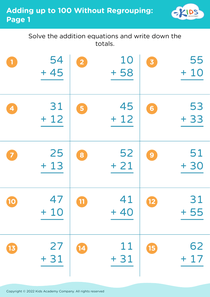
Addition Practice Adding up to 100 with Regrouping Worksheets for 8-Year-Olds
4 filtered results
-
From - To
Enhance your 8-year-old’s math skills with our engaging Addition Practice Adding up to 100 with Regrouping Worksheets! Specifically designed for young learners, these worksheets provide fun and interactive exercises to master the art of adding two-digit numbers. They offer plenty of opportunities to practice regrouping, helping kids develop a strong foundational understanding in addition. Perfect for classroom or home use, each worksheet aims to boost your child's confidence while making learning enjoyable. Lay a solid groundwork for your child’s future math success with our expertly crafted addition practice worksheets, and watch them excel!
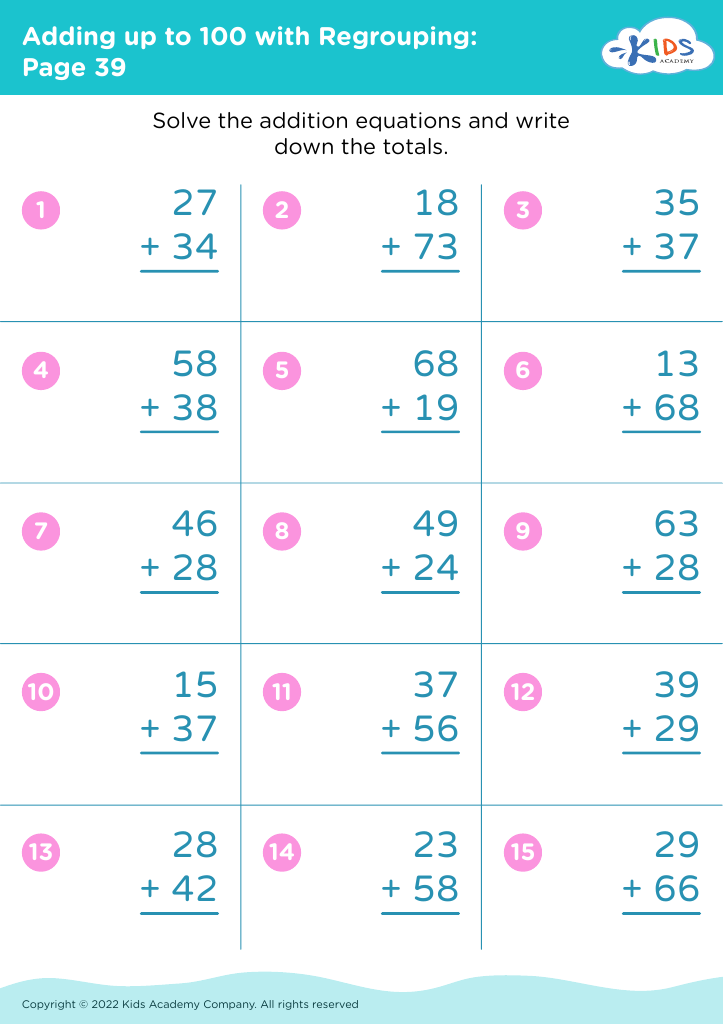
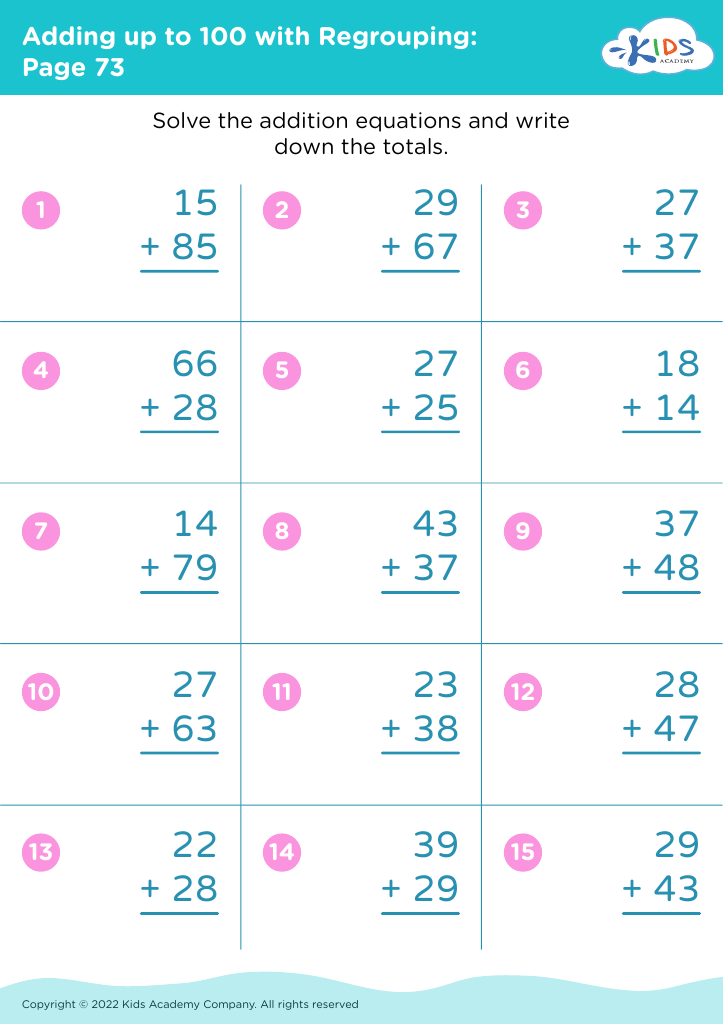
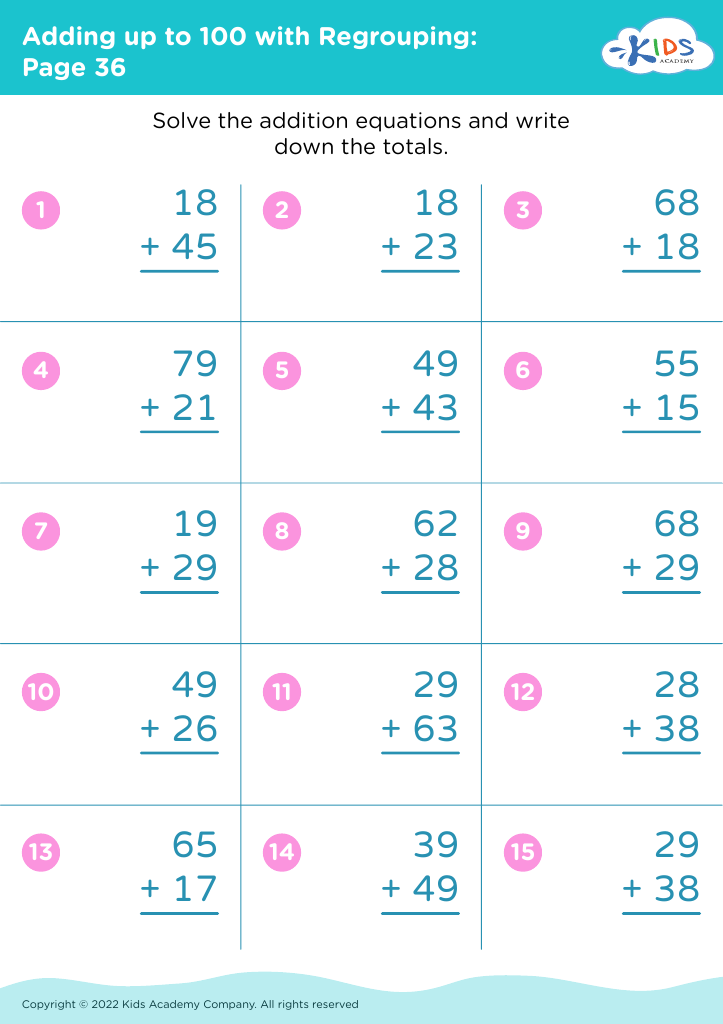
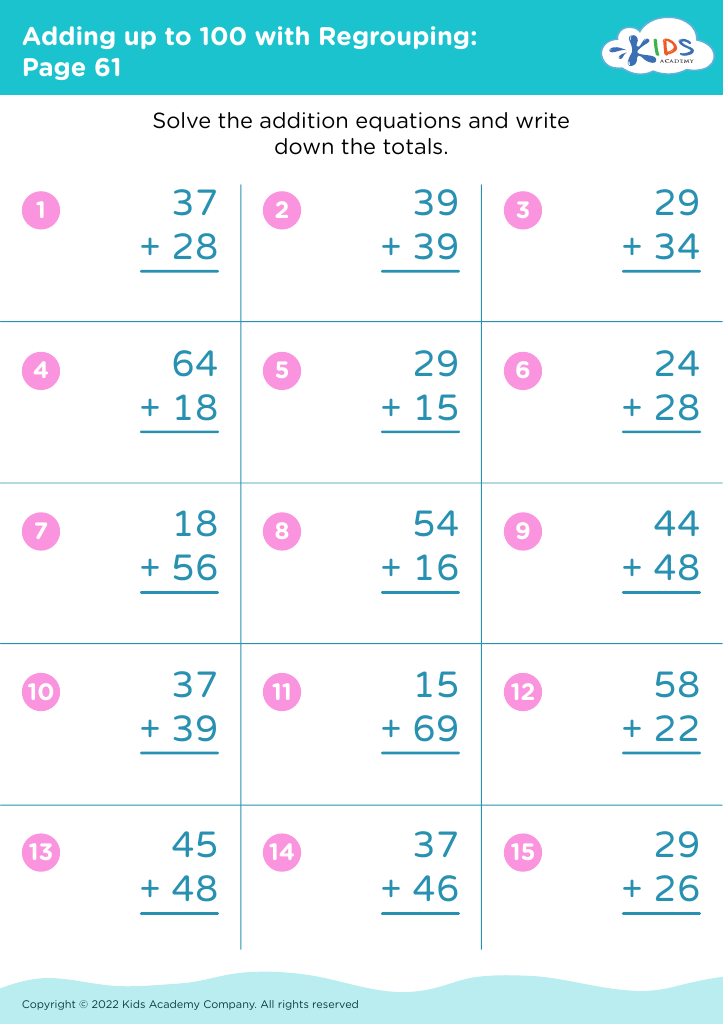




Parents and teachers should prioritize addition practice up to 100 with regrouping for 8-year-olds because it fosters foundational mathematical skills essential for future academic success and daily life problem-solving. This age is critical as children transition from basic arithmetic to more complex concepts, and mastering addition with regrouping reinforces their understanding of place value, a core principle of our number system.
When 8-year-olds practice adding numbers up to 100 with regrouping, they learn how to manipulate numbers logically. This skill translates to improved accuracy and efficiency in calculations, which are crucial for tackling more advanced operations such as multiplication and division later on. Additionally, consistent practice helps solidify mental math abilities, boosting students' confidence and reducing their anxiety around math tasks.
Moreover, proficiency in addition with regrouping aids in developing cognitive skills such as memory, attention, and logical reasoning. It also encourages perseverance and problem-solving, as regrouping requires understanding and applying multiple steps. By nurturing these abilities early, parents and teachers set children up for success not just in math, but in various subjects that require analytical thinking. Thus, dedicating time to addition practice is an investment in a child's holistic academic development and future competence in STEM fields.