Fraction comparison Adding up to 100 with Regrouping Worksheets for 8-Year-Olds
3 filtered results
-
From - To
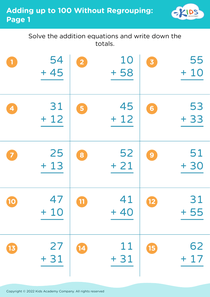
Looking to reinforce your child's math skills? Our "Fraction Comparison Adding Up to 100 with Regrouping Worksheets for 8-Year-Olds" offer an engaging way for kids to practice essential math concepts. These worksheets help young learners compare fractions and manage addition problems that require regrouping, all within the 100 range. Designed to be fun and educational, they strengthen understanding of fractions, improve problem-solving abilities, and build confidence in arithmetic. Perfect for home or classroom use, these printable worksheets are an invaluable resource for mastering early math skills. Explore and download today to boost your child's understanding and math proficiency!
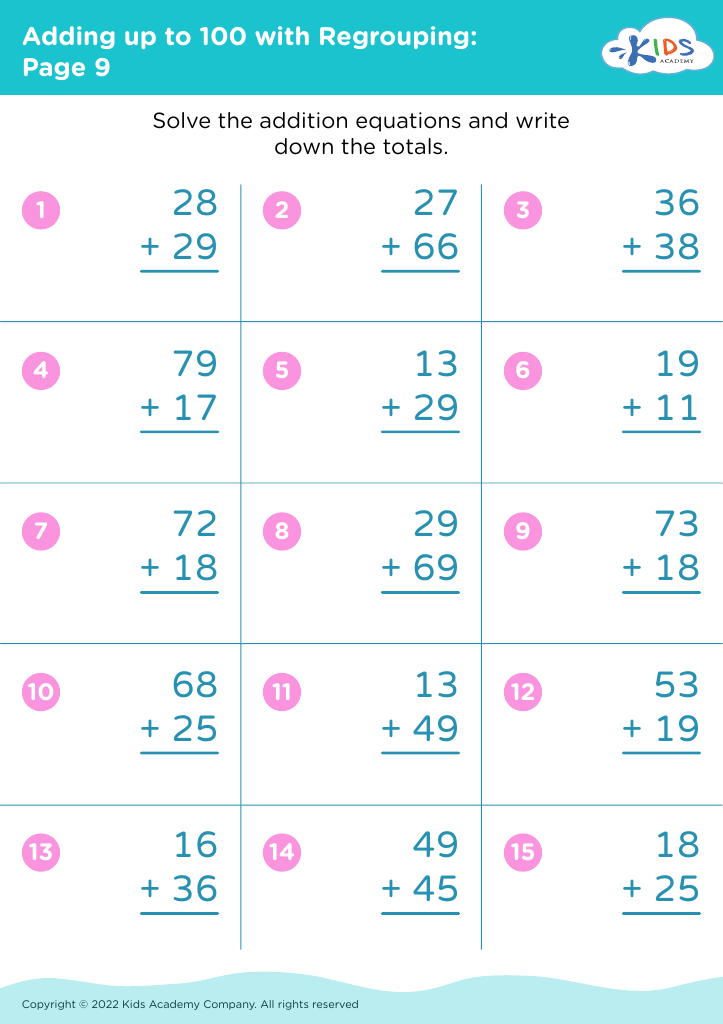
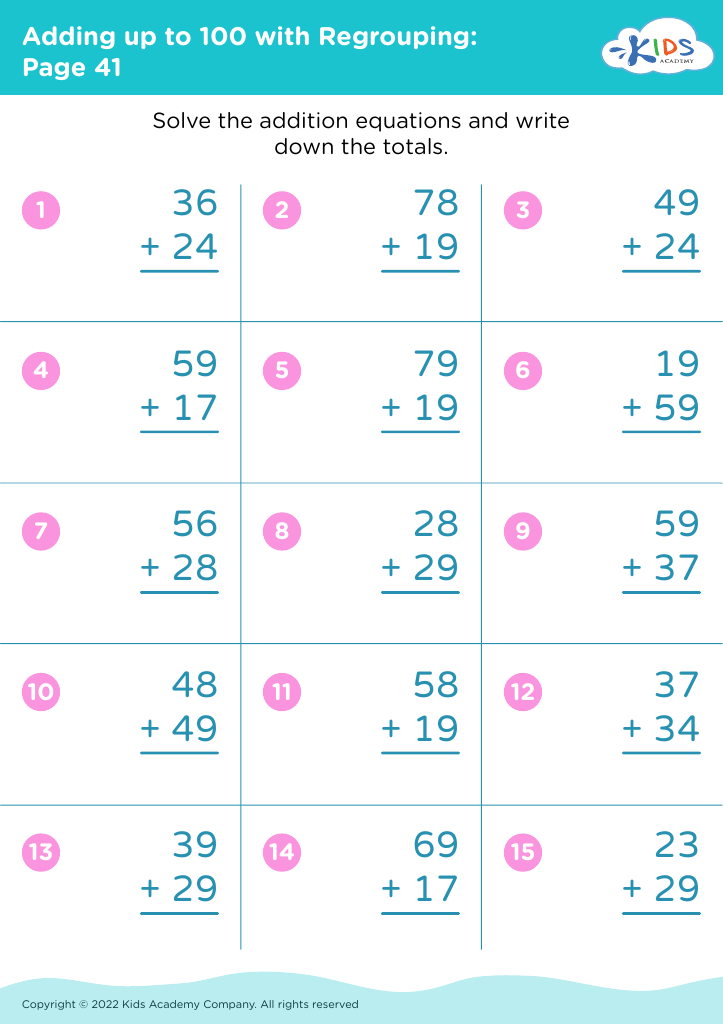
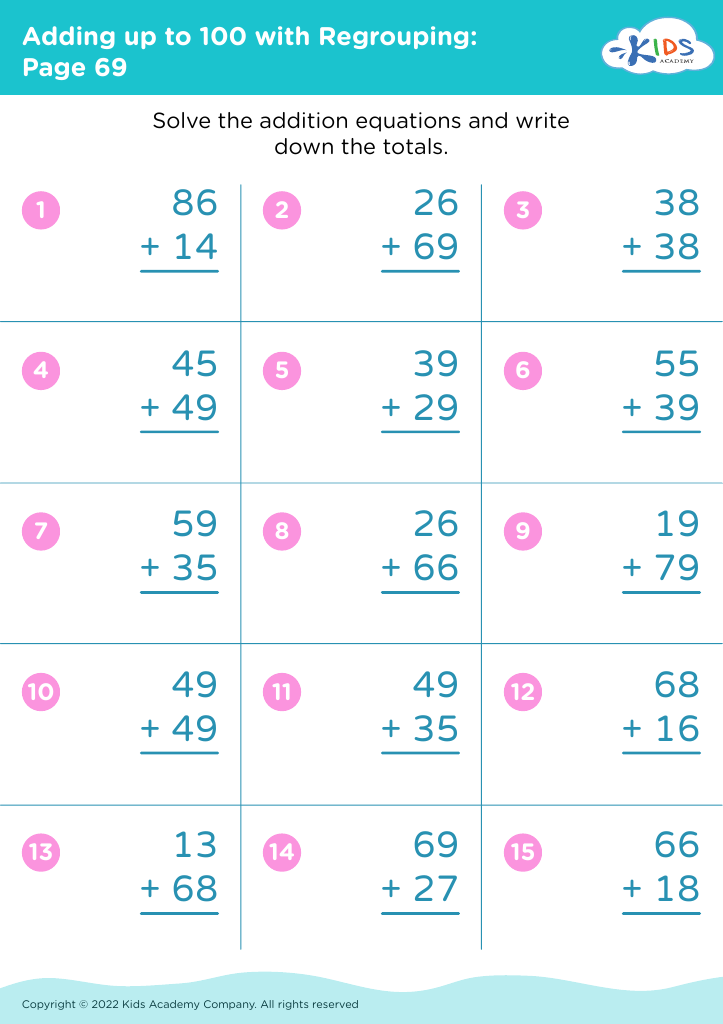




Fraction comparison and adding up to 100 with regrouping might seem like advanced topics for 8-year-olds, but they play a crucial role in building strong math foundations. For parents and teachers, understanding the importance of these skills can help in nurturing a child's academic growth.
Fraction comparison develops a solid number sense and introduces children to concepts like numerators, denominators, and equivalent fractions. It means kids learn how to compare parts of a whole, which translates into easier handling of percentages, ratios, and proportional reasoning later on. This skill also enhances critical thinking as children figure out why one fraction is greater than or less than another.
Adding up to 100 with regrouping, on the other hand, promotes understanding of place value and operational efficiency. Regrouping, often called carrying or borrowing, aids in solving more complex problems by teaching children to break down tasks into manageable steps. Mastery in regrouping also has practical everyday uses, such as in making change or planning budgets.
Both skills are cornerstones that support later mathematics learning, from algebra to statistics. Early mastery builds confidence and reduces math anxiety. Therefore, parents and teachers must emphasize these areas, ensuring quality practice and experience so that students are prepared for more complex mathematical challenges.