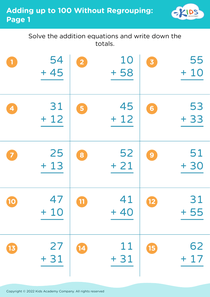
Improve math skills Adding up to 100 with Regrouping Worksheets for 8-Year-Olds
3 filtered results
-
From - To
Boost your child's math proficiency with our engaging "Adding Up to 100 with Regrouping Worksheets" designed for 8-year-olds. These worksheets focus on the essential skill of regrouping, a fundamental concept that helps students master addition. Through fun exercises and visual aids, your child will learn how to break down numbers into more manageable parts, enhancing their problem-solving abilities and boosting confidence. Ideal for classroom and home use, our resources cater to varying skill levels, fostering a love for math while ensuring mastery of adding up to 100. Turn learning into play and watch your child shine in mathematics!
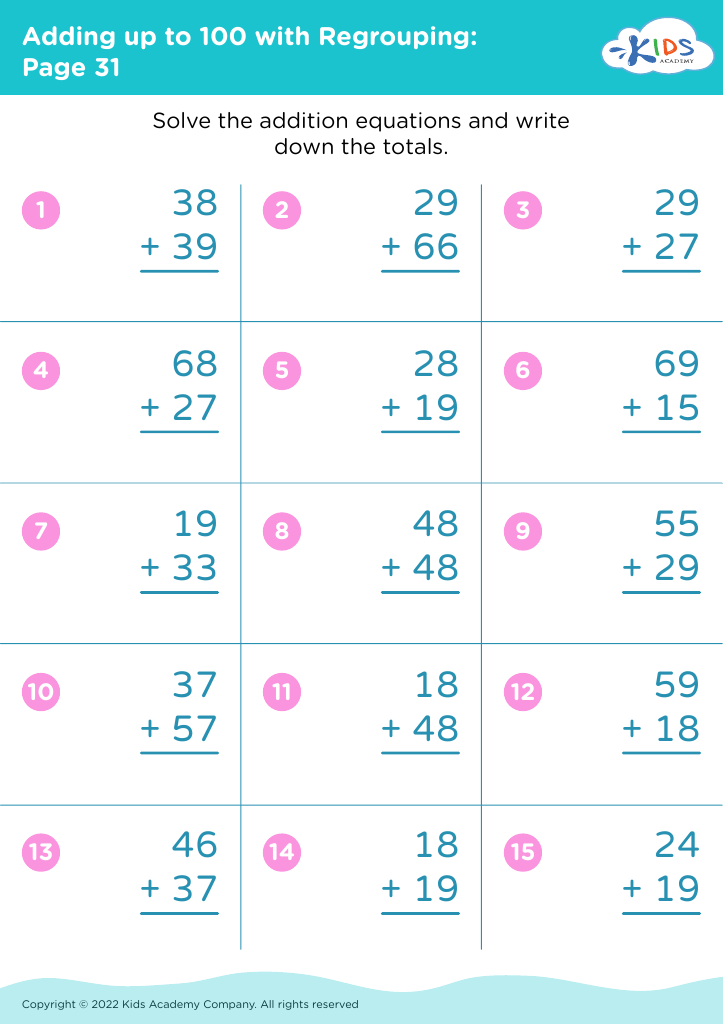
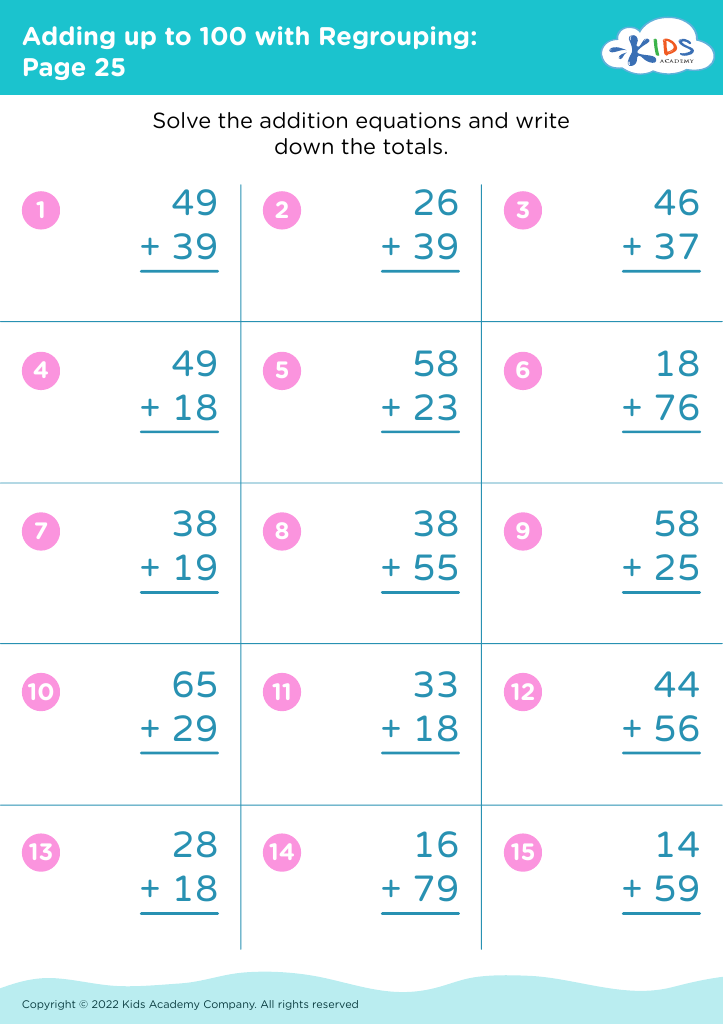
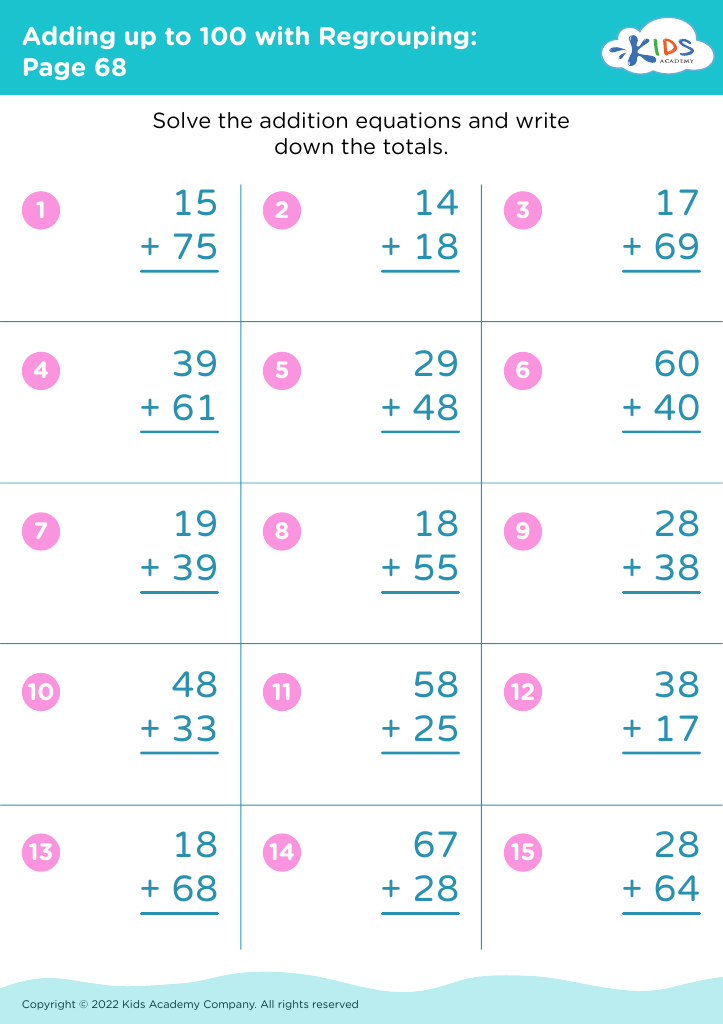




Improving math skills, particularly in addition and regrouping for 8-year-olds, is crucial for fostering a strong foundation in mathematics. At this age, children are transitioning from basic arithmetic to more complex problem-solving. Mastering concepts like adding up to 100 with regrouping enhances their number sense and prepares them for higher-level math topics.
Parents and teachers should care about this skill for several reasons. Firstly, proficiency in addition with regrouping builds confidence, encouraging a positive attitude towards math. When children feel successful in their abilities, they are more inclined to tackle challenging concepts in the future.
Additionally, these skills are not just relevant for math class but are applicable in real-life situations, from budgeting for a toy to understanding measurements in cooking. Furthermore, a strong grasp of these foundational skills can significantly improve overall academic performance since math literacy is linked to success in various disciplines.
Teachers can address this through engaging activities, while parents can reinforce these skills with practical applications at home, such as games or simple math challenges. Ultimately, helping children improve their math skills is an investment in their academic journey and everyday life competence.