Understanding fractions Adding up to 100 with Regrouping Worksheets for 8-Year-Olds

Filters

16 filtered results

Clear all filters
Favorites
With answer key
Interactive

16 filtered results

Difficulty Level

Grade


Our "Understanding Fractions Adding Up to 100 with Regrouping Worksheets for 8-Year-Olds" offer engaging and educational activities designed to strengthen foundational math skills. Perfectly tailored for third graders, these worksheets combine fraction concepts with addition and regrouping exercises, making practice both fun and effective. Through colorful and child-friendly designs, kids will learn to add and regroup numbers up to 100 while gaining a solid understanding of fractions. Ideal for classroom use or at-home learning, these worksheets ensure every child masters the essential concepts for future math success. Watch your child's confidence and skills grow with each worksheet!
Check out this FREE Trial Lesson on Adding up to 100 with Regrouping for age 8!

L

Favorites
With answer key
Interactive
  • 8
  • Understanding fractions
  • Adding up to 100 with Regrouping
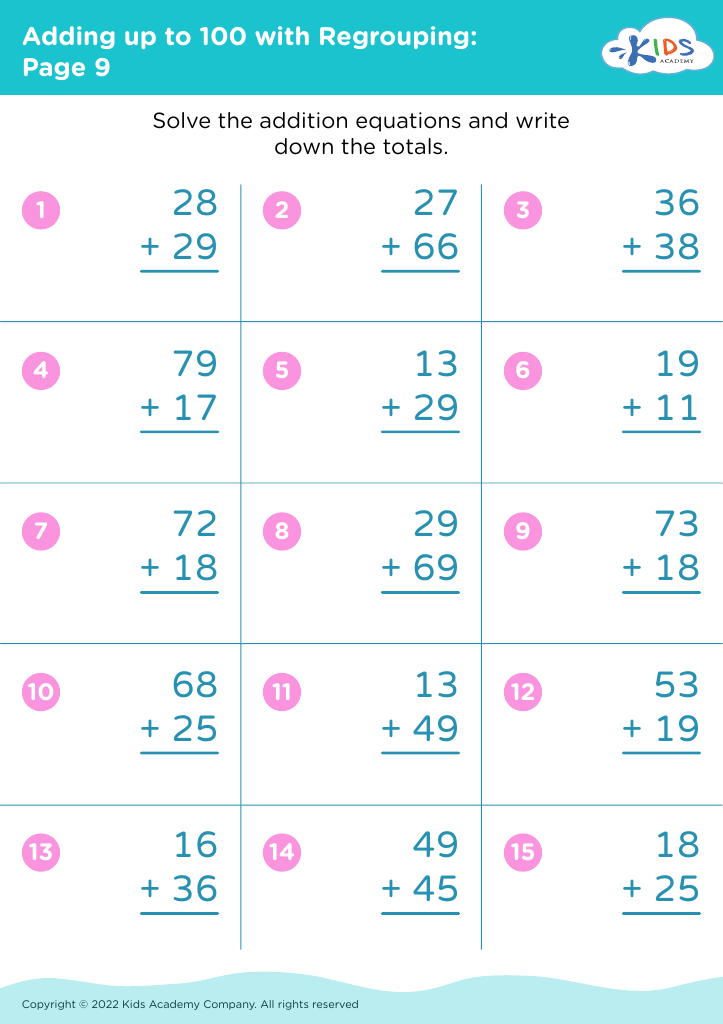
Adding up to 100 with Regrouping: Page 9
Worksheet
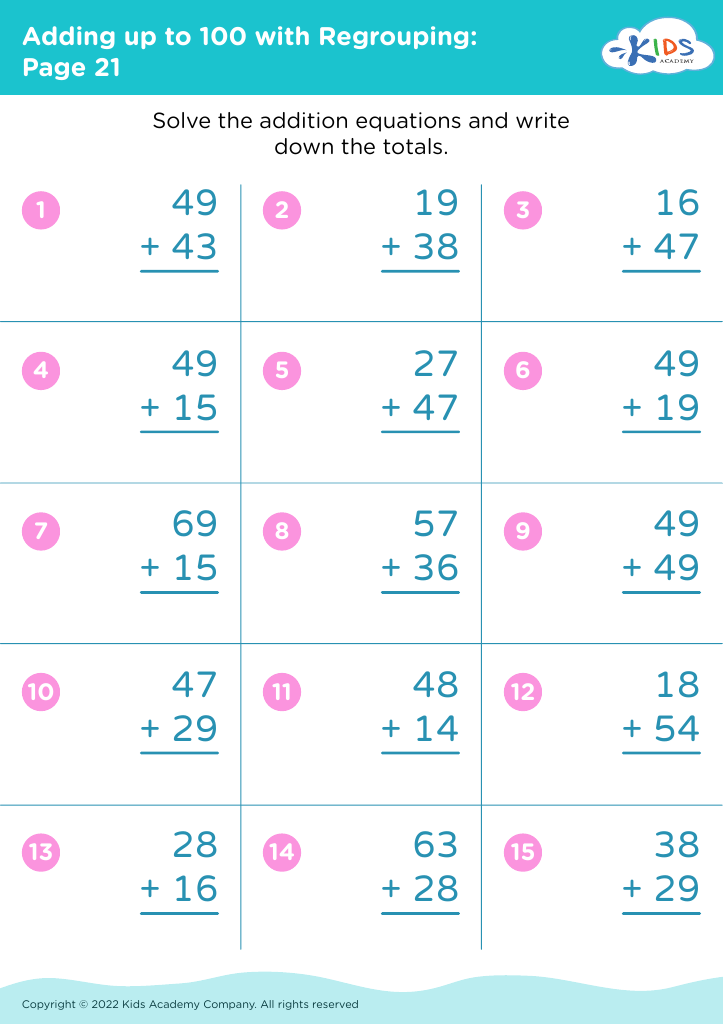
Adding up to 100 with Regrouping: Page 21
Worksheet
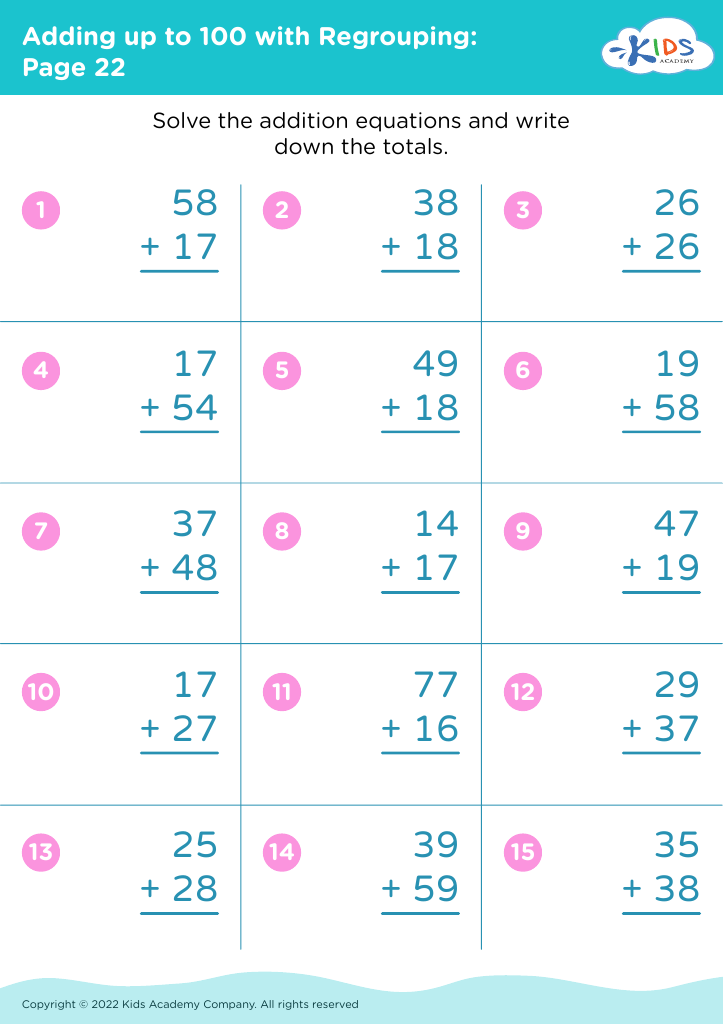
Adding up to 100 with Regrouping: Page 22
Worksheet
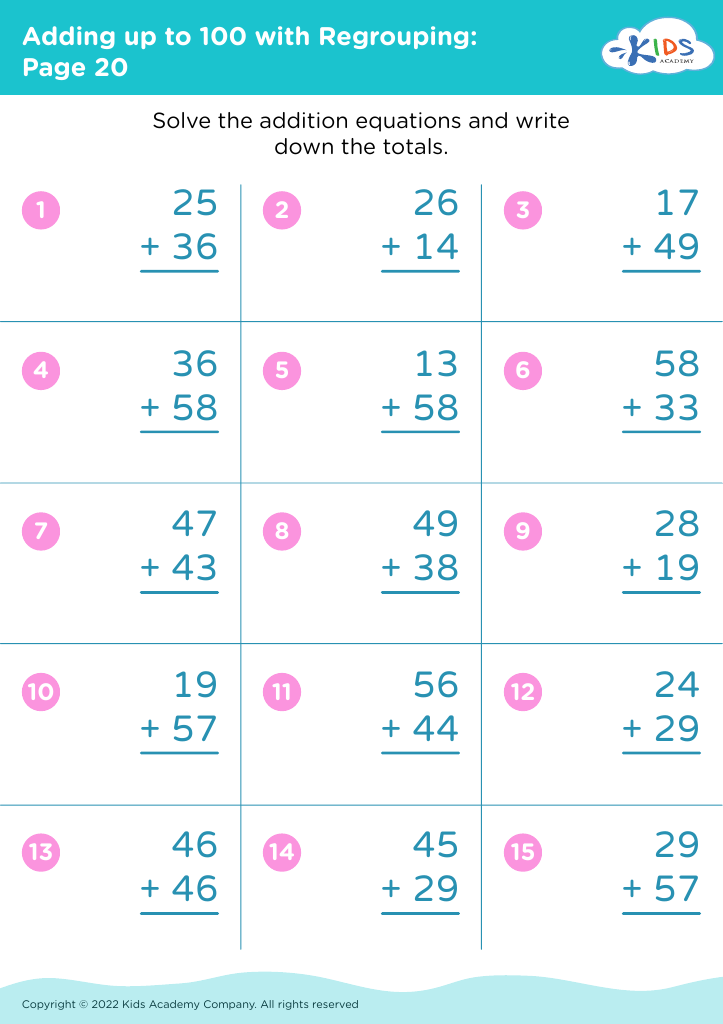
Adding up to 100 with Regrouping: Page 20
Worksheet
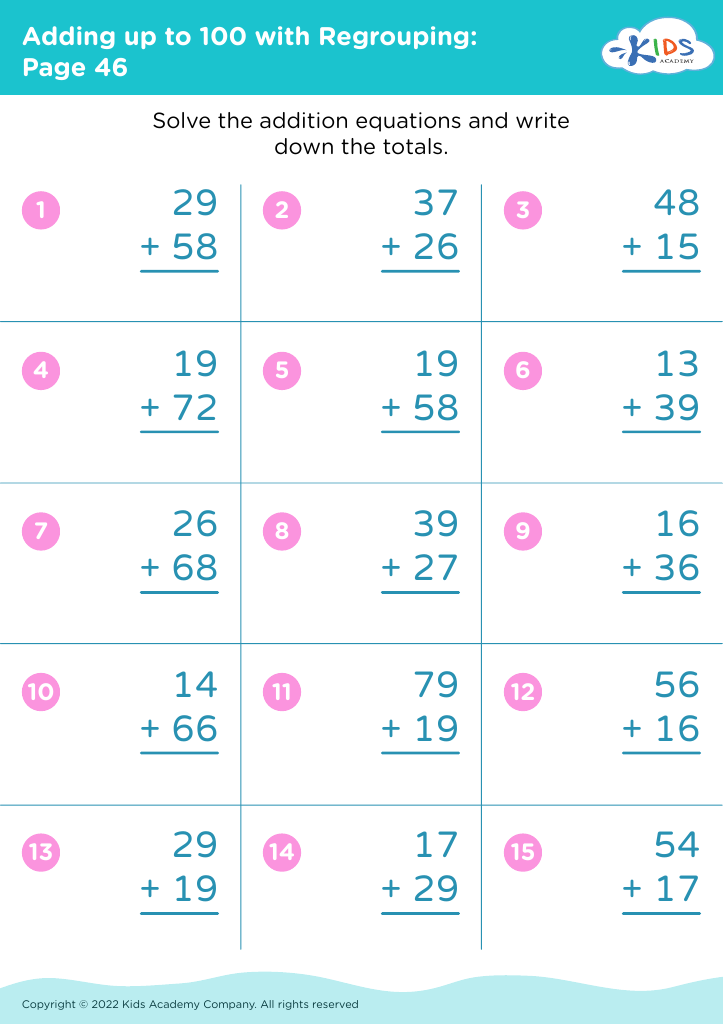
Adding up to 100 with Regrouping: Page 46
Worksheet
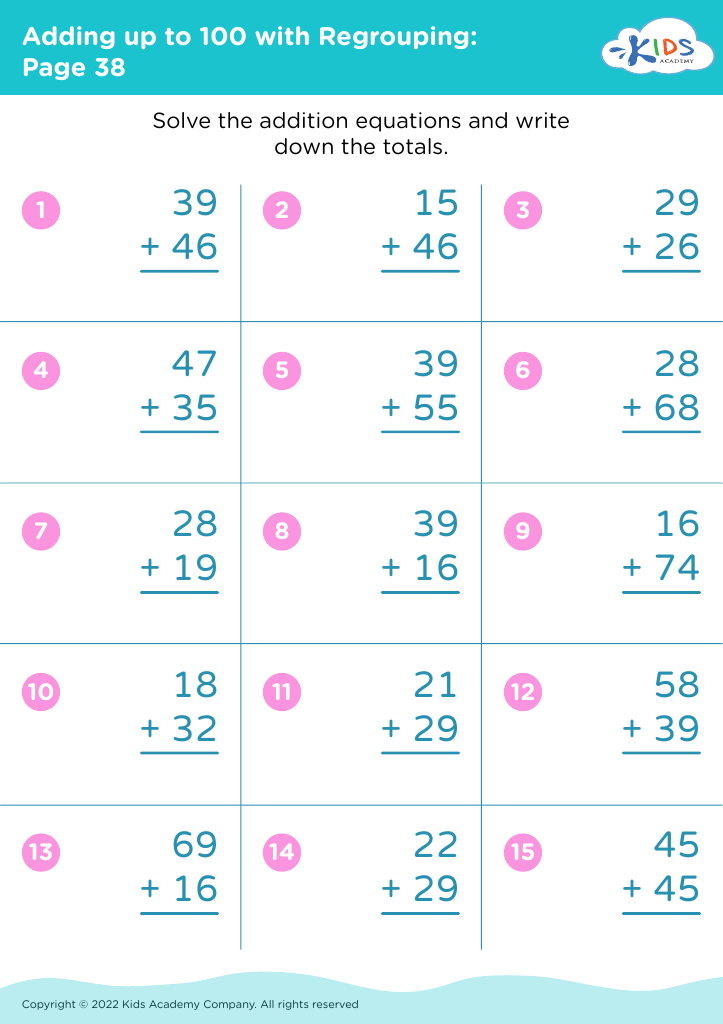
Adding up to 100 with Regrouping: Page 38
Worksheet
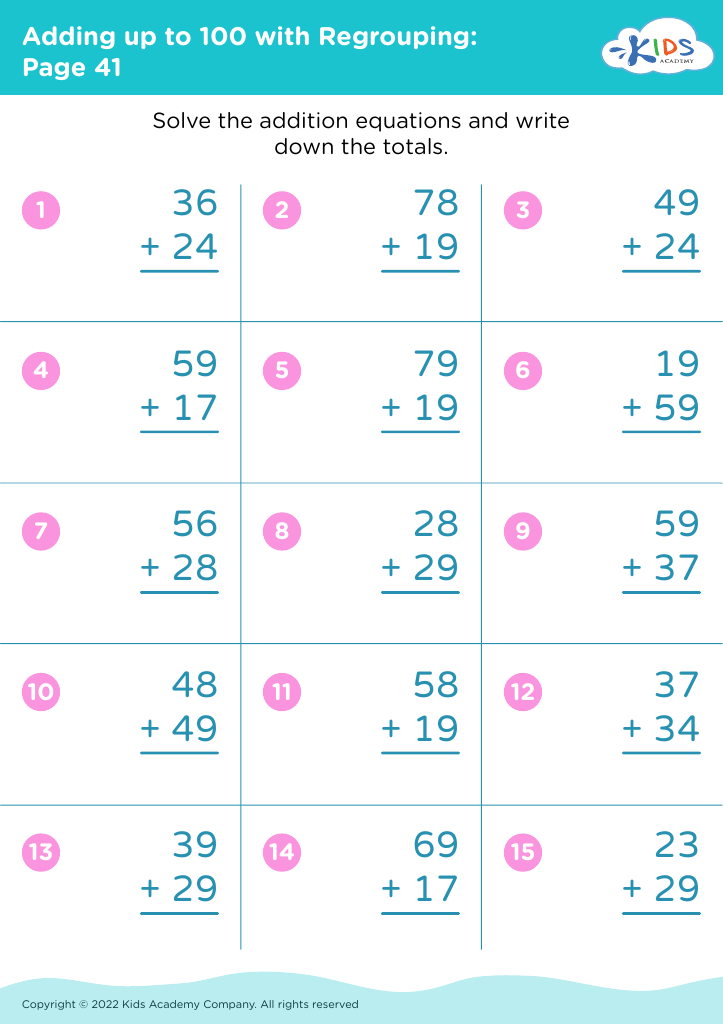
Adding up to 100 with Regrouping: Page 41
Worksheet
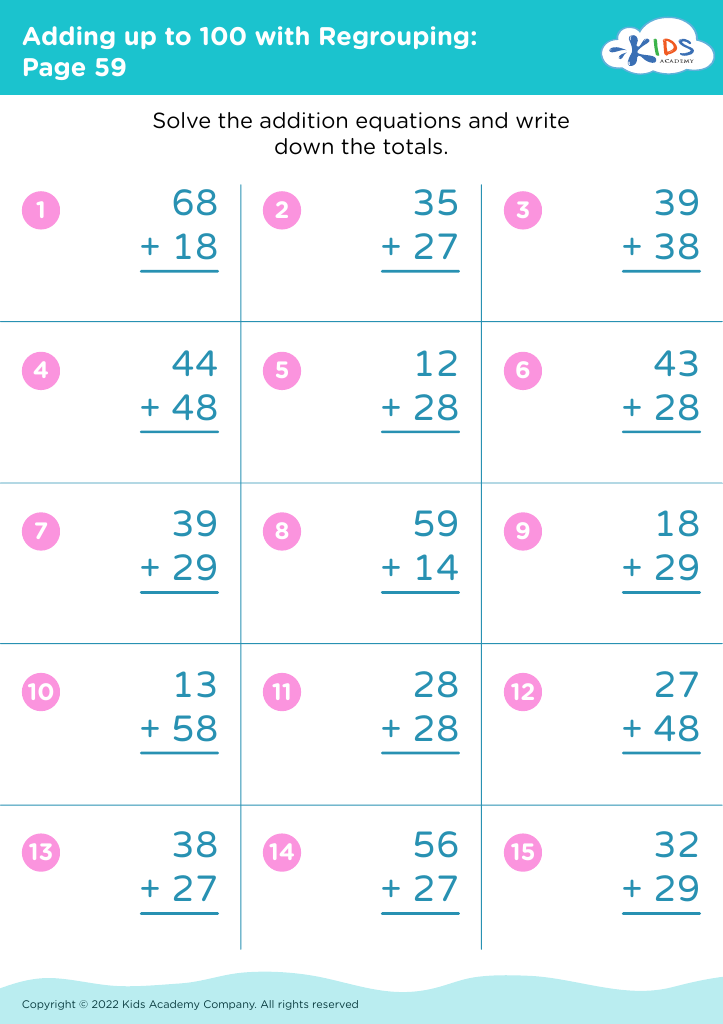
Adding up to 100 with Regrouping: Page 59
Worksheet
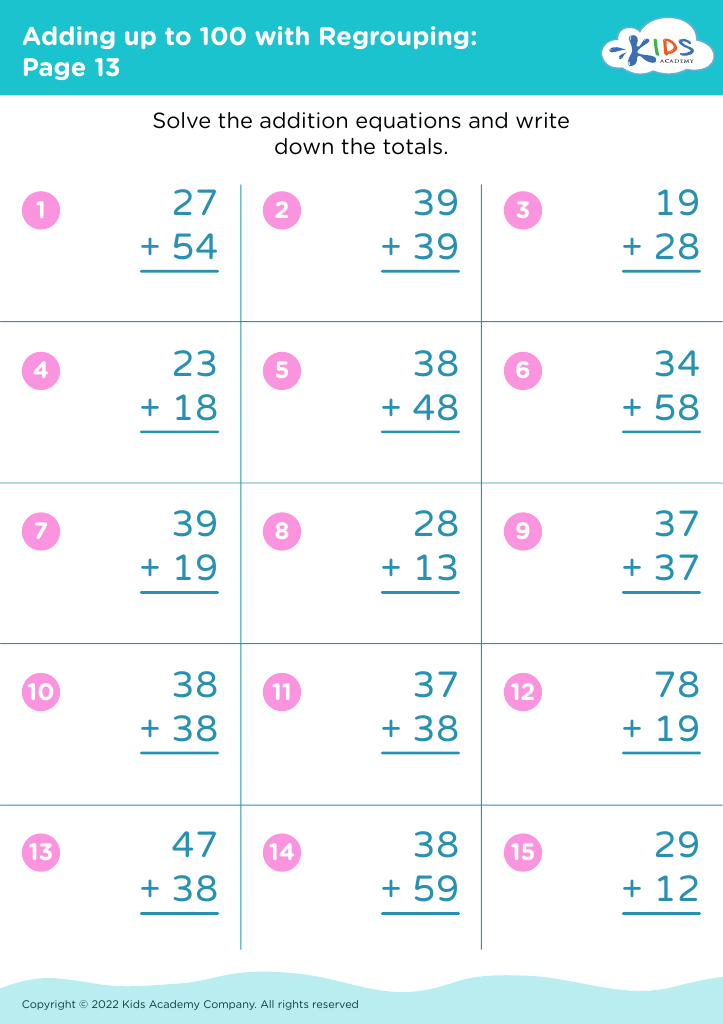
Adding up to 100 with Regrouping: Page 13
Worksheet
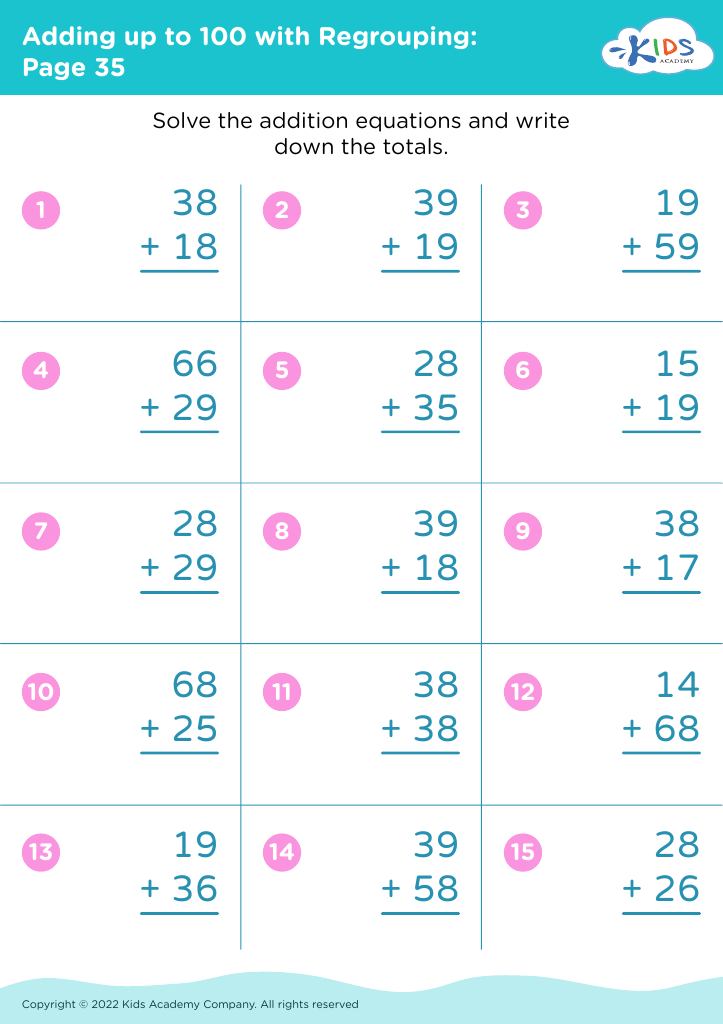
Adding up to 100 with Regrouping: Page 35
Worksheet
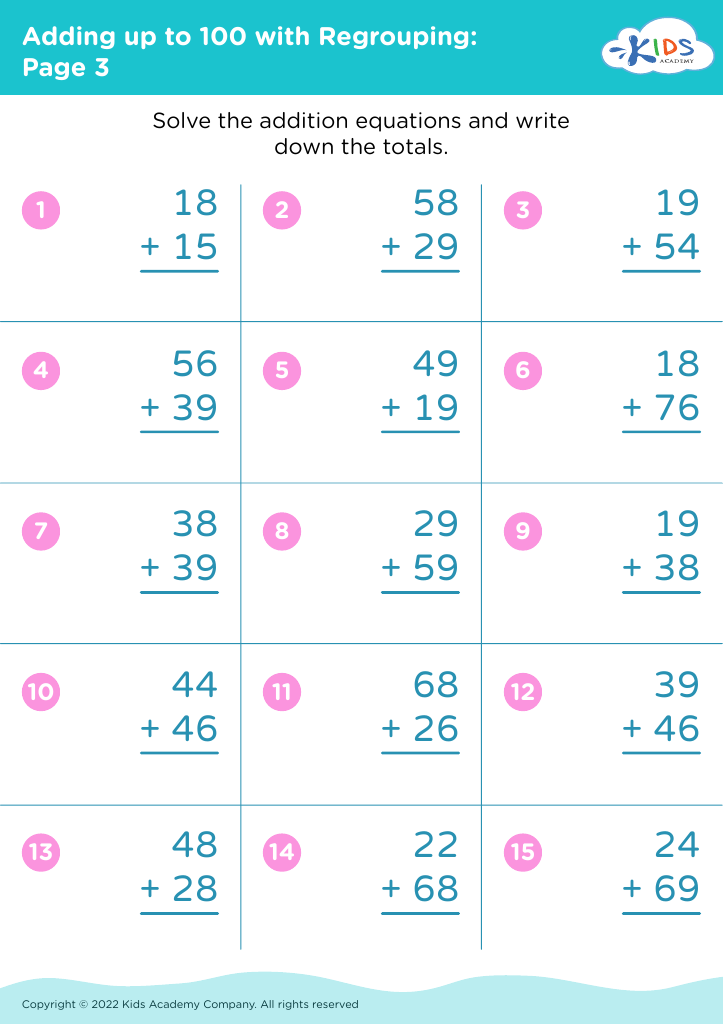
Adding up to 100 with Regrouping: Page 3
Worksheet
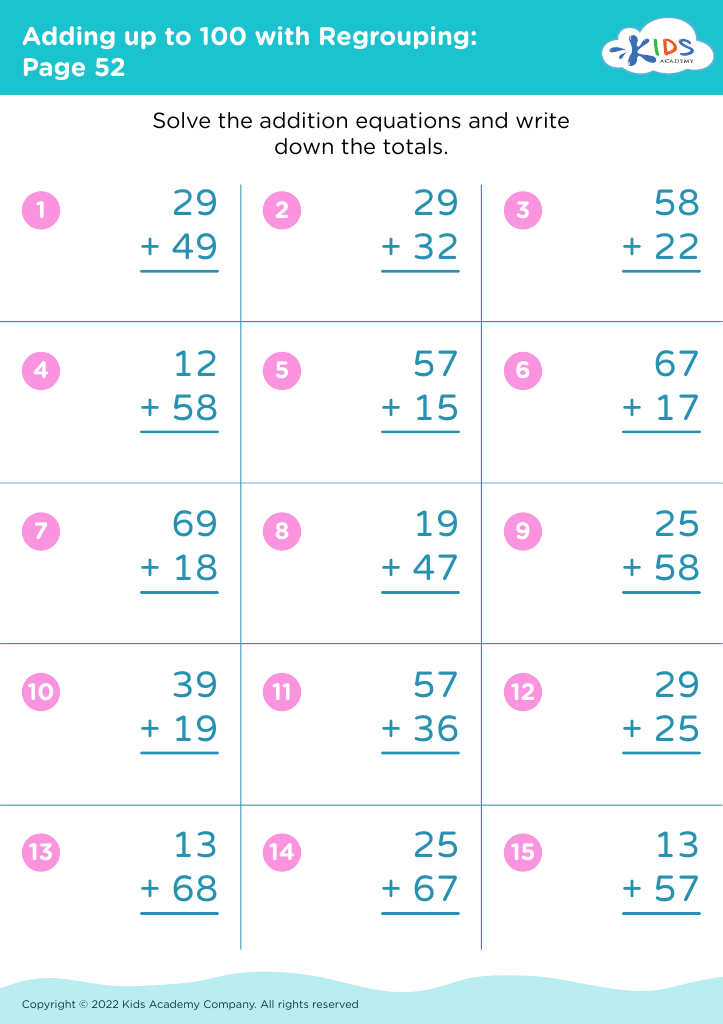
Adding up to 100 with Regrouping: Page 52
Worksheet
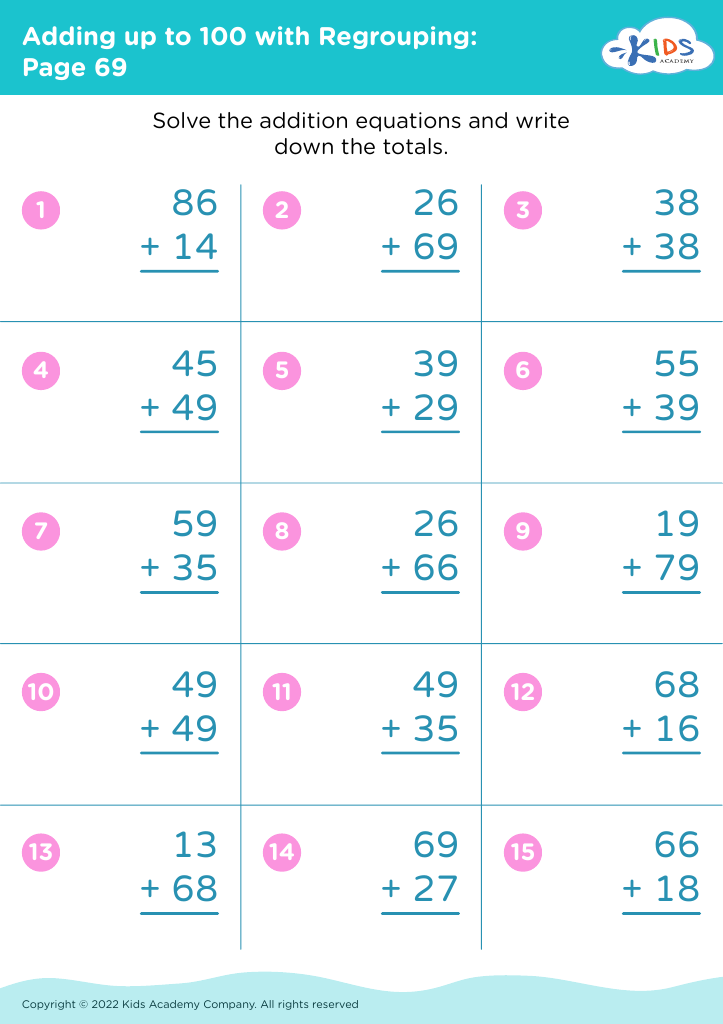
Adding up to 100 with Regrouping: Page 69
Worksheet
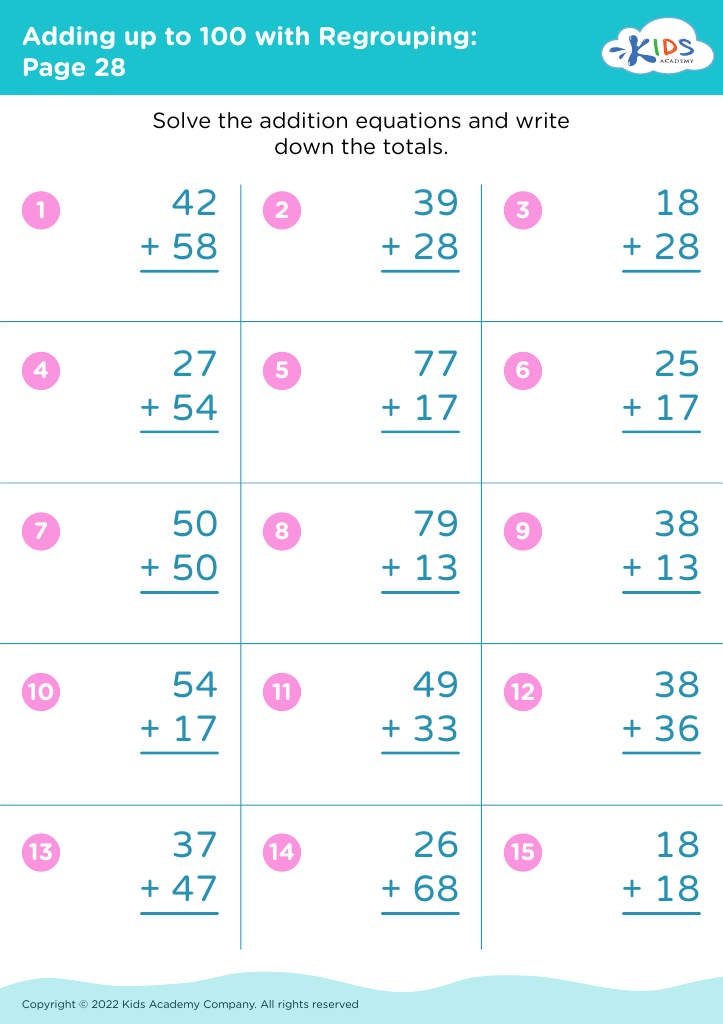
Adding up to 100 with Regrouping: Page 28
Worksheet
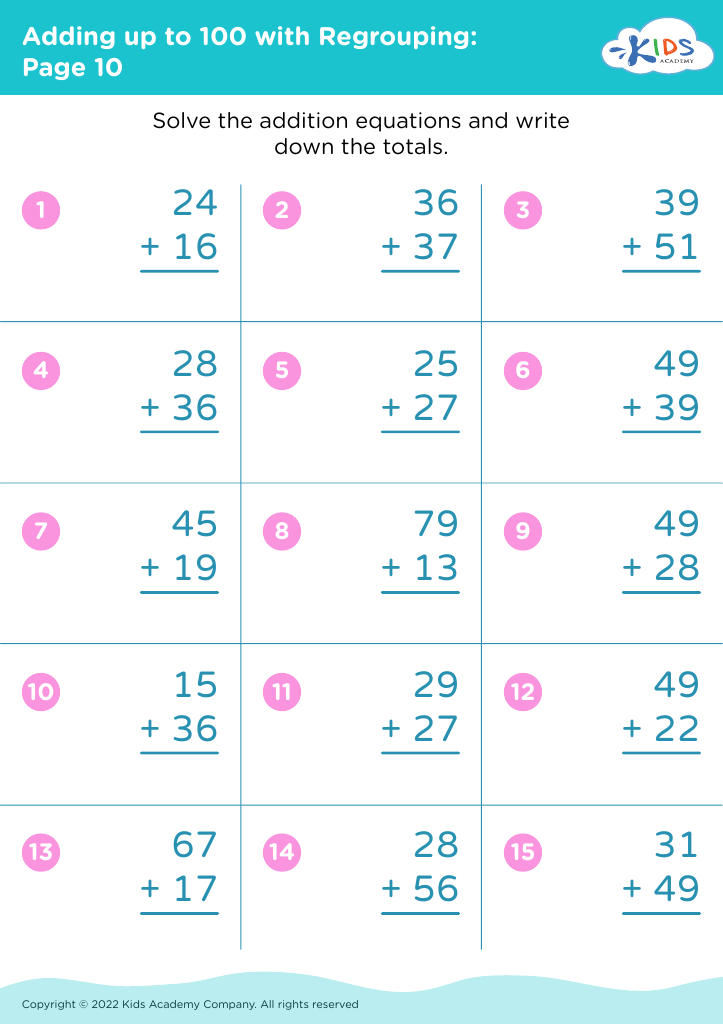
Adding up to 100 with Regrouping: Page 10
Worksheet
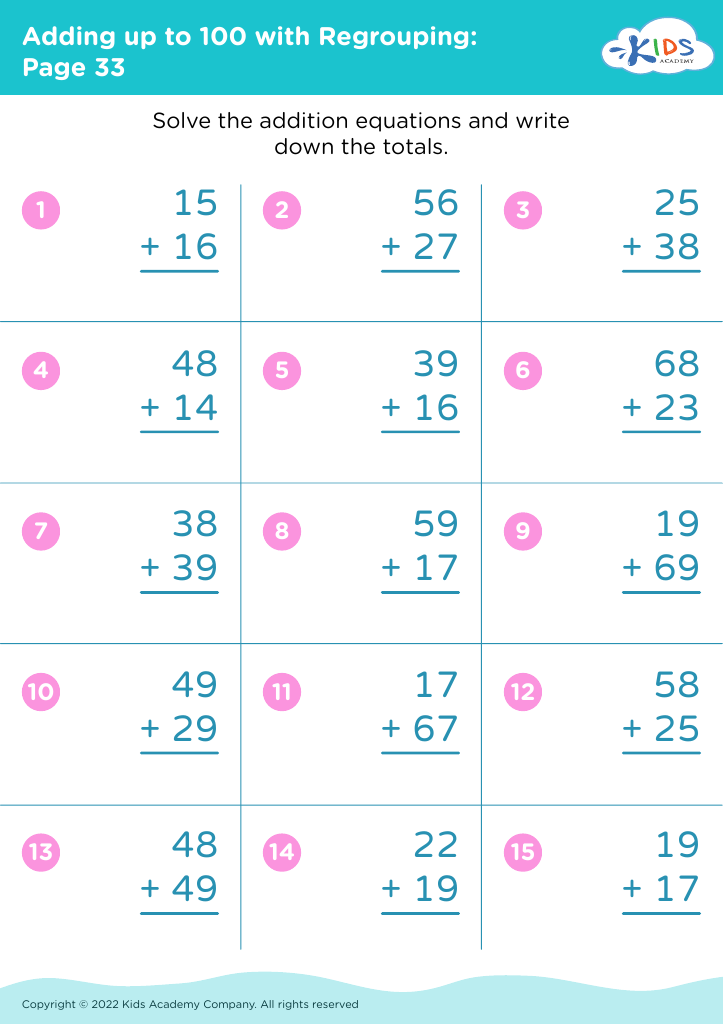
Adding up to 100 with Regrouping: Page 33
Worksheet


Understanding fractions and adding up to 100 with regrouping are fundamental concepts that support math proficiency for 8-year-olds. These skills are essential for a few reasons:

Fractions are an introduction to more advanced math concepts, such as decimals and percentages. By grasping fractions early, children build a solid foundation that will aid in their understanding of other complex topics later. This understanding allows them to tackle real-life situations involving measurement, sharing, and budgeting.

Adding up to 100 with regrouping develops important problem-solving skills and provides practice with basic arithmetic in a way that strengthens mental math abilities. This skill teaches children how to break down and simplify numbers, use place value, and understand the base-10 number system.

Mastering these topics promotes logical thinking, patience, and attention to detail, which are beneficial beyond the math classroom. This early confidence in basic math skills positively impacts a child's overall academic journey and enhances their ability to handle challenges in other subjects. Finally, parents and teachers showing interest in these areas encourages a child's own enthusiasm for math, paving the way for a positive attitude toward learning.