Comparing Fractions Adding up to 100 Without Regrouping Worksheets for 8-Year-Olds
11 filtered results
-
From - To
Welcome to our engaging "Comparing Fractions Adding up to 100 Without Regrouping" worksheets, designed specifically for 8-year-olds! These interactive resources help young learners master the essential skill of comparing fractions, ensuring they understand how to analyze and distinguish between different fractional values. Each worksheet provides a delightful mix of visual aids and practical exercises, making learning fun and effective. Our curriculum-aligned activities encourage practice without regrouping, reinforcing foundational math concepts while building confidence. Perfect for both classroom and home learning, these worksheets are a fundamental tool for helping children excel in their math journey. Explore our collection today and watch your child's skills grow!
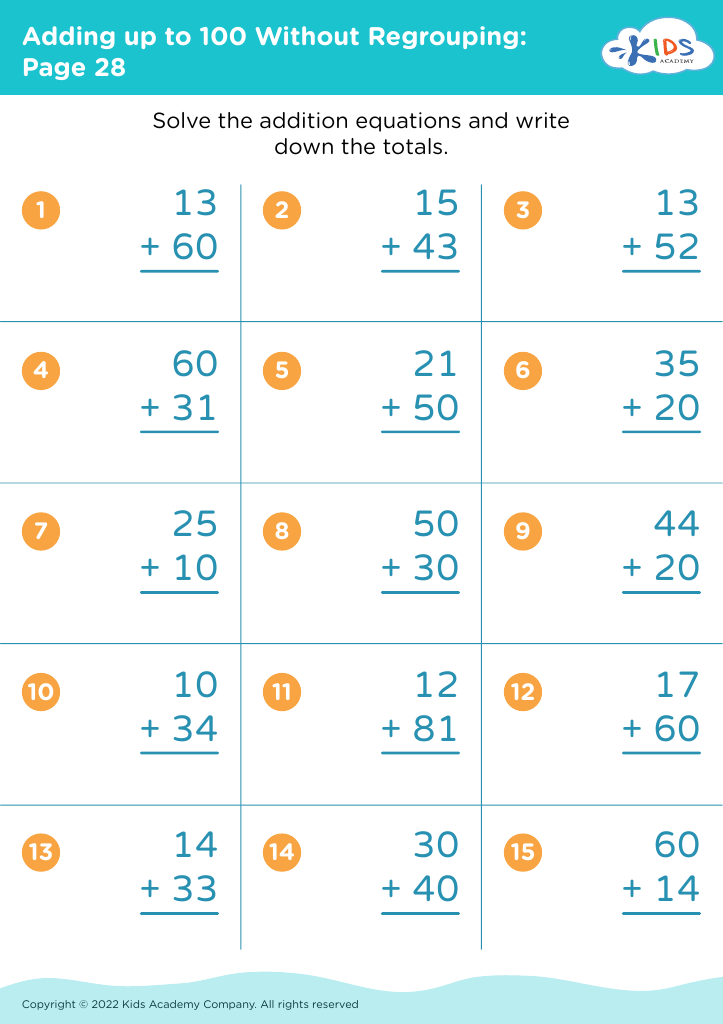
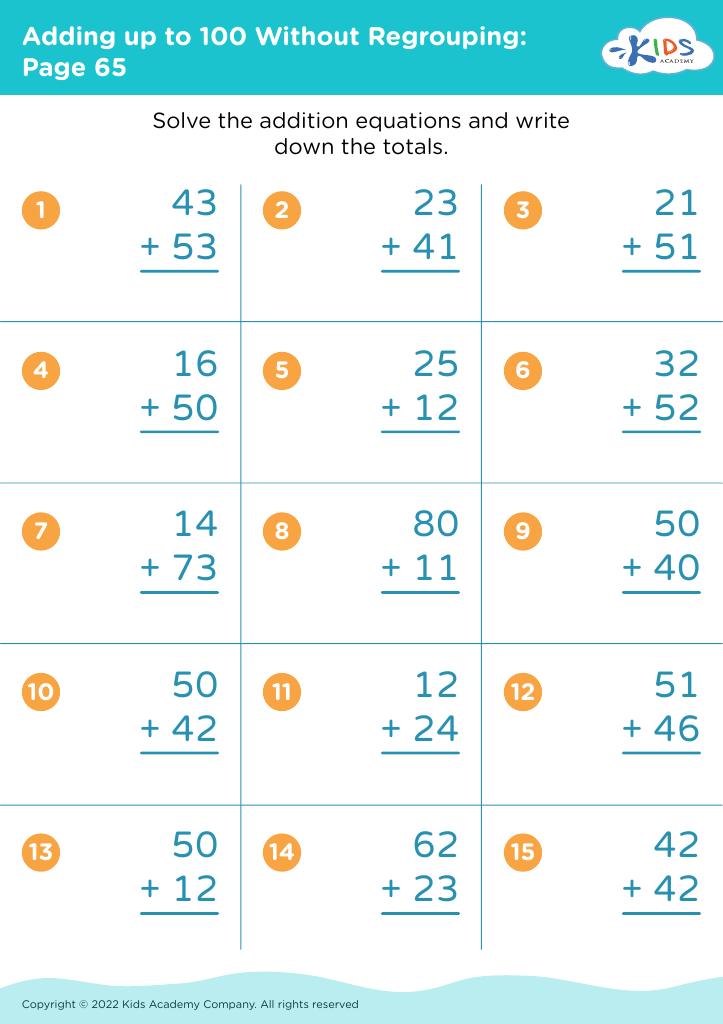
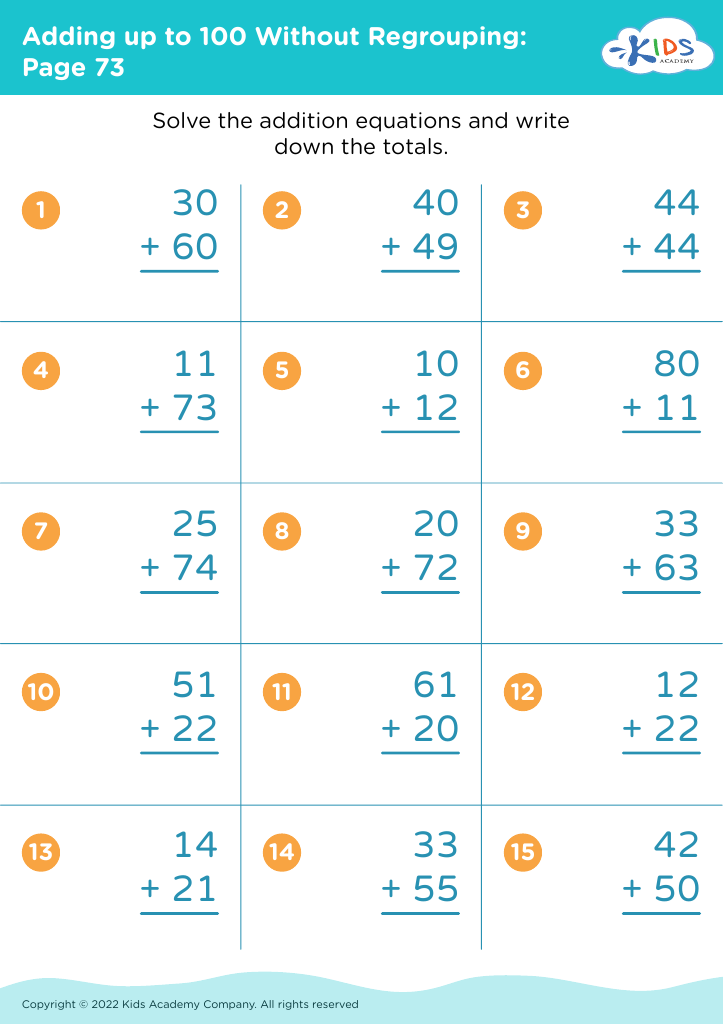
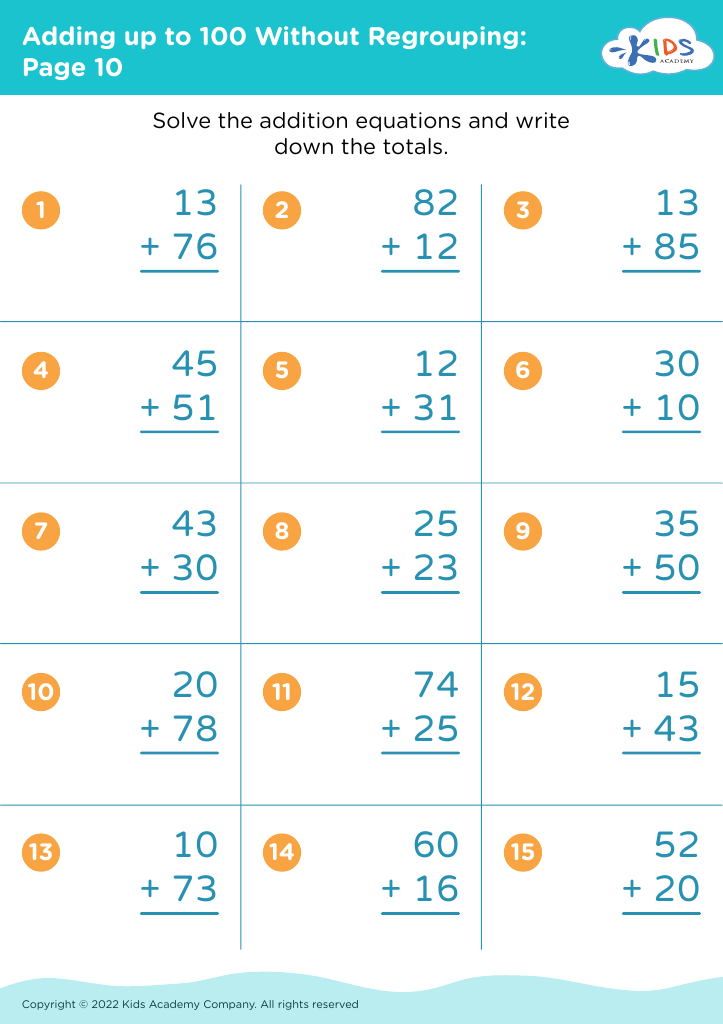
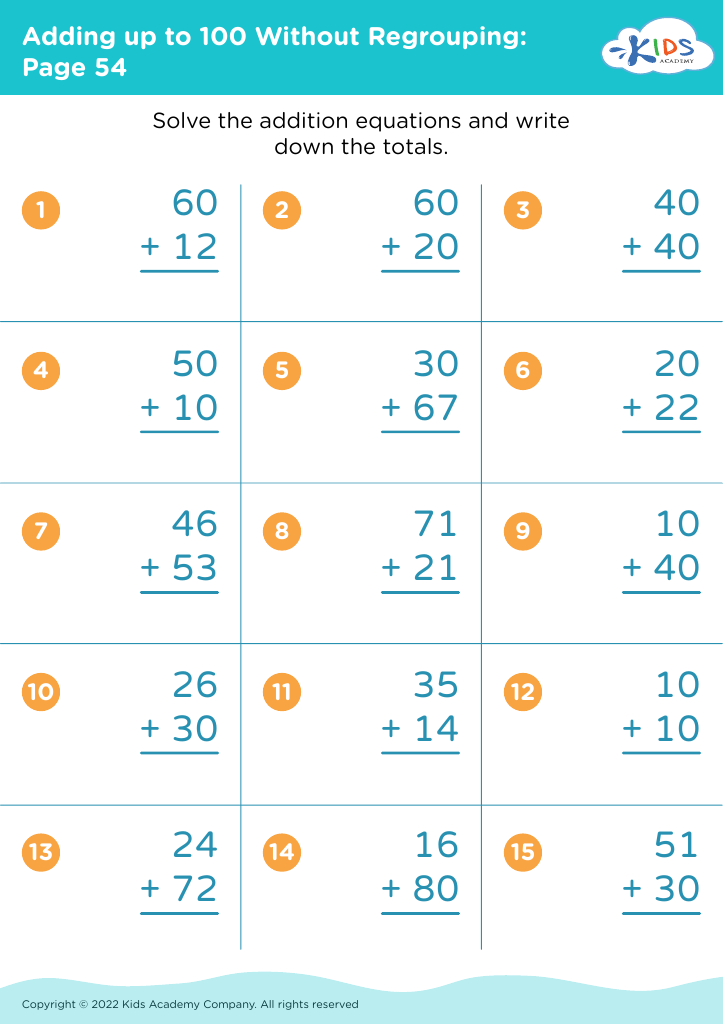
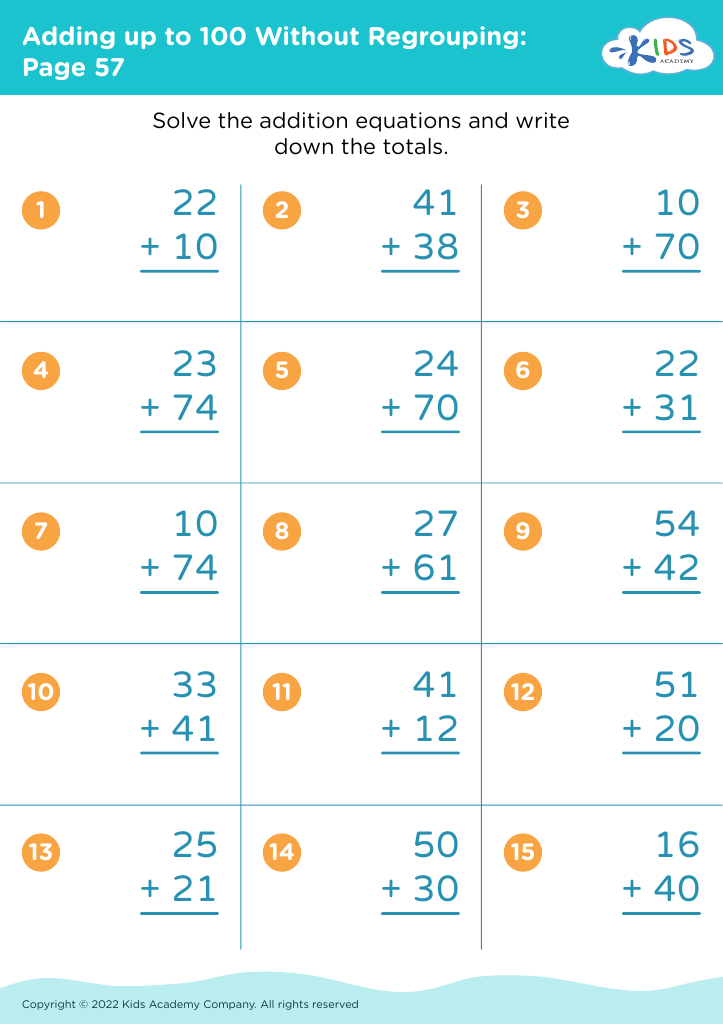
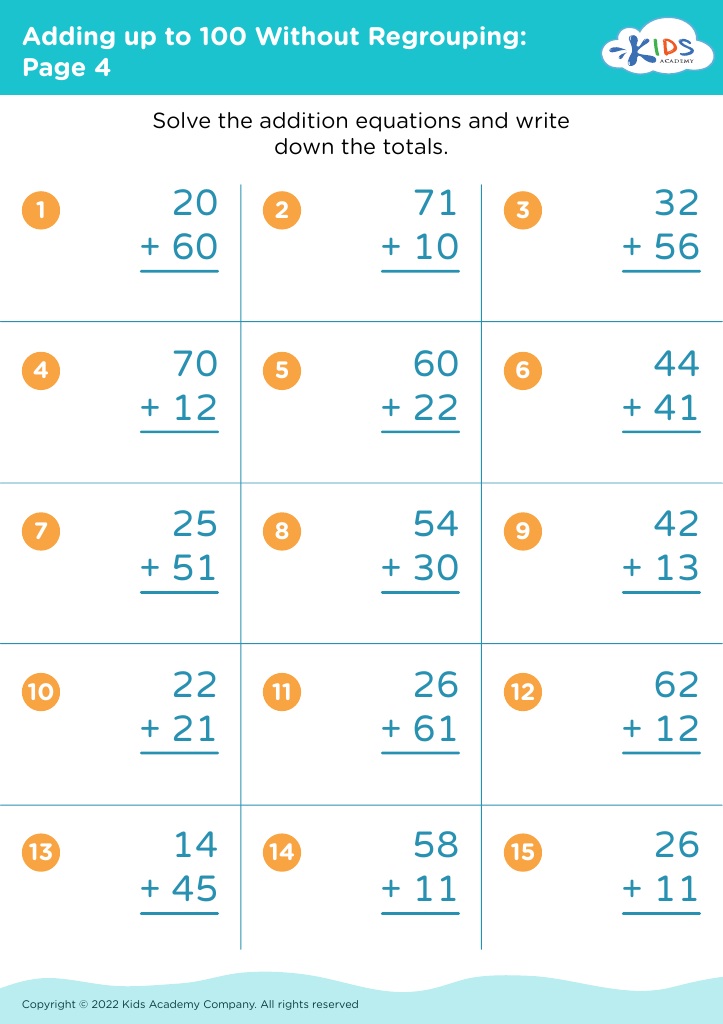
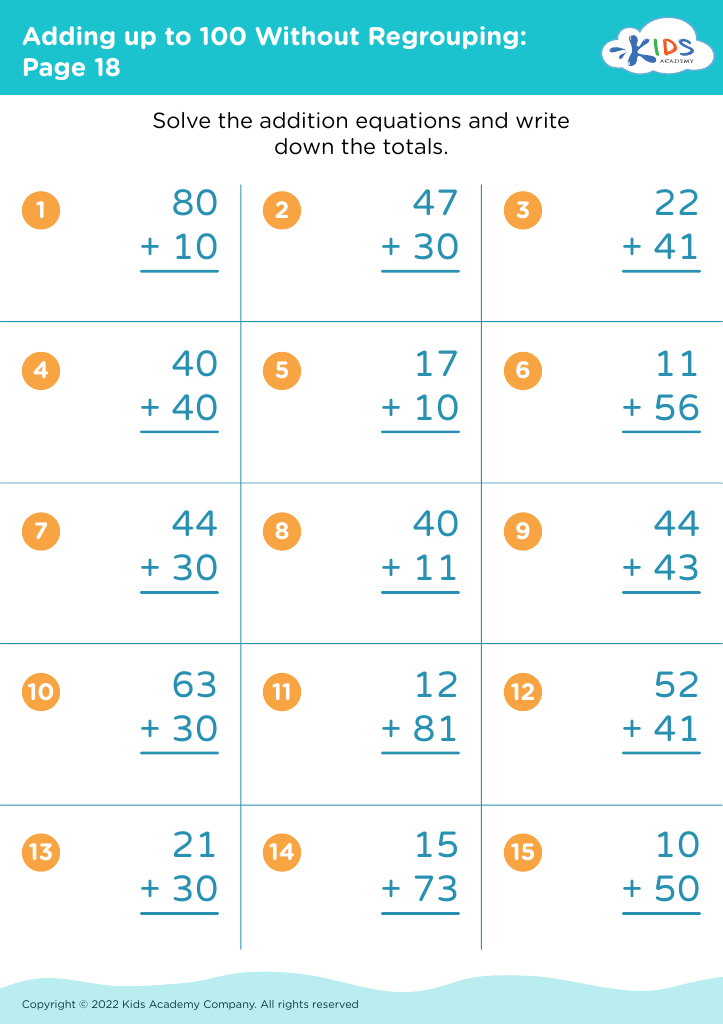
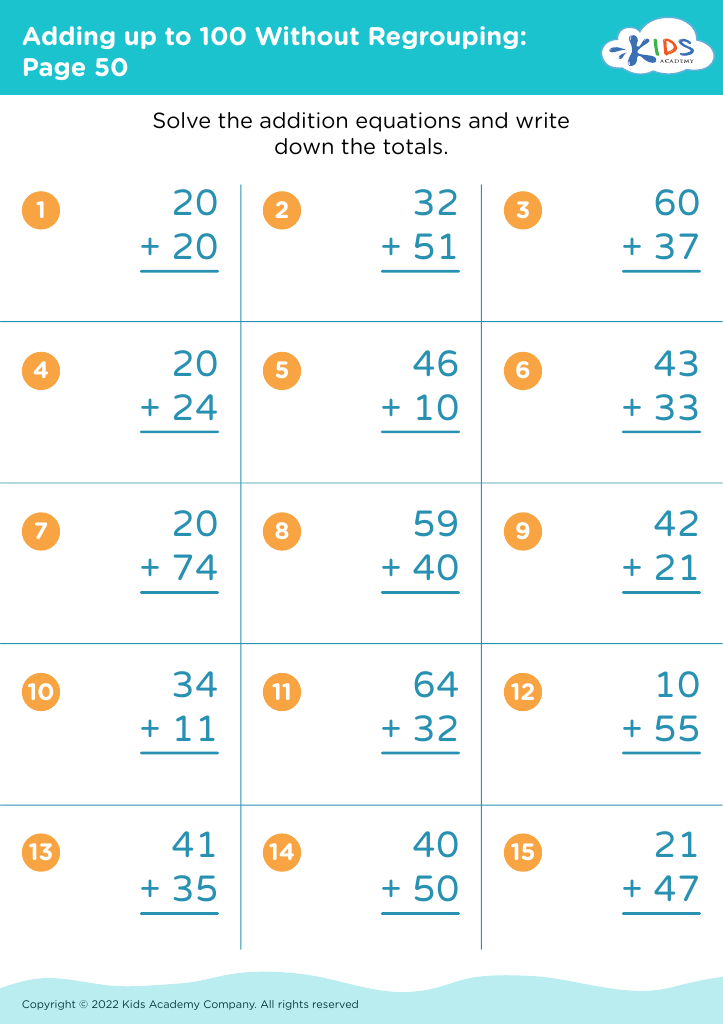
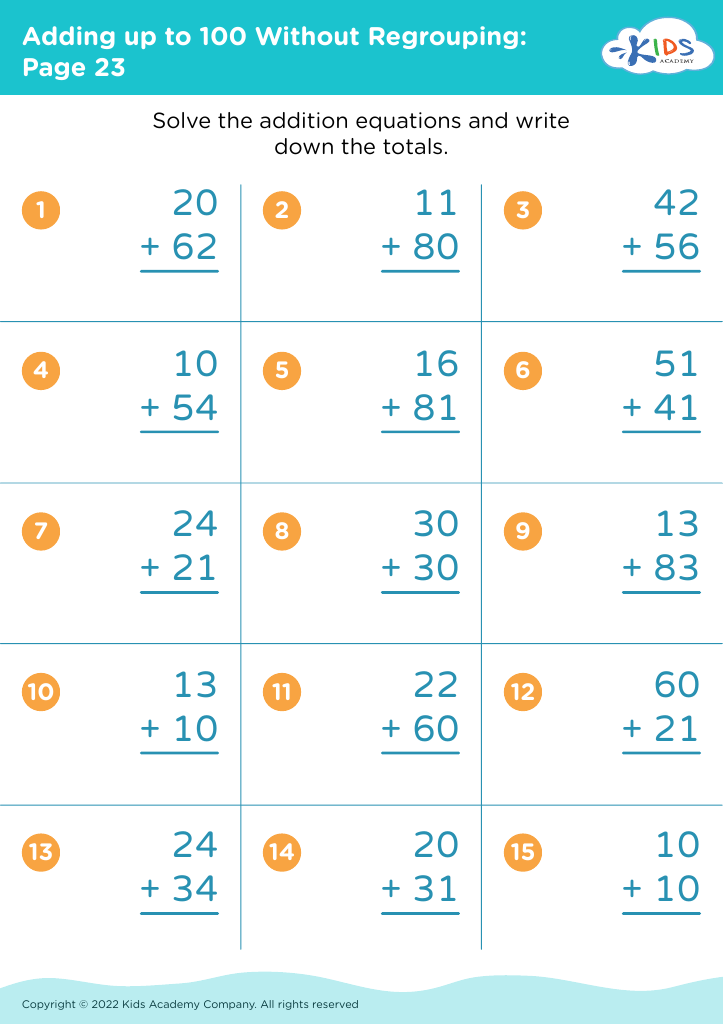
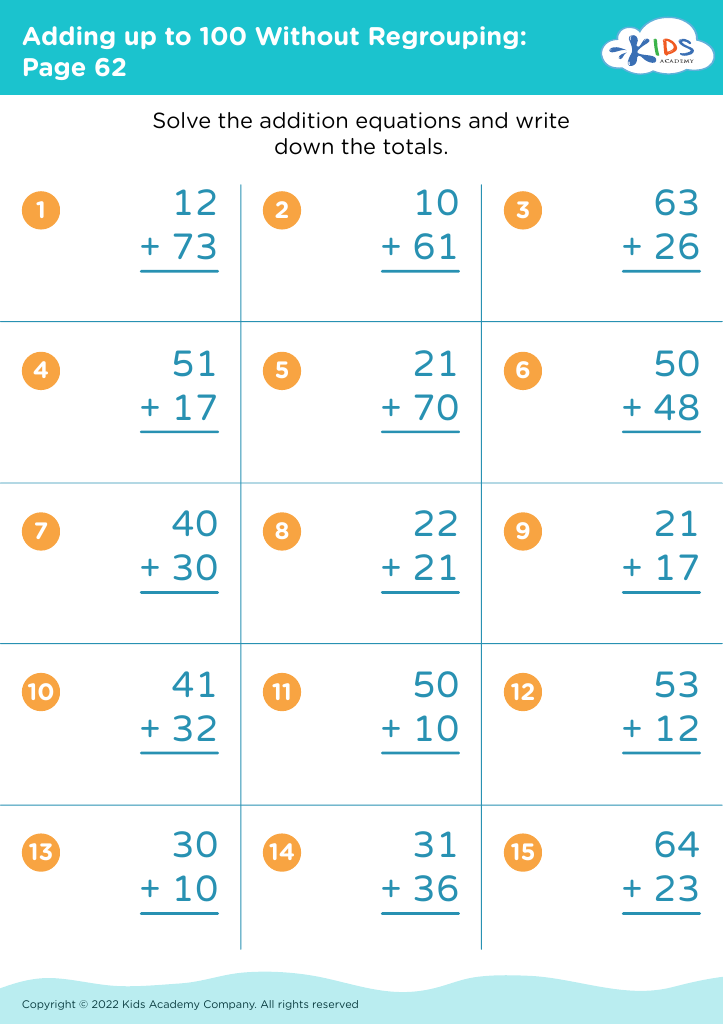




Parents and teachers should care about teaching 8-year-olds to compare fractions that add up to 100 without regrouping because this skill is foundational for their mathematical development. At this age, children begin to build a deeper understanding of fractions, which are crucial for more advanced concepts in math. Comparing fractions helps students enhance their critical thinking skills, as they learn to analyze and evaluate different values.
Understanding how fractions relate to whole numbers—specifically that two fractions can combine to form a whole (or 100 in this case)—promotes financial literacy, an essential skill for everyday life. It equips children with the ability to calculate discounts, budgets, and shares in real-world scenarios, fostering independence as they grow.
Additionally, mastering such concepts boosts confidence in math, reducing anxiety towards the subject. When students grasp the idea of comparing and combining fractions successfully, they lay down a solid groundwork for future topics including ratios, proportions, and even algebra.
Collaborative learning experiences, such as games or hands-on activities, also enhance engagement and retention in this crucial learning phase. Overall, emphasizing this skill not only supports academic success but also prepares children for practical, everyday problem-solving in their lives.