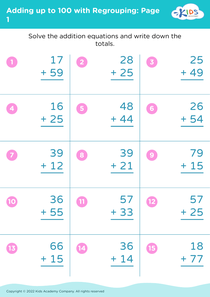
Identifying shapes Adding up to 100 Without Regrouping Worksheets for 8-Year-Olds
4 filtered results
-
From - To
Explore our "Identifying Shapes Adding Up to 100 Without Regrouping Worksheets" designed specifically for 8-year-olds! These engaging worksheets help young learners practice addition while identifying various geometric shapes. Each activity encourages critical thinking and enhances their mathematical skills by combining visual shape recognition with fundamental addition practices. Perfect for enhancing classroom activities or at-home learning, our worksheets aim to make learning fun and effective. With clear instructions and colorful visuals, your child will easily grasp the concepts and gain confidence as they add numbers up to 100 without regrouping. Start inspiring a love for math today!
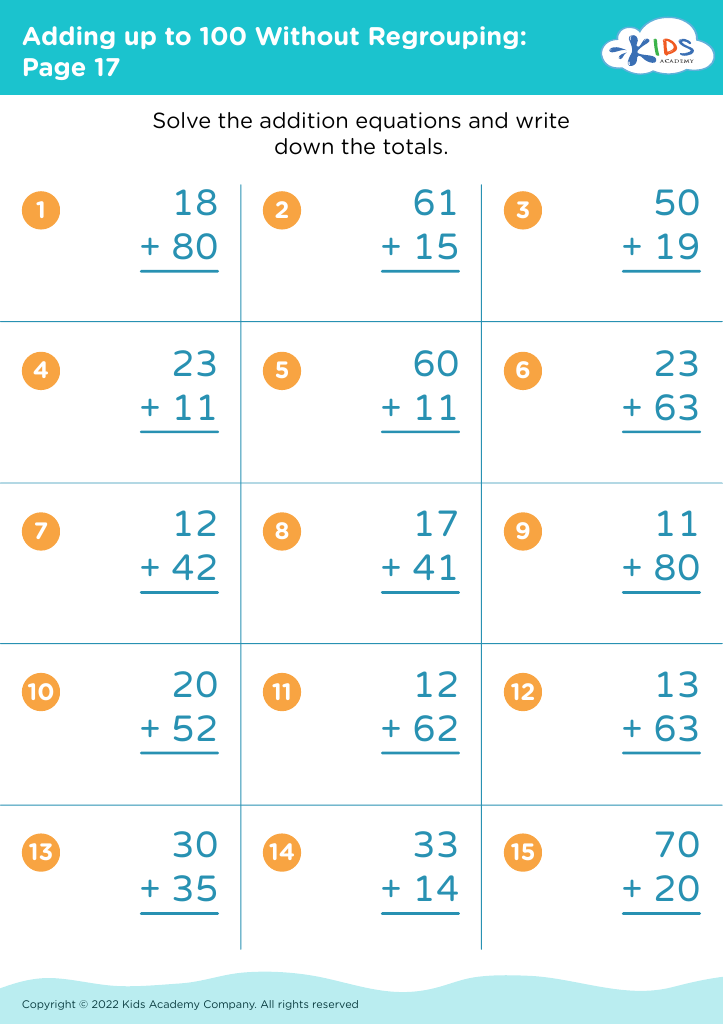
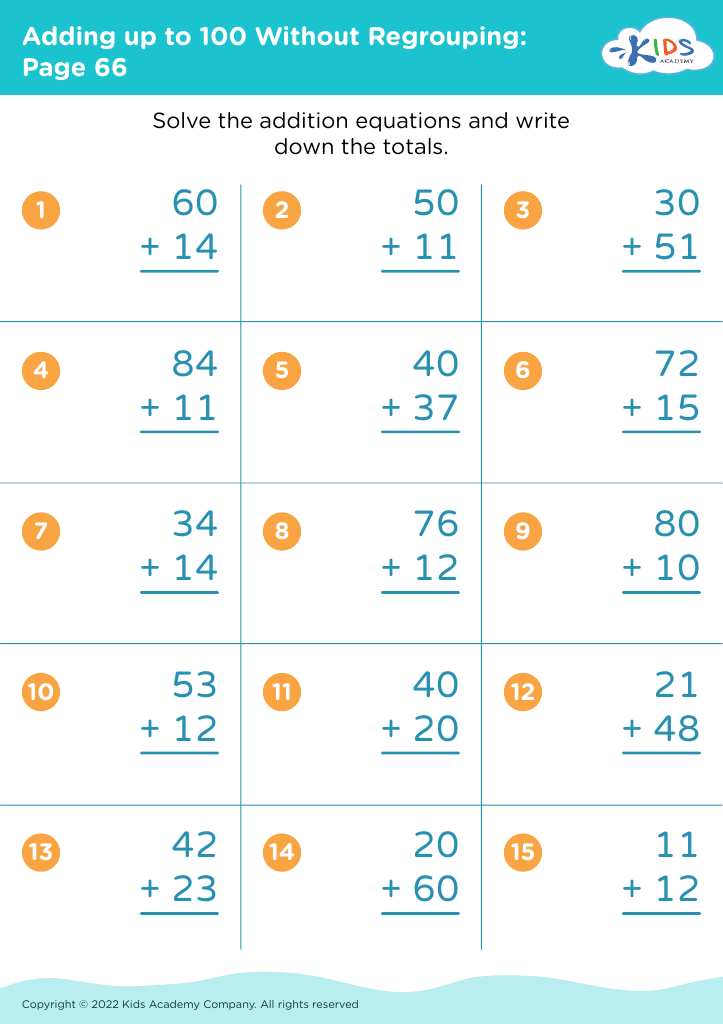
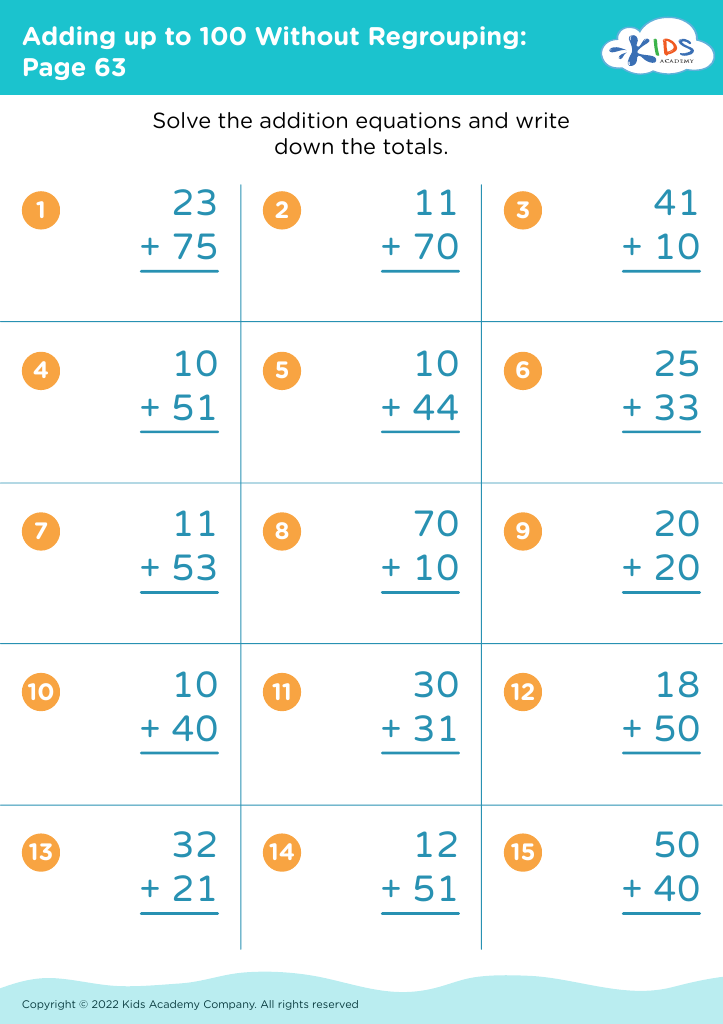
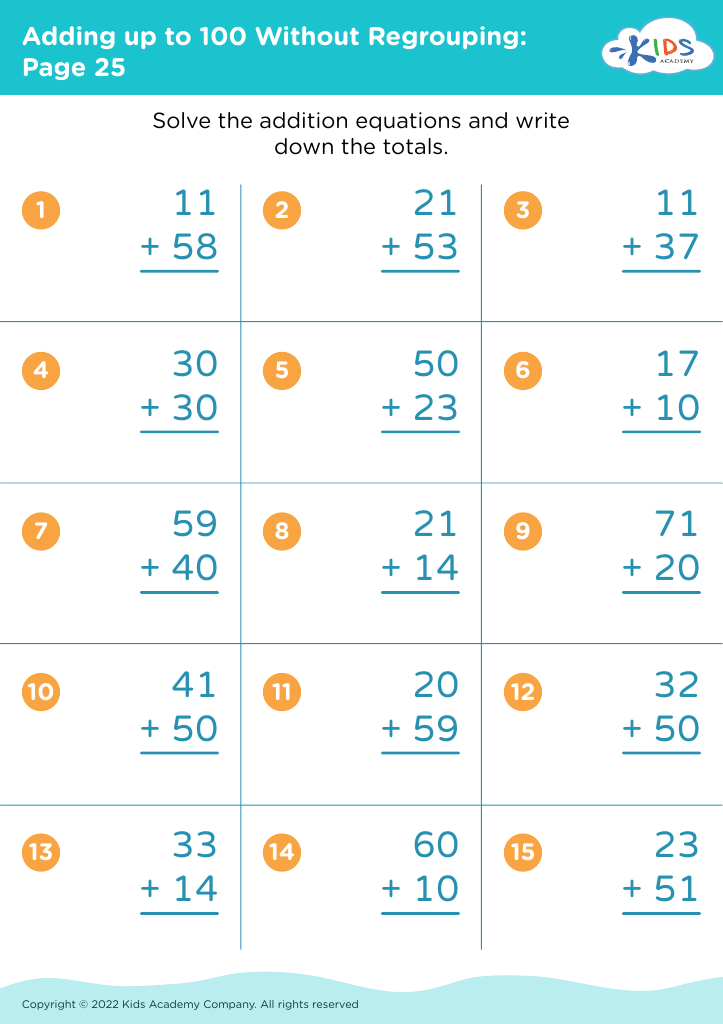




Identifying shapes and mastering addition without regrouping are fundamental skills for 8-year-olds, forming the bedrock of mathematical and spatial understanding. For parents and teachers, nurturing these skills is vital as they enhance cognitive development and critical thinking.
Understanding shapes fosters geometry skills crucial for real-world applications—helping students recognize patterns, comprehend spatial relationships, and improve problem-solving abilities. This foundational knowledge is essential as students progress to more advanced math concepts, throughout their academic journey.
Moreover, adding up to 100 without regrouping simplifies mathematical operations and builds numerical fluency. It's a precursor to more complex arithmetic, ensuring students develop confidence and competence in their computations. This skill is also important in enhancing mental math abilities, allowing kids to solve problems quickly and effectively.
Encouraging these skills early not only supports academic performance but also boosts children's confidence in their abilities. Engaging in fun activities and exercises related to shapes and addition reinforces these concepts, making mathematics enjoyable and applicable in daily situations. Ultimately, fostering these foundational skills benefits children now and equips them with essential tools for future learning and problem-solving.