Reading comprehension Adding up to 100 Without Regrouping Worksheets for 8-Year-Olds
3 filtered results
-
From - To
Discover engaging Reading Comprehension Worksheets designed for 8-year-olds that incorporate adding up to 100 without regrouping. Our meticulously crafted resources enhance math skills while fostering literacy. Each worksheet presents fun, relatable scenarios that challenge young learners to solve addition problems and comprehend accompanying text. By integrating reading and math, students boost their cognitive skills and develop a deeper understanding of numerical relationships. Ideal for classroom use or at-home practice, these worksheets encourage critical thinking, improve problem-solving abilities, and make learning math exciting. Perfect for enhancing both numerical fluency and comprehension, our worksheets promote a well-rounded educational experience for children.
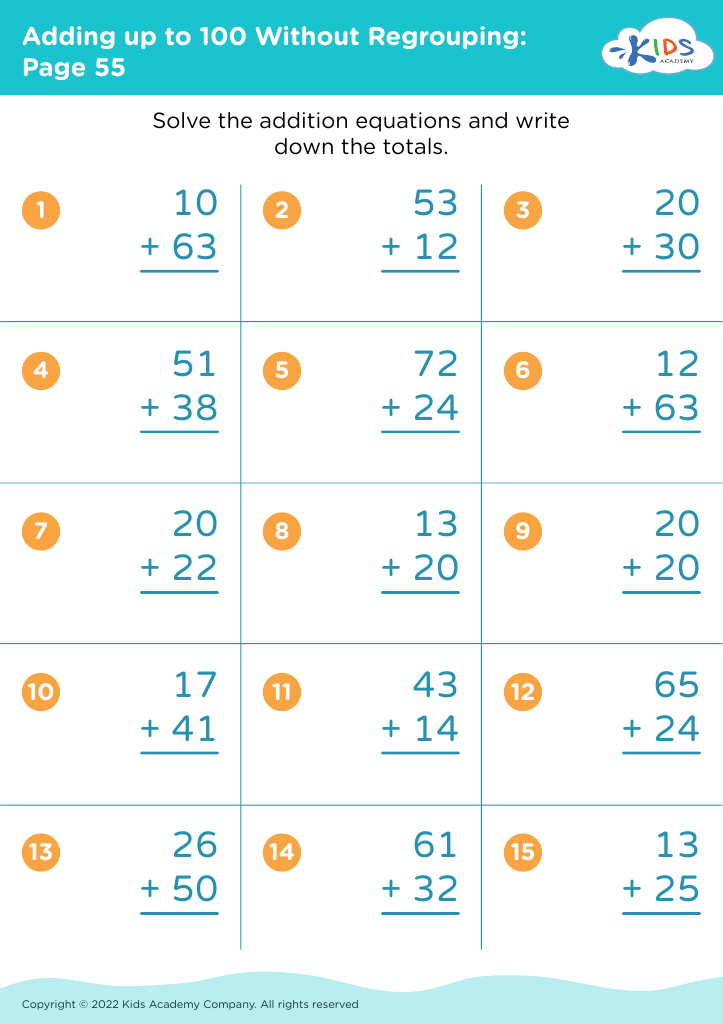
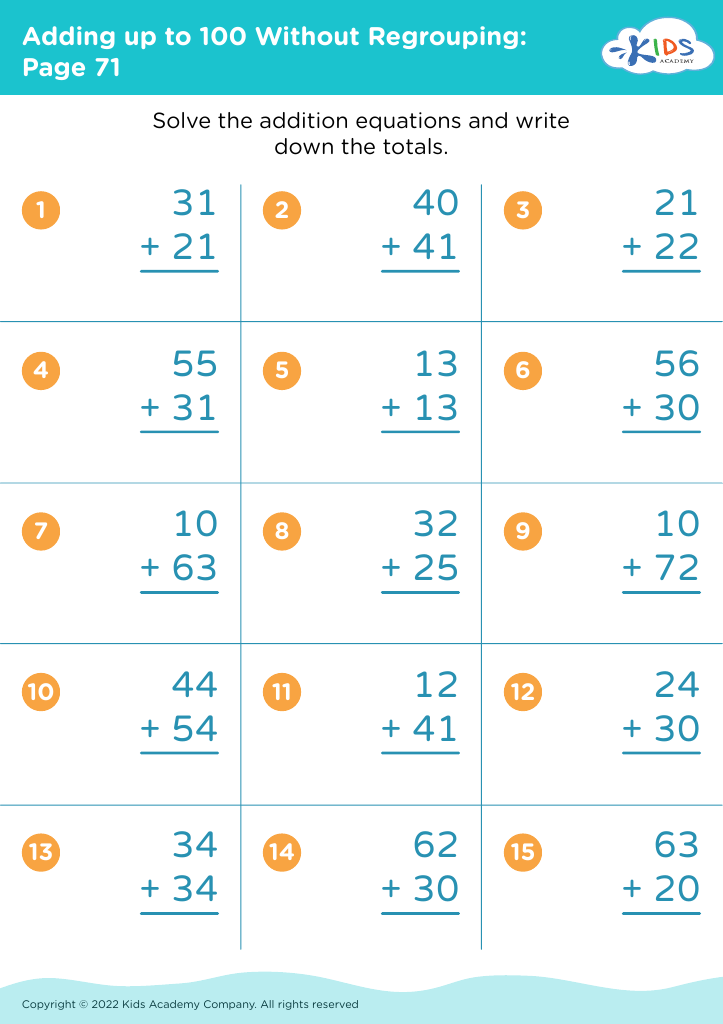
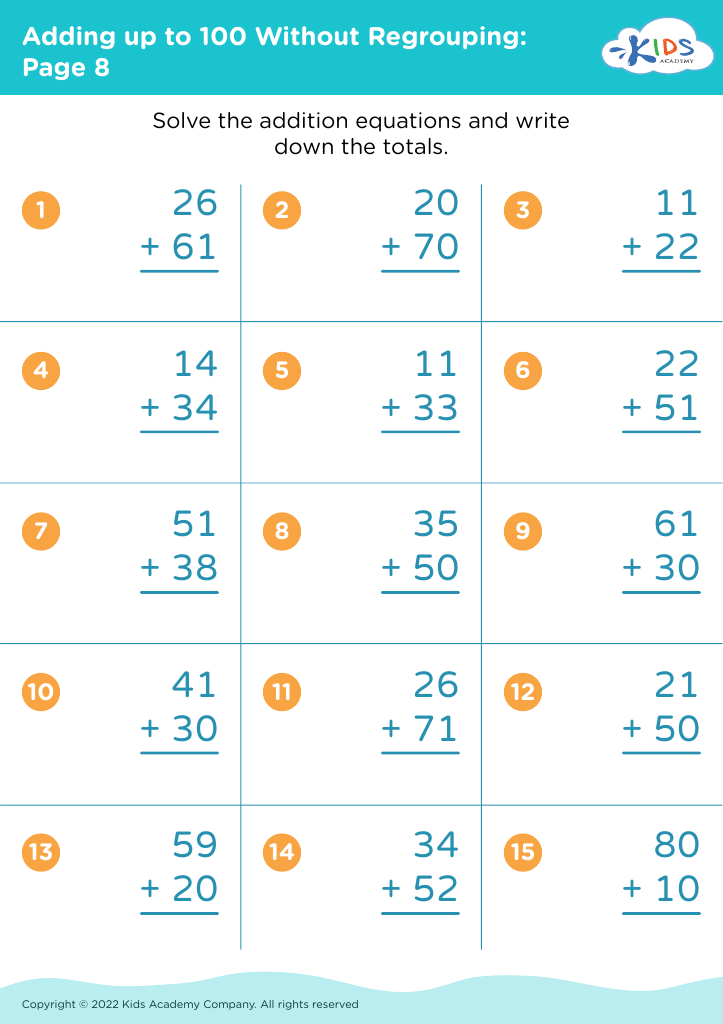




Reading comprehension and mastering addition without regrouping are crucial skills for 8-year-olds, as they lay the foundation for future academic success. Both skills are intertwined, as understanding words and concepts enhances a child's ability to process and solve mathematical problems. When children comprehend reading material, they can better grasp instructions and concepts within math problems—even those involving addition.
For parents and teachers, fostering these skills helps to build confidence and encourages a love for learning. At this age, children are highly impressionable and can easily develop attitudes towards subjects like reading and math. A strong grasp of reading comprehension enables learners to fully engage with educational material, making it easier to make connections between disciplines.
Moreover, routine practice of addition without regrouping helps solidify foundational math skills, promoting quick mental calculations. This skill not only aids in academic scenarios but also prepares children for everyday situations such as budgeting, shopping, or determining time. By now, parents and educators should actively support 8-year-olds in honing these essential skills to facilitate their overall cognitive development, ensuring they grow into competent learners and problem solvers.