Understanding multiplication Adding up to 100 Without Regrouping Worksheets for 8-Year-Olds
5 filtered results
-
From - To
Welcome to our "Understanding Multiplication Adding Up to 100 Without Regrouping" worksheets tailored for 8-year-olds! This engaging resource helps young learners connect the concepts of addition and multiplication in a fun and interactive way. Our carefully designed activities enable students to practice their multiplication skills by adding groups of numbers, fostering a solid understanding of these fundamental math concepts. With a focus on clarity and ease of use, these worksheets promote confidence in problem-solving and numeracy. Perfect for home or classroom use, our resources encourage math fluency while ensuring that children grasp the importance of multiplication in everyday life. Explore our collection today!
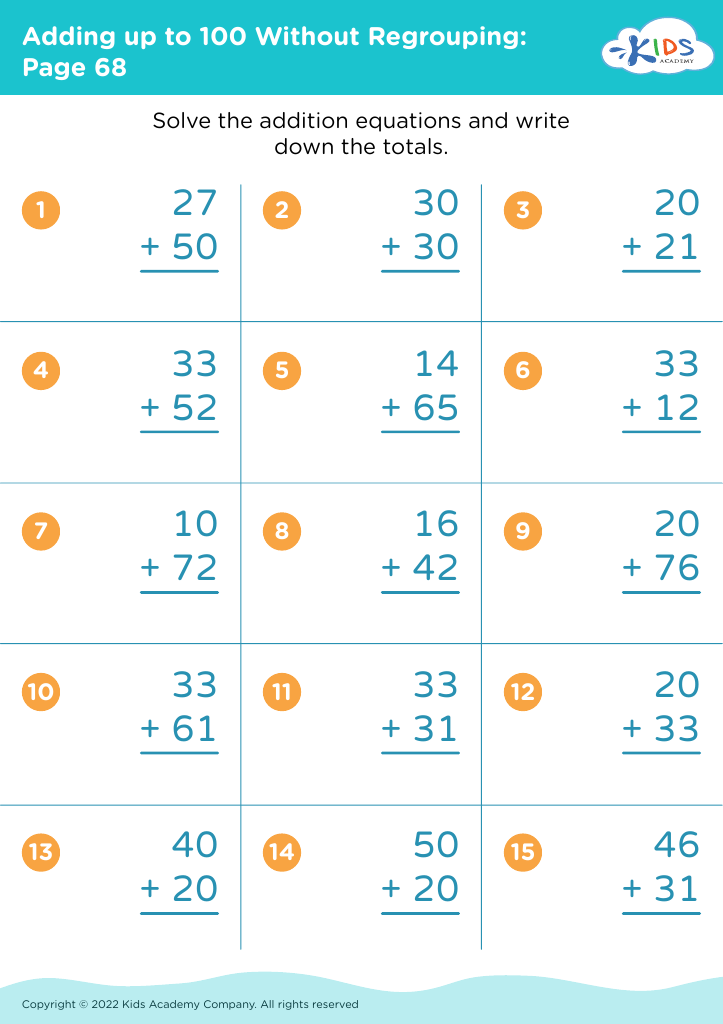
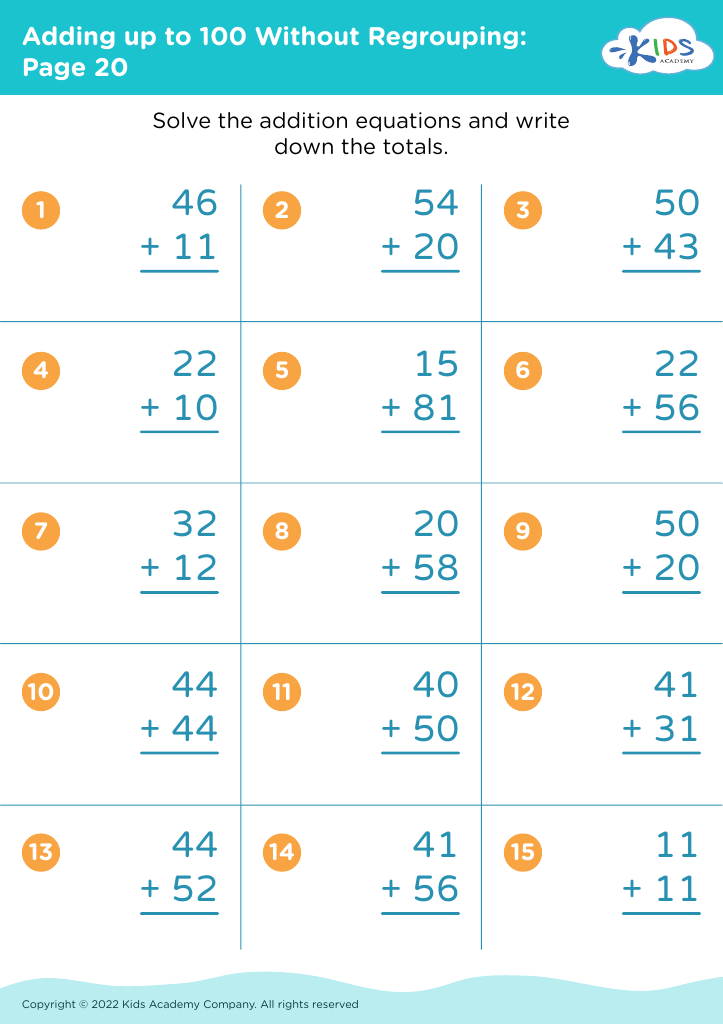
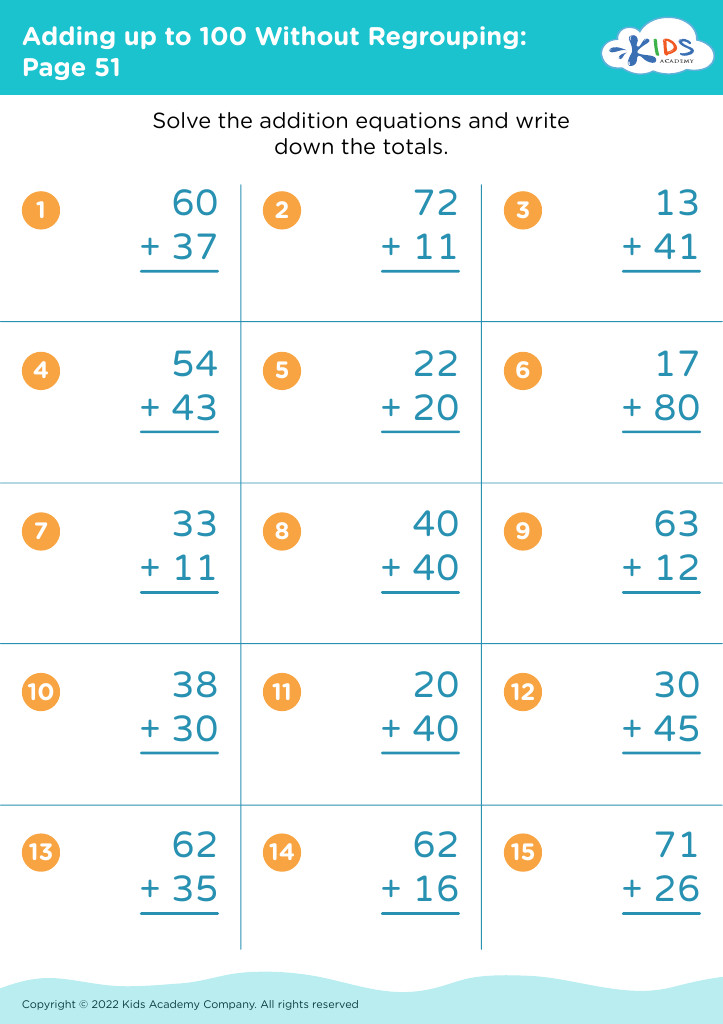
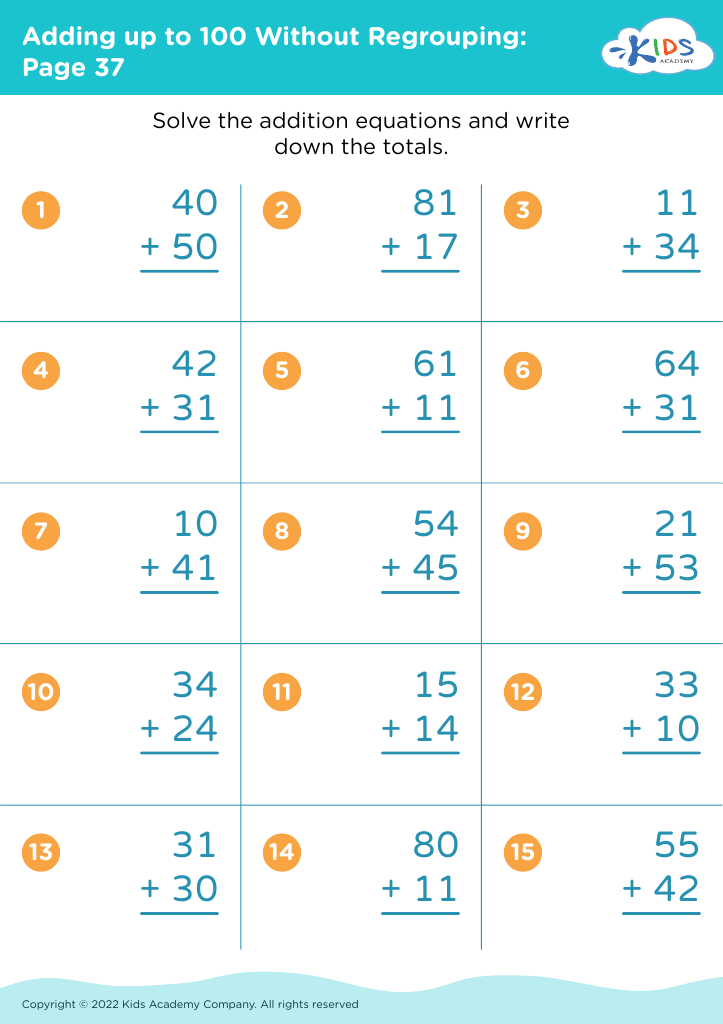
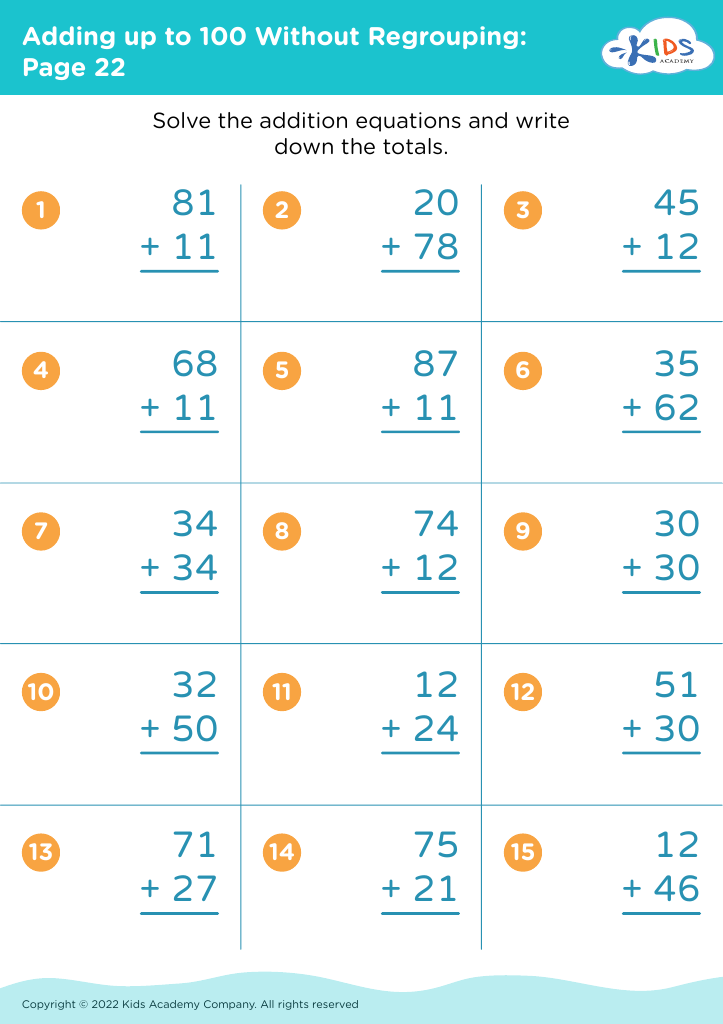




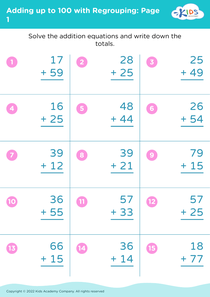
Understanding multiplication and addition without regrouping is crucial for 8-year-olds as it lays the foundational skills they need for future math concepts. At this age, students transition from concrete to more abstract thinking, and mastering basic arithmetic operations boosts their confidence in problem-solving. Learning to add up to 100 without regrouping cultivates mental math skills, enabling children to perform calculations quickly and accurately.
Moreover, multiplication is not only essential for higher-level math but also plays a significant role in everyday tasks and understanding patterns. When students grasp multiplication, they can easily calculate totals, distribute items evenly, and tackle word problems more effectively.
Parents and teachers should be keenly invested in these skills because they are indicators of a child’s mathematical fluency and readiness for more complex topics such as division and fractions. Proficiency in these areas also enhances analytical thinking—an important skill beyond math. Supporting students in these early stages fosters a positive attitude toward learning and a resilient approach to challenges, shaping lifelong learners who are equipped for academic success. Encouraging early mastery ensures that children build a strong mathematical foundation to thrive in later grades.