Fraction comparison Adding up to 1000 Misc Worksheets for 8-Year-Olds
6 filtered results
-
From - To
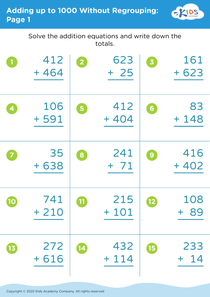
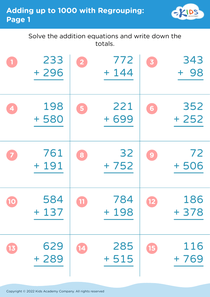
Explore our engaging "Fraction Comparison: Adding Up to 1000 Misc Worksheets" designed specifically for 8-year-olds! These worksheets help young learners grasp essential math concepts through fun and interactive activities. Students will enhance their understanding of fractions, develop comparison skills, and apply these concepts in various scenarios involving numbers up to 1000. Tailored to meet educational standards, our resources support independent learning and reinforce classroom lessons, making math enjoyable and accessible. Perfect for home practice or classroom use, these worksheets are a valuable tool for any teacher or parent aiming to foster a solid foundation in mathematics for their child.
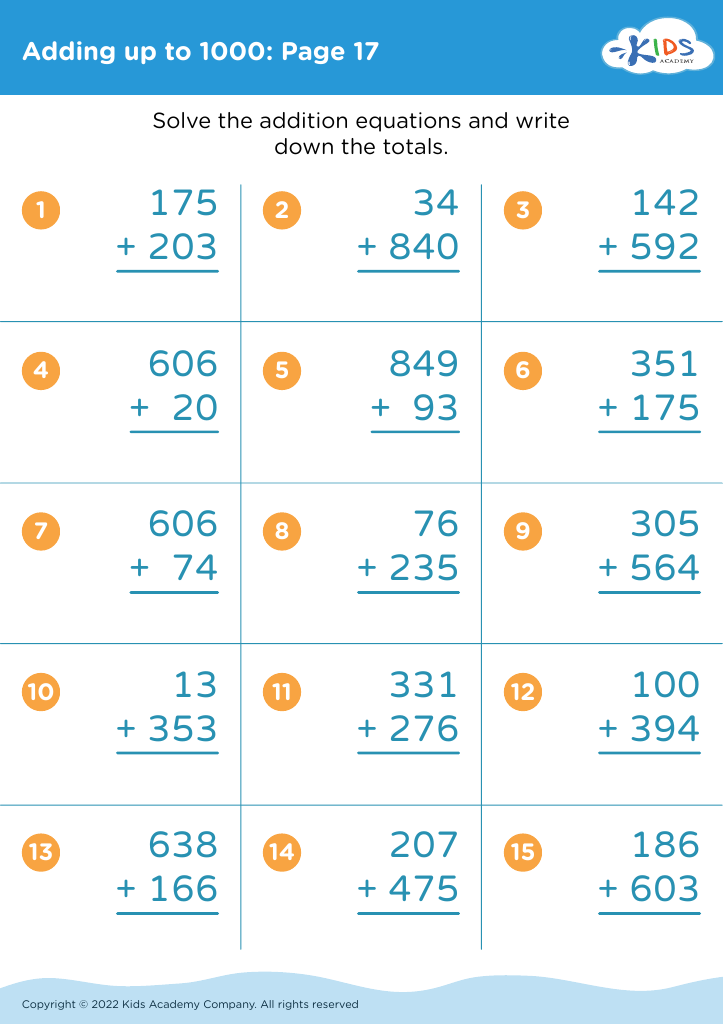
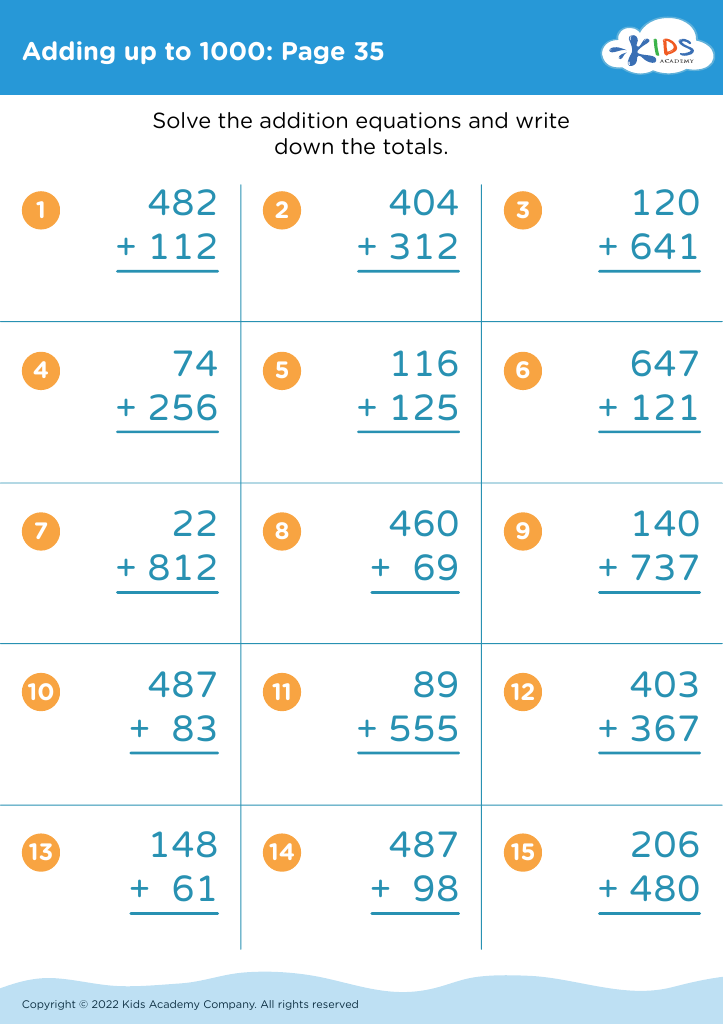
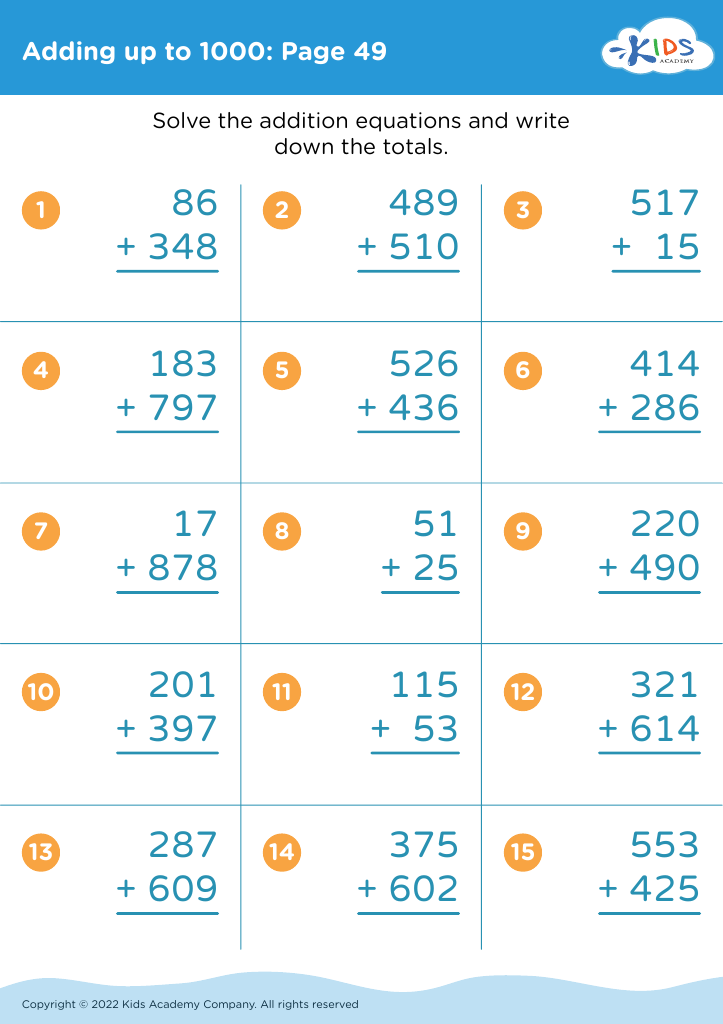
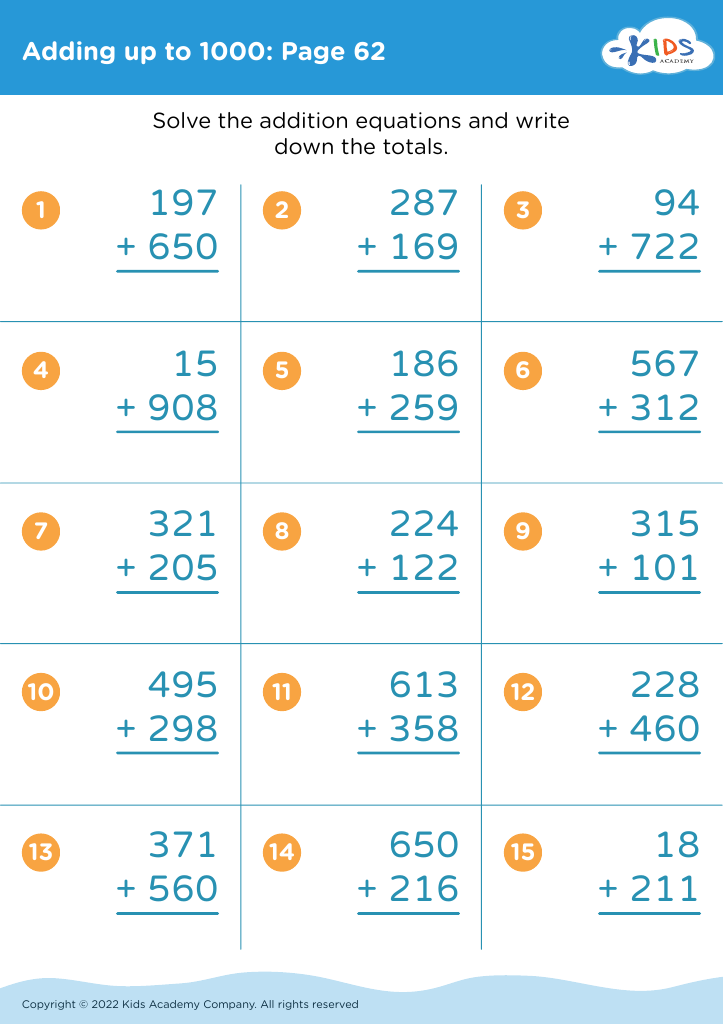
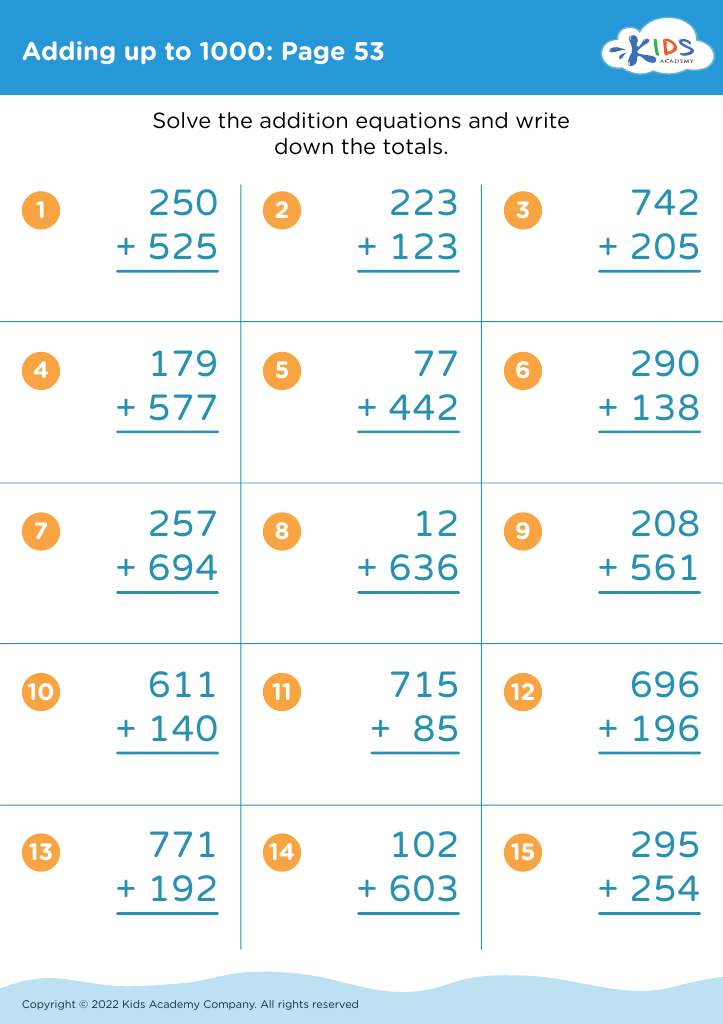
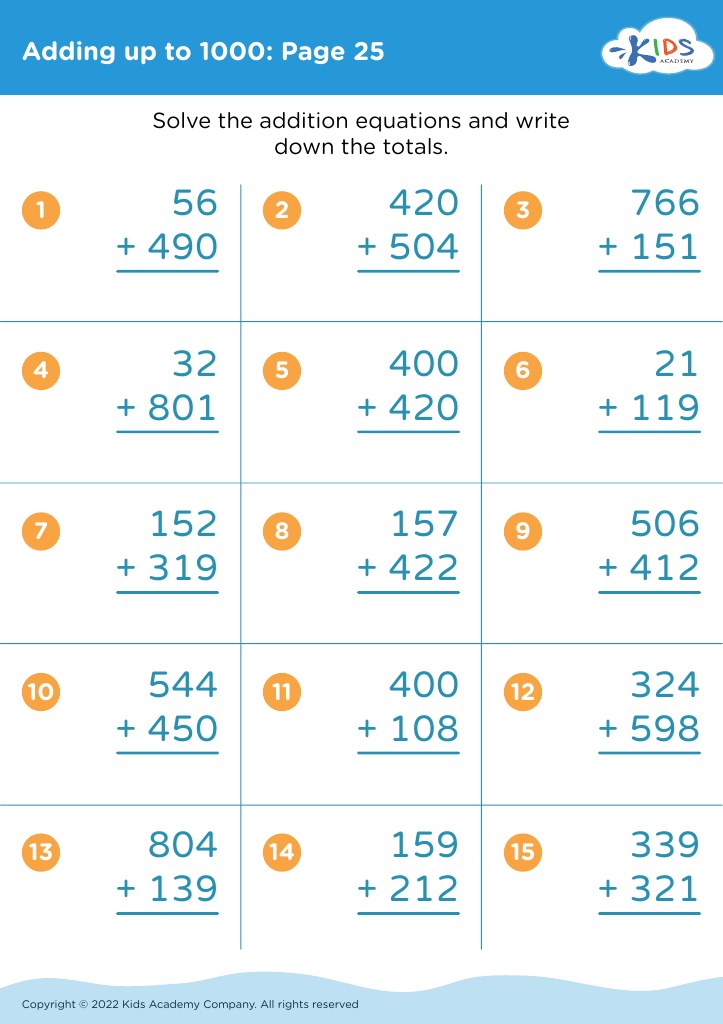


Fraction comparison is a crucial mathematical skill that lays the foundation for more advanced concepts later on. For 8-year-olds, developing this skill is essential for several reasons. First, understanding fractions helps children grasp the idea of parts of a whole, an essential concept in everyday life, such as cooking or sharing. Second, mastering fraction comparison enhances their problem-solving skills, as it requires critical thinking and logical reasoning.
Moreover, this topic connects to adding and subtracting numbers, fostering a deeper understanding of number relationships. When children learn to compare fractions, they develop a strong mathematical intuition, which is essential for higher-grade math, including ratios, percentages, and algebra.
Additionally, comparing fractions allows children to understand diverse representations of numbers, fostering adaptability and flexibility in their thinking. This is important in an increasingly quantitative world, where financial literacy and critical evaluation of data are paramount.
For parents and teachers, encouraging mastery of fraction comparison not only supports academic growth but also boosts children's confidence in tackling complex mathematical problems, paving the way toward a solid educational foundation. Engaging in this learning will benefit their academic journey and equip them with skills they'll use in everyday life.