Basic Addition Adding up to 1000 Worksheets for 8-Year-Olds
6 filtered results
-
From - To
Welcome to our Basic Addition worksheets tailored for 8-year-olds! Designed to enhance mathematical skills, these worksheets focus on adding numbers up to 1000, helping young learners gain confidence and proficiency in basic addition. With engaging problems and varied formats, each worksheet encourages children to practice calculations in a fun, interactive way. Ideal for home or classroom use, these resources support essential learning outcomes, making it easier for kids to master addition concepts. Let’s make math enjoyable and help your child excel in their studies with our comprehensive collection of addition worksheets today!
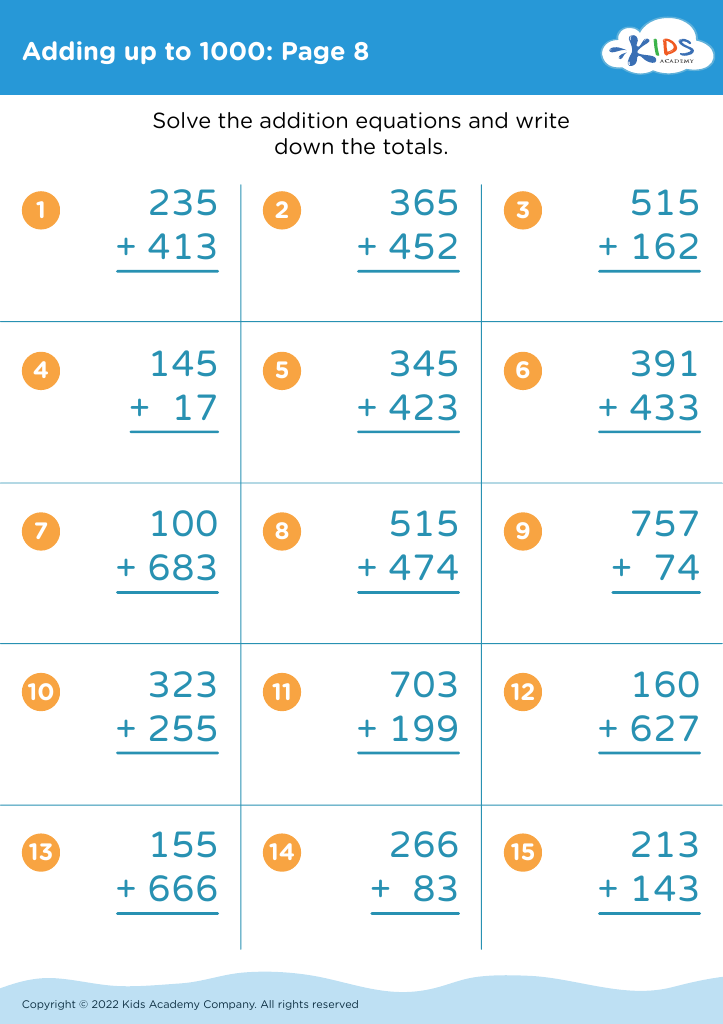
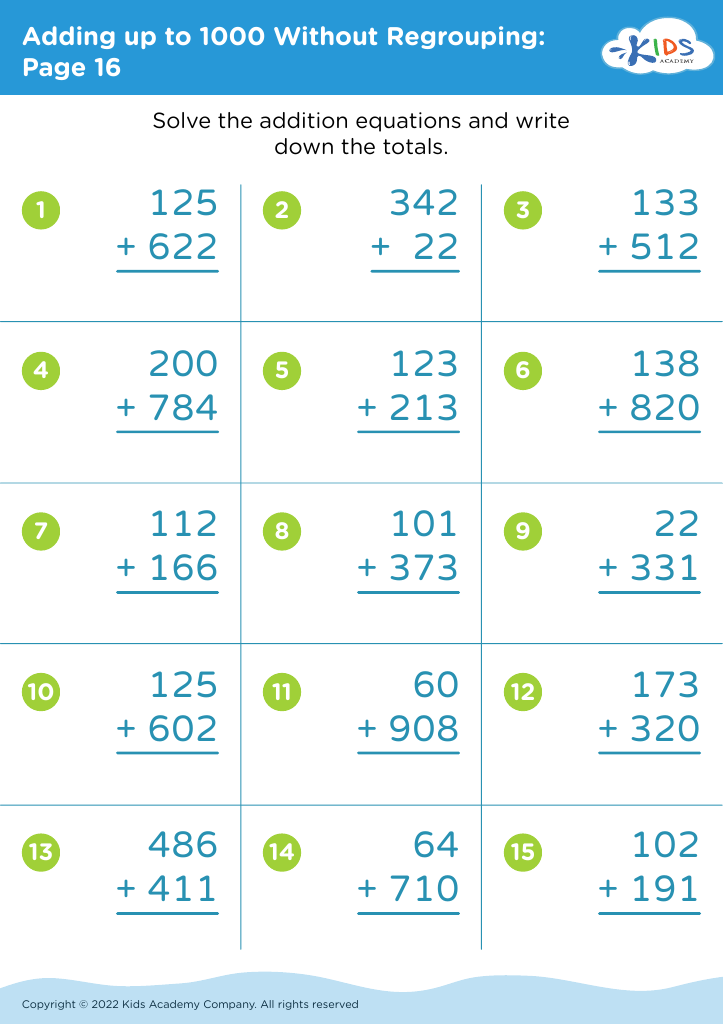
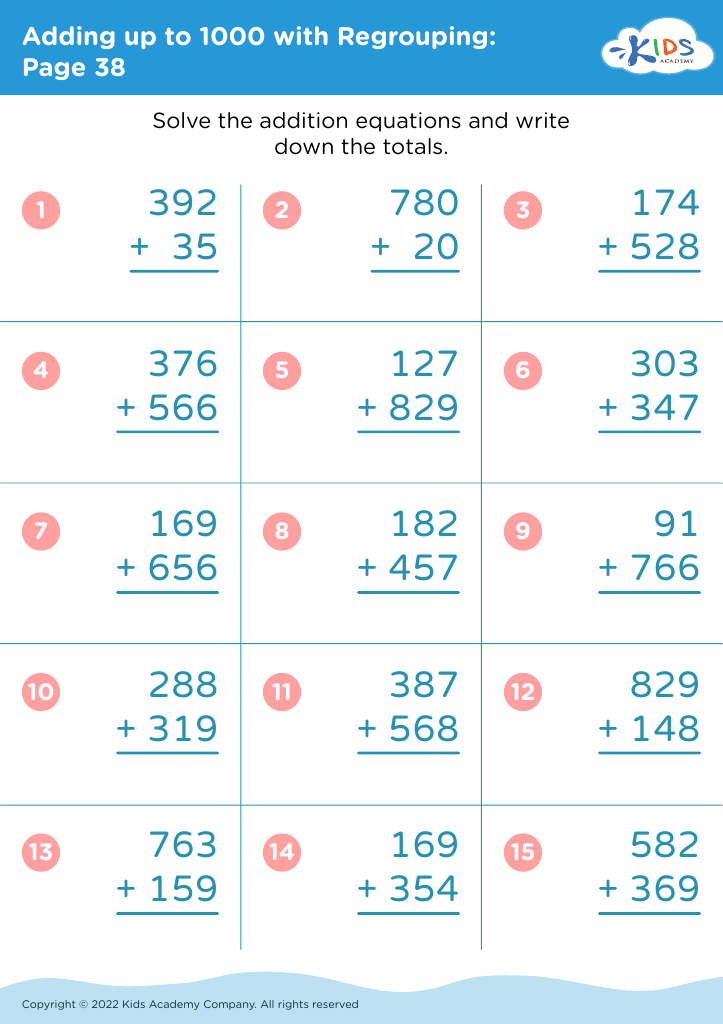
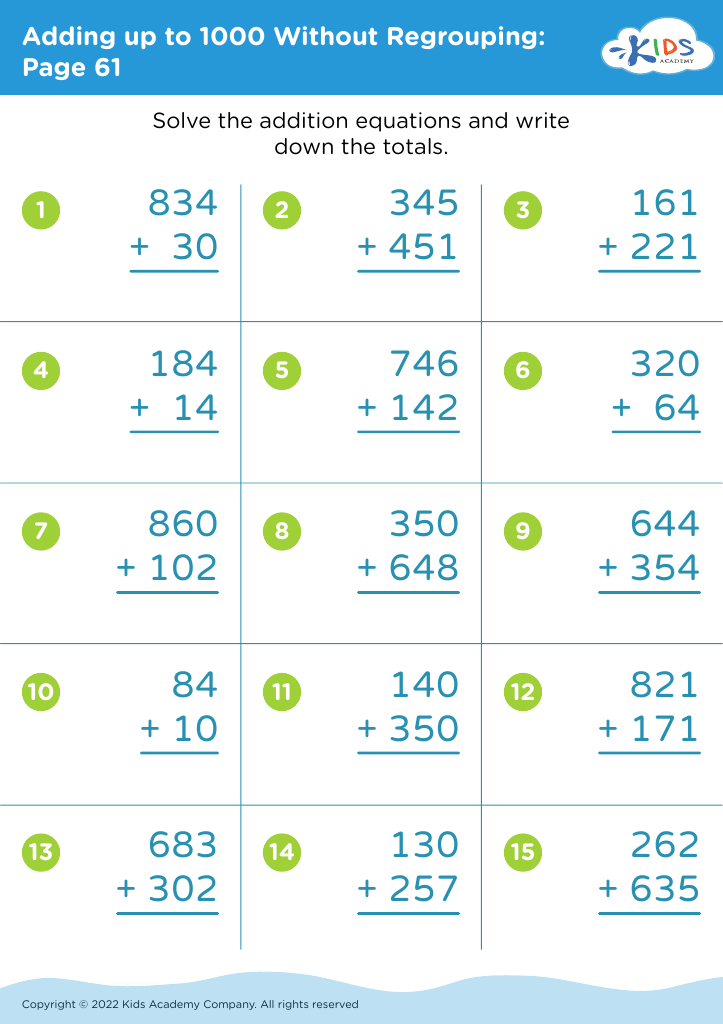
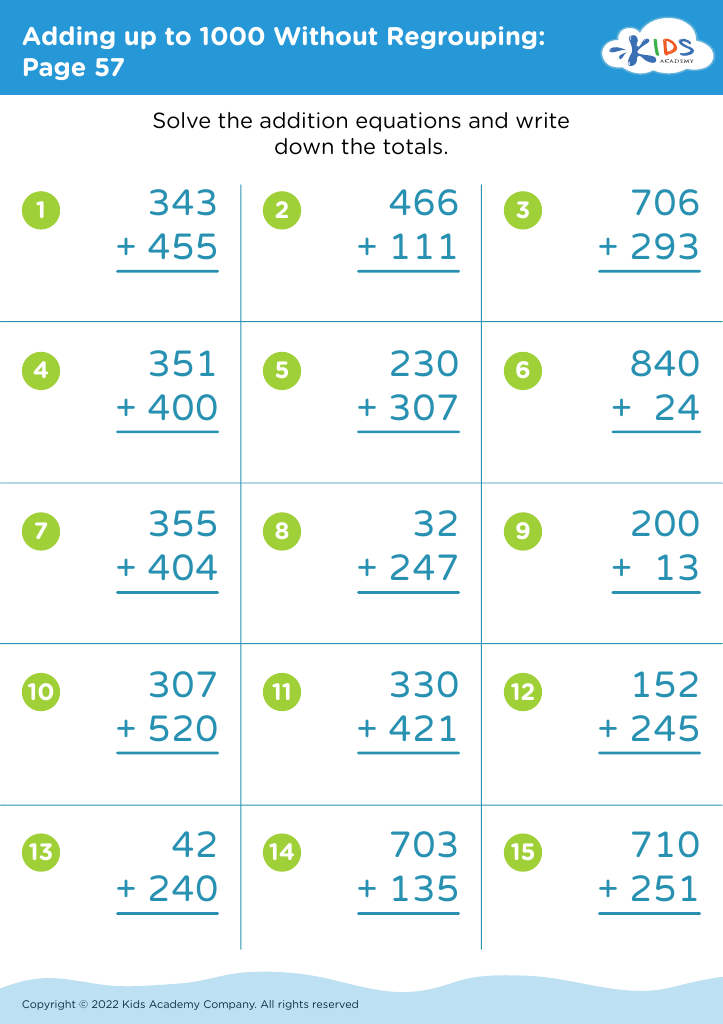
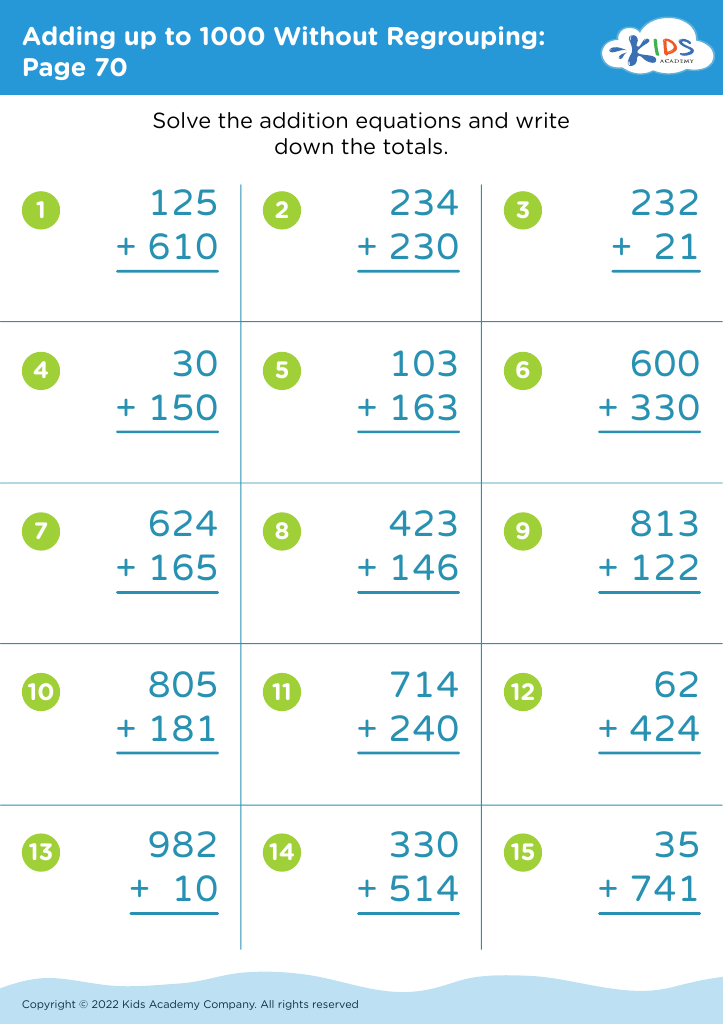



Understanding basic addition is crucial for 8-year-olds, as it serves as a foundational skill for more complex mathematical concepts later on. By mastering addition up to 1000, children enhance their number sense, enabling them to make sense of larger quantifications and financial literacy in everyday situations. This skill helps them learn to approach problems logically, break down larger numbers into manageable parts, and solve real-world issues, fostering critical thinking.
Moreover, proficiency in addition boosts confidence in mathematics, an area where many children struggle. As they gain competence, they become more willing to engage in advanced mathematical challenges, laying a stronger groundwork for subjects like multiplication, division, and even algebra. Some career opportunities also rely on basic math skills, making it all the more crucial from an early age.
For parents and teachers, ensuring that children develop strong addition skills means they can participate fully in classroom activities, engage in group learning, and perform well in exams. Ultimately, caring about addition isn't just about arithmetic; it’s about nurturing a mindset that values problem-solving, resilience, and curiosity, which will benefit children throughout their education and beyond.








