
Learn new vocabulary Adding up to 1000 Worksheets for 8-Year-Olds
3 filtered results
Difficulty Level
Grade
Age
-
From - To
Subject
Activity
Standards
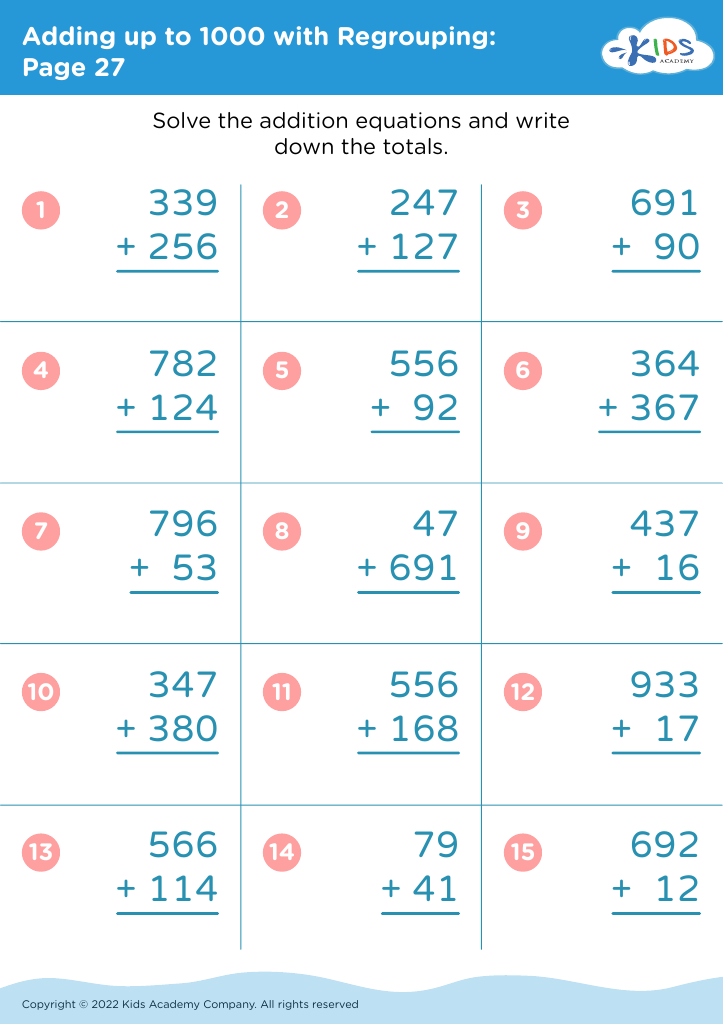
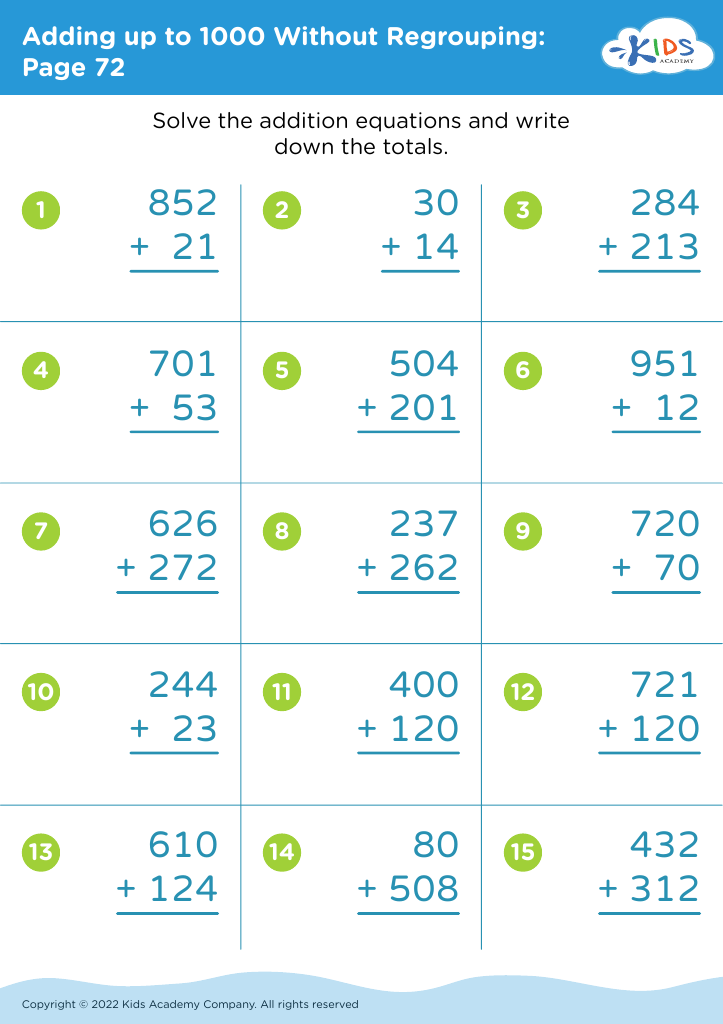
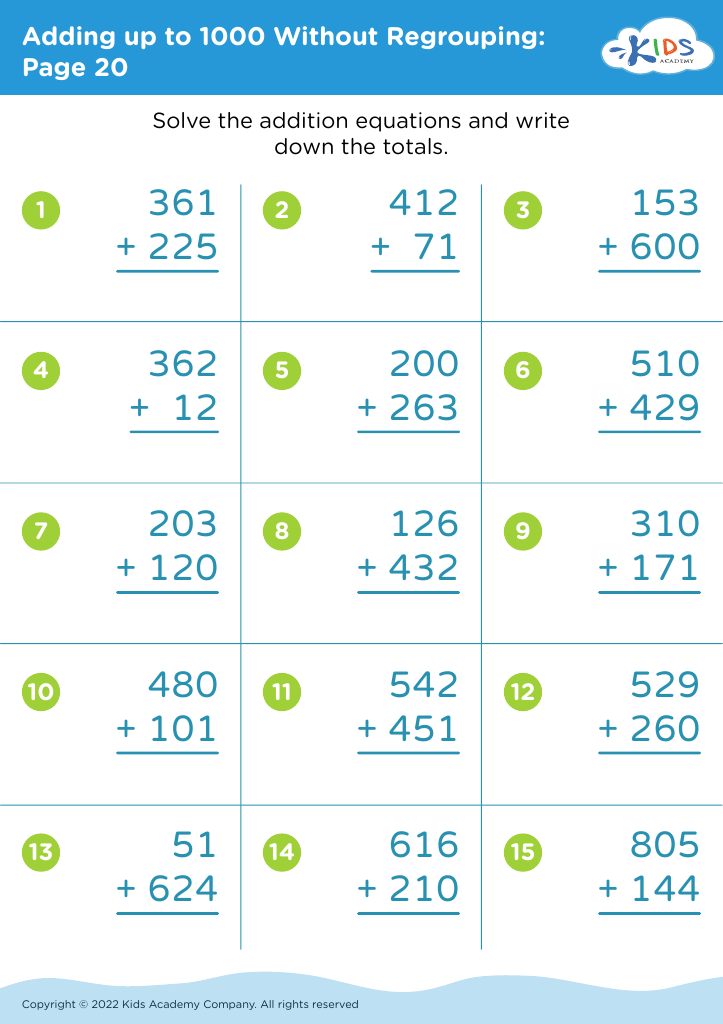
Boost your child’s vocabulary while mastering math skills with our "Learn New Vocabulary: Adding up to 1000 Worksheets for 8-Year-Olds." These engaging worksheets are specifically designed for young learners to tackle large addition problems up to 1000 while introducing them to new terms and enhancing their vocabulary. Perfect for enhancing both math and language skills, these resources are tailored to eight-year-olds, making learning interactive and enjoyable. Each worksheet combines challenging addition exercises with fun vocabulary-building activities, designed to keep kids motivated and eager to learn. Download today and support your child's educational journey!
Favorites
With answer key
Interactive
Join Kids Academy for Free
Who is primarily going to use this learning content?



Introducing new vocabulary and teaching addition up to 1000 are crucial developmental milestones for 8-year-olds, both of which can significantly impact a child's academic growth and future success. At this age, children's cognitive abilities are rapidly expanding. Enriching their vocabulary boosts their communication skills, reading comprehension, and overall literacy, which are foundational for more complex learning experiences. A strong vocabulary allows children to express themselves more clearly and accurately, aiding in both social interactions and academic achievements.
Similarly, mastering addition up to 1000 sets the stage for more advanced mathematical concepts. This foundational math skill enhances logical thinking, problem-solving abilities, and numerical literacy. Understanding addition helps children grasp concepts in other areas such as multiplying, dividing, and even tackling everyday tasks like time management or budgeting. Proficiency in basic math is linked to future success in STEM (Science, Technology, Engineering, and Mathematics) fields, making it a key area for early focus.
Both vocabulary acquisition and arithmetic skills provide essential building blocks for a child's overall intellectual development. Parents and teachers play a vital role in nurturing these skills, fostering a lifelong love for learning, and preparing children for future academic challenges. Ignoring these aspects of early education can lead to gaps that may be harder to bridge later on, affecting a child's confidence and academic trajectory.








