Filters

44 filtered results

Clear all filters
Favorites
With answer key
Interactive

44 filtered results

Difficulty Level

Grade


Check out this FREE Trial Lesson on Adding up to 1000 for age 8!

A

Favorites
With answer key
Interactive
  • 8
  • Understanding fractions
  • Adding up to 1000
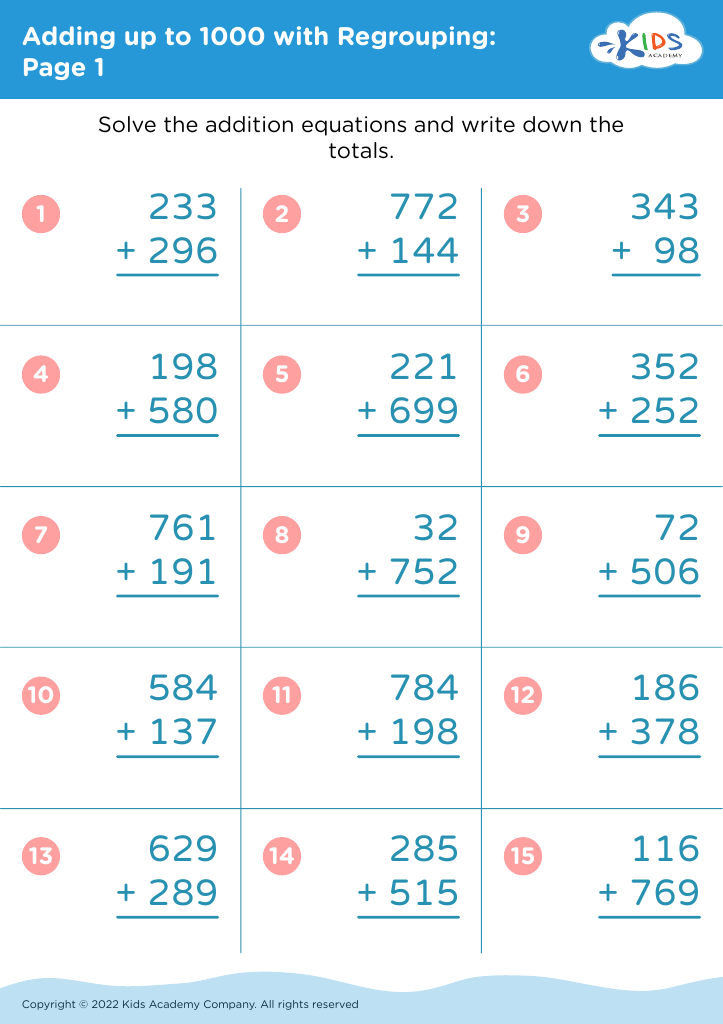
Adding up to 1000 with Regrouping: Page 1
Worksheet
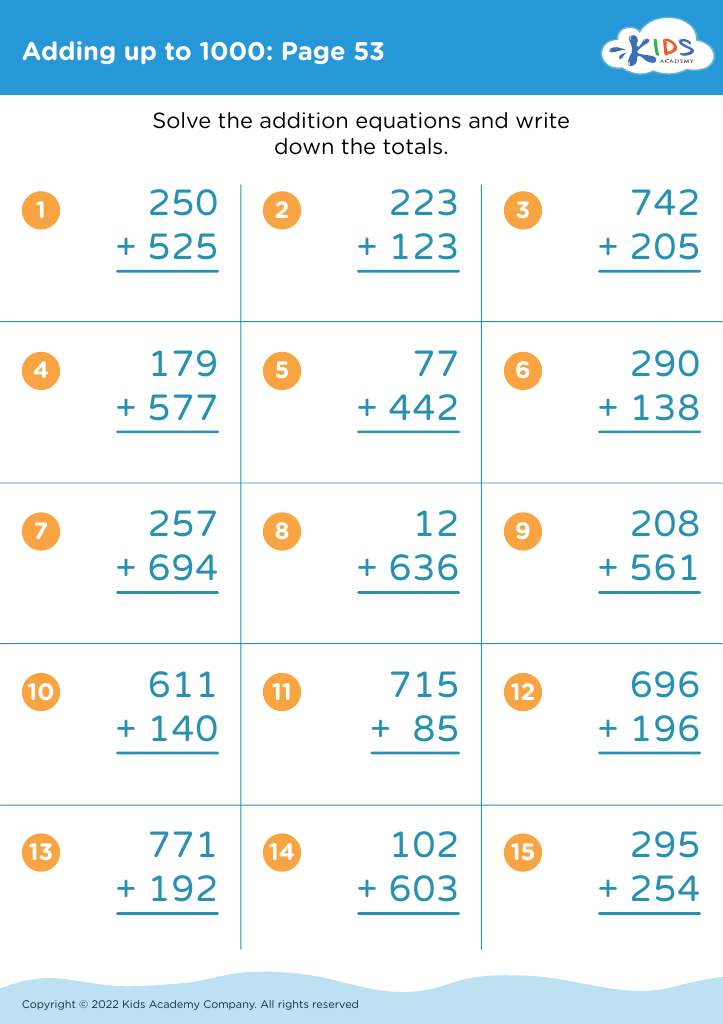
Adding up to 1000: Page 53

Adding up to 1000: Page 53

Adding up to 1000: Page 53
Worksheet
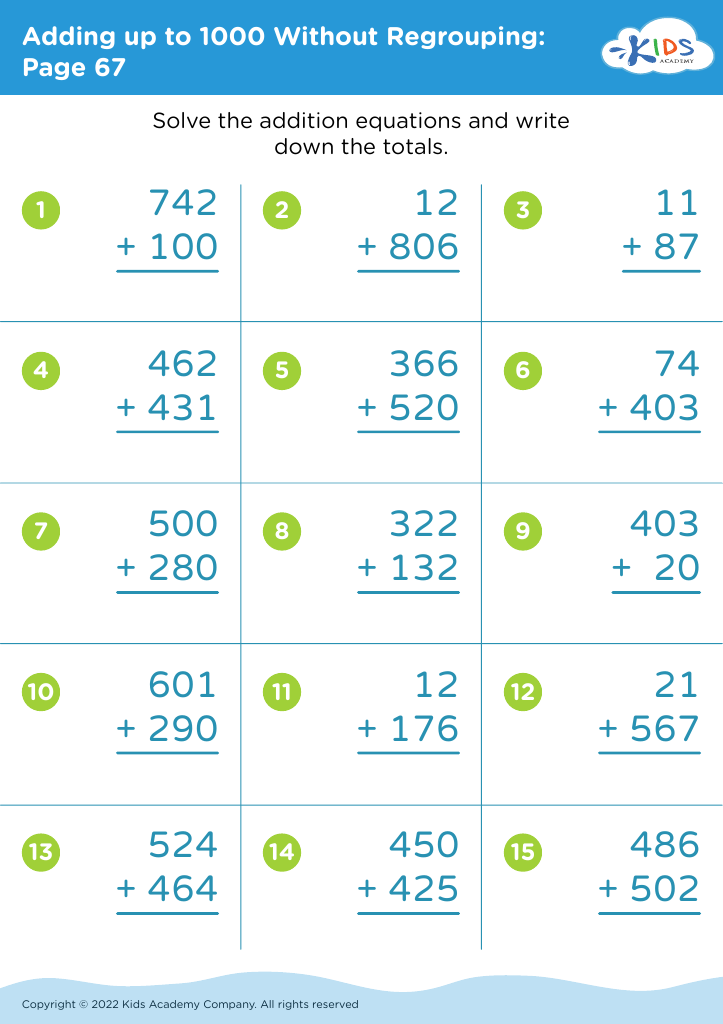
Adding up to 1000 Without Regrouping: Page 67
Worksheet
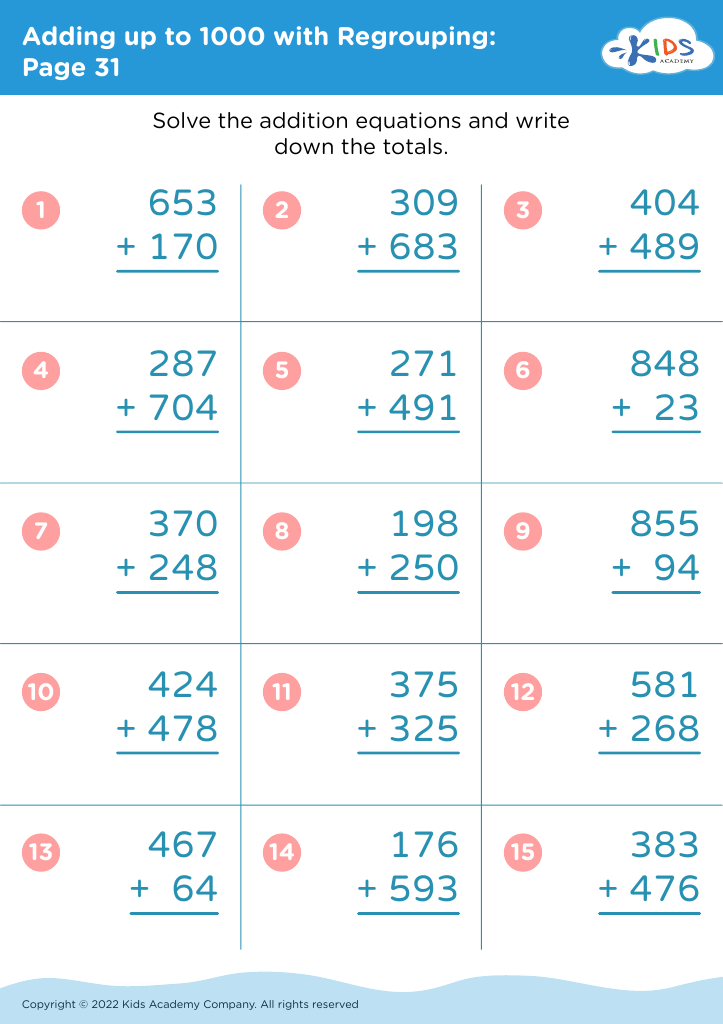
Adding up to 1000 with Regrouping: Page 31
Worksheet
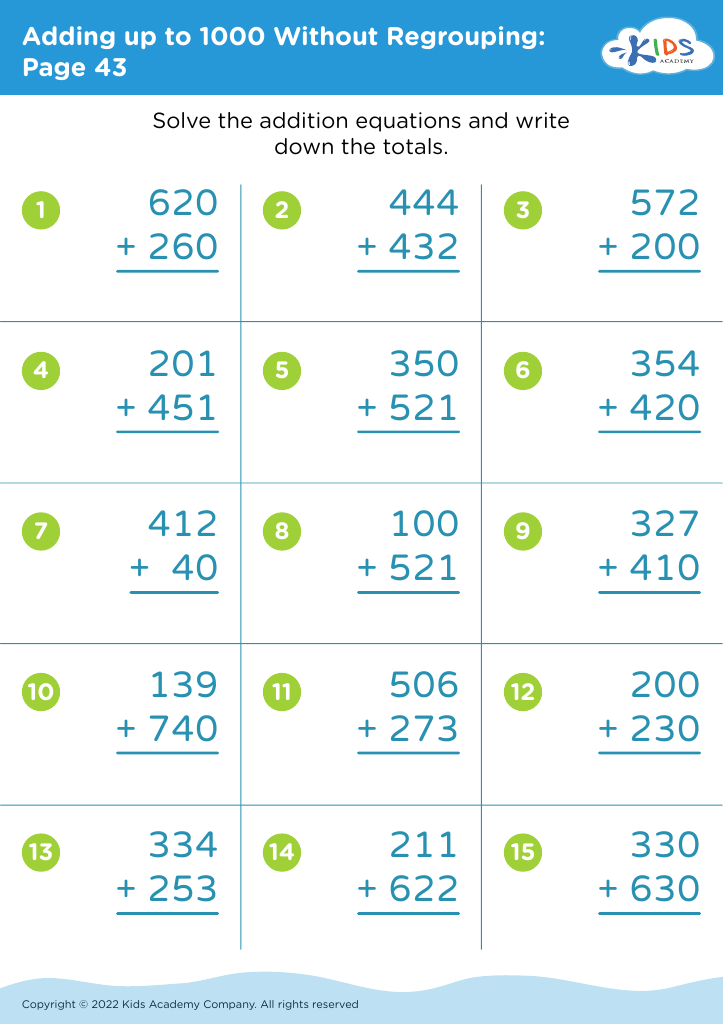
Adding up to 1000 Without Regrouping: Page 43
Worksheet
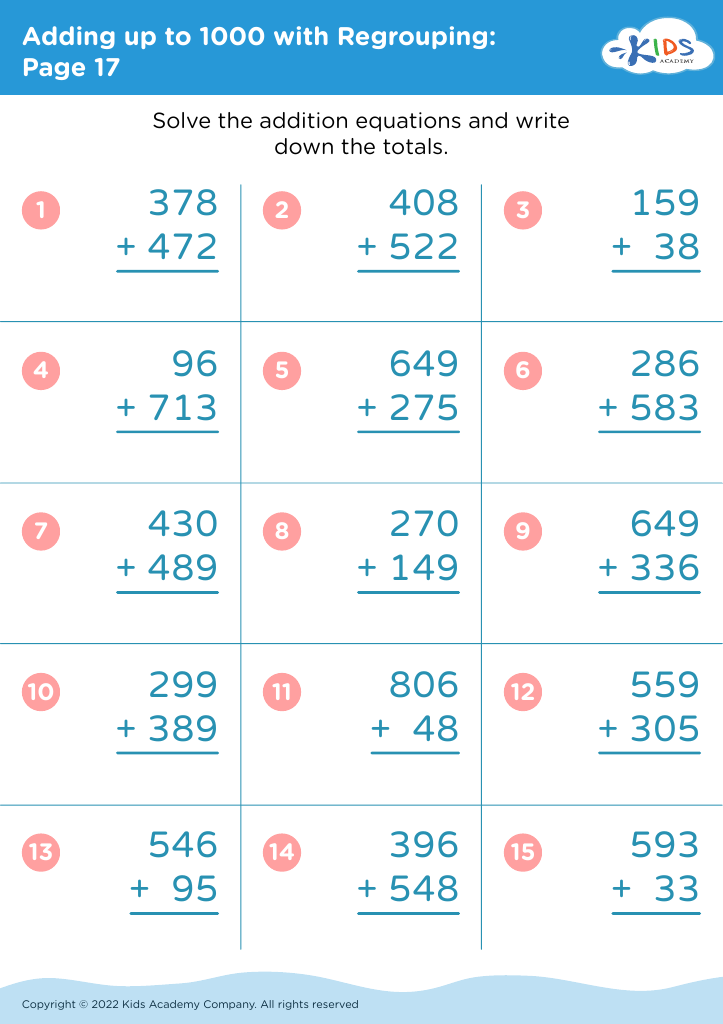
Adding up to 1000 with Regrouping: Page 17
Worksheet
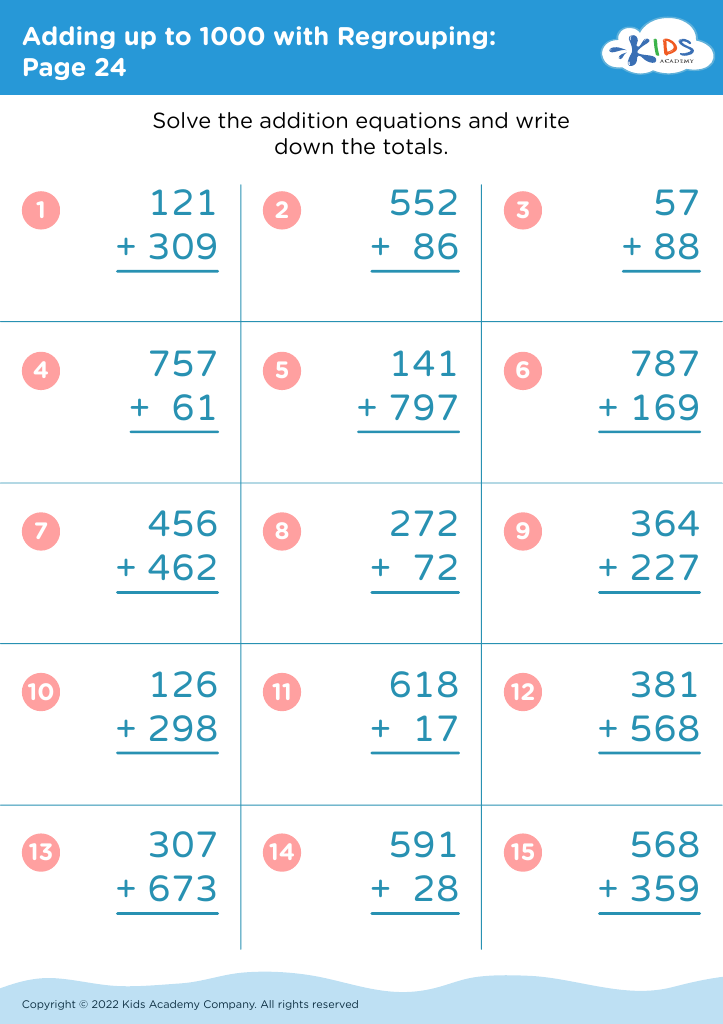
Adding up to 1000 with Regrouping: Page 24
Worksheet
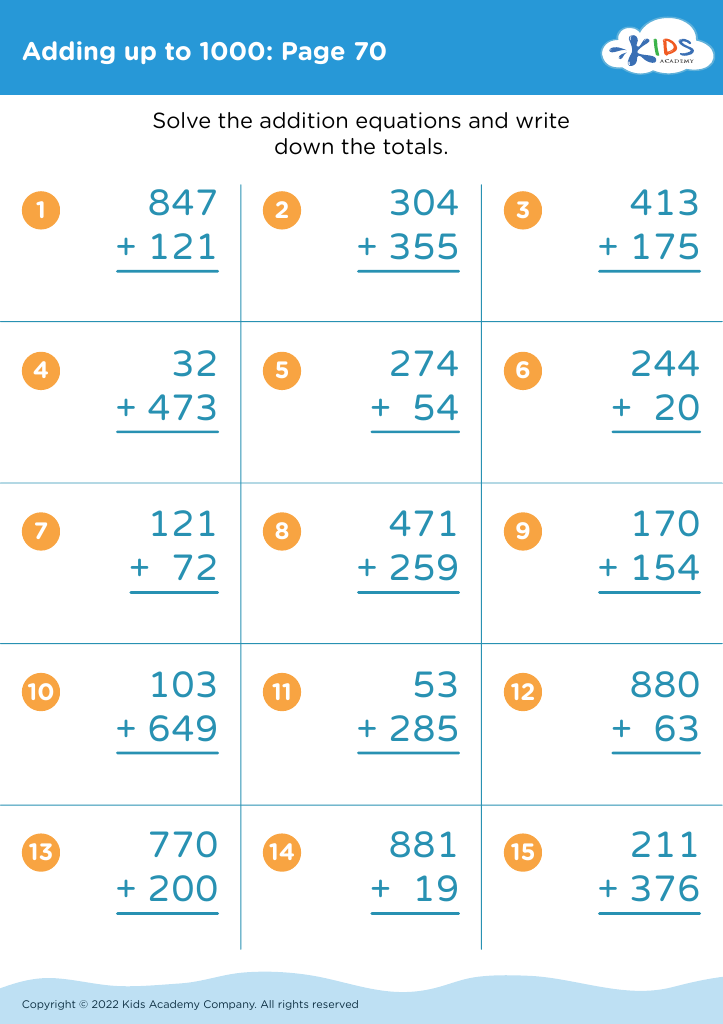
Adding up to 1000: Page 70

Adding up to 1000: Page 70

Adding up to 1000: Page 70
Worksheet
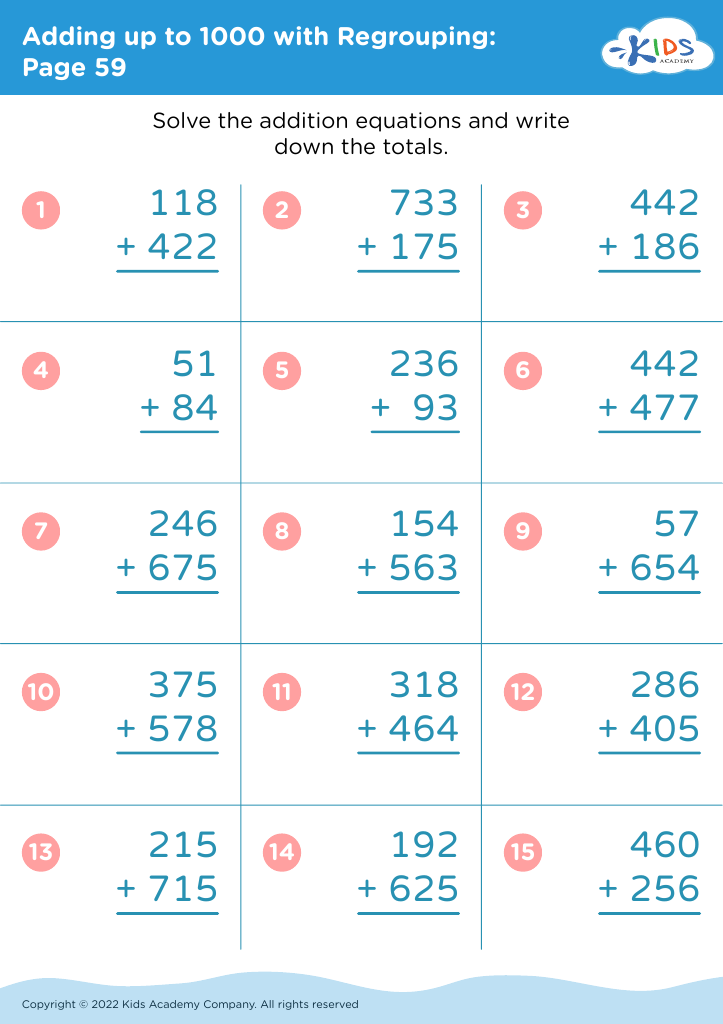
Adding up to 1000 with Regrouping: Page 59
Worksheet
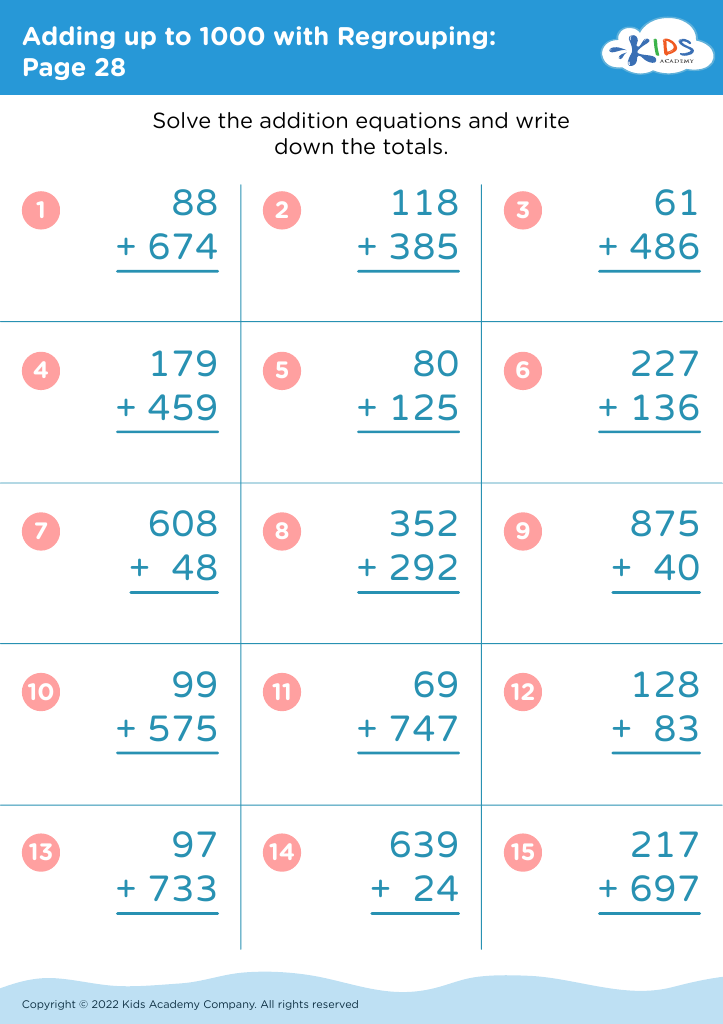
Adding up to 1000 with Regrouping: Page 28
Worksheet
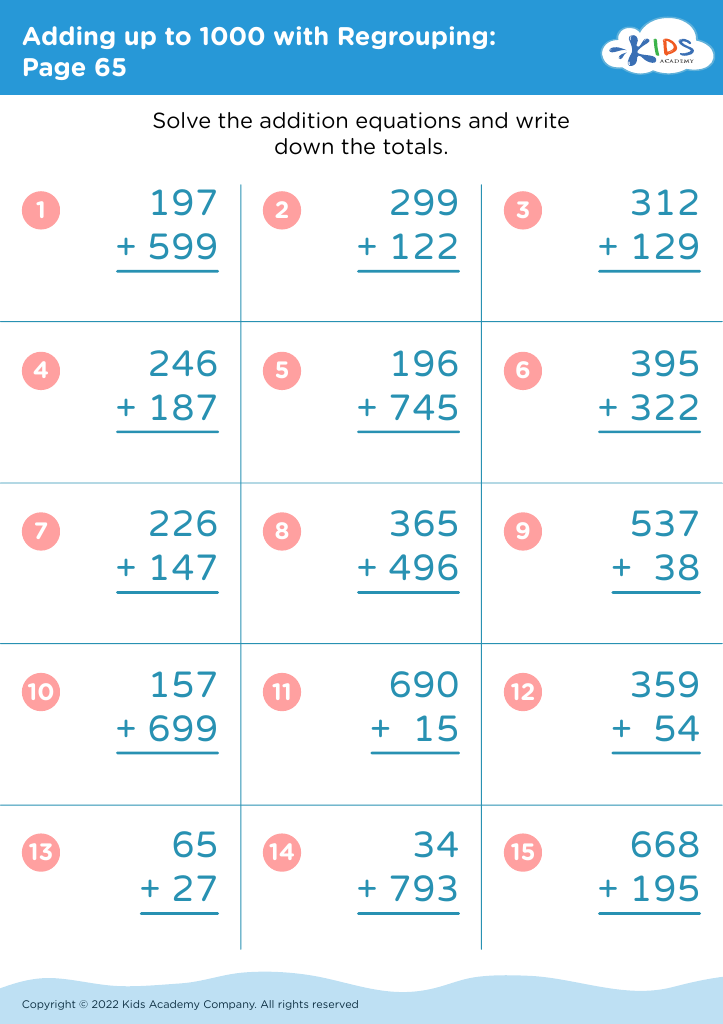
Adding up to 1000 with Regrouping: Page 65
Worksheet
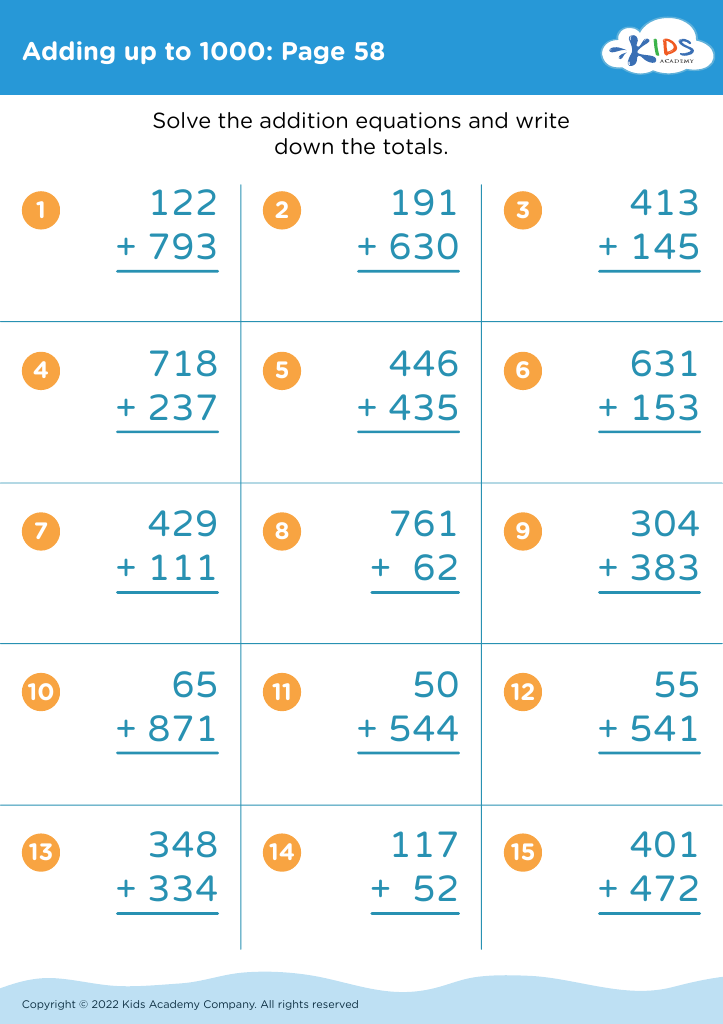
Adding up to 1000: Page 58

Adding up to 1000: Page 58

Adding up to 1000: Page 58
Worksheet
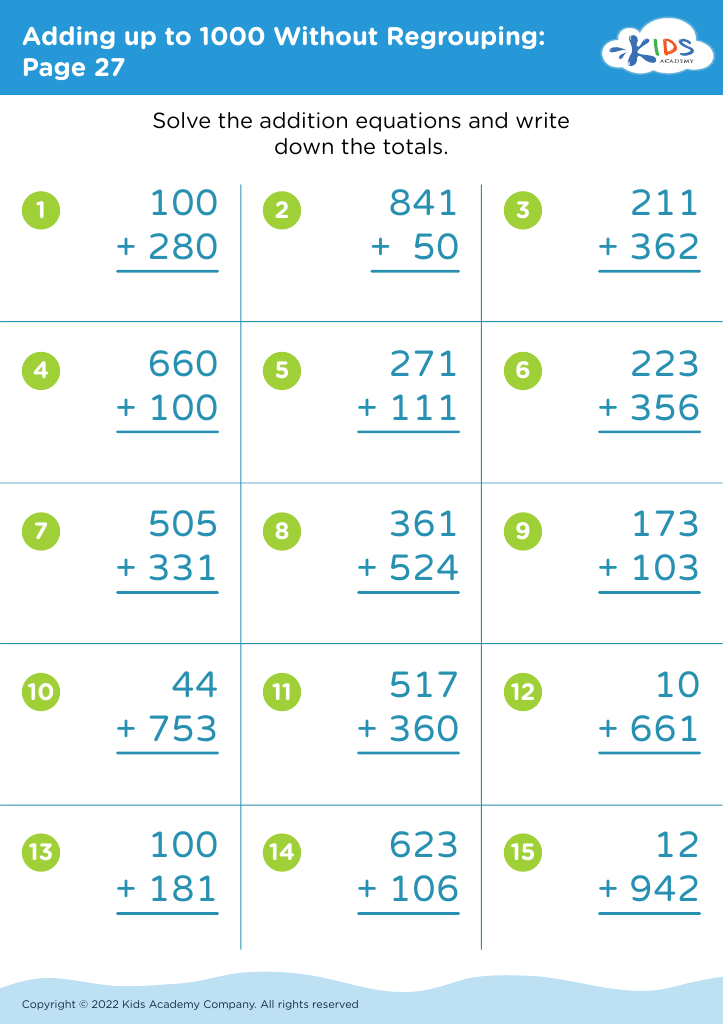
Adding up to 1000 Without Regrouping: Page 27
Worksheet
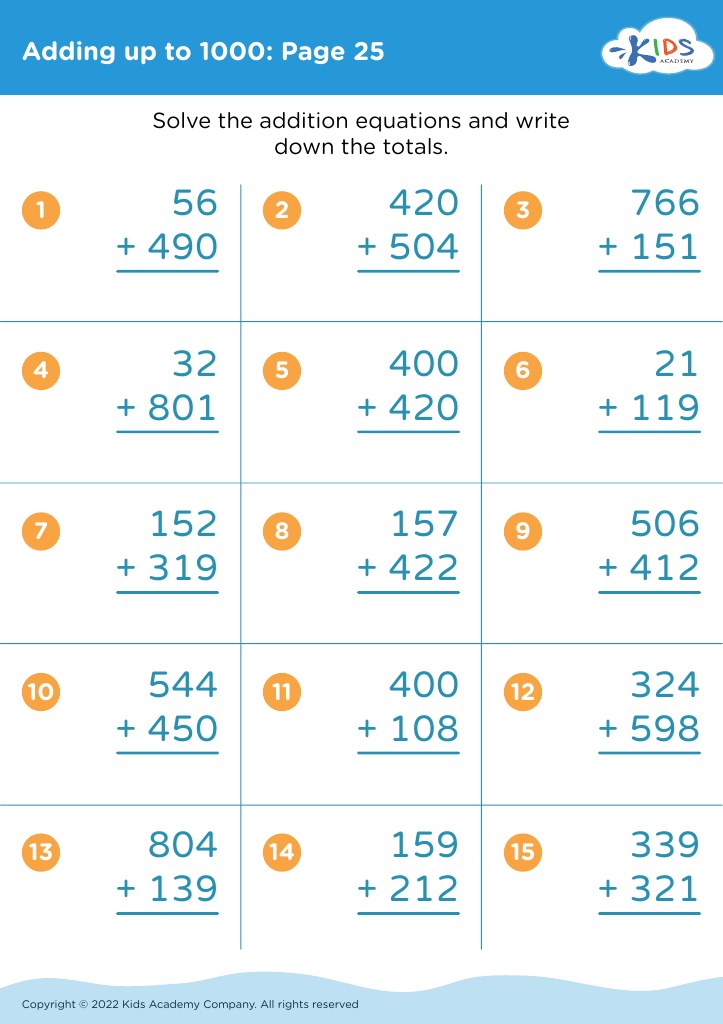
Adding up to 1000: Page 25

Adding up to 1000: Page 25

Adding up to 1000: Page 25
Worksheet
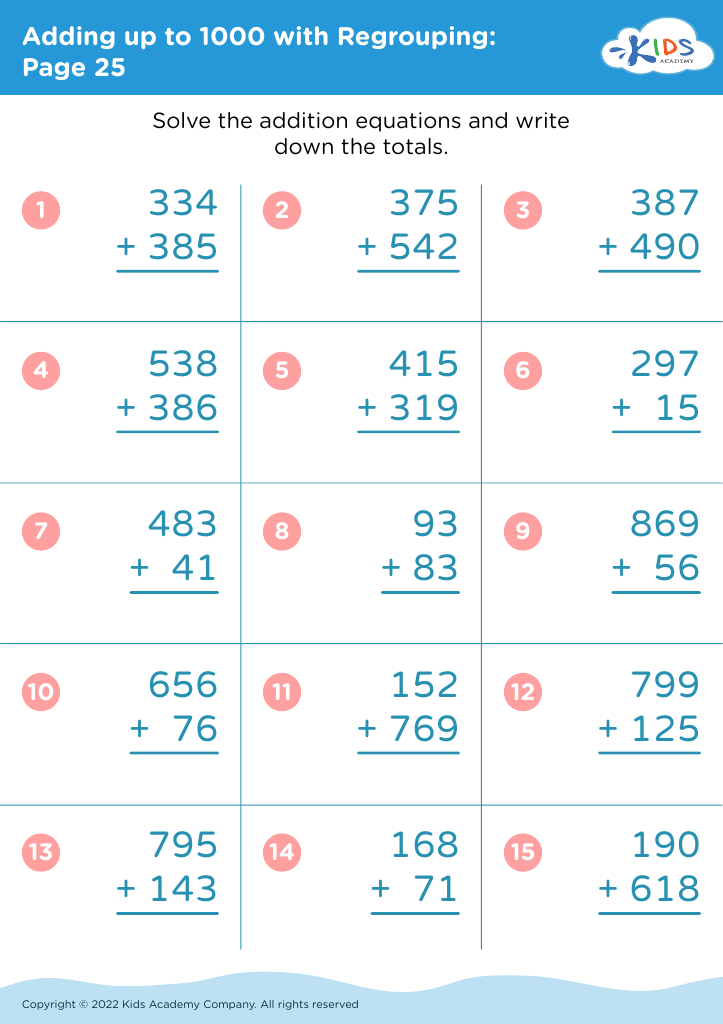
Adding up to 1000 with Regrouping: Page 25
Worksheet
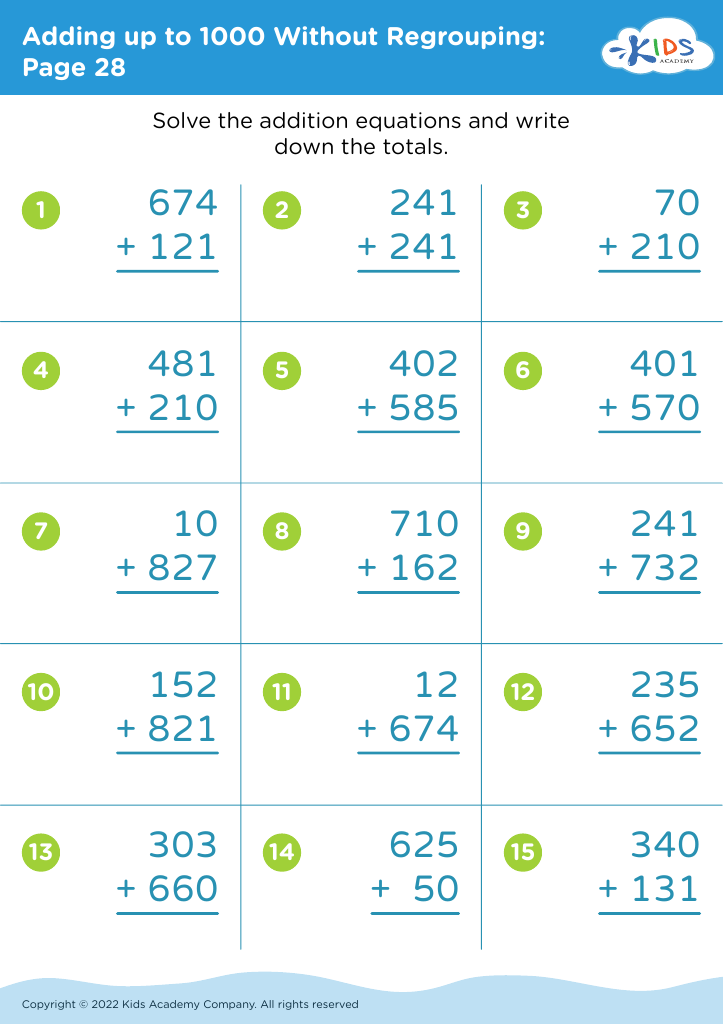
Adding up to 1000 Without Regrouping: Page 28
Worksheet
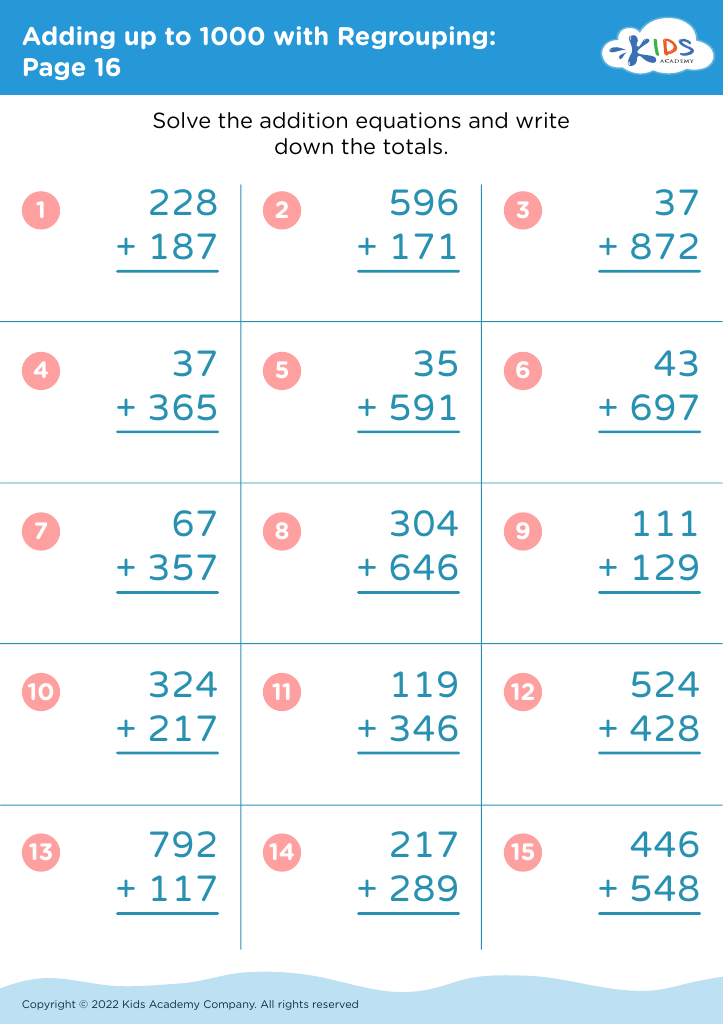
Adding up to 1000 with Regrouping: Page 16
Worksheet
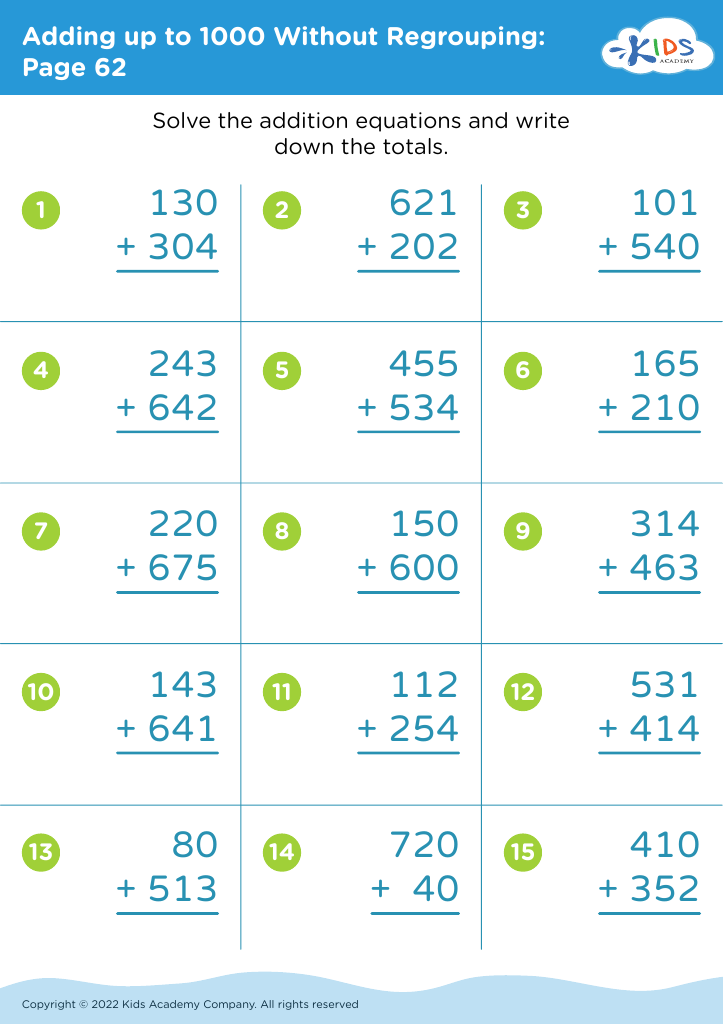
Adding up to 1000 Without Regrouping: Page 62
Worksheet
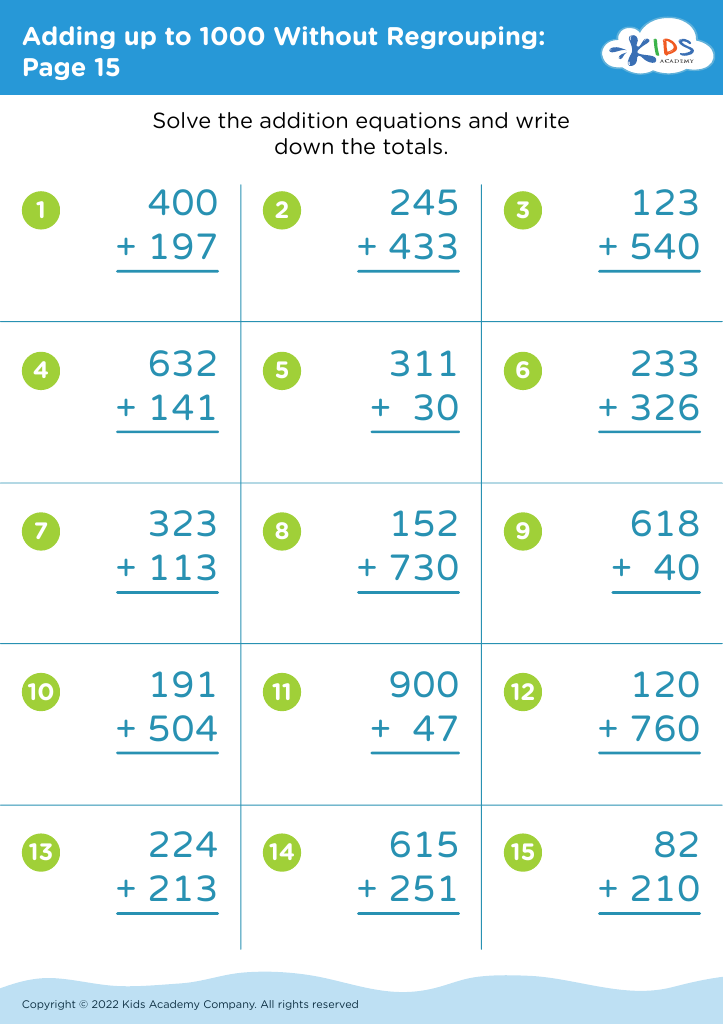
Adding up to 1000 Without Regrouping: Page 15
Worksheet
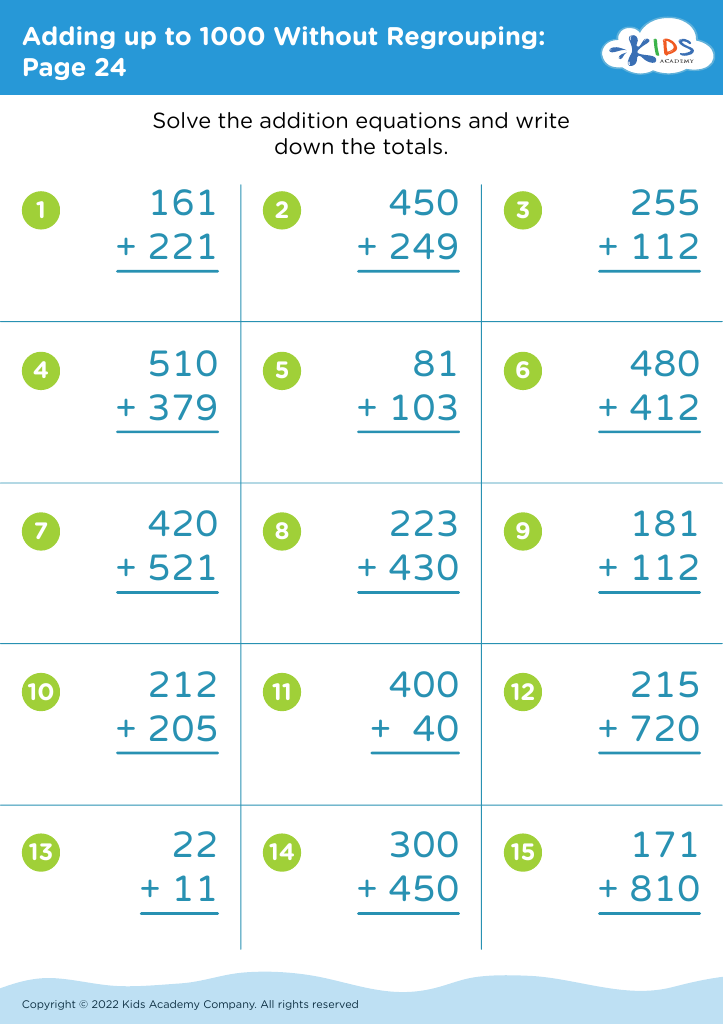
Adding up to 1000 Without Regrouping: Page 24
Worksheet


Understanding fractions is crucial for 8-year-olds, as it lays the foundation for advanced mathematics and critical thinking skills. Fractions, like those adding up to 1 or 1,000, help children grasp important concepts such as parts of a whole, division, and proportional reasoning. When students learn to work with fractions, they improve their ability to solve real-world problems, from cooking and shopping to analyzing data and measuring.

For parents and teachers, emphasizing this understanding helps cultivate a better grasp of math concepts, making subsequent topics like decimals, percentages, and ratios easier to comprehend. Additionally, mastering fractions fosters confidence and competence in students, reducing anxiety around mathematics and encouraging a positive math identity.

Moreover, developing a solid foundation in fractions can enhance collaborative skills. When working on problems that involve fractions, children learn to communicate their thought processes and reasoning with peers, promoting social interaction and teamwork.

Ultimately, by focusing on fractions, parents and teachers can empower children to become independent learners, equipped to tackle mathematical challenges and apply their knowledge creatively in various domains, fostering a lifelong love for learning and discovery.