Understanding symmetry Adding up to 50 Misc Worksheets for 8-Year-Olds
3 filtered results
-
From - To
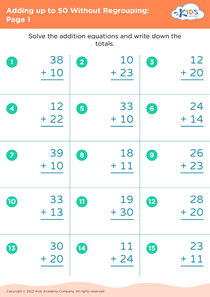
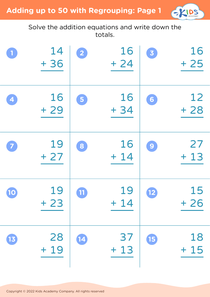
Explore our engaging resource, "Understanding Symmetry: Adding Up to 50 Misc Worksheets," designed specifically for 8-year-olds! These interactive worksheets help young learners develop their mathematical skills while grasping the concept of symmetry. With fun exercises that blend addition challenges and symmetry recognition, children will enhance their problem-solving abilities and critical thinking. Perfect for at-home use or classroom activities, these worksheets are tailored to support diverse learning styles. Foster a love for math and provide your child with the tools to master essential skills while discovering the beauty of symmetry. Dive into creativity and learning today!
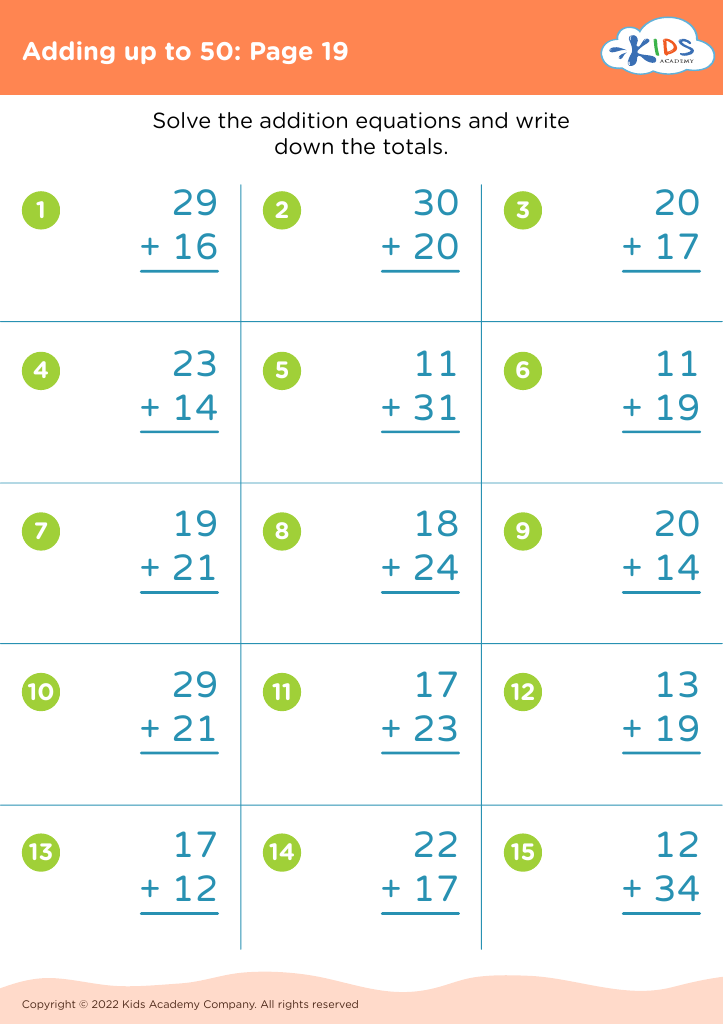
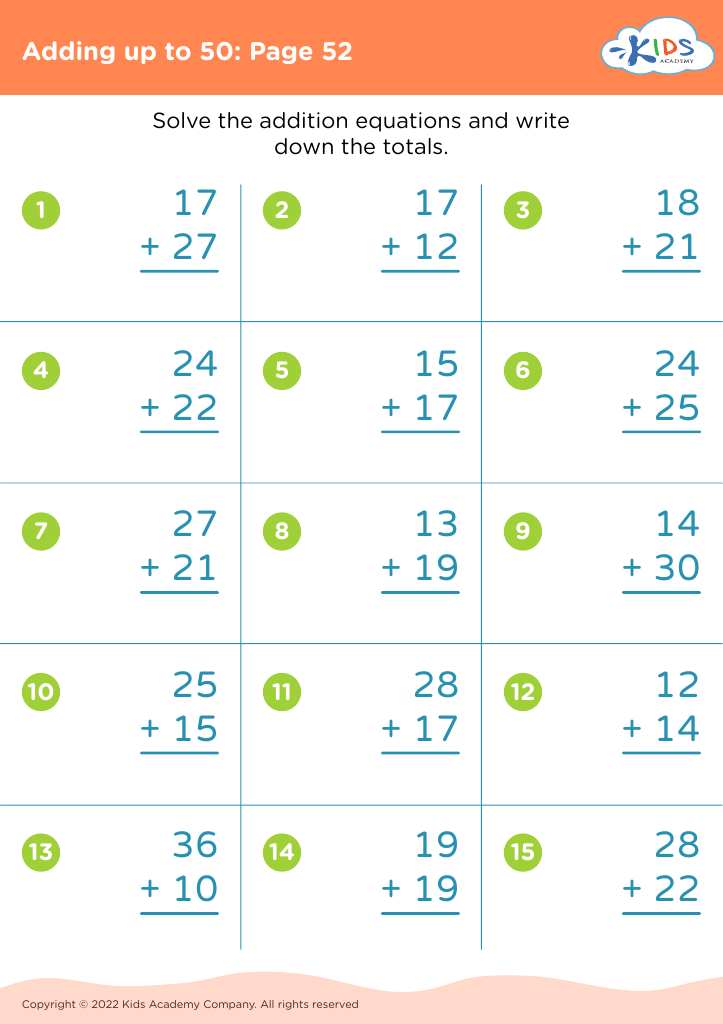
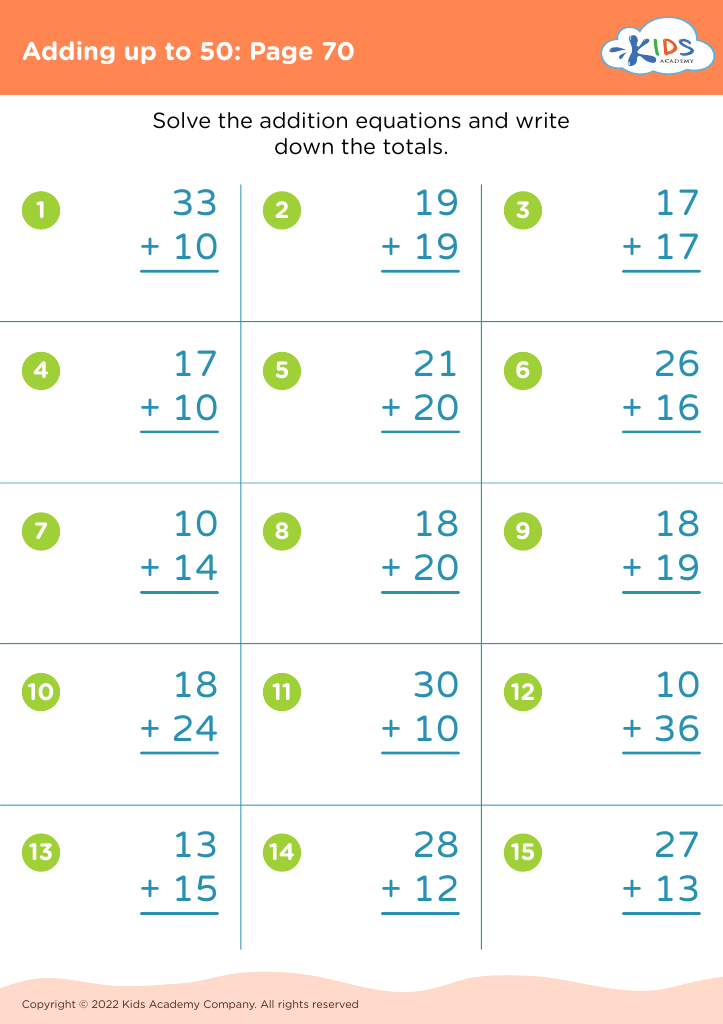


Understanding symmetry and the concept of adding up to 50 are fundamental skills for 8-year-olds that support their cognitive development. Symmetry helps children recognize and create balanced shapes, which fosters critical thinking and spatial awareness. This foundational geometry knowledge is vital as it integrates into more advanced mathematical concepts later on, enhancing problem-solving skills and innovation.
On the other hand, mastering addition with a focus on numbers that add up to 50 sets a strong foundation for arithmetic operations, which are essential in everyday life. Competence in addition boosts confidence and encourages children to tackle more complex math problems. When children achieve fluency in basic operations, they build the skills necessary for advanced topics, preparing them for further academic challenges.
Additionally, these concepts promote logical reasoning and mathematical relationships, aiding in grasping fractions and measurements in the future. Both symmetry and addition work hand in hand to enhance creativity and reasoning skills critical for multiple subjects. Engaging children in these areas of learning can lead to not just better performance in mathematics, but also improved cognitive flexibility, making parents and teachers vital in cultivating a balanced education. Recognizing this importance fosters a well-rounded, mathematically literate generation.