Addition Practice Adding up to 50 with Regrouping Worksheets for 8-Year-Olds
5 filtered results
-
From - To
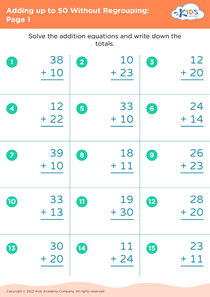
Enhance math skills with our Addition Practice Adding up to 50 with Regrouping Worksheets, tailored for 8-year-olds. These engaging worksheets help children master addition through structured exercises and colorful, kid-friendly designs. Utilizing regrouping techniques, these activities build a solid foundation for more advanced arithmetic. Ideal for classroom or home use, the worksheets offer varied problems to ensure comprehensive practice. Perfect for young learners to bolster confidence and competence in mathematics, our resources make learning to add both effective and enjoyable. Start your child's journey to math success with our expert-designed addition practice worksheets!
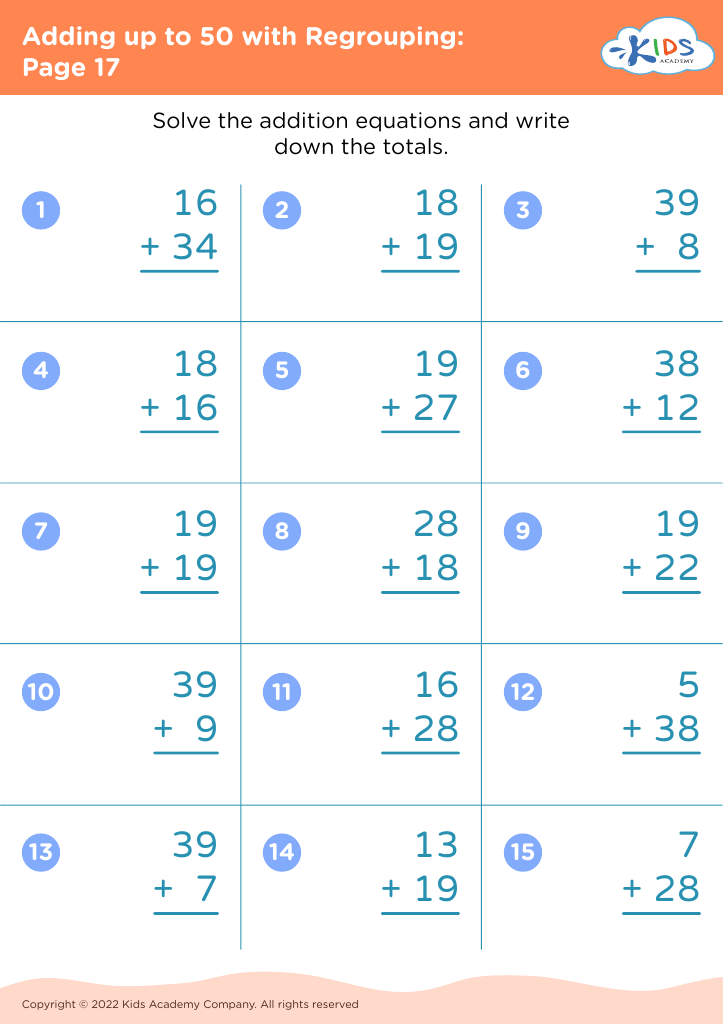
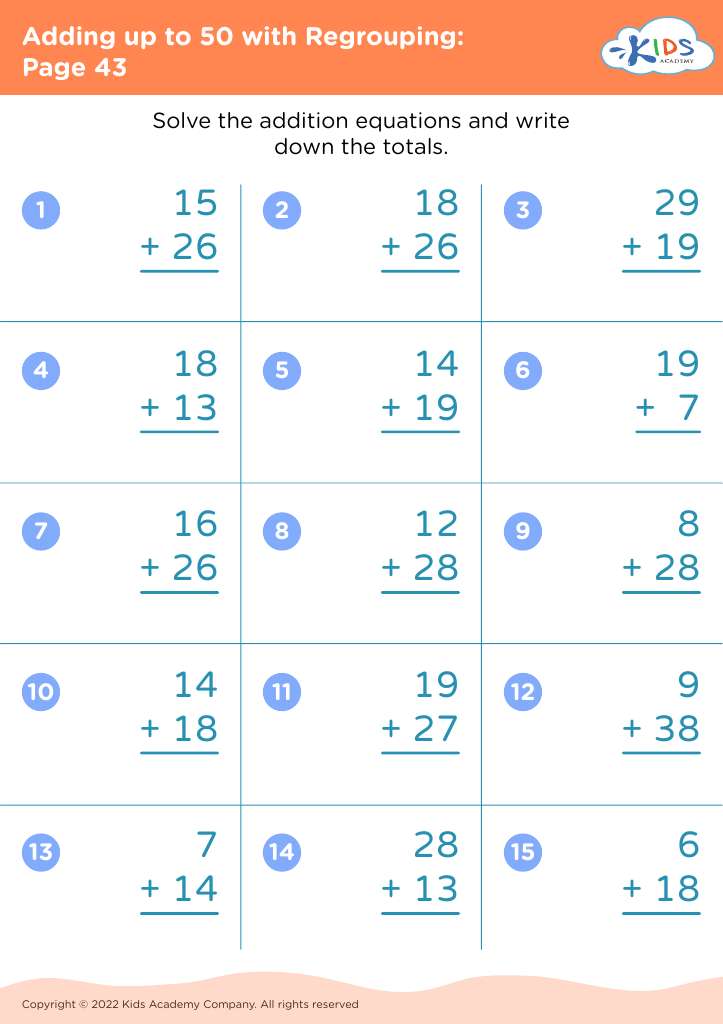
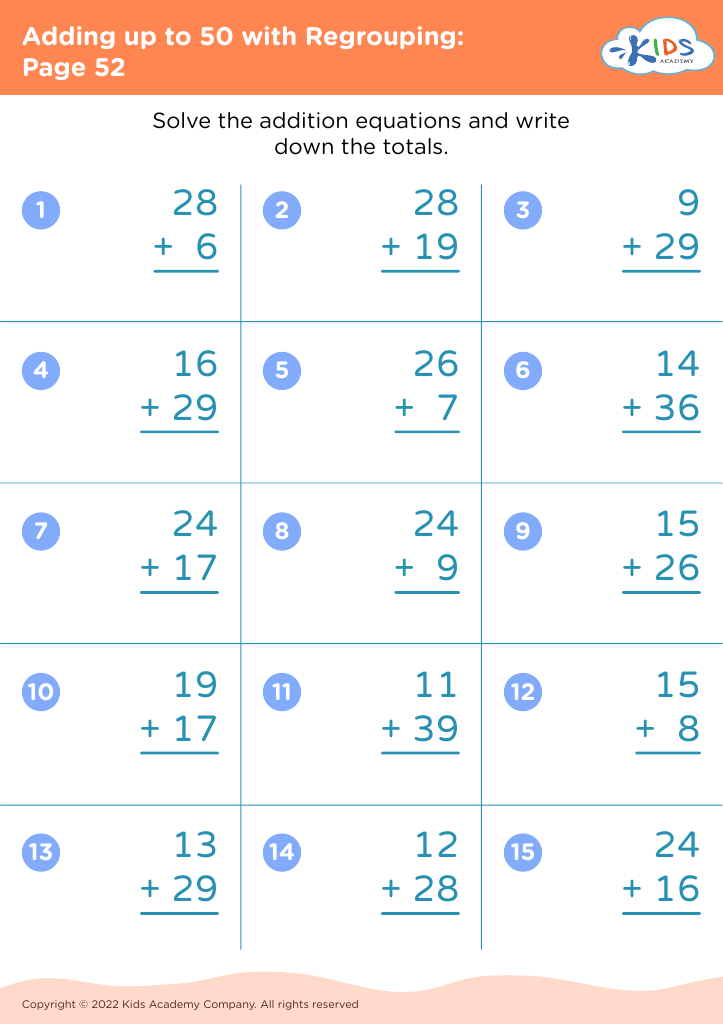
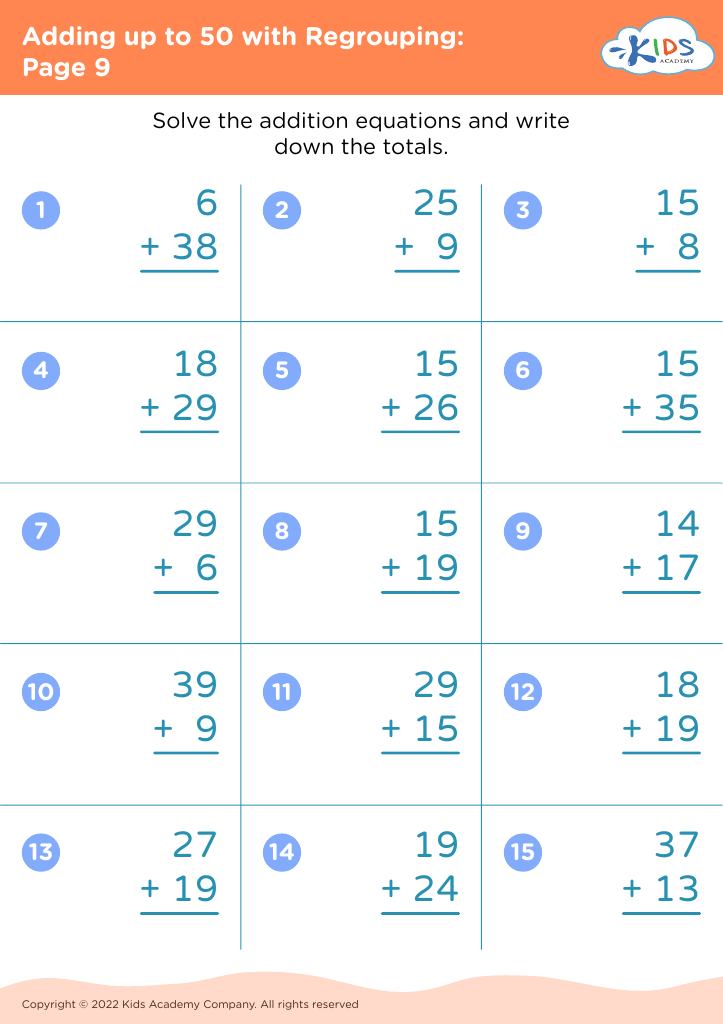
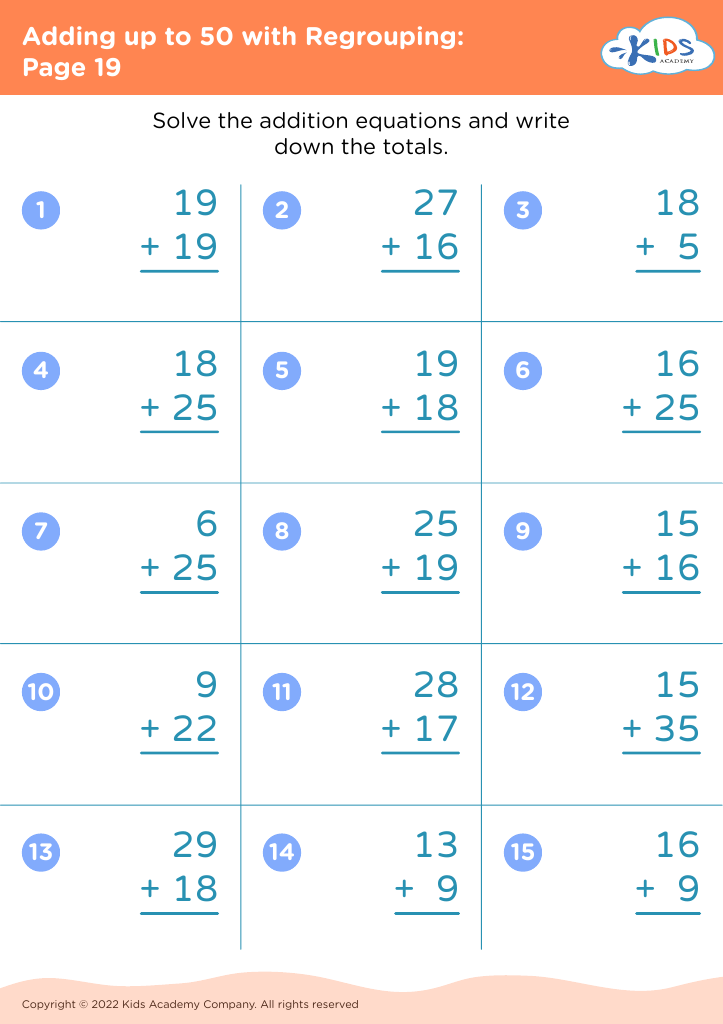


Parents and teachers should prioritize addition practice up to 50 with regrouping for 8-year-olds because it lays a vital foundation for mathematical proficiency. Mastery of this skill not only reinforces basic arithmetic but also improves cognitive development, fostering problem-solving abilities crucial for more advanced math concepts. At this age, children are at a pivotal stage of acquiring fluency in addition, ensuring they develop both speed and accuracy essential for future math success.
Moreover, understanding regrouping helps students grasp the concept of place value, an underpinning principle of our number system. This skill emphasizes the hierarchical structure of numbers, enabling smoother transitions to more complex topics like subtraction with borrowing, multiplication, and division. Practical daily life applications reinforce the importance of this practice, as children encounter addition scenarios regularly while shopping, measuring, or managing time.
Fostering confidence in math at this early stage eradicates potential anxiety or fear associated with the subject. This positive reinforcement encourages a growth mindset, wherein students feel capable and motivated to tackle increasingly complex problems. Ultimately, early numerical proficiency propels academic achievement across all disciplines, instilling a lifelong appreciation for learning and analytical thinking skills in children.