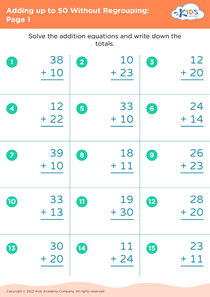
Comparing Fractions Adding up to 50 with Regrouping Worksheets for 8-Year-Olds
12 filtered results
-
From - To
Discover the fun and engaging way for 8-year-olds to master comparing fractions with our specially designed worksheets! These interactive resources focus on fractions that sum to 50, providing a solid foundation in both addition and the concept of regrouping. Kids will develop critical thinking skills as they explore visual aids and hands-on activities that make learning fractions enjoyable. Our worksheets are tailored to enhance understanding while promoting confidence in mathematical skills. Perfect for teachers and parents, these resources ensure your child grasps the fundamentals of fraction comparison while nurturing a passion for math. Dive into the world of fractions today!
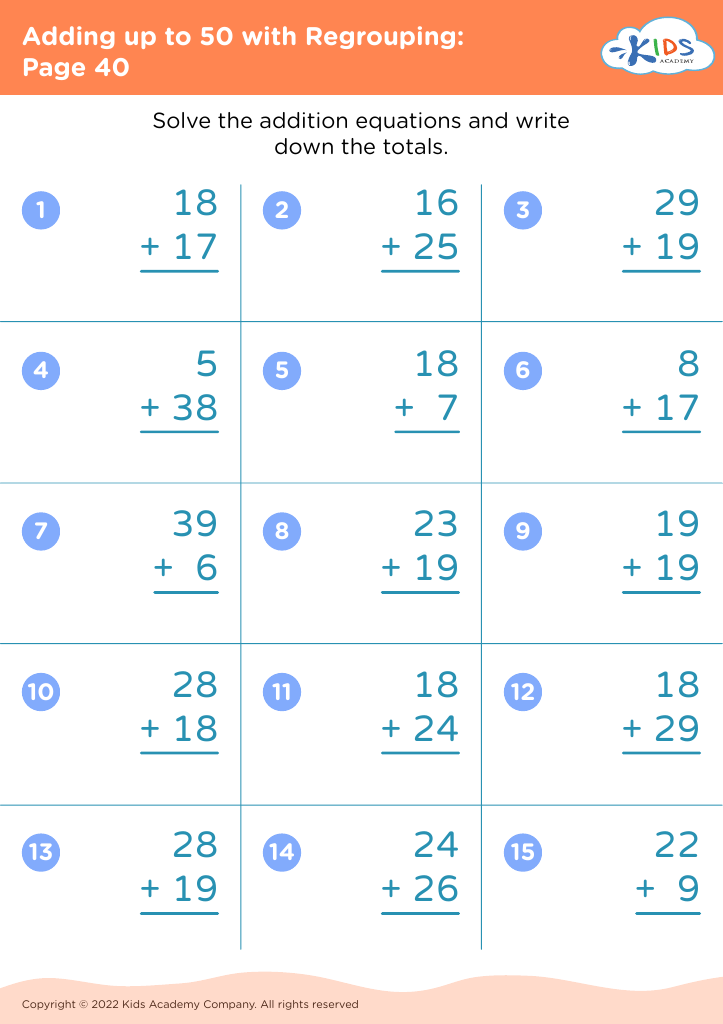
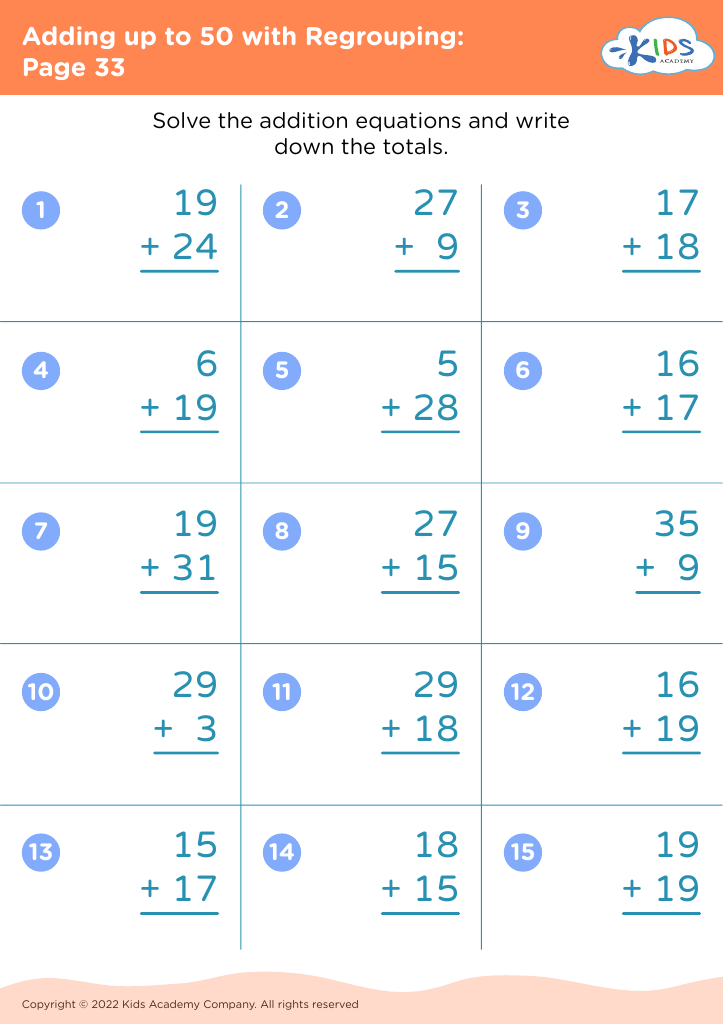
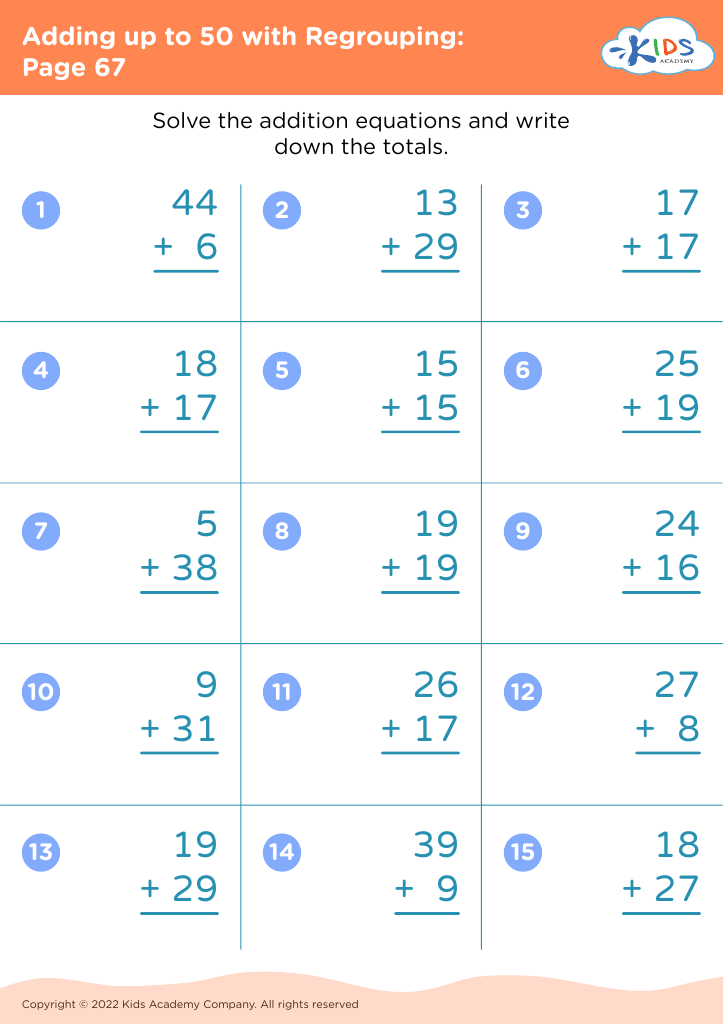
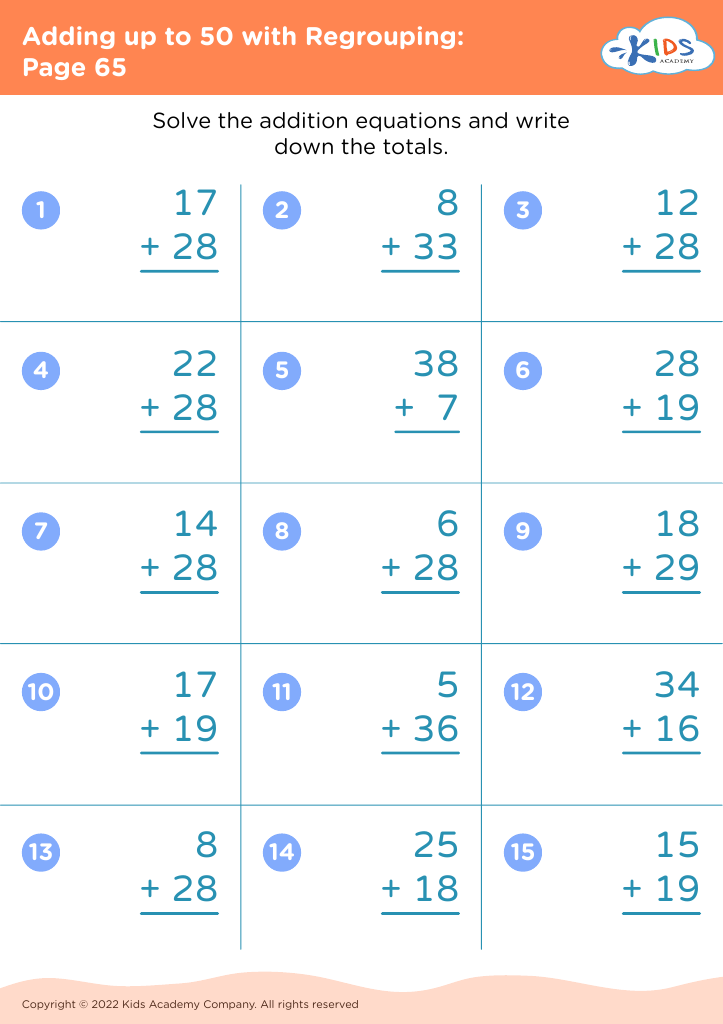
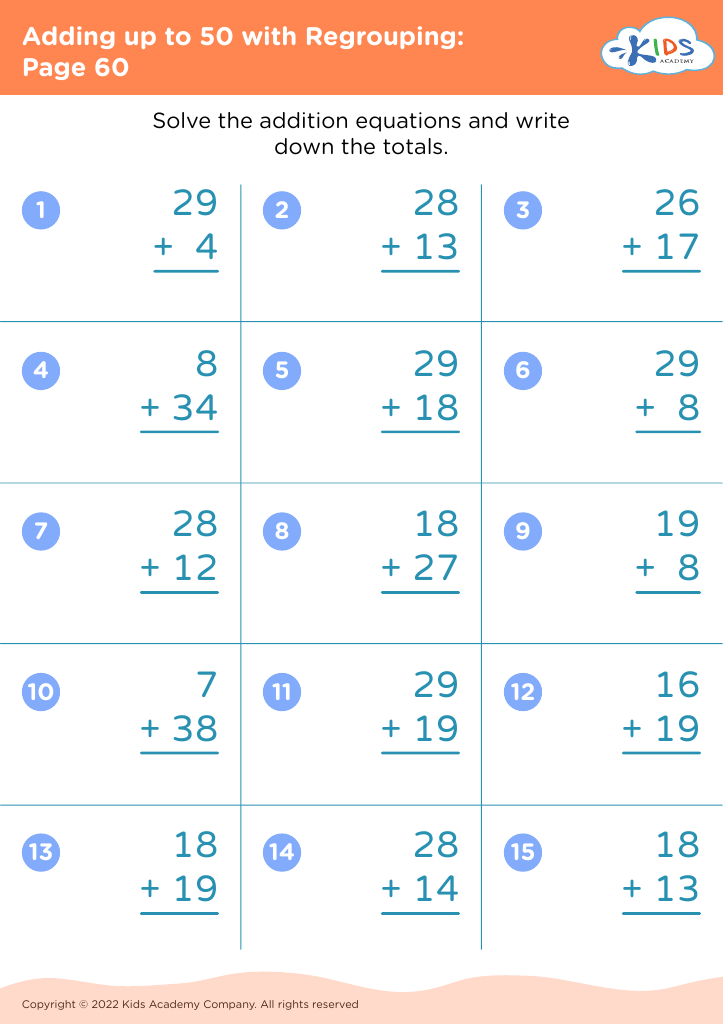
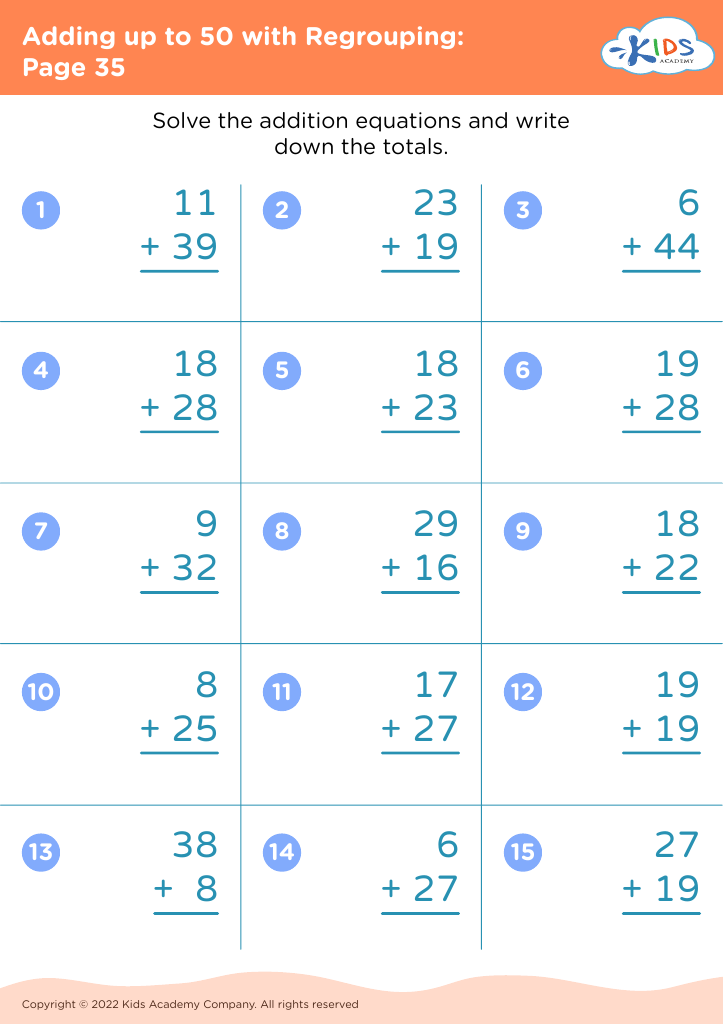
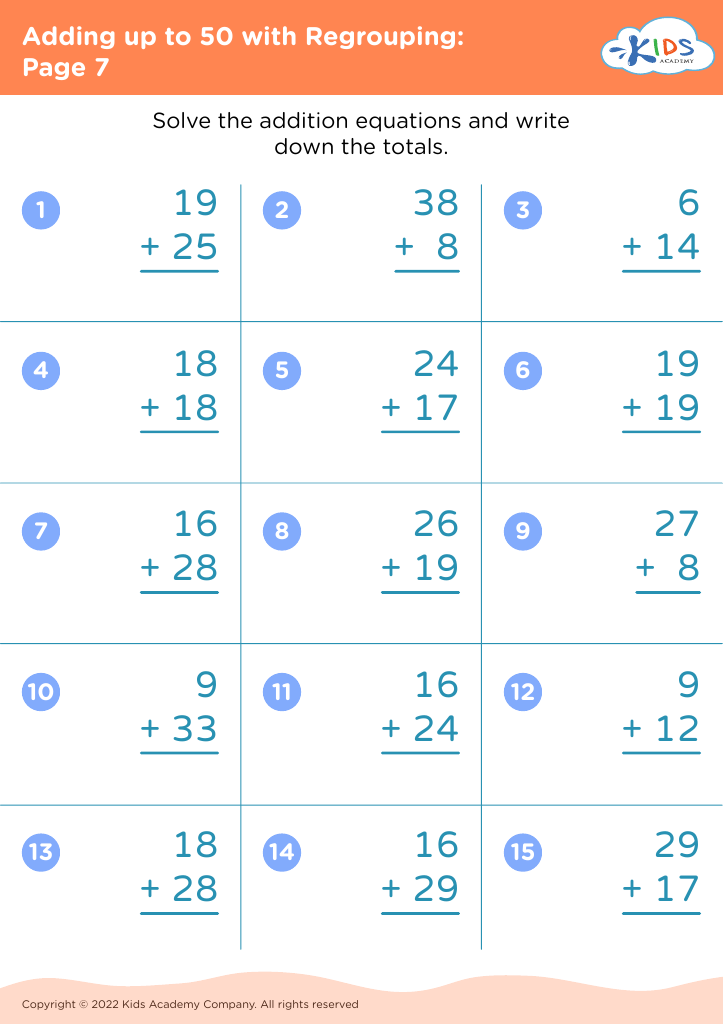
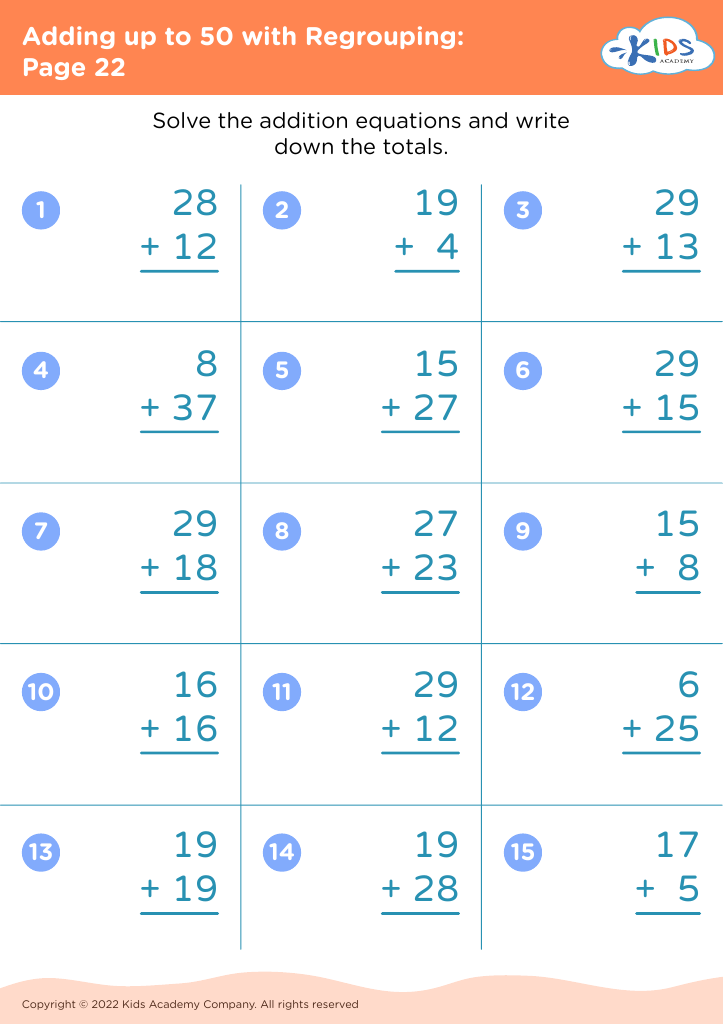
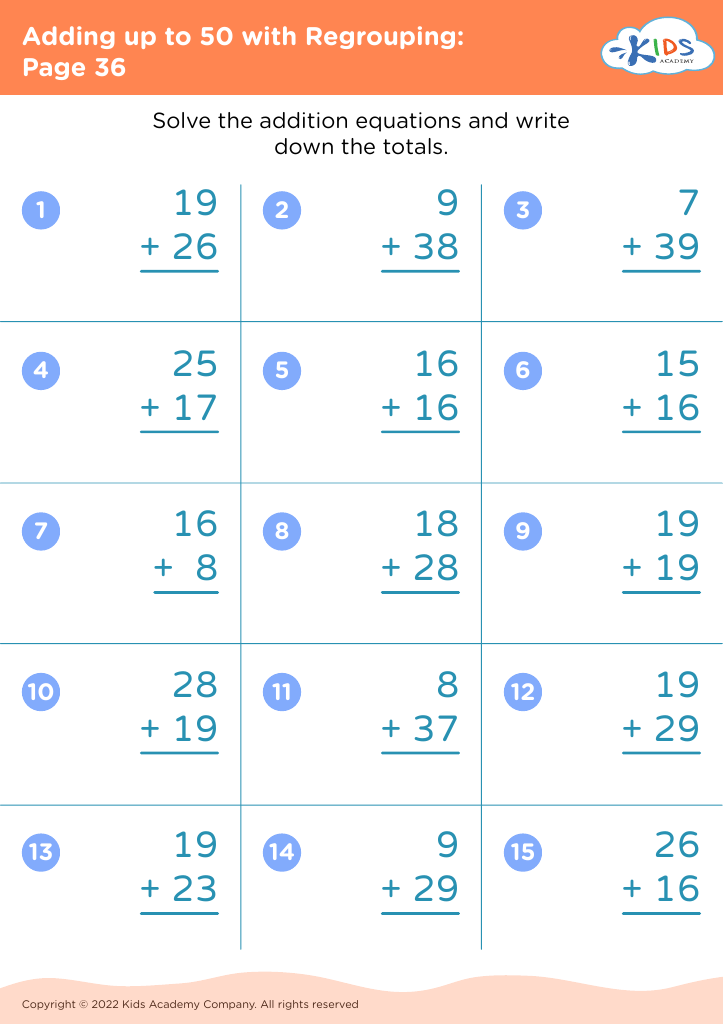
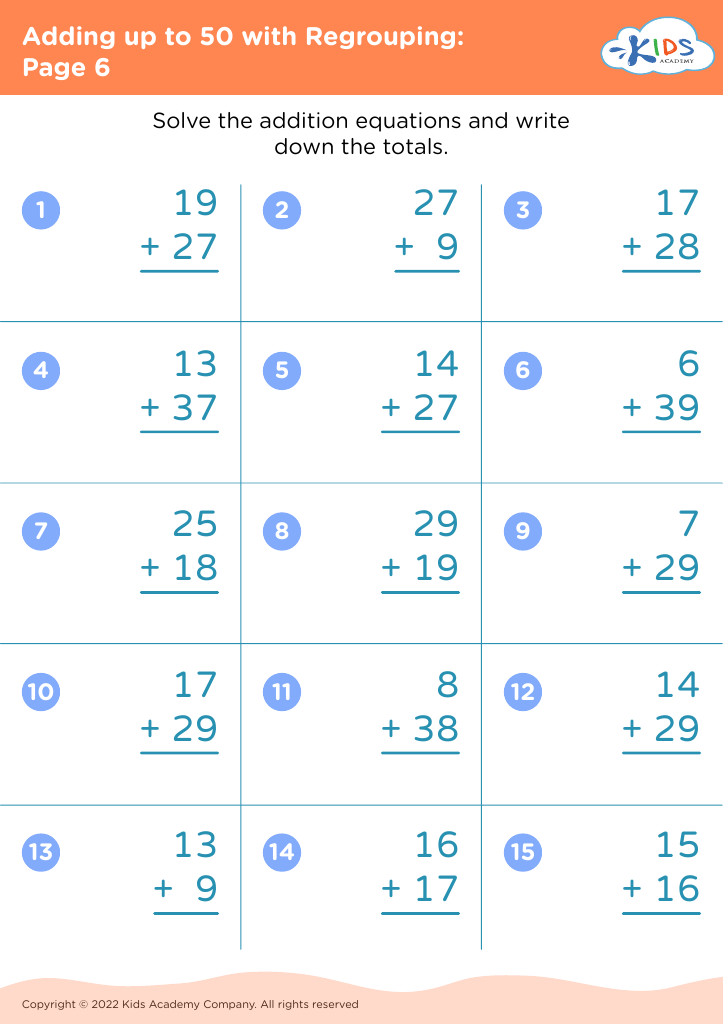
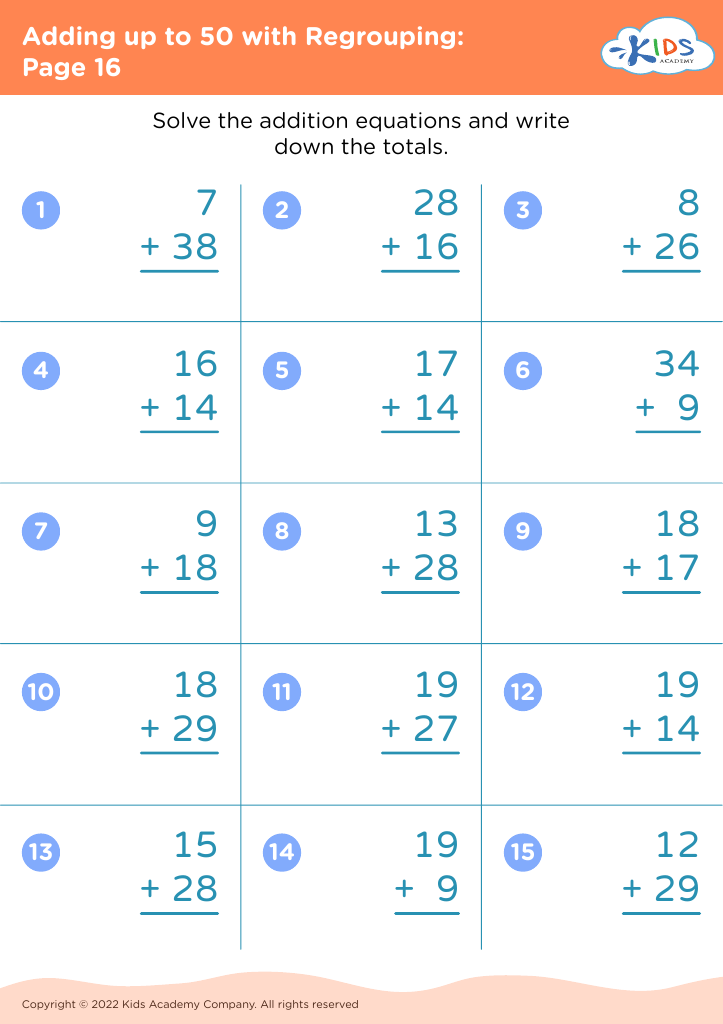
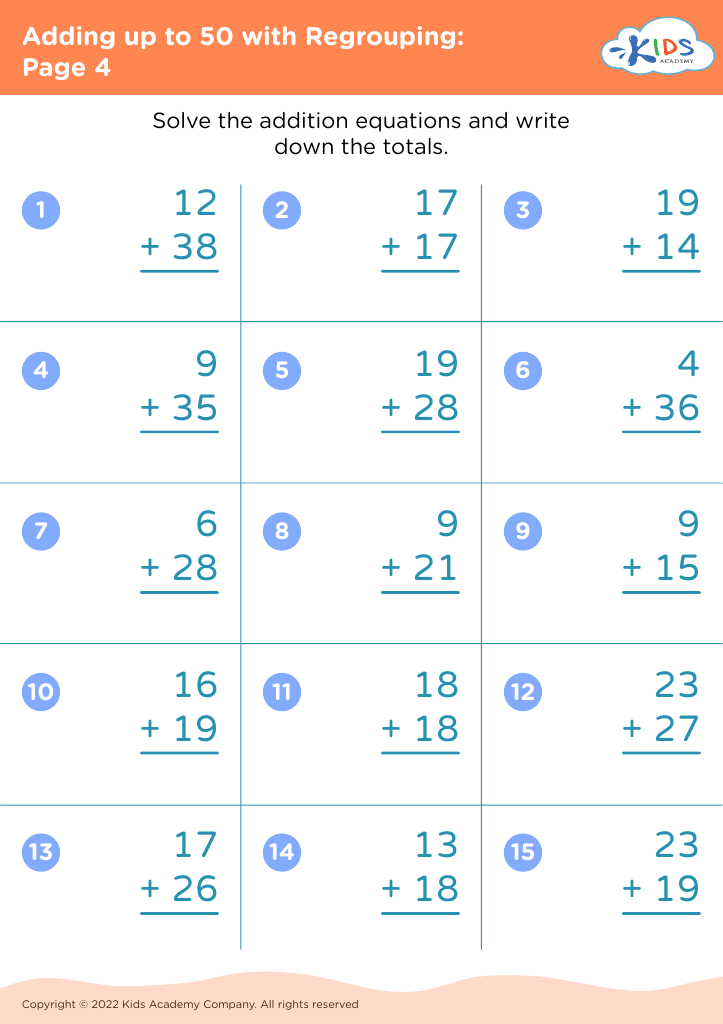


Understanding how to compare fractions and perform addition with regrouping is crucial for 8-year-olds in their mathematical development. At this age, children are transitioning from concrete thinking to more abstract reasoning, making it essential for parents and teachers to emphasize these concepts.
Comparing fractions helps children understand how different parts relate to a whole, nurturing their critical thinking skills. It lays the foundation for more complex mathematical concepts they'll encounter later, such as ratios and proportions. Recognizing which fractions are larger or smaller enhances their problem-solving abilities in real-life scenarios.
Adding fractions that total up to 50 with regrouping adds another layer of complexity, fostering skills such as estimation and mental math. Regrouping calls for a deeper understanding of number value and relationships, reinforcing the importance of place value. Mastery of these skills equips children with the tools to tackle more advanced math in the future confidently.
Moreover, engaging parents in this process promotes a supportive learning environment, enhancing children's motivation and comprehension. By caring about these skills, educators and parents contribute to a solid arithmetic foundation, empowering children for success in both academic and everyday situations. This collaborative effort is vital for cultivating a love for mathematics that can endure throughout their education.