Understanding fractions Adding up to 50 with Regrouping Worksheets for 8-Year-Olds

Filters

17 filtered results

Clear all filters
Favorites
With answer key
Interactive

17 filtered results

Difficulty Level

Grade


Welcome to our "Understanding Fractions Adding Up to 50 with Regrouping Worksheets" tailored specifically for 8-year-olds! These engaging, interactive worksheets help young learners grasp the concept of fractions while mastering addition through regrouping. Our carefully crafted exercises encourage critical thinking and reinforce essential math skills, enhancing their confidence in tackling complex problems. With vibrant visuals and relatable scenarios, students will find joy in learning about fractions in a fun, approachable manner. Ideal for classroom use or at-home practice, these worksheets foster a solid foundation in mathematics, preparing children for future success. Dive in and watch your child's math skills flourish!
Check out this FREE Trial Lesson on Adding up to 50 with Regrouping for age 8!

Z

Favorites
With answer key
Interactive
  • 8
  • Understanding fractions
  • Adding up to 50 with Regrouping
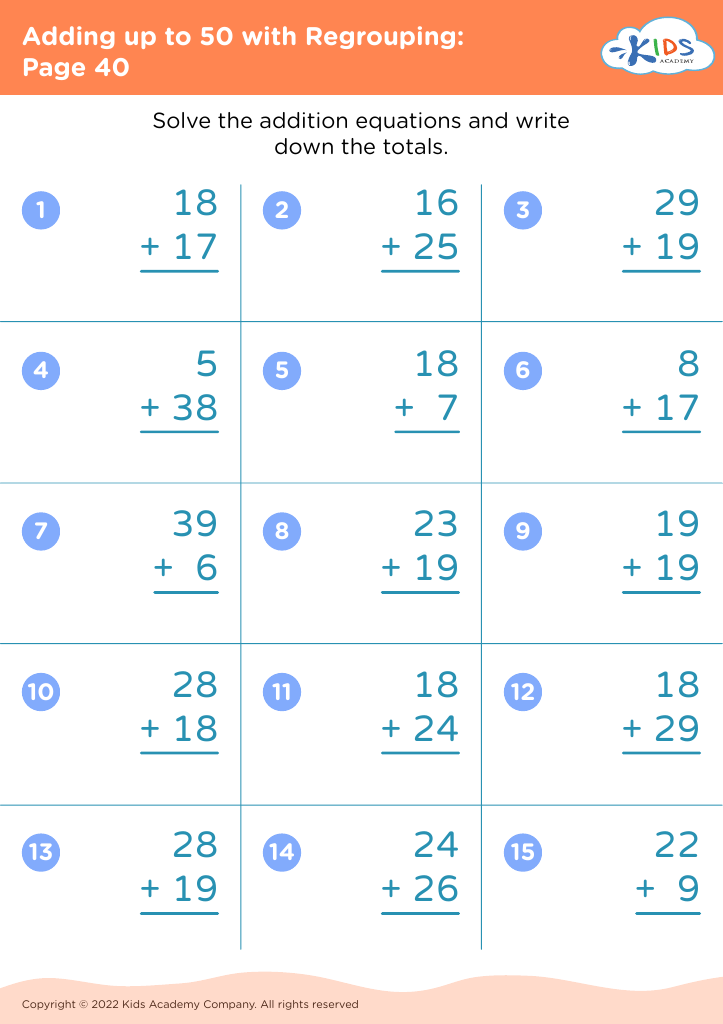
Adding up to 50 with Regrouping: Page 40
Worksheet
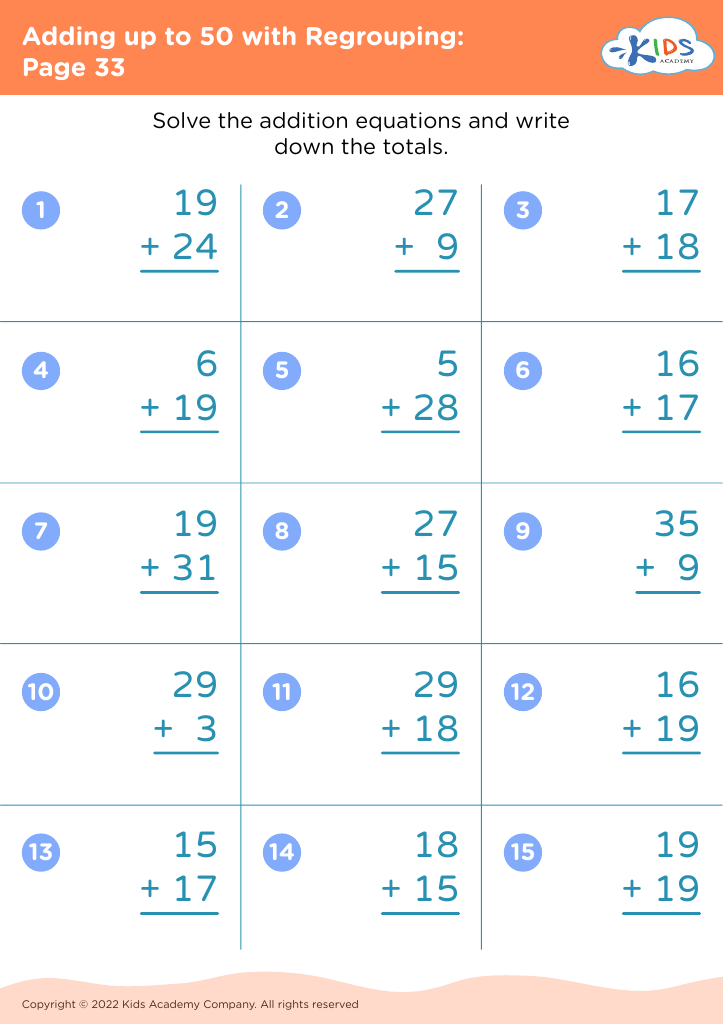
Adding up to 50 with Regrouping: Page 33
Worksheet
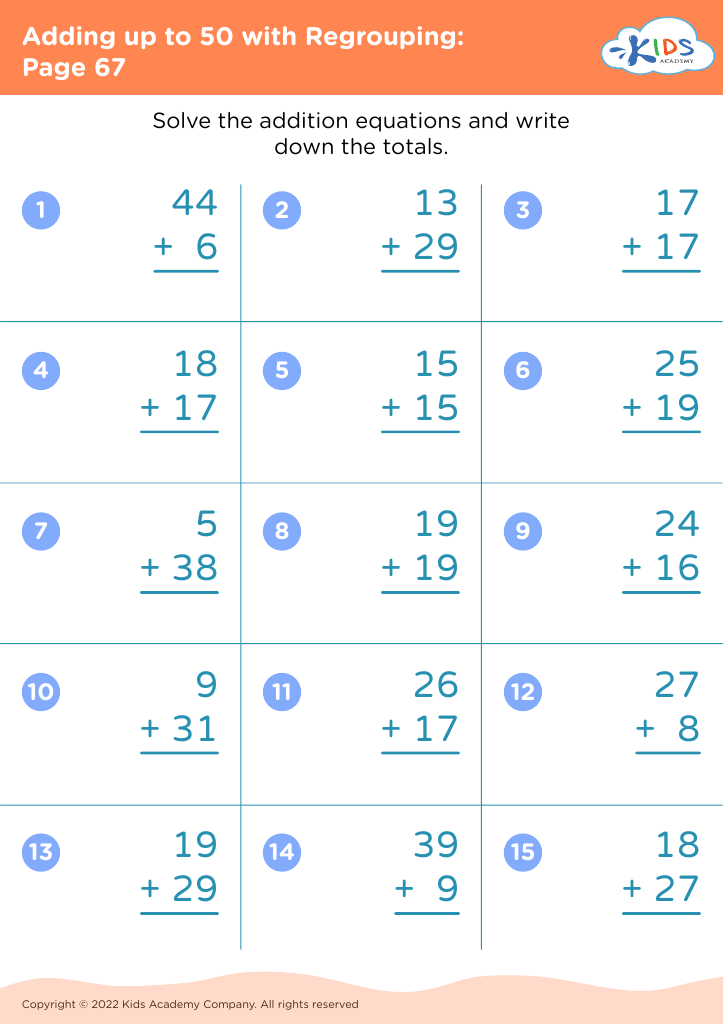
Adding up to 50 with Regrouping: Page 67
Worksheet
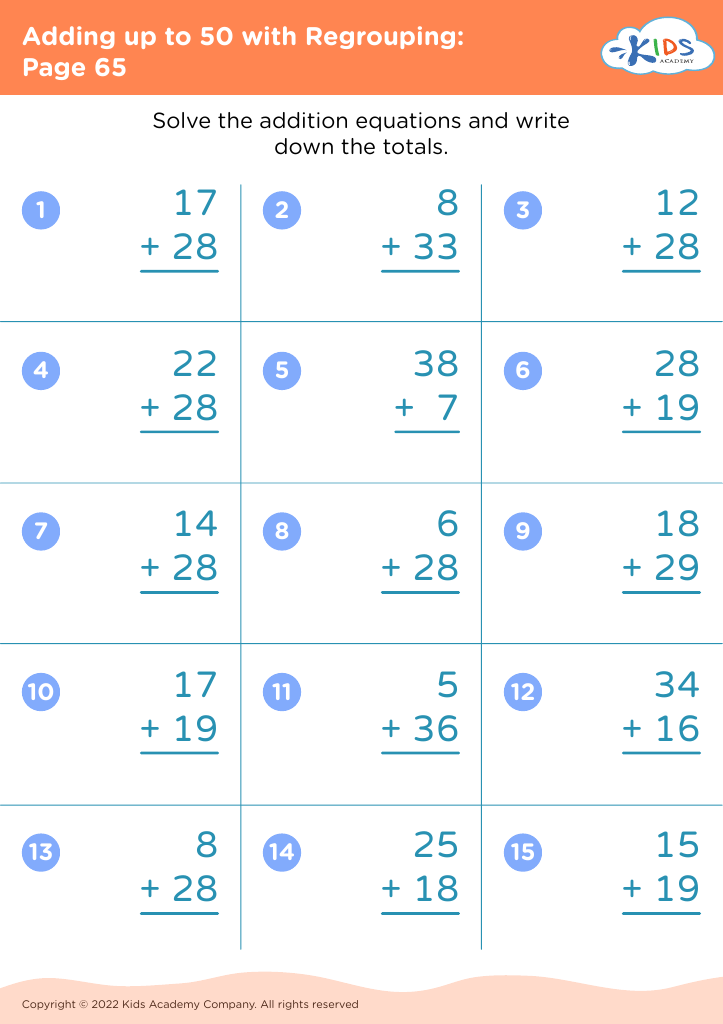
Adding up to 50 with Regrouping: Page 65
Worksheet
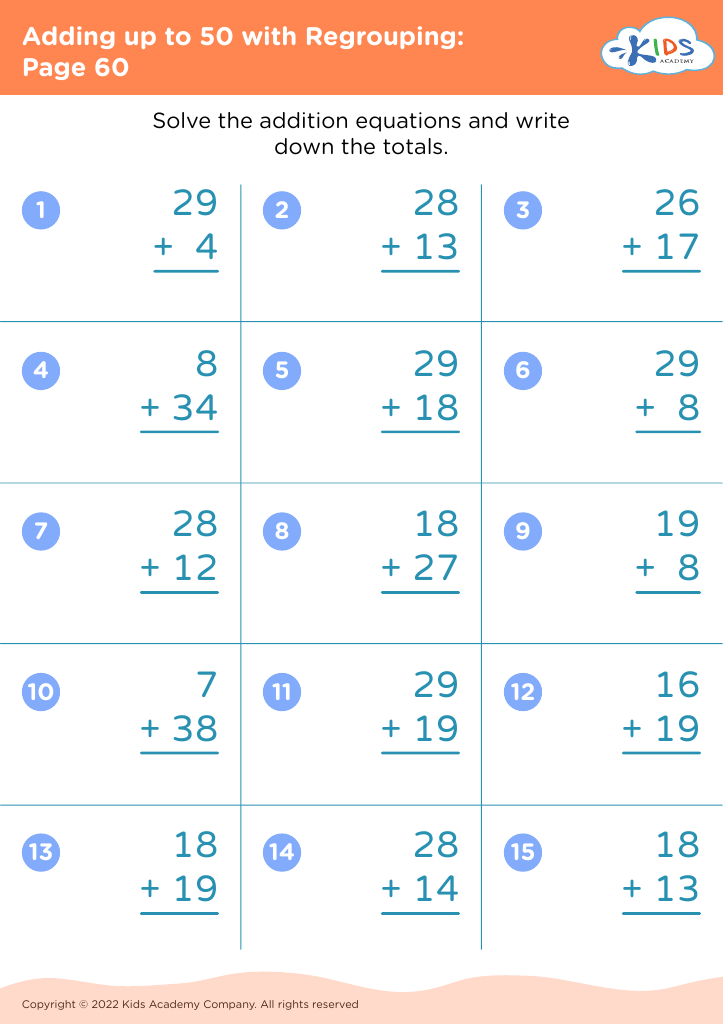
Adding up to 50 with Regrouping: Page 60
Worksheet
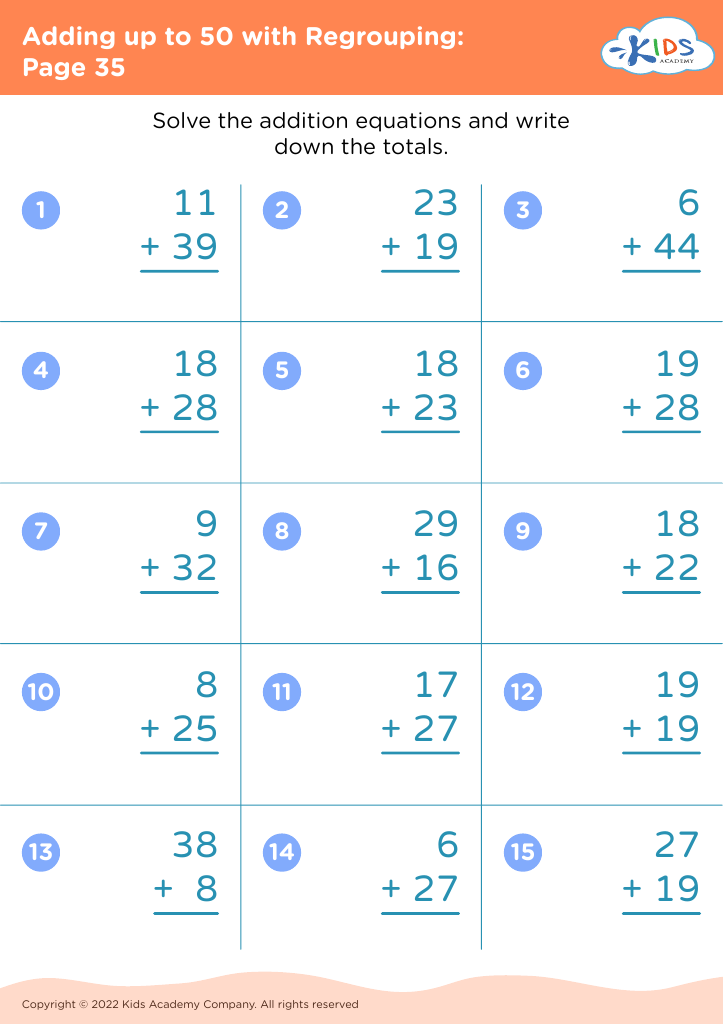
Adding up to 50 with Regrouping: Page 35
Worksheet
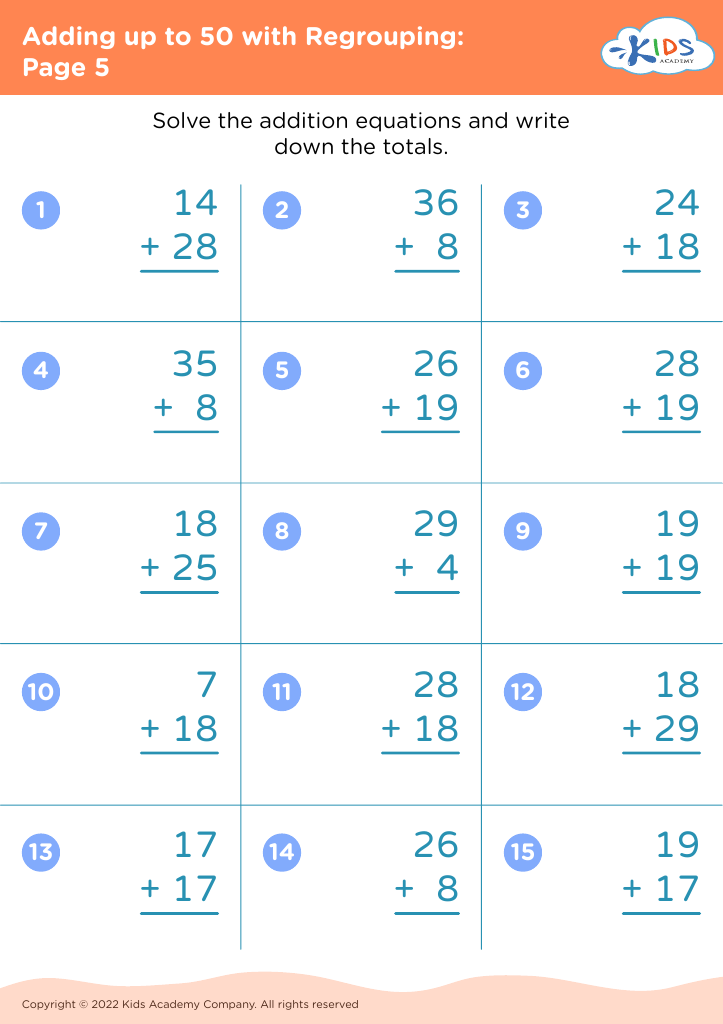
Adding up to 50 with Regrouping: Page 5
Worksheet
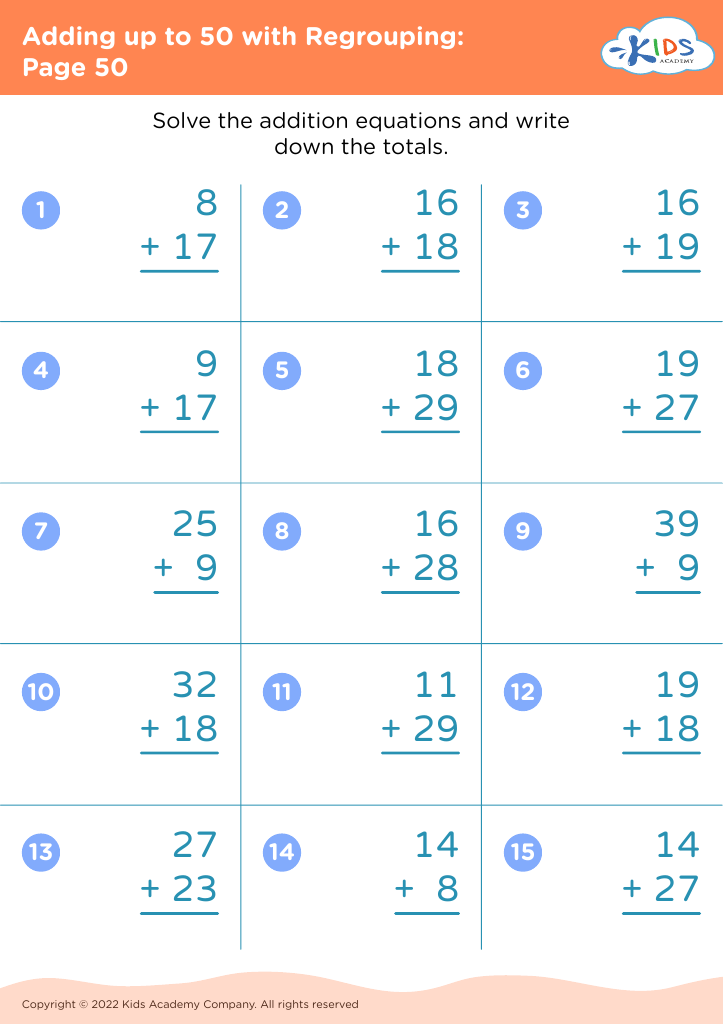
Adding up to 50 with Regrouping: Page 50
Worksheet
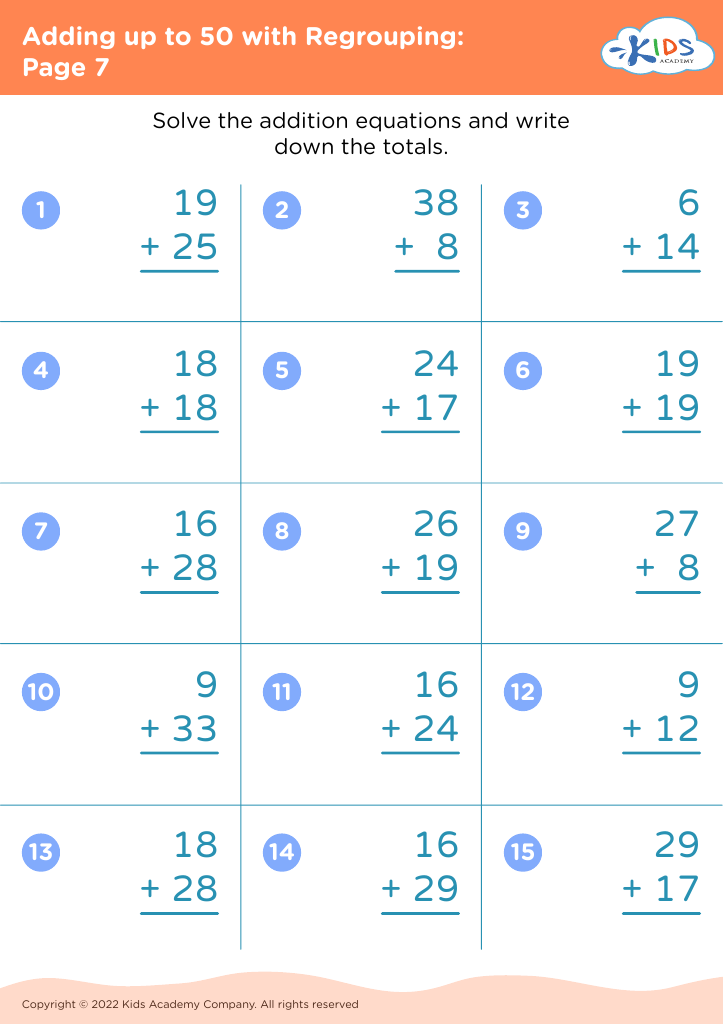
Adding up to 50 with Regrouping: Page 7
Worksheet
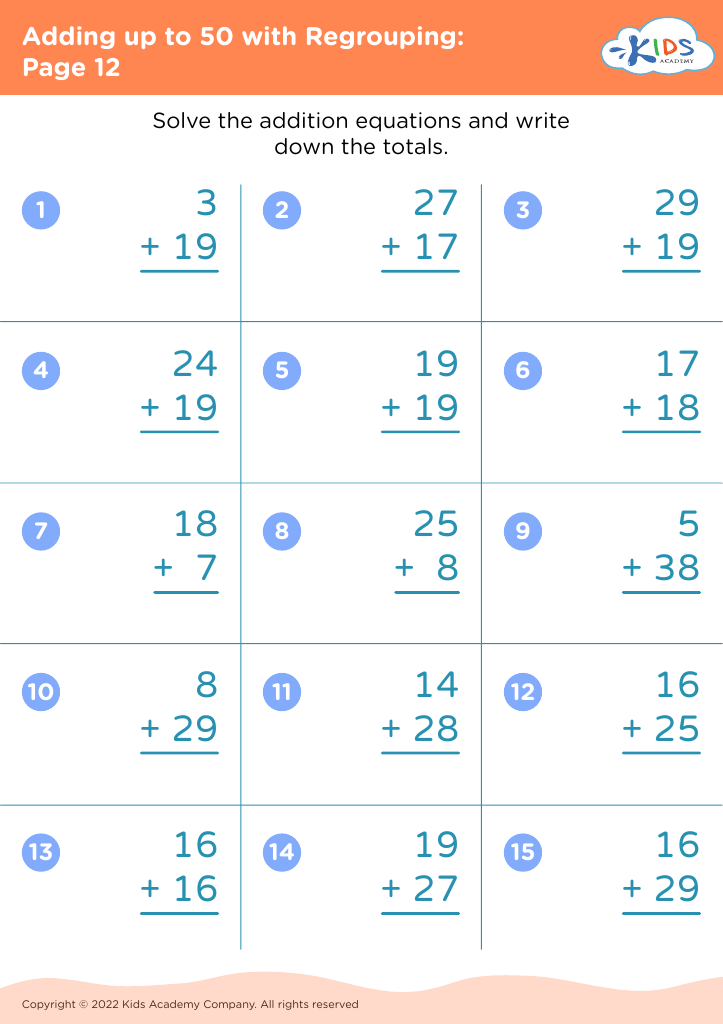
Adding up to 50 with Regrouping: Page 12
Worksheet
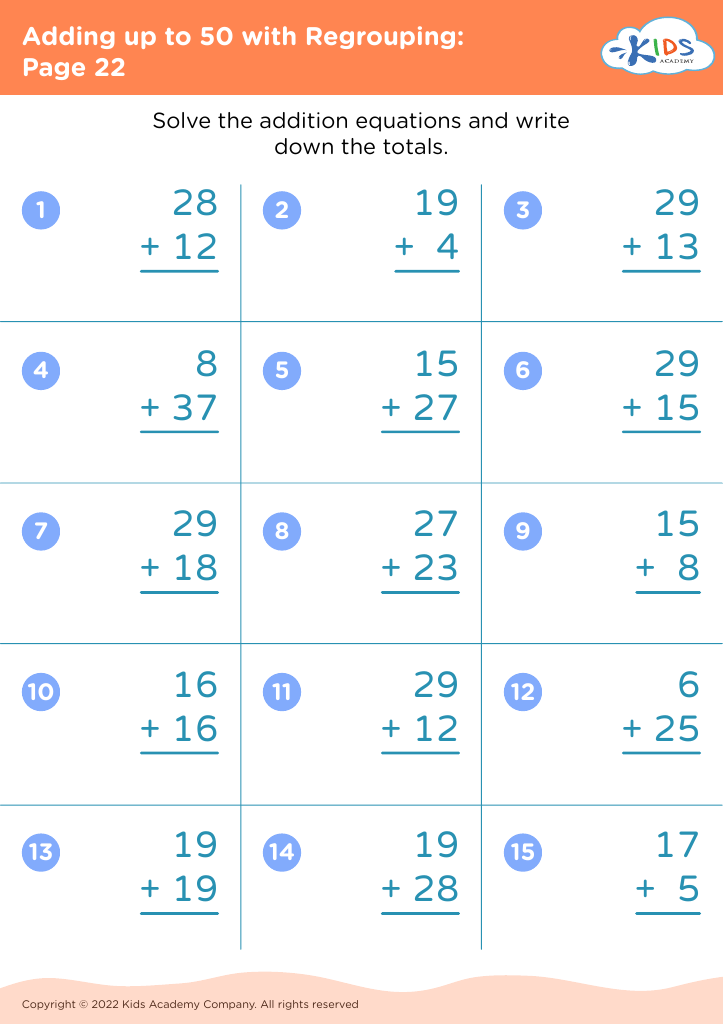
Adding up to 50 with Regrouping: Page 22
Worksheet
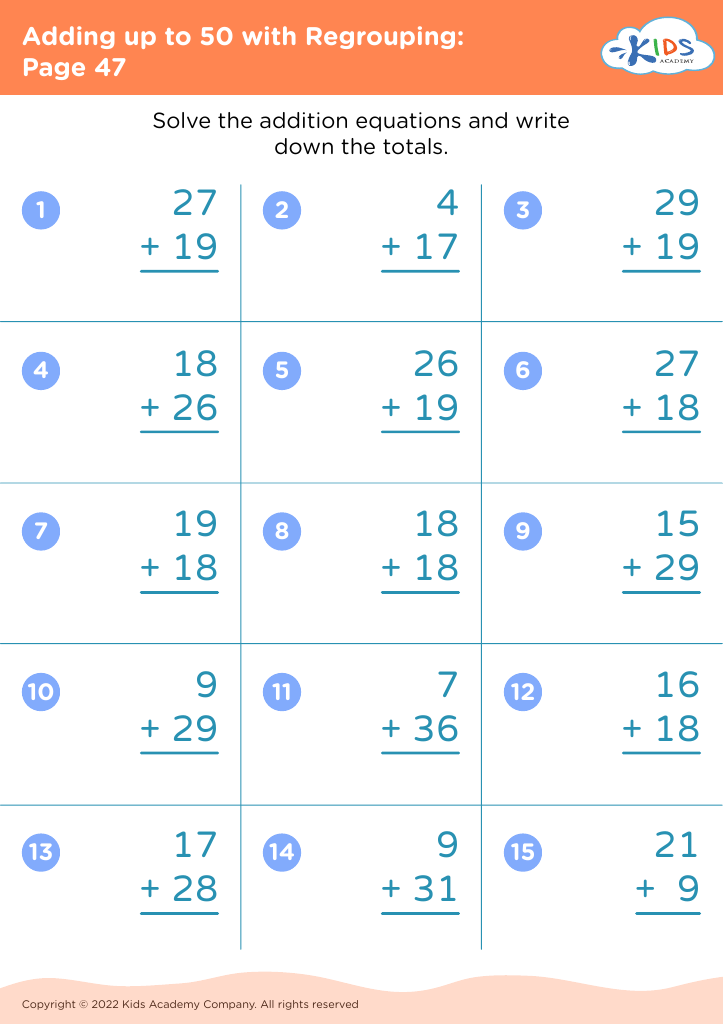
Adding up to 50 with Regrouping: Page 47
Worksheet
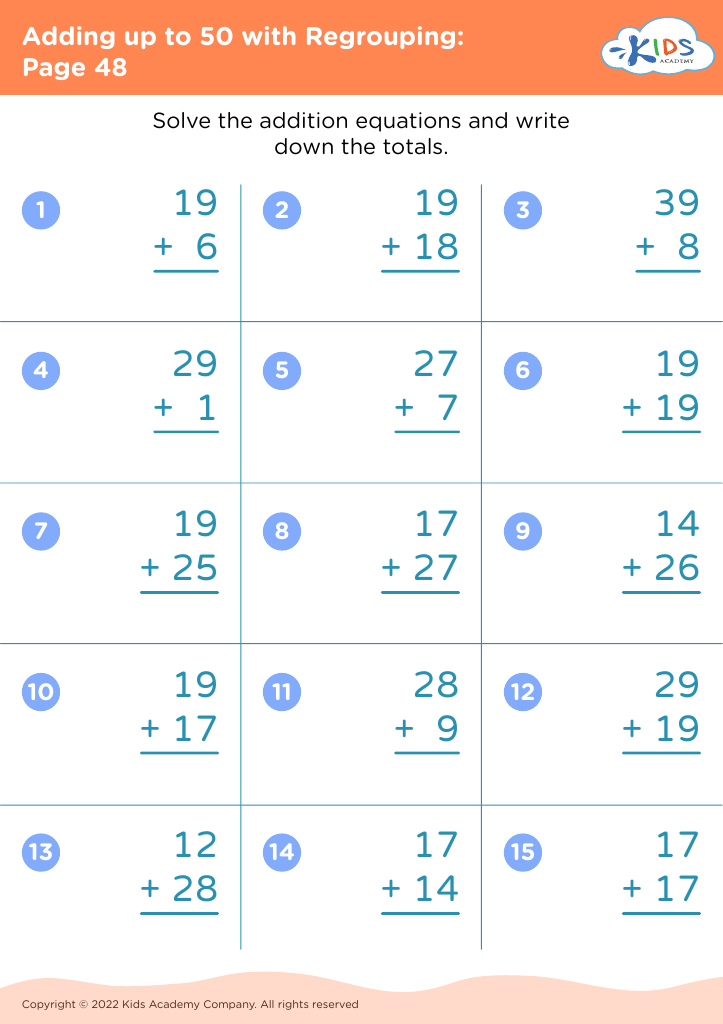
Adding up to 50 with Regrouping: Page 48
Worksheet
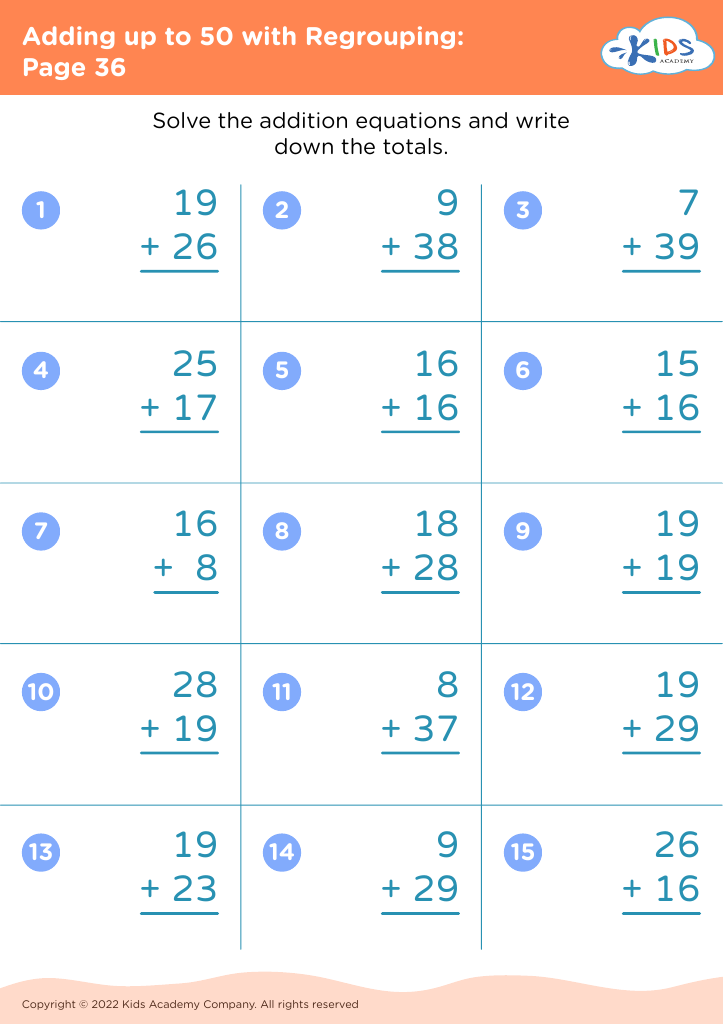
Adding up to 50 with Regrouping: Page 36
Worksheet
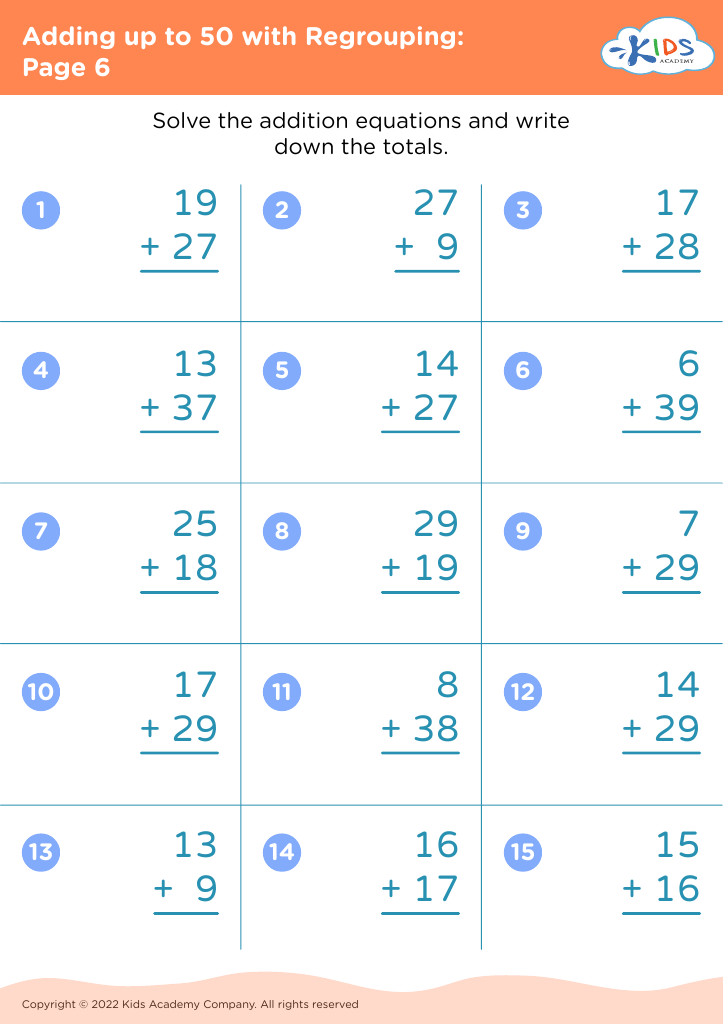
Adding up to 50 with Regrouping: Page 6
Worksheet
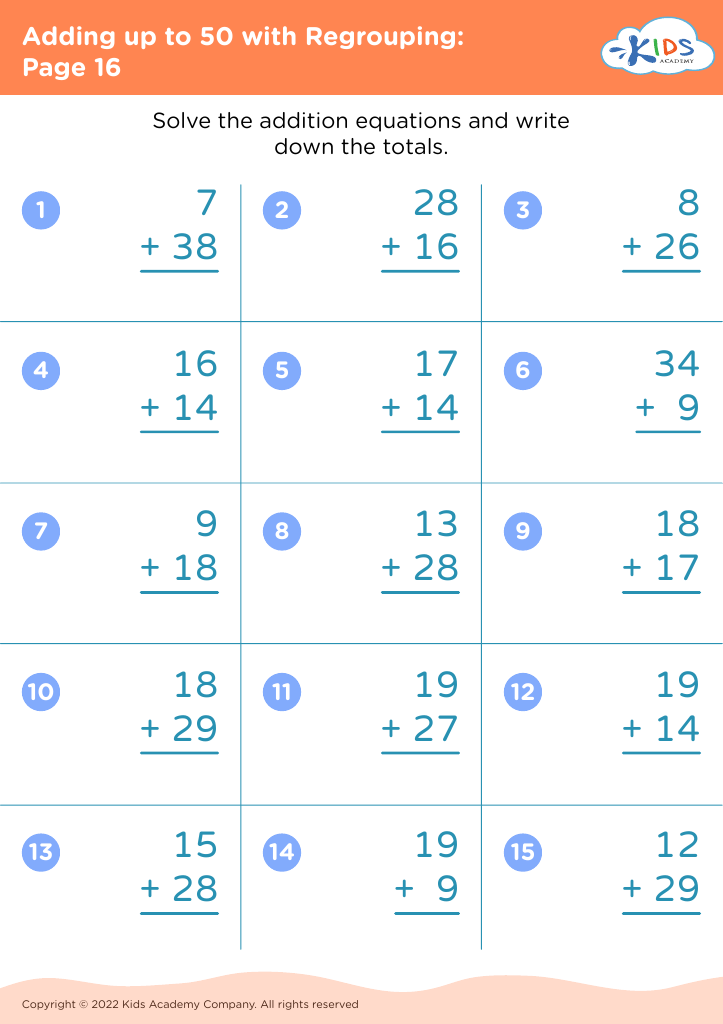
Adding up to 50 with Regrouping: Page 16
Worksheet
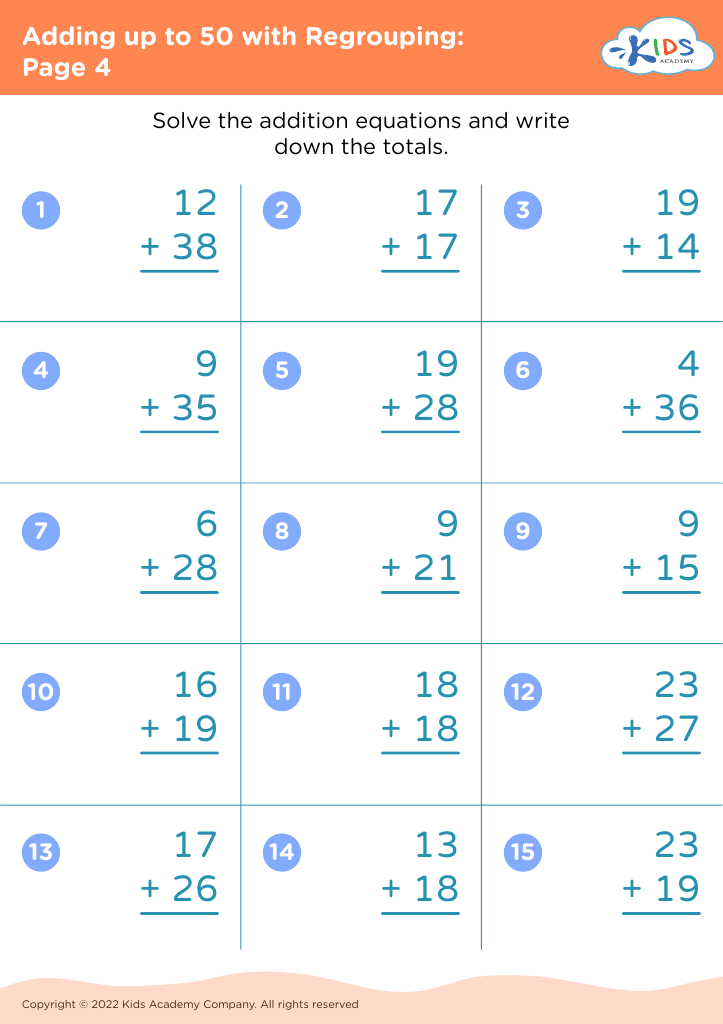
Adding up to 50 with Regrouping: Page 4
Worksheet


Understanding fractions and the concept of adding up to 50 with regrouping is crucial for 8-year-olds, as it lays the foundation for more advanced mathematical concepts they'll encounter later. Fractions are not just numbers; they represent parts of a whole, and having a firm grasp of them enables children to understand proportions, ratios, and even basic recipes in daily life.

When students learn to add fractions, particularly with regrouping, it enhances their problem-solving skills and number sense. It teaches them to break down larger problems into manageable parts, fostering critical thinking. Furthermore, mastering addition with regrouping solidifies their understanding of place value, which is essential for fluency in math.

For parents and teachers, recognizing the significance of these skills can lead to better support for children. Engaging them with real-life examples, games, and visual aids makes learning enjoyable and relevant. As children develop confidence in handling fractions and regrouping, it positively affects their overall math proficiency, leading to success in higher-level math tasks. Ultimately, instilling these concepts not only improves academic performance but also equips children with essential life skills they'll use beyond the classroom.