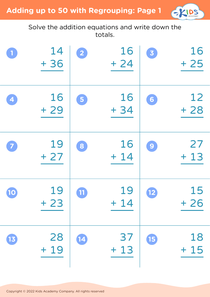
Counting practice Adding up to 50 Without Regrouping Worksheets for 8-Year-Olds
5 filtered results
-
From - To
Introduce your 8-year-olds to our engaging Counting Practice Adding up to 50 Without Regrouping Worksheets. Specially designed to build foundational math skills, these worksheets offer a fun and educational way to sharpen adding skills without regrouping. Each sheet features colorful exercises that challenge young learners while cultivating their confidence in arithmetic. Ideal for both in-class activities and at-home practice, these worksheets provide a comprehensive approach to mastering addition up to 50. Promote numerical fluency and ensure your students are counting with precision through interactive, visually appealing tasks tailored to their developmental needs.
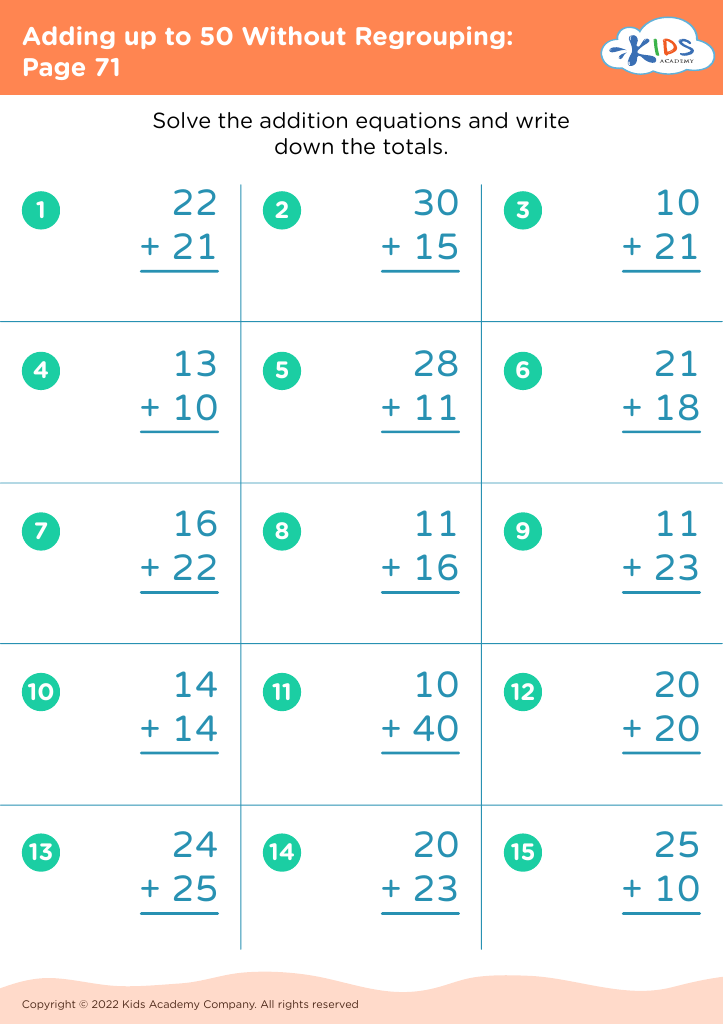
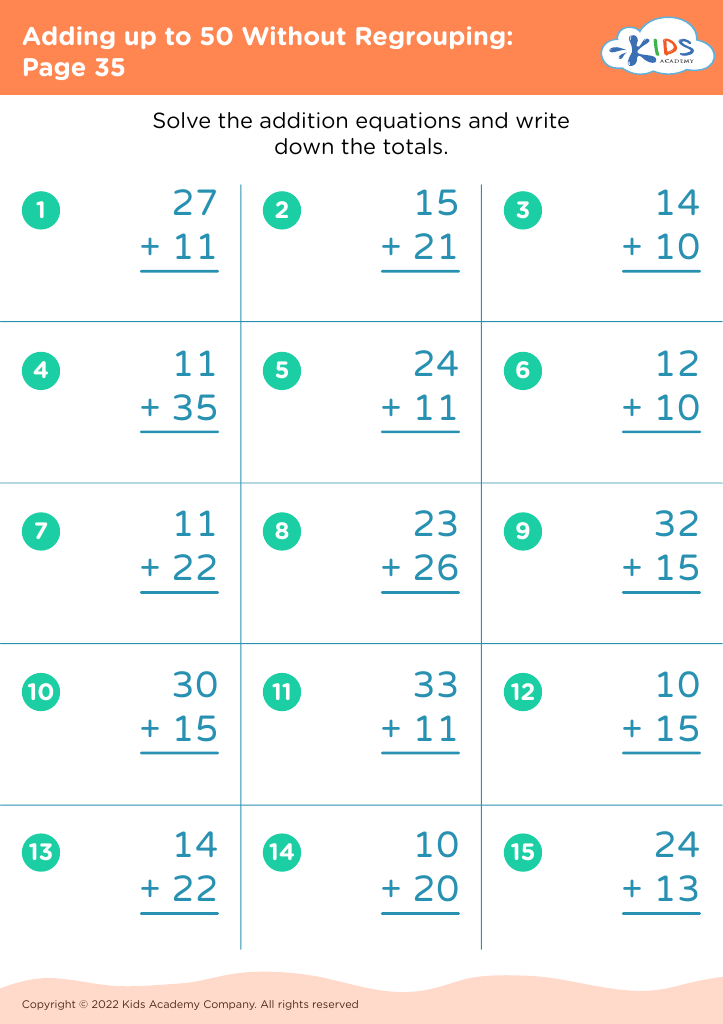
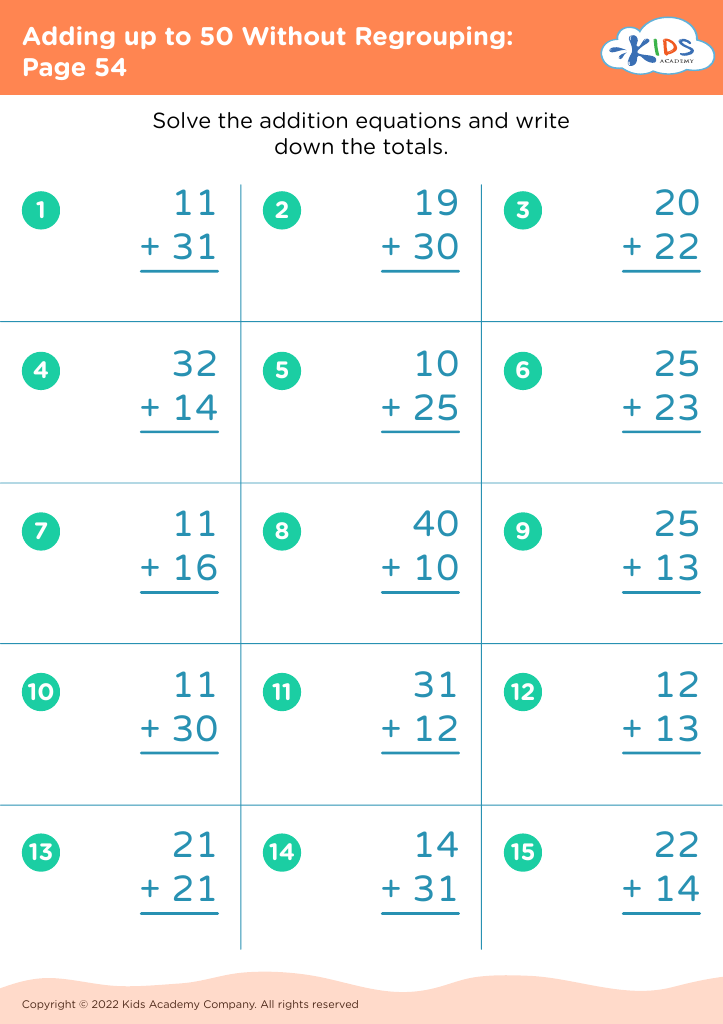
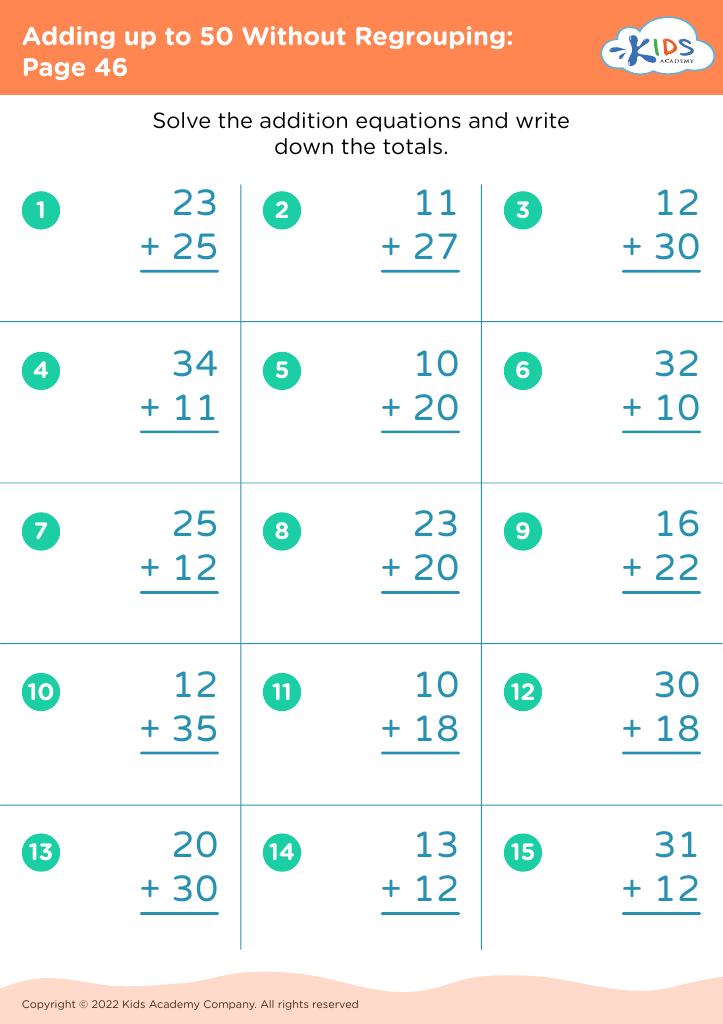
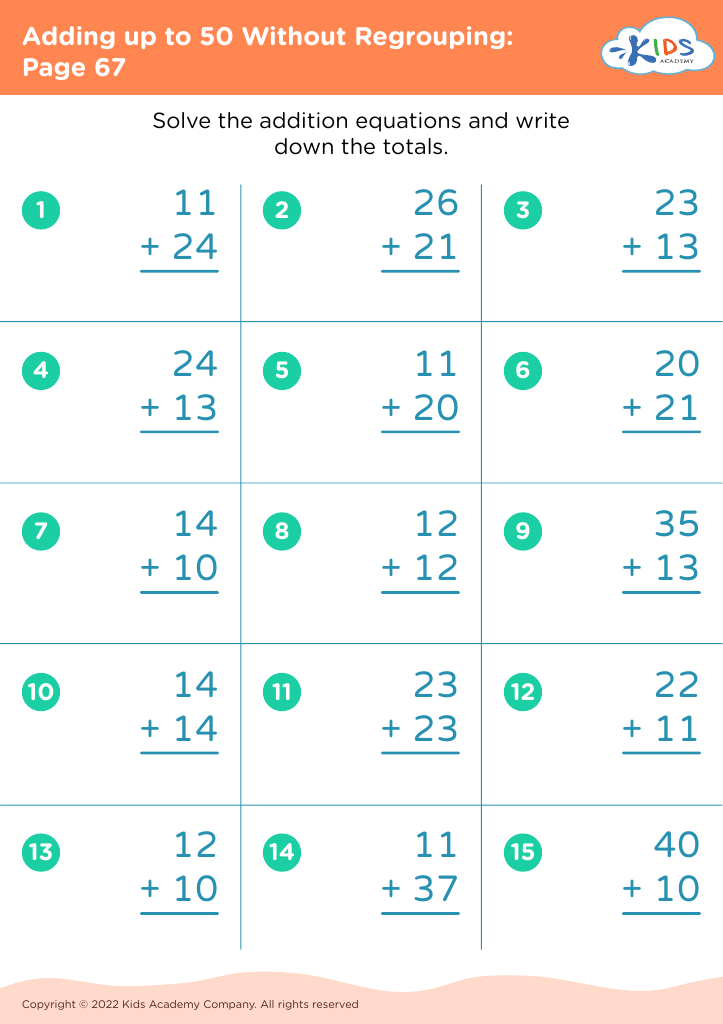


Counting practice and adding up to 50 without regrouping are foundational math skills crucial for 8-year-olds. This age marks a critical period in cognitive development when children are transitioning from simple, concrete calculations to more abstract mathematical concepts.
First, mastering these skills builds confidence. Successfully performing these calculations helps children see themselves as capable mathematicians, boosting their self-esteem.
Second, these skills form the building blocks for more complex math topics, such as addition and subtraction with regrouping, multiplication, and division. Without a strong grasp of counting and simple addition, children may struggle significantly as math problems become more complicated.
Third, counting practice enhances number fluency and mental calculation abilities. By regularly practicing these skills, children's brains become more adept at quickly and accurately processing numeric information.
Finally, early math skills are closely linked to real-world competencies. Tasks such as measuring ingredients for a recipe, handling money, or even playing certain games require a basic proficiency in addition.
For these reasons, parents and teachers alike should prioritize counting practice and simple addition, recognizing this investment lays the groundwork for each child's future academic success and practical life skills.