Filters

16 filtered results

Clear all filters
Favorites
With answer key
Interactive

16 filtered results

Difficulty Level

Grade


Boost your child's math confidence with our "Basic Math Skills: Adding up to 50 Worksheets" designed specifically for 8-year-olds. These engaging and interactive worksheets provide a fun way for young learners to master addition within the range of 50, sharpening their skills through a variety of exercises. From simple addition problems to more challenging scenarios, these resources cater to different learning styles and reinforce essential math concepts essential for their academic growth. Perfect for classroom activities or at-home practice, these worksheets are an excellent tool to support your child's learning journey, making math enjoyable and accessible. Start exploring today!
Check out this FREE Trial Lesson on Adding up to 50 for age 8!

Short and Long Vowel Sort

Favorites
With answer key
Interactive
  • 8
  • Basic Math Skills
  • Adding up to 50
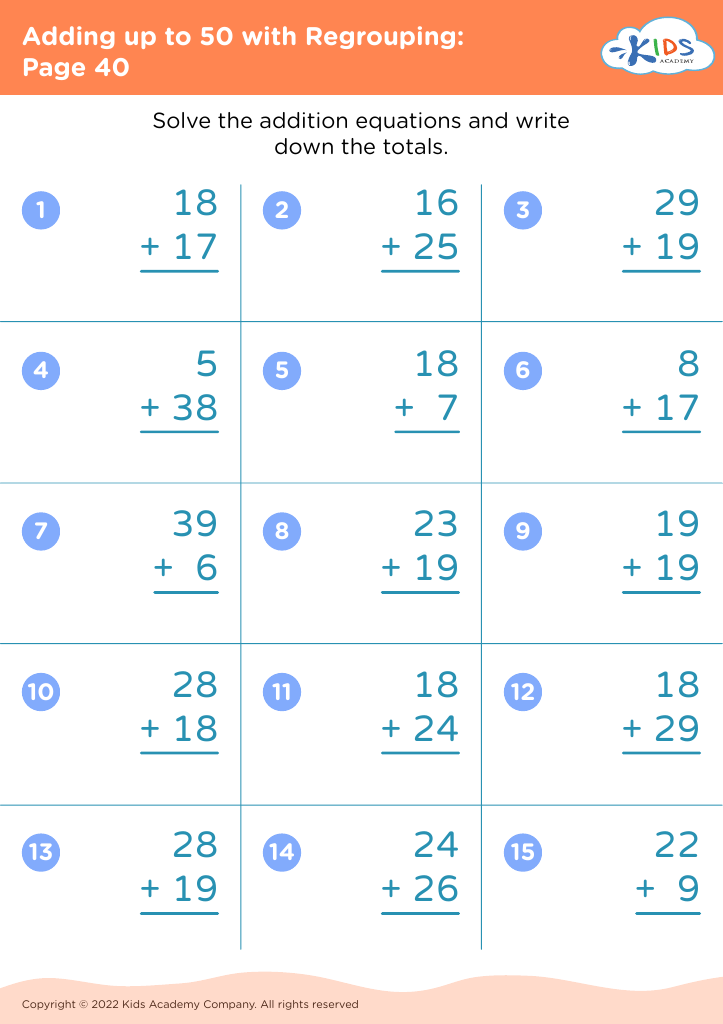
Adding up to 50 with Regrouping: Page 40
Worksheet
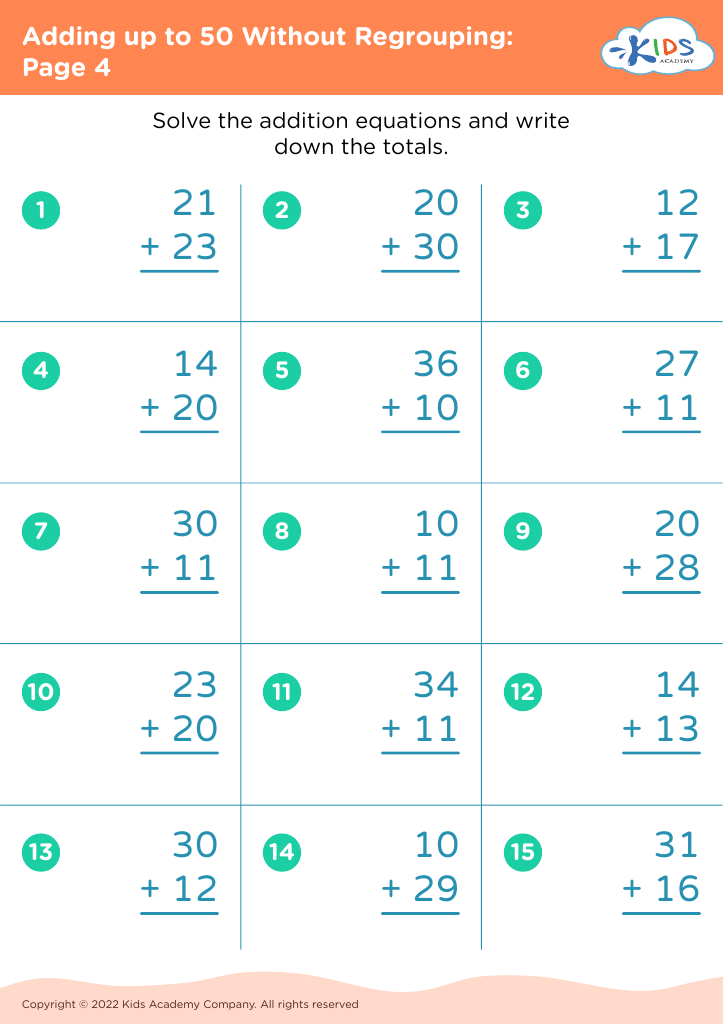
Adding up to 50 Without Regrouping: Page 4
Worksheet
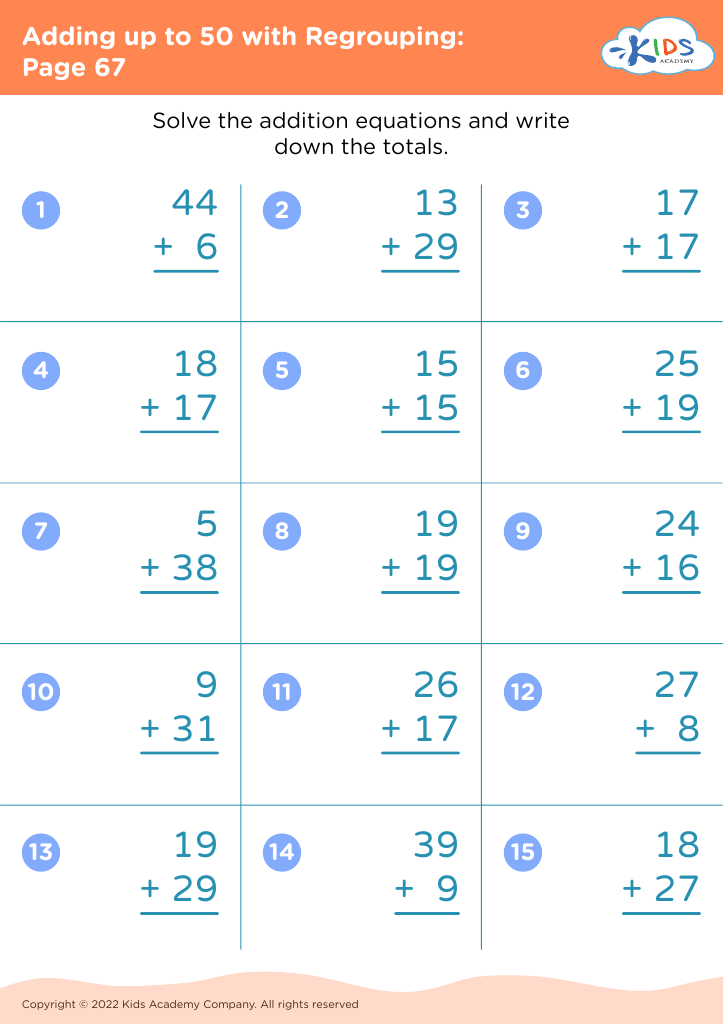
Adding up to 50 with Regrouping: Page 67
Worksheet
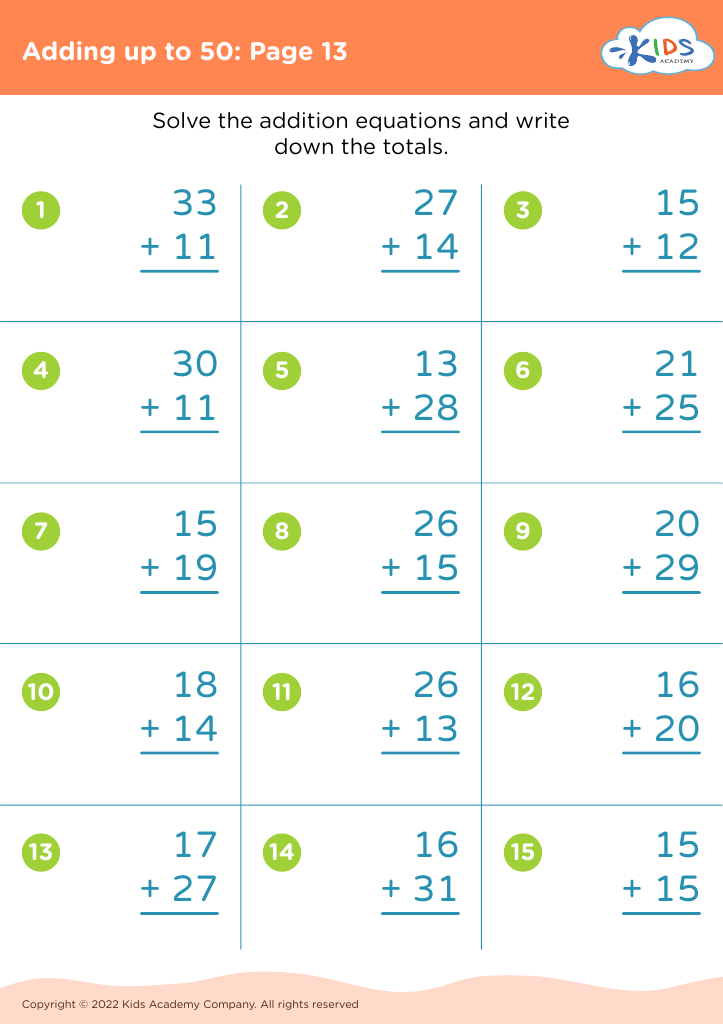
Adding up to 50: Page 13

Adding up to 50: Page 13

Adding up to 50: Page 13
Worksheet
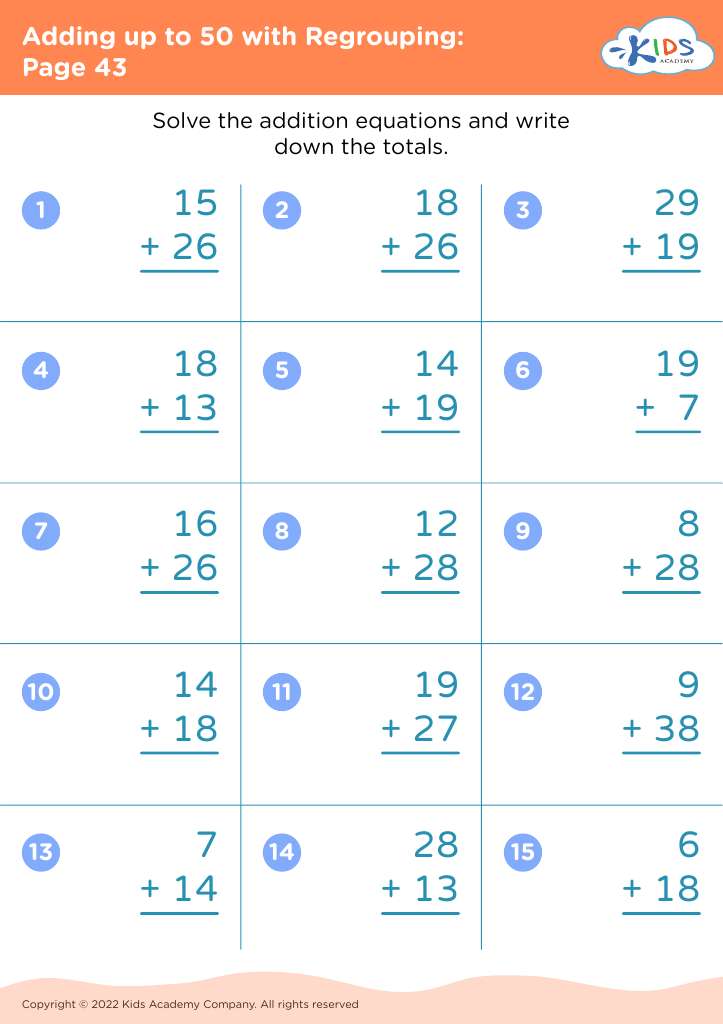
Adding up to 50 with Regrouping: Page 43
Worksheet
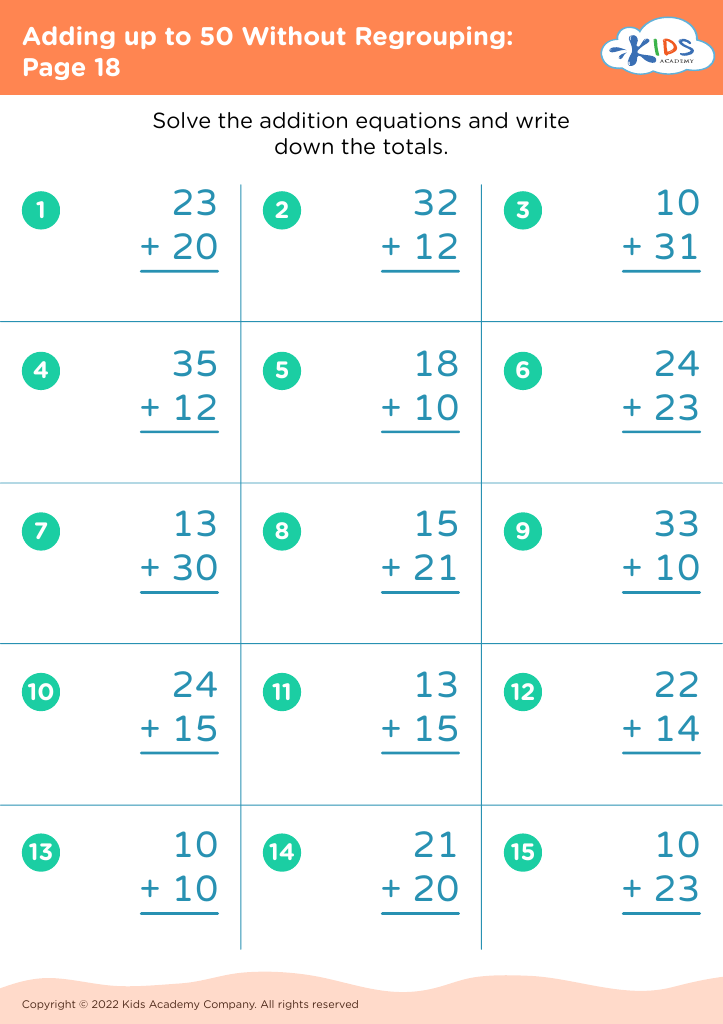
Adding up to 50 Without Regrouping: Page 18
Worksheet
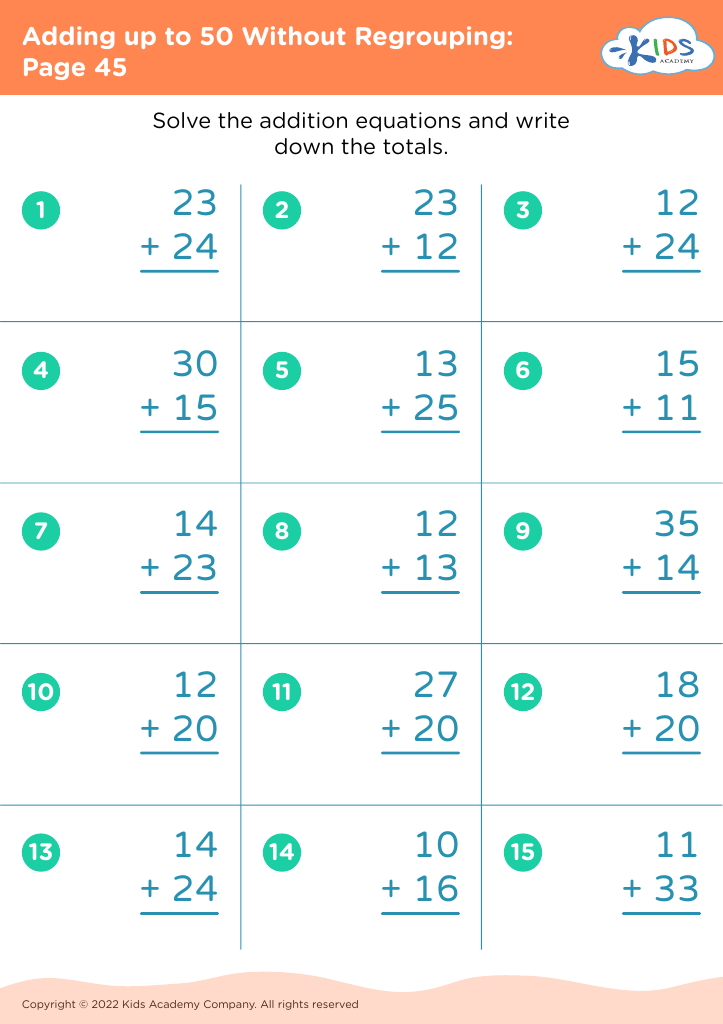
Adding up to 50 Without Regrouping: Page 45
Worksheet
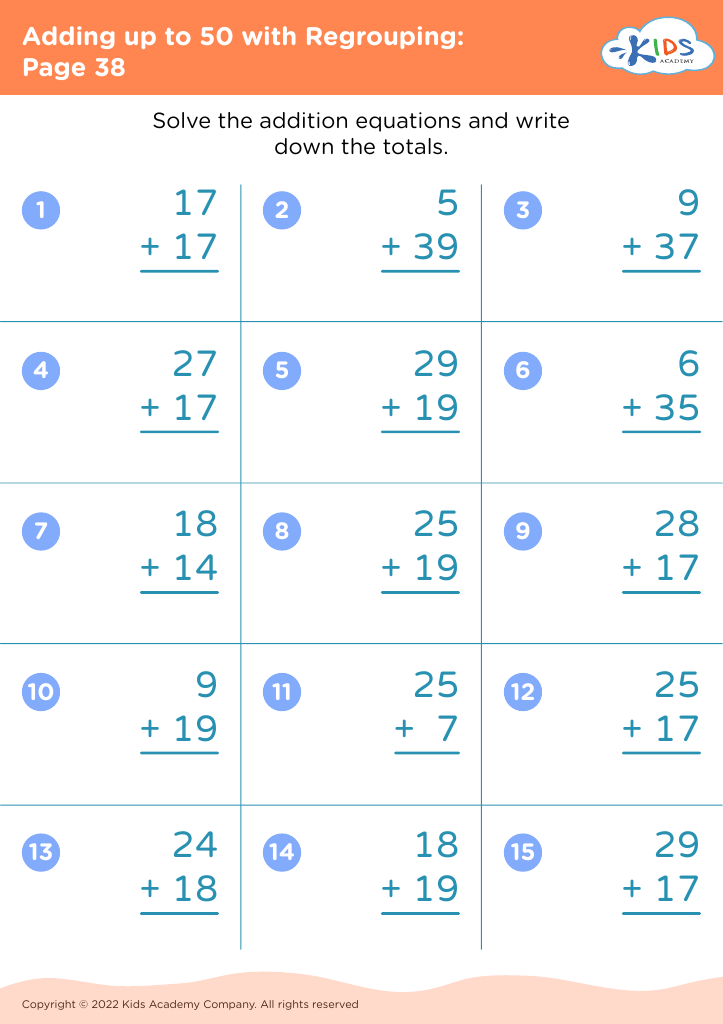
Adding up to 50 with Regrouping: Page 38
Worksheet
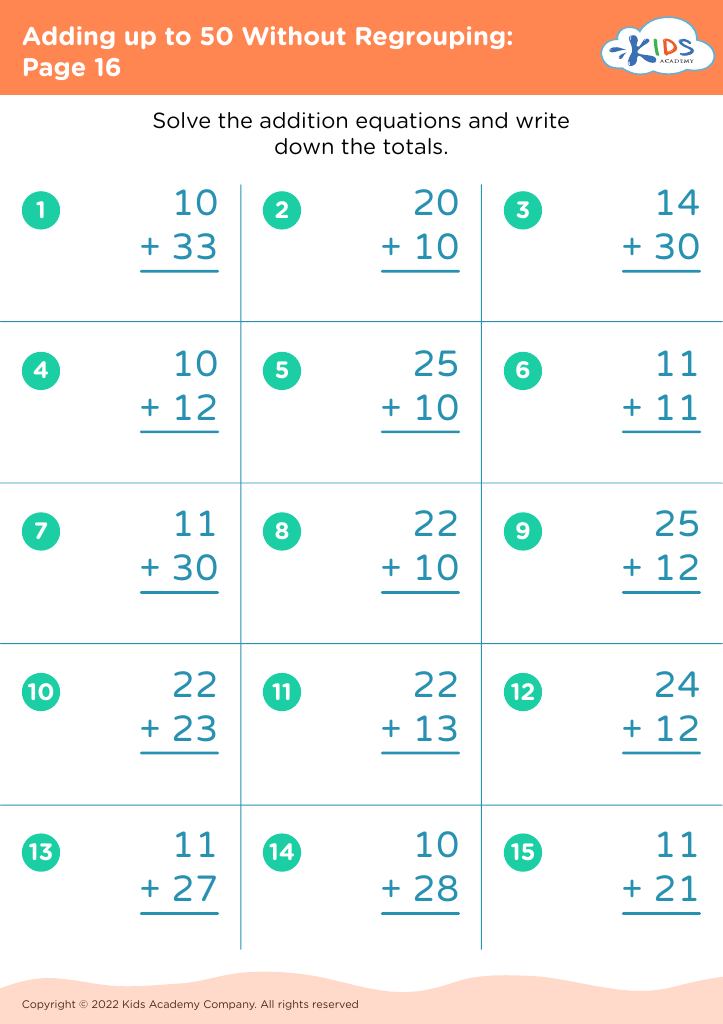
Adding up to 50 Without Regrouping: Page 16
Worksheet
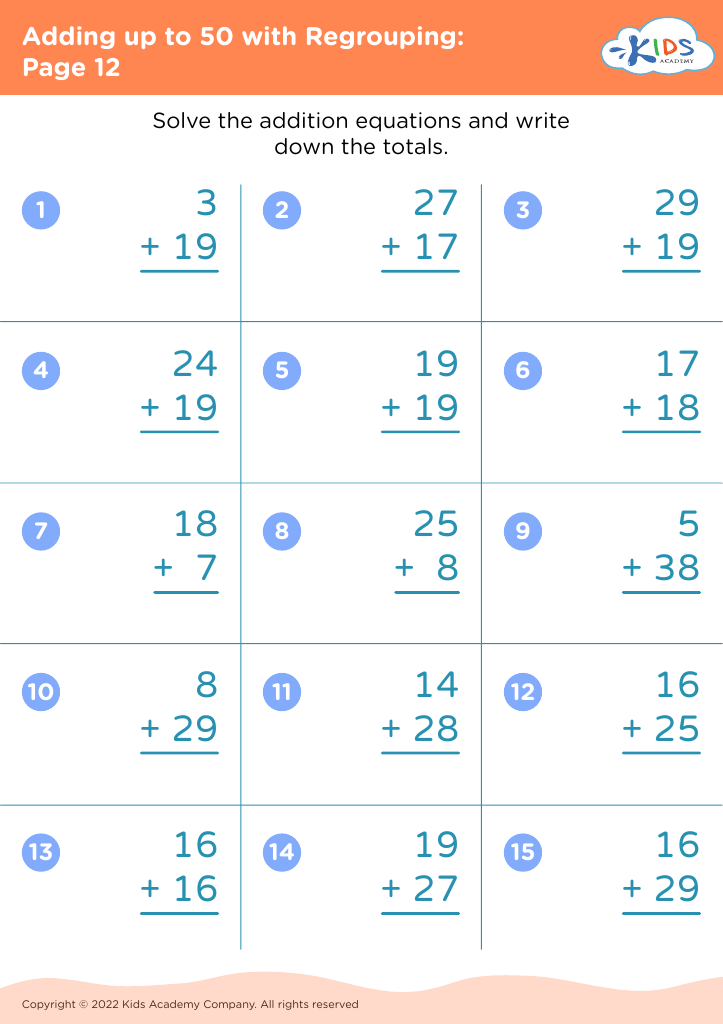
Adding up to 50 with Regrouping: Page 12
Worksheet
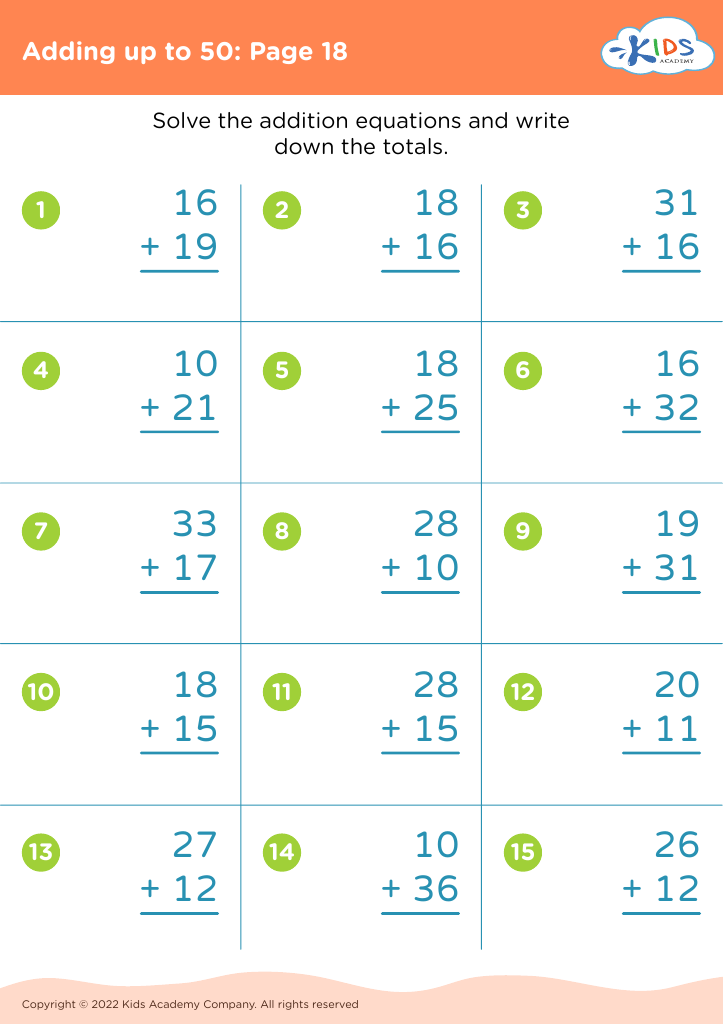
Adding up to 50: Page 18

Adding up to 50: Page 18

Adding up to 50: Page 18
Worksheet
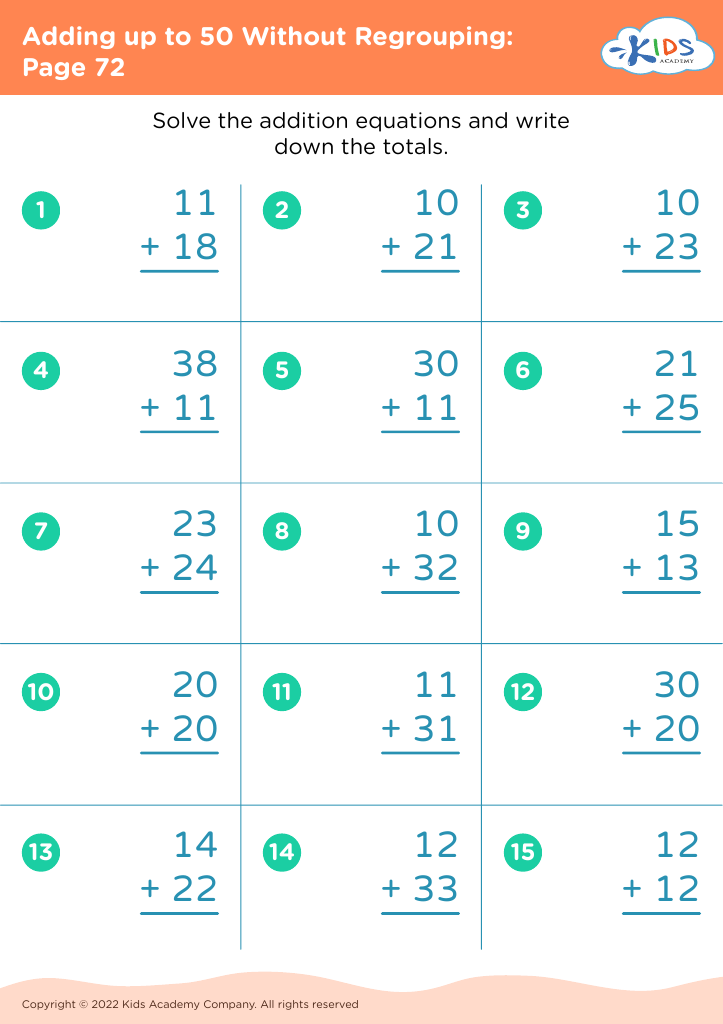
Adding up to 50 Without Regrouping: Page 72
Worksheet
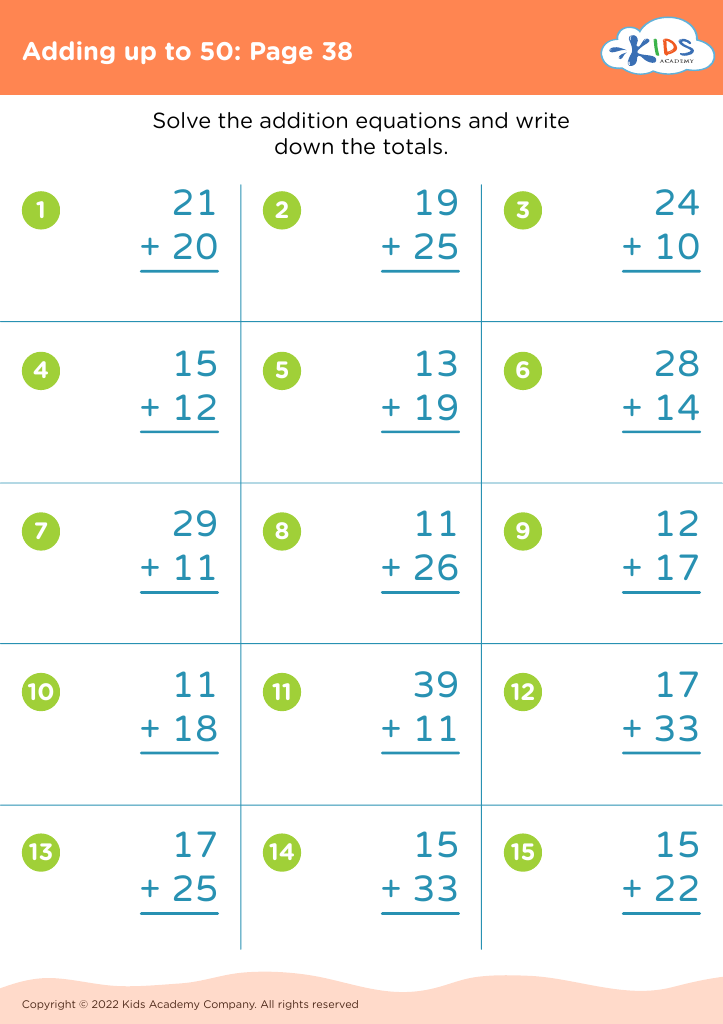
Adding up to 50: Page 38

Adding up to 50: Page 38

Adding up to 50: Page 38
Worksheet
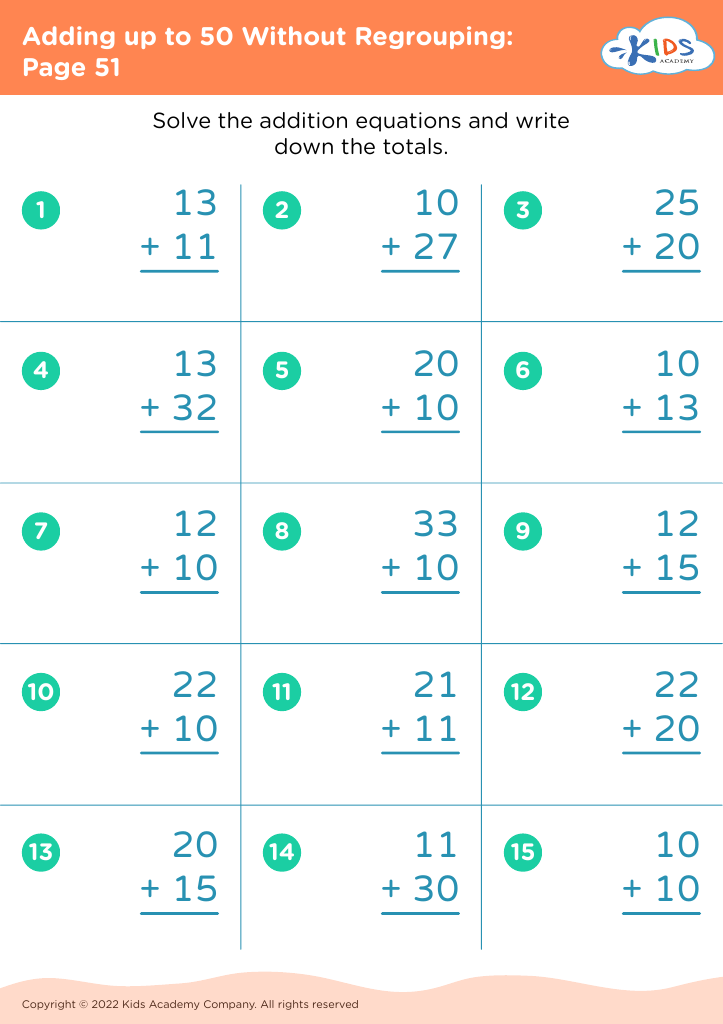
Adding up to 50 Without Regrouping: Page 51
Worksheet
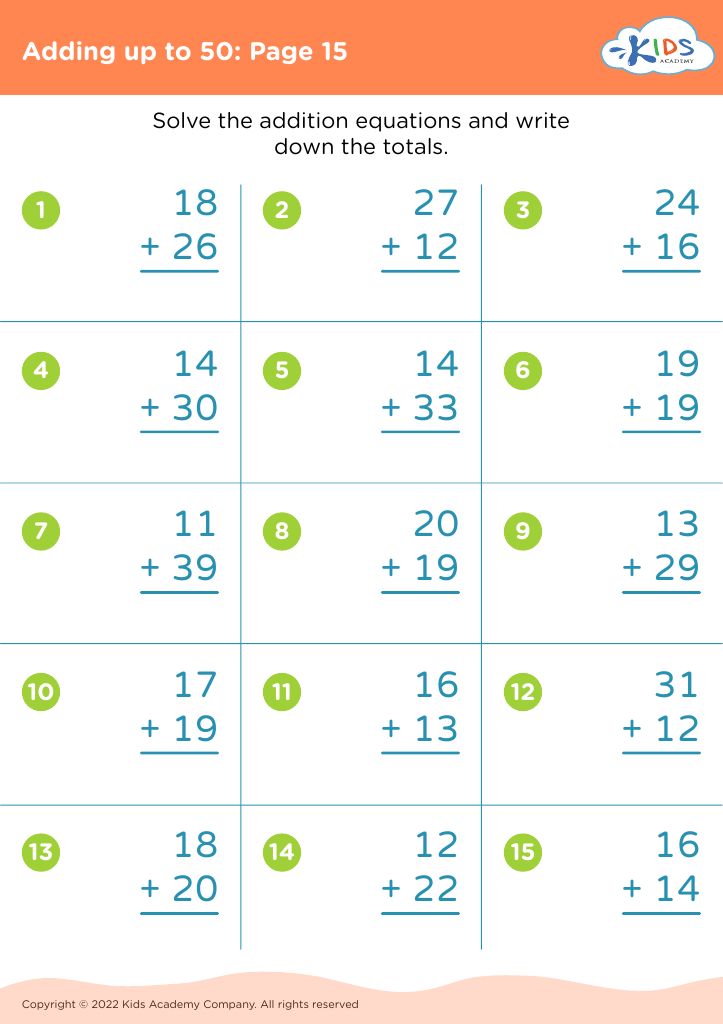
Adding up to 50: Page 15

Adding up to 50: Page 15

Adding up to 50: Page 15
Worksheet
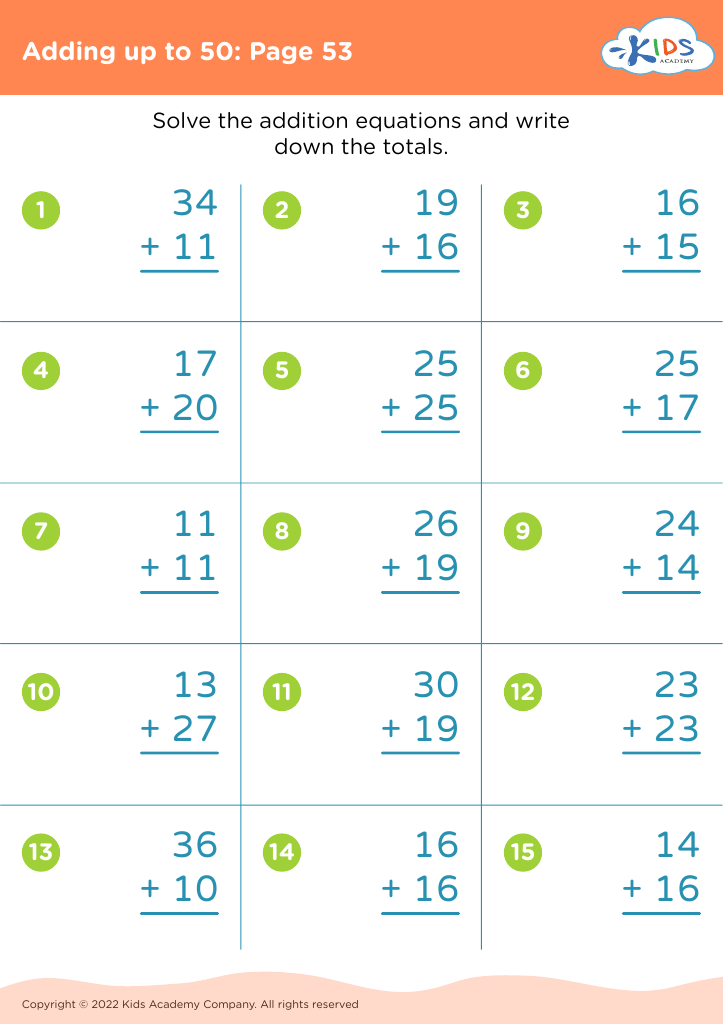
Adding up to 50: Page 53

Adding up to 50: Page 53

Adding up to 50: Page 53
Worksheet


Basic math skills, especially adding up to 50, are essential for 8-year-olds for several reasons. First, these skills form the foundation of a child's mathematical understanding and pave the way for more complex concepts like subtraction, multiplication, and division. Mastery of addition not only inculcates number sense but also fosters confidence in mathematical abilities, which is crucial for overall academic success.

Secondly, addition skills are practical and immediately applicable in daily life, enhancing a child's ability to tackle real-world tasks such as shopping, budgeting, or helping with cooking measurements. This relevance helps improve engagement and interest in mathematics, making the learning process more enjoyable.

Furthermore, developing these skills at an early age can prevent challenges later. Early mastery helps prevent gaps in knowledge, ensuring that students keep pace with their peers. This support can alleviate future anxiety regarding math, promoting a positive attitude toward the subject.

Lastly, nurturing basic math skills fosters critical thinking and problem-solving abilities. These skills contribute to lifelong learning and adaptability, which are increasingly important in our rapidly changing world. Therefore, parents and teachers should prioritize ensuring children are comfortable with adding up to 50 to set them on a path to future success.