Cognitive Development Adding up to 50 Worksheets for 8-Year-Olds
4 filtered results
-
From - To
Unlock your child's potential with our "Cognitive Development Adding Up to 50 Worksheets for 8-Year-Olds." Designed to engage young minds, these worksheets focus on essential math skills, such as addition within 50, critical thinking, and problem-solving. Each activity is crafted to enhance cognitive abilities, making learning enjoyable and effective. Through interactive and fun exercises, your child will build confidence, improve focus, and develop a love for math. Ideal for home practice or classroom use, these worksheets offer a solid foundation for future academic success. Give your child the tools to excel with our expertly designed math resources.
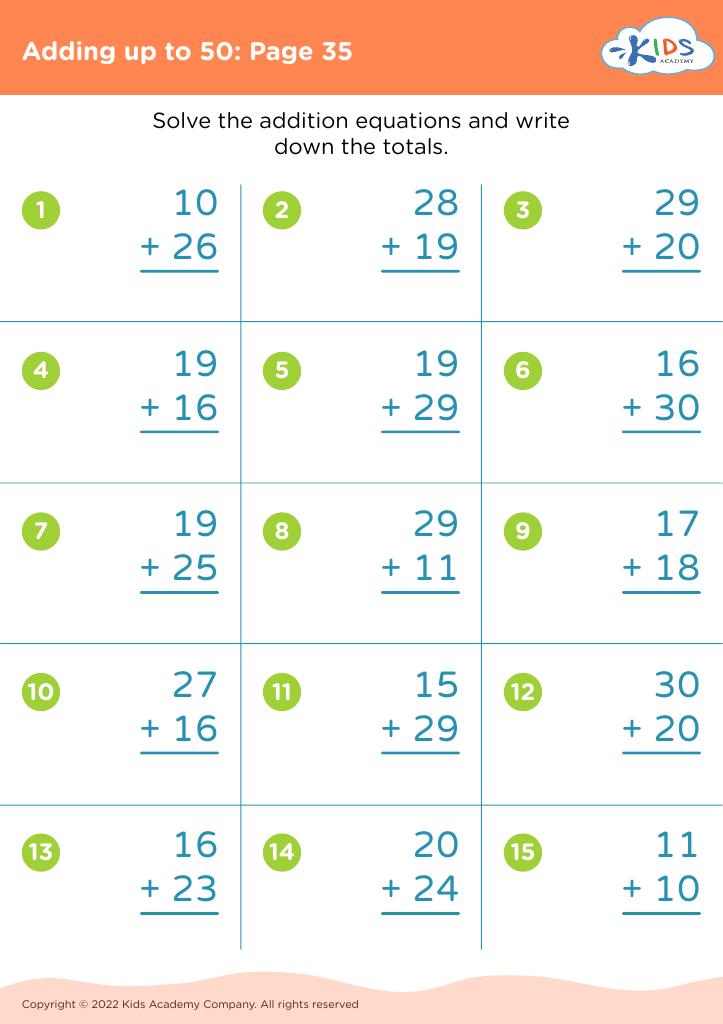
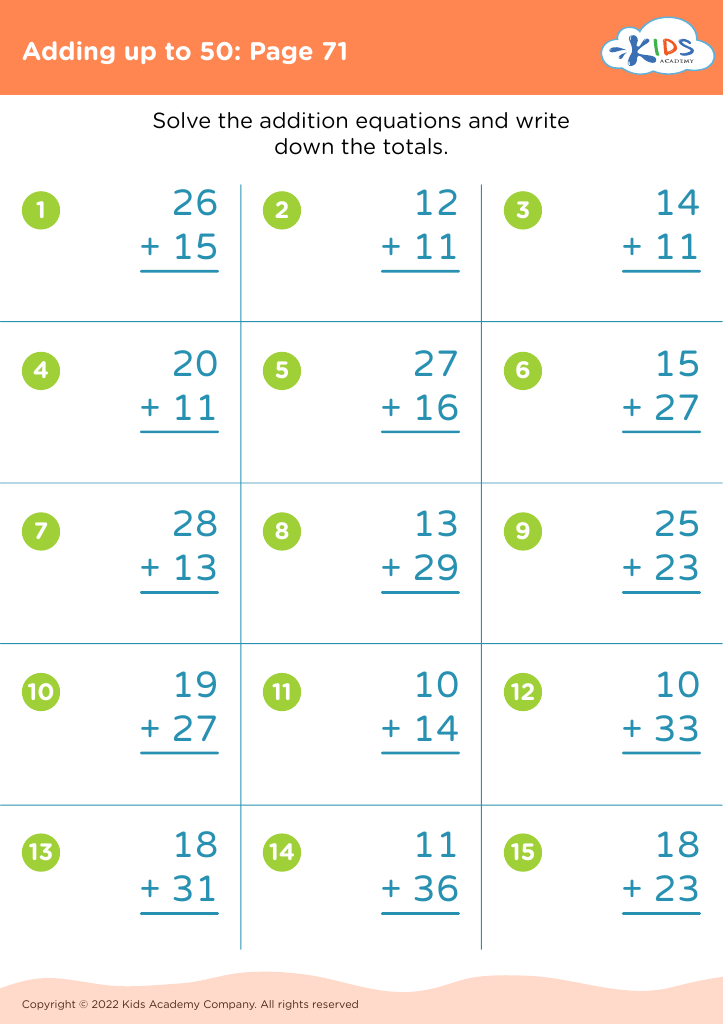
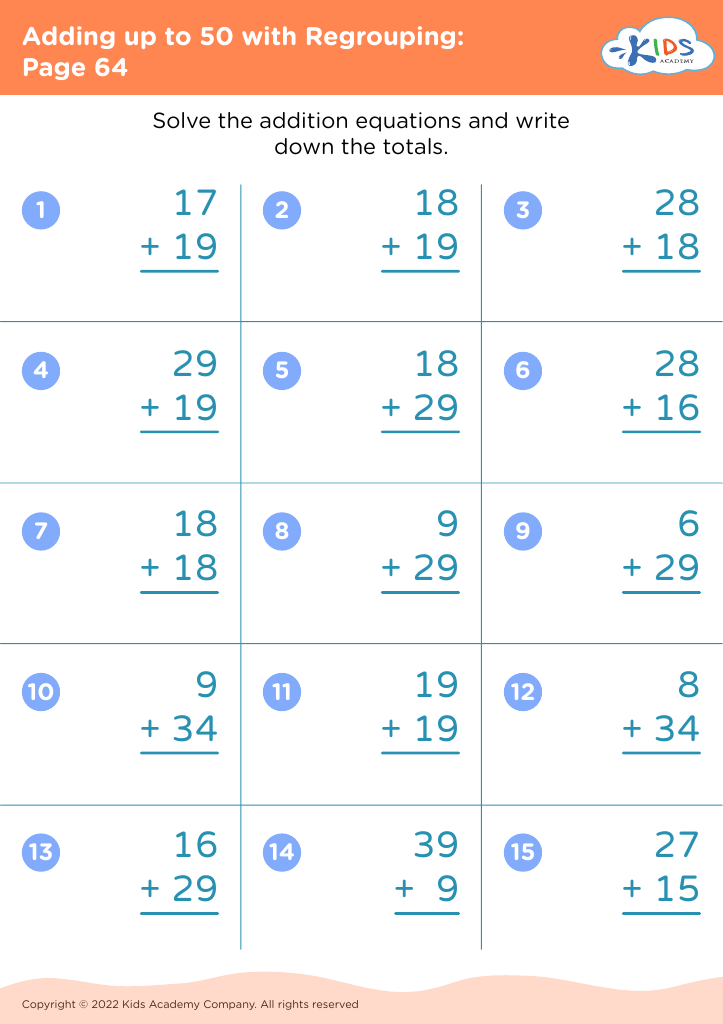
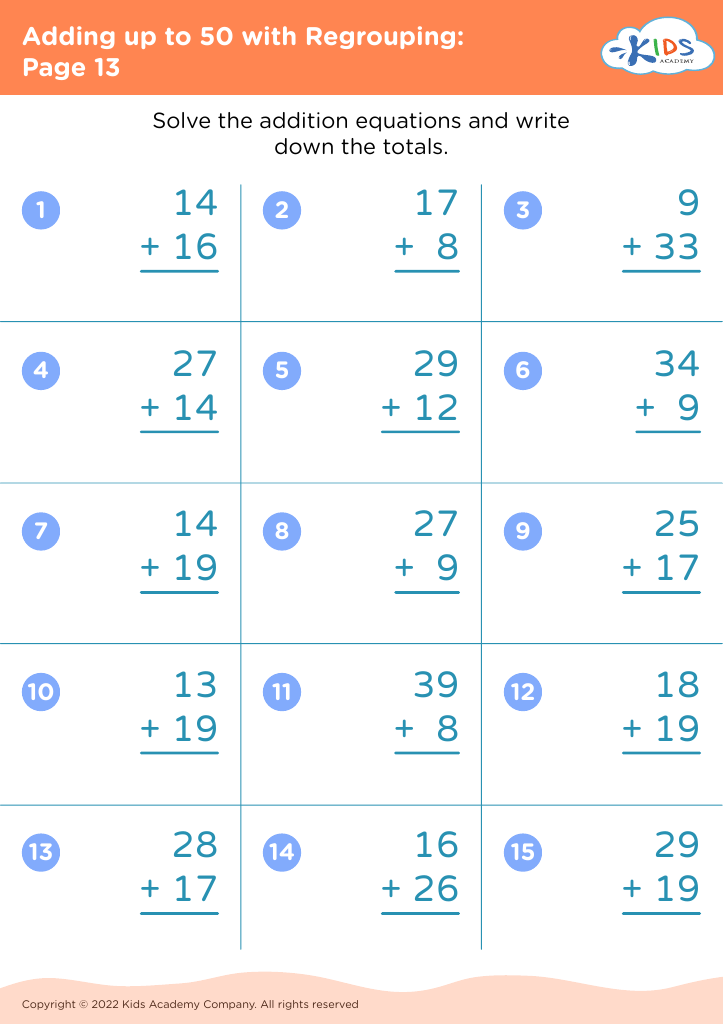




Cognitive development is a crucial aspect of an 8-year-old’s growth, encompassing their ability to think, reason, and understand the world around them. One formative milestone in this period is the capacity to add numbers up to 50. This skill isn't just about arithmetic; it fosters logical thinking, problem-solving abilities, and perseverance. For parents and teachers, encouraging cognitive development by focusing on such milestones is essential as it lays a foundation for a child's future academic success.
Concretely, mastering addition up to 50 involves several cognitive processes. Children learn to recognize number patterns, develop mental strategies to tackle problems, and enhance their memory. These skills are precursors to more complex math concepts they'll encounter later in school. Furthermore, such activities promote concentration and patience, qualities beneficial in all learning areas.
Additionally, being proficient in these basics ensures that children have the confidence and readiness to approach diverse academic tasks. This confidence subsequently affects their overall attitude towards schooling and learning. By supporting cognitive development, parents and teachers nurture a child's intellectual capacity and emotional wellness, setting them on a path to continuous growth and achievement. Hence, focusing on cognitive development through exercises like these additions is vital for a child’s holistic education and wellbeing.








