Color recognition Adding up to 50 Worksheets for 8-Year-Olds
3 filtered results
-
From - To
Unlock your child's potential with our Color Recognition and Adding Up to 50 worksheets designed specifically for 8-year-olds! This engaging resource combines essential math skills and vibrant colors to enhance learning. Kids will love identifying colors while practicing their addition skills, making math exciting and interactive. With a variety of fun activities, these worksheets promote critical thinking and visual discrimination, essential for developing foundational math abilities. Ideal for homeschooling or classroom use, our worksheets provide a balanced approach to education—ensuring students master adding up to 50 while enjoying the process! Enhance your teaching toolkit and ignite a love for learning today!
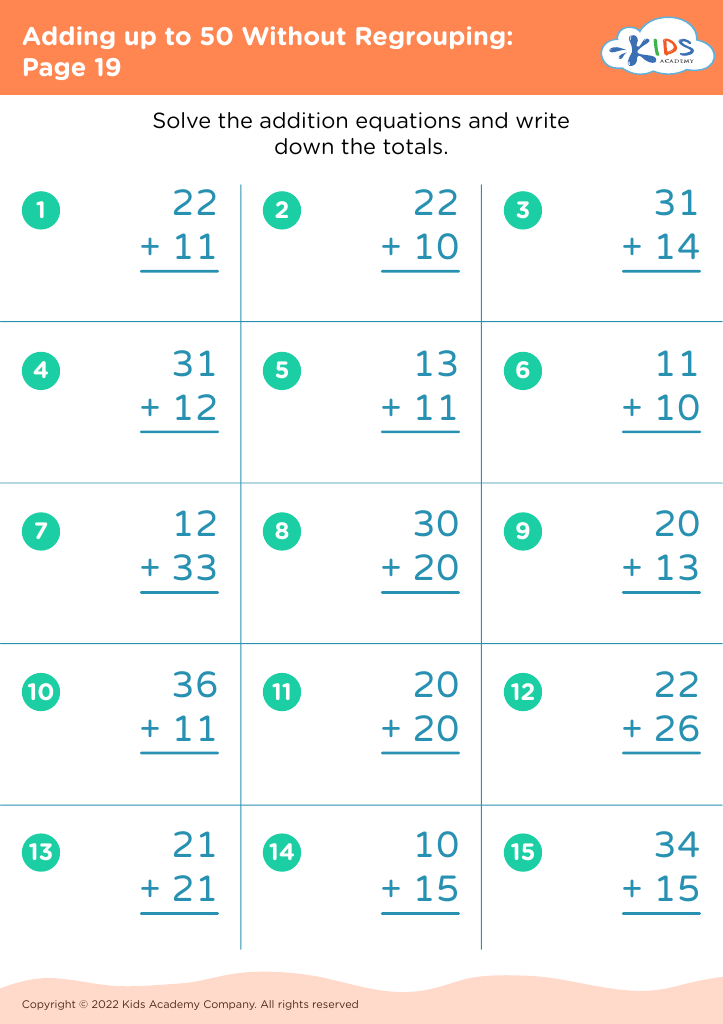
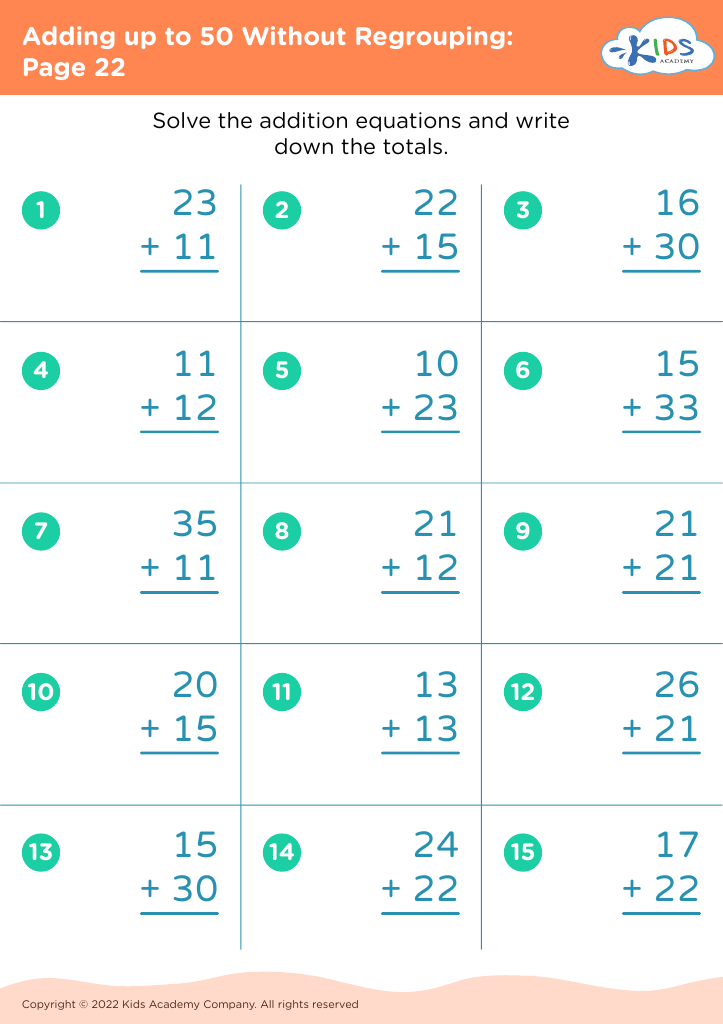
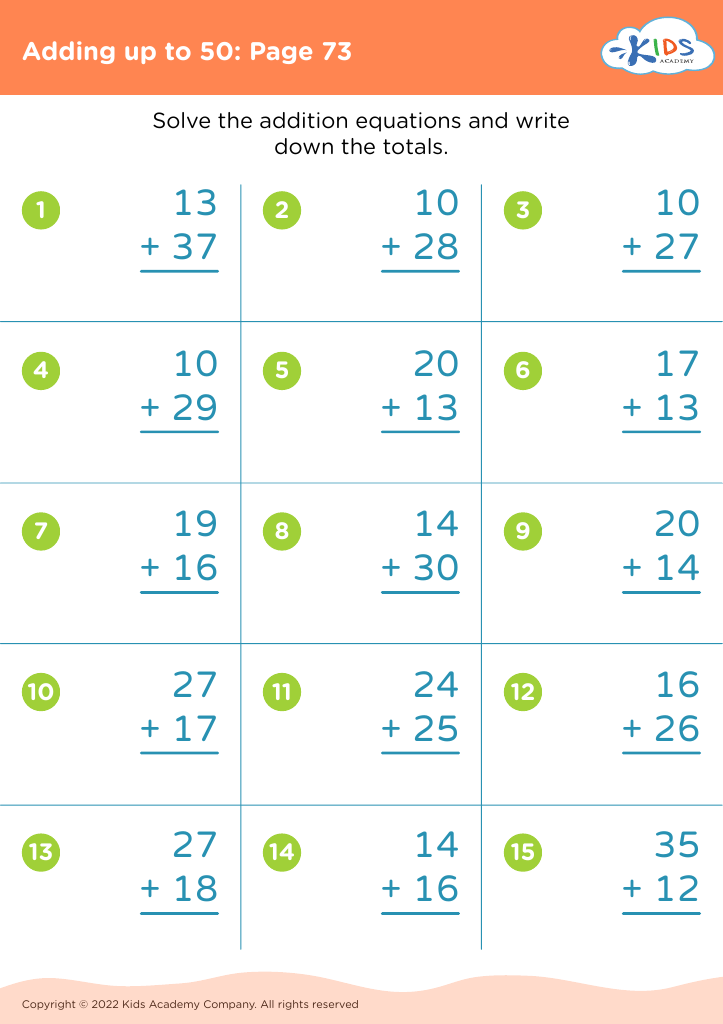




Color recognition and the ability to add up to 50 are essential skills that significantly impact a child's development, both academically and socially. For parents and teachers, fostering these skills lays the groundwork for cognitive growth and enhances learning experiences.
Color recognition plays a crucial role in early childhood. It helps children develop their observation and categorization skills, which are foundational for engaging with the world. Recognizing colors can support language development, as children learn to name and describe various hues. Moreover, it leads to creativity in art and design, enabling children to express themselves visually.
On the other hand, mastering addition up to 50 contributes to mathematical literacy. At the age of 8, children are typically transitioning from basic arithmetic to more complex problem-solving tasks. The ability to add efficiently strengthens their number sense and boosts their confidence, equipping them for more advanced math concepts. Furthermore, math skills are instrumental in daily life, enhancing critical thinking and decision-making abilities.
Together, color recognition and addition form vital cognitive building blocks. They intertwine artistry and logic, paving the way for holistic development and making learning both fun and engaging for children. As such, parents and teachers should prioritize these skills in their educational approach.








