Comparing Fractions Adding up to 50 Worksheets for 8-Year-Olds - Page 2
30 filtered results
-
From - To
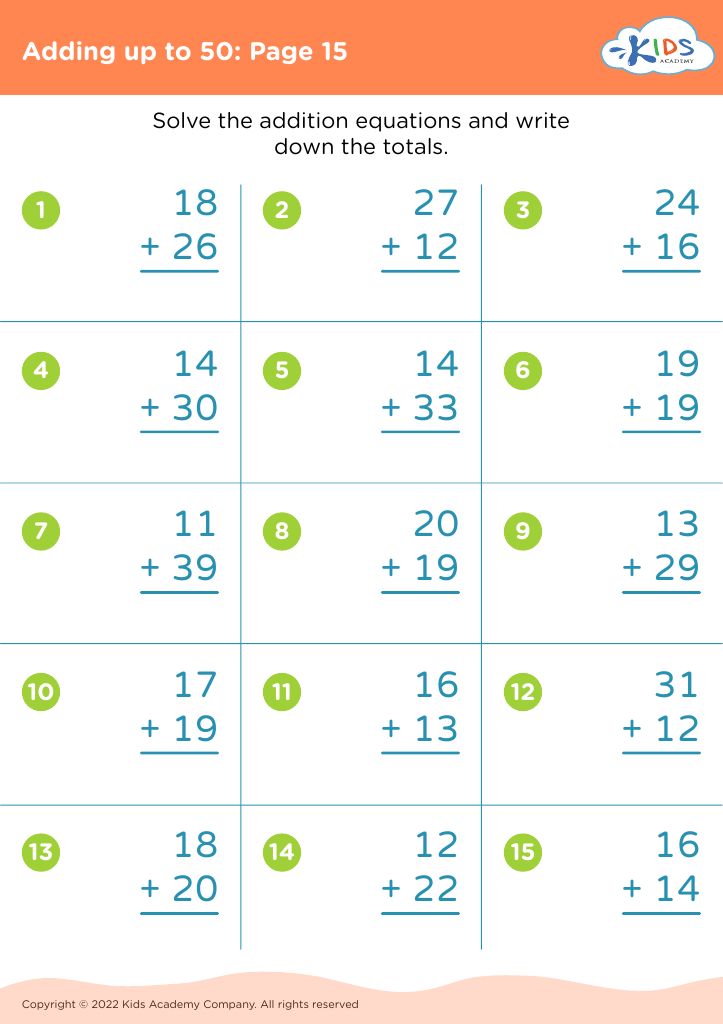
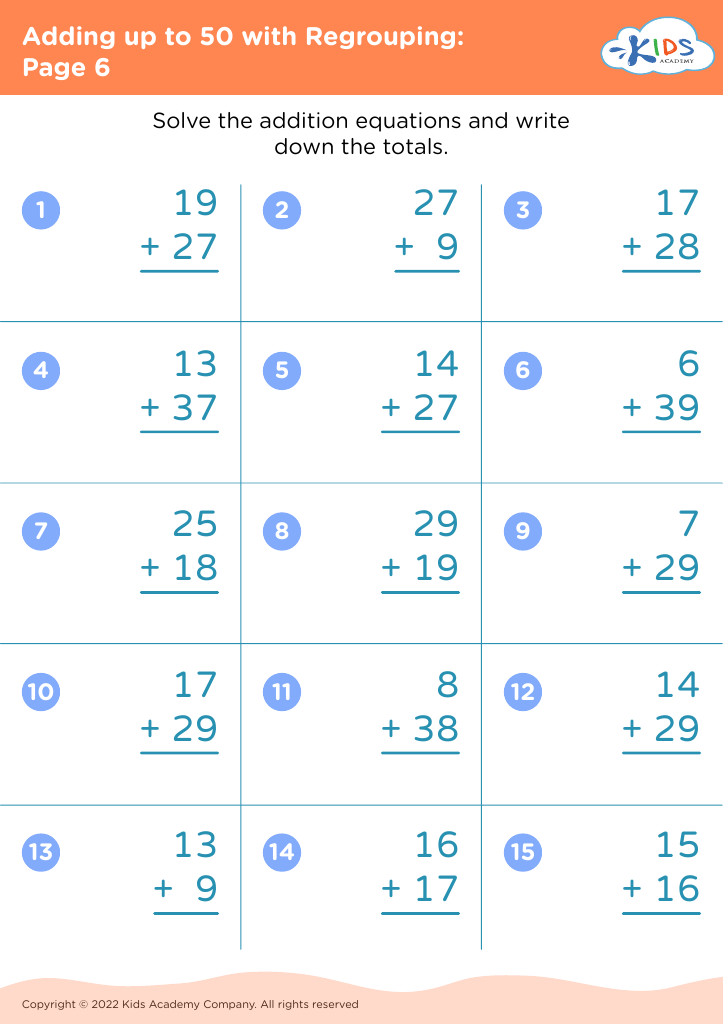
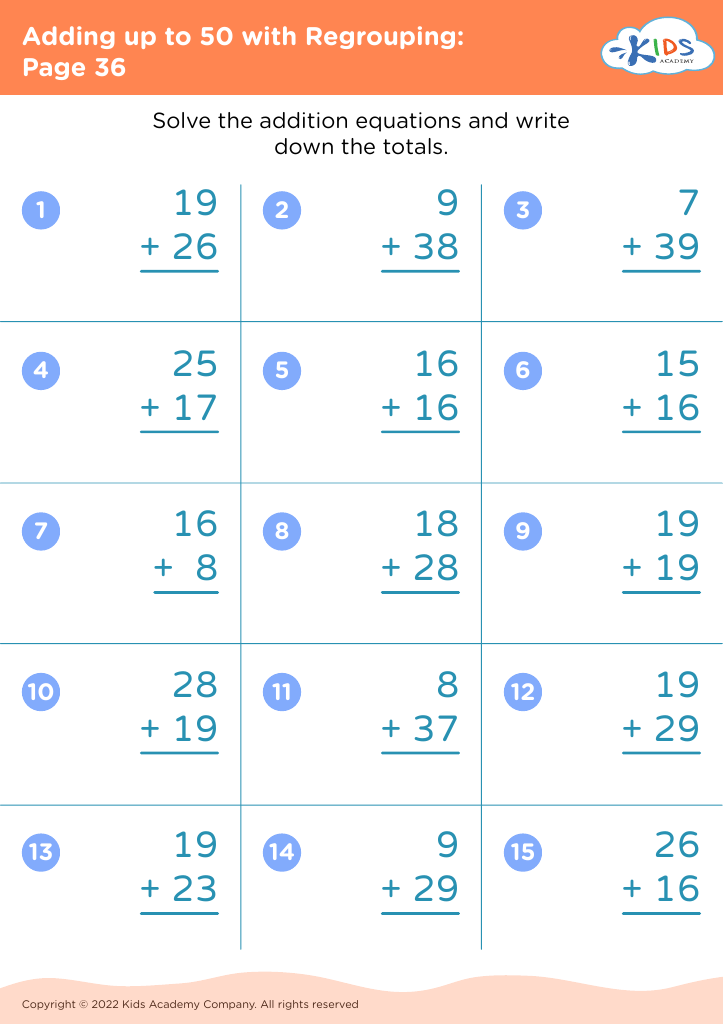
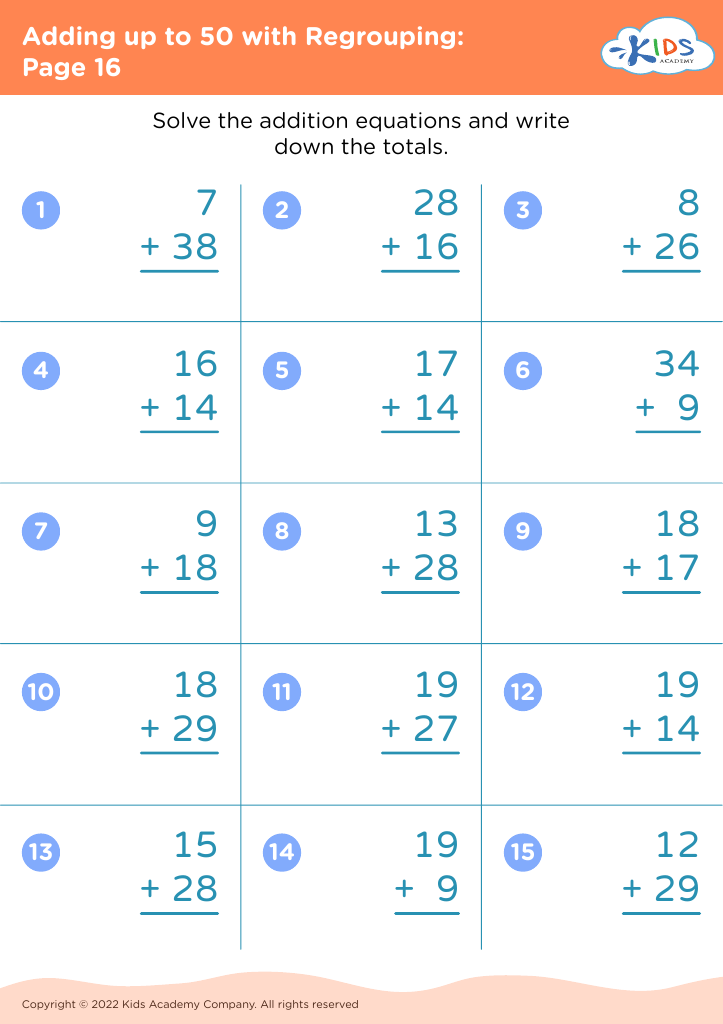
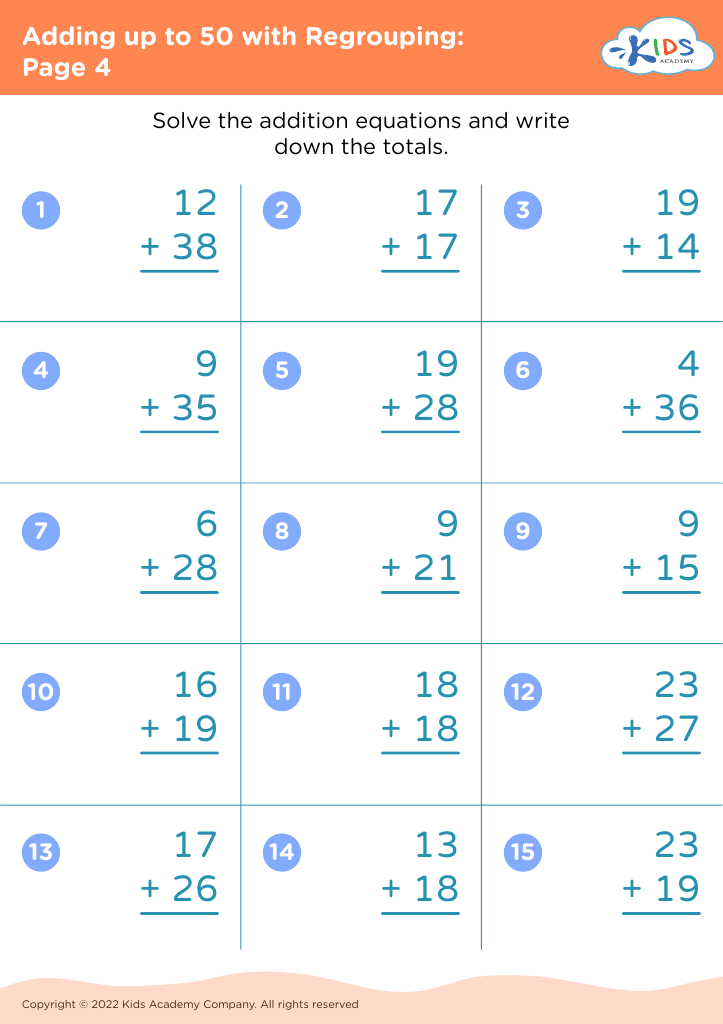
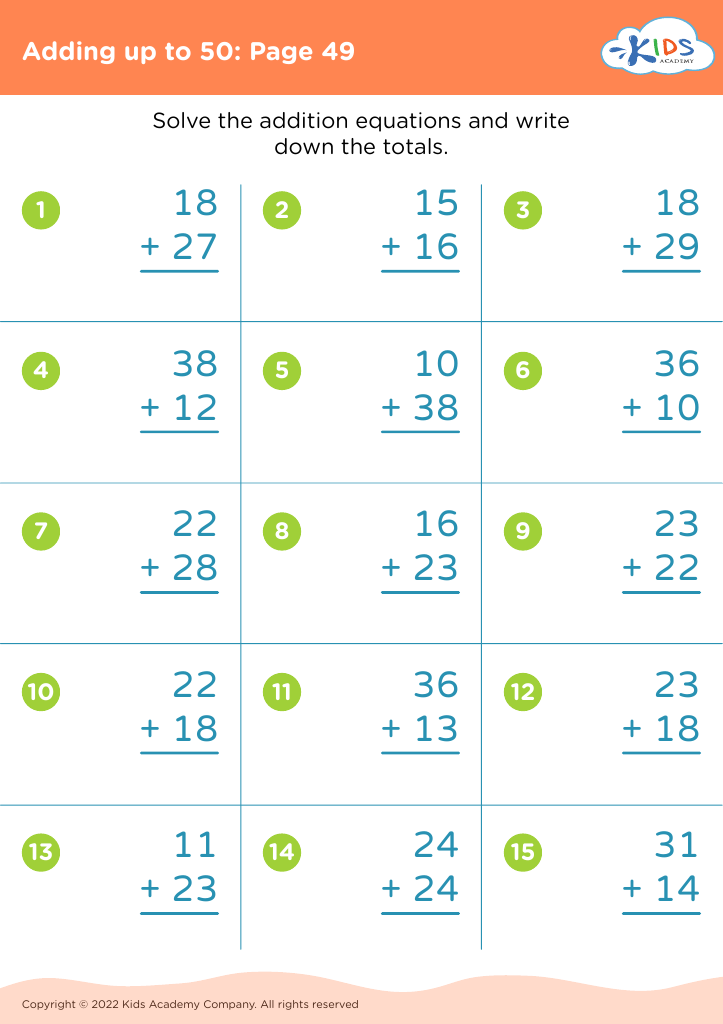




Introducing 8-year-olds to comparing fractions and practicing addition up to 50 plays a critical role in early mathematical development. This dual focus not only builds foundational arithmetic competencies but also enhances critical thinking and problem-solving skills.
Comparing fractions helps children understand proportions and relative sizes, which are essential for grasping more advanced math concepts later on. When students are taught to recognize equivalences and differences among fractions, they improve their number sense, an intuition about numbers that makes further mathematical learning easier.
Meanwhile, achieving proficiency in addition up to 50 strengthens computational fluency. This practice tunes basic arithmetic skills, essential for handling all kinds of mathematical problems. When children become quick and accurate with addition, they gain confidence in their ability to tackle math challenges, setting them up for success in more complex operations like multiplication and division.
Moreover, mastering these skills nurtures logical reasoning. Students learn to approach a problem in steps, compare outcomes, and verify their answers systematically. This mindset benefits other academic areas and everyday situations requiring logical assessment.
Finally, actively engaging parents and teachers in this learning journey creates a supportive environment, fostering a positive attitude toward math. Celebrating small milestones encourages students to persevere and maintain a keen interest in learning.
In conclusion, prioritizing the comparative study of fractions and addition fluency provides a wholesome foundation that prepares children for future academic challenges while developing essential life-long cognitive skills.








