Fraction Addition Adding up to 50 Worksheets for 8-Year-Olds
5 filtered results
-
From - To
Enhance your child's math skills with our Fraction Addition worksheets designed specifically for 8-year-olds! Perfect for reinforcing core concepts, these engaging worksheets encourage students to practice adding fractions that result in sums up to 50. With user-friendly illustrations and step-by-step exercises, kids will gain confidence in their ability to solve fraction problems while developing critical thinking skills. Our resource is ideal for both classroom use and at-home practice, making math fun and approachable. Start exploring the exciting world of fractions today and help your child build a strong foundation for future mathematical success! Printable and easy to access!
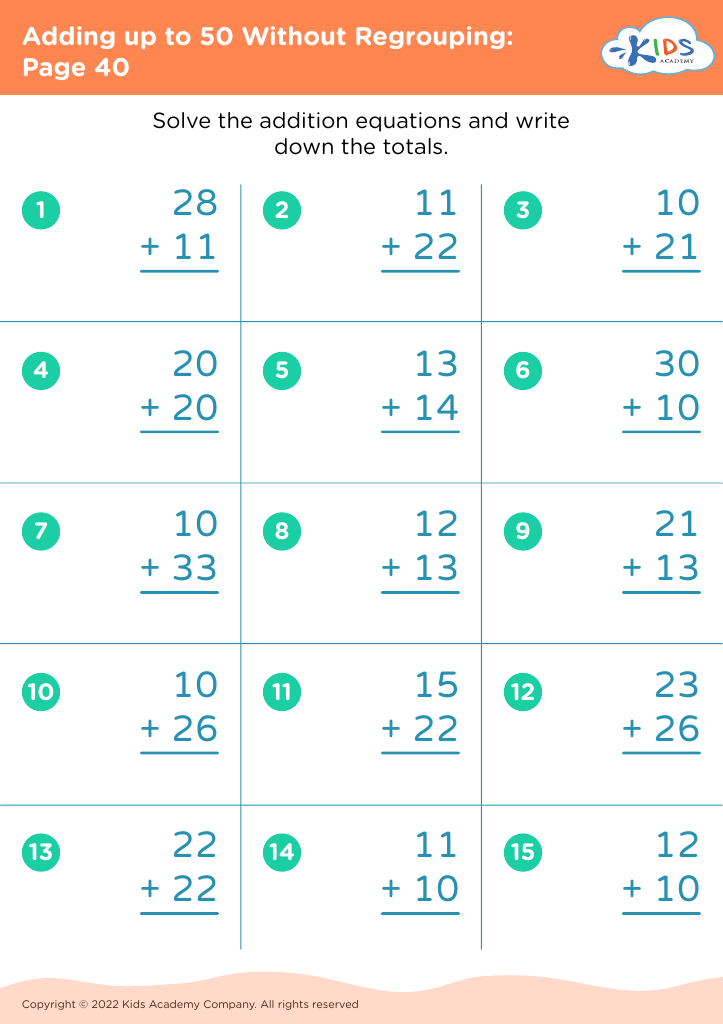
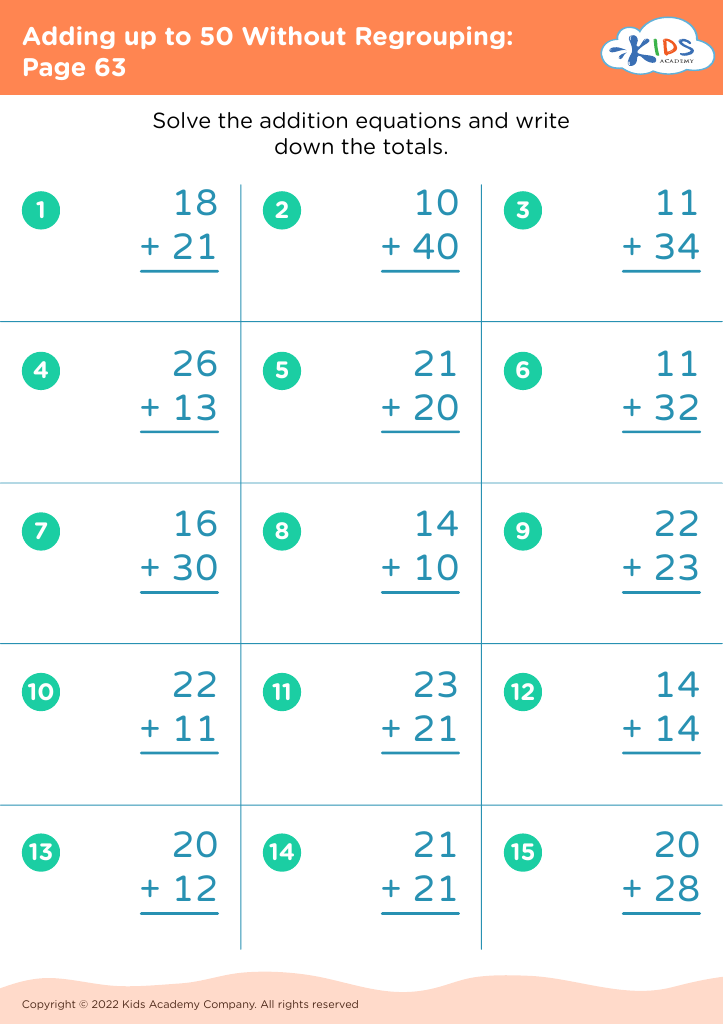
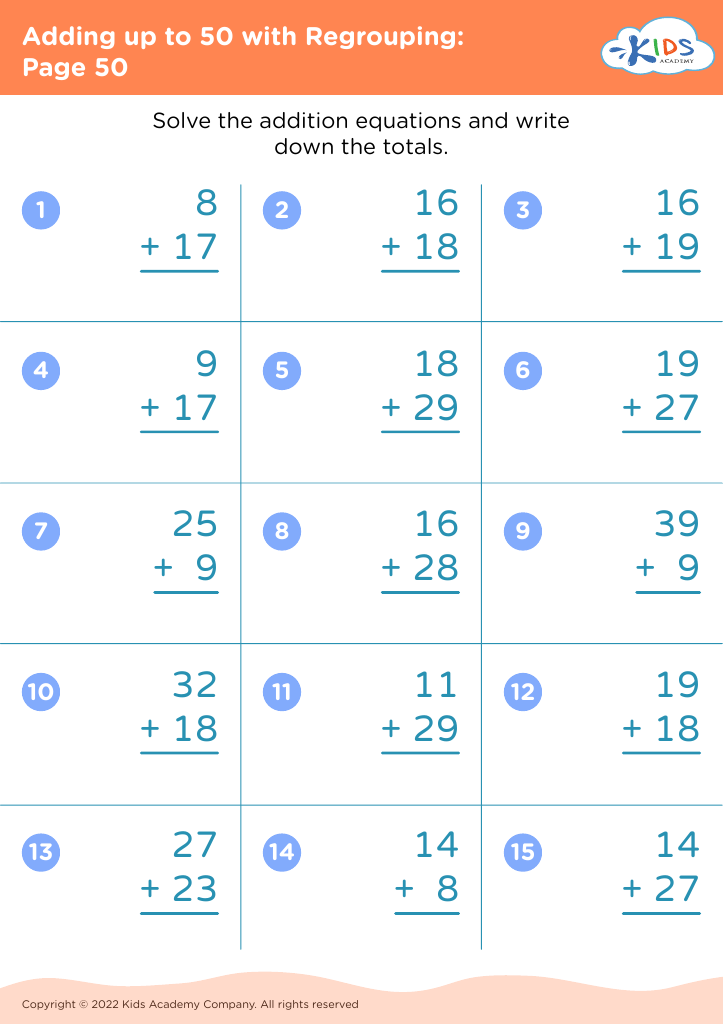
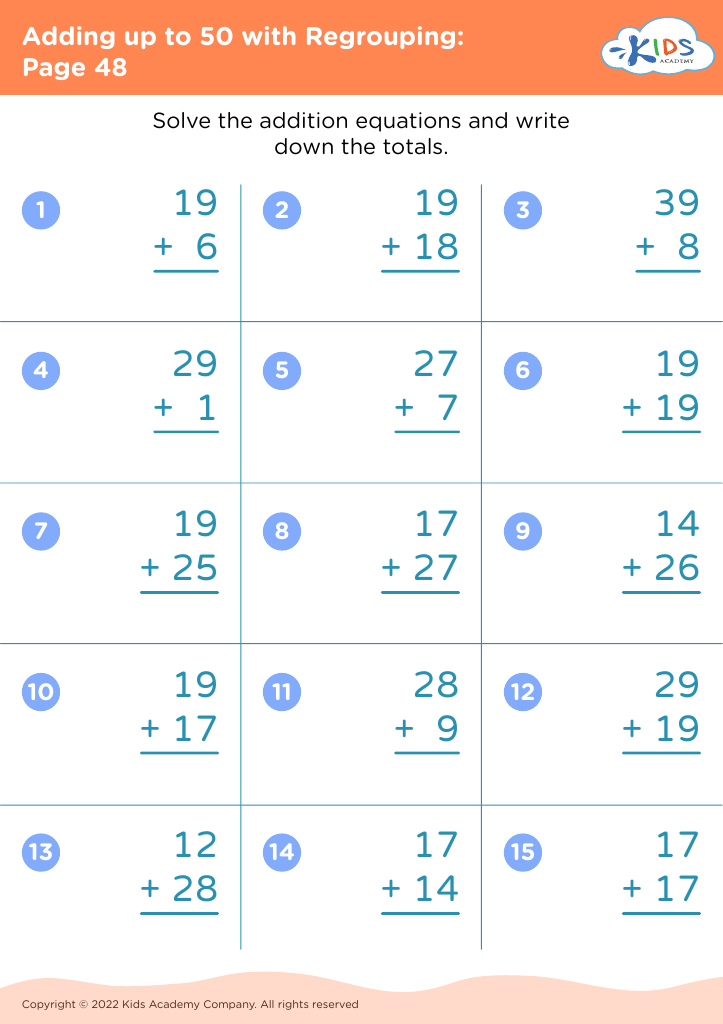
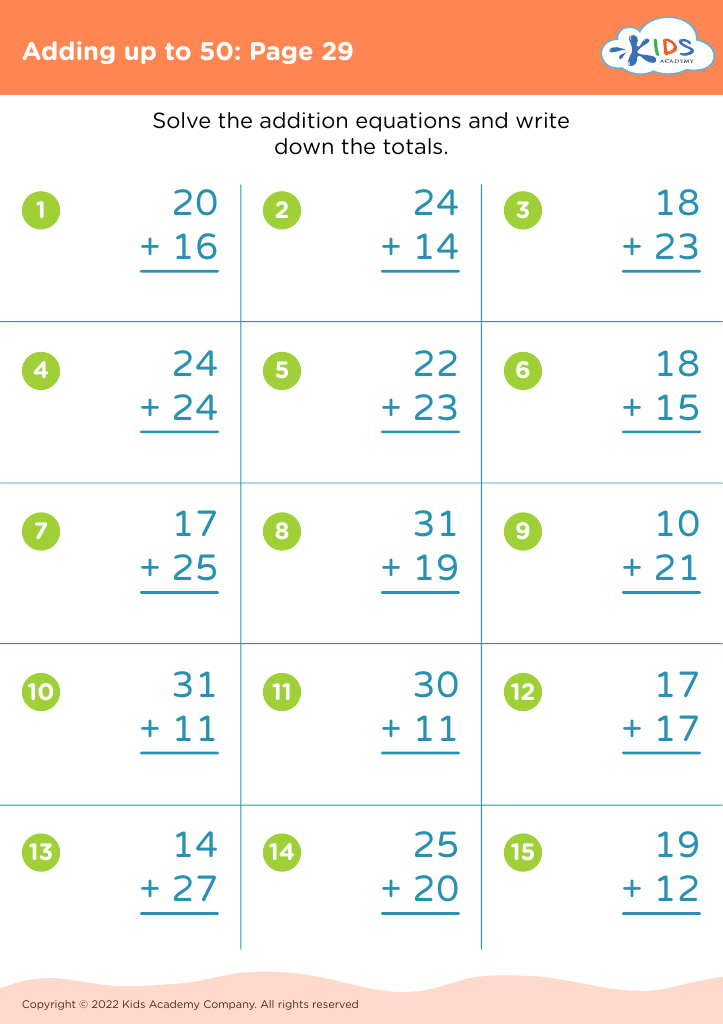




Understanding fraction addition is crucial for 8-year-olds as it lays the groundwork for their mathematical development and practical problem-solving skills. At this age, children are beginning to grasp more complex concepts in math, and mastering fractions not only improves their computational skills but also enhances their ability to understand part-whole relationships.
When students learn to add fractions whose sum can equal to 50, it challenges them to integrate their understanding of basic adding, place value, and the concept of “whole.” For teachers and parents, focusing on these lessons provides an opportunity to cultivate critical thinking and reasoning skills at an essential developmental stage.
Moreover, the skill of adding fractions plays a significant role beyond the classroom, impacting everyday scenarios, from cooking to budgeting. Understanding fractions ultimately contributes to a child's confidence and proficiency in math, shaping their attitude towards subjects that involve calculations in the future. Engaging children in interactive activities that apply these concepts can make learning enjoyable and meaningful, reinforcing the importance of both fractions and arithmetic as foundational skills that go beyond school curricula. Supporting them at this stage fosters a positive math identity that can carry into their future educational pursuits.








