Fraction comparison Adding up to 50 Worksheets for 8-Year-Olds
7 filtered results
-
From - To
Title: Fraction Comparison: Adding Up to 50 Worksheets for 8-Year-Olds
Description: Boost your child’s math skills with our Fraction Comparison: Adding Up to 50 worksheets designed especially for 8-year-olds. These engaging exercises focus on comparing fractions and summing numbers up to 50, promoting a solid understanding of basic arithmetic and fractions. Each worksheet combines fun graphics with challenging problems to keep young minds stimulated and eager to learn. Perfect for reinforcing classroom concepts or for extra practice at home, these printables offer a fun and effective way for children to develop their math proficiency and confidence. Download now for an exciting practice experience!
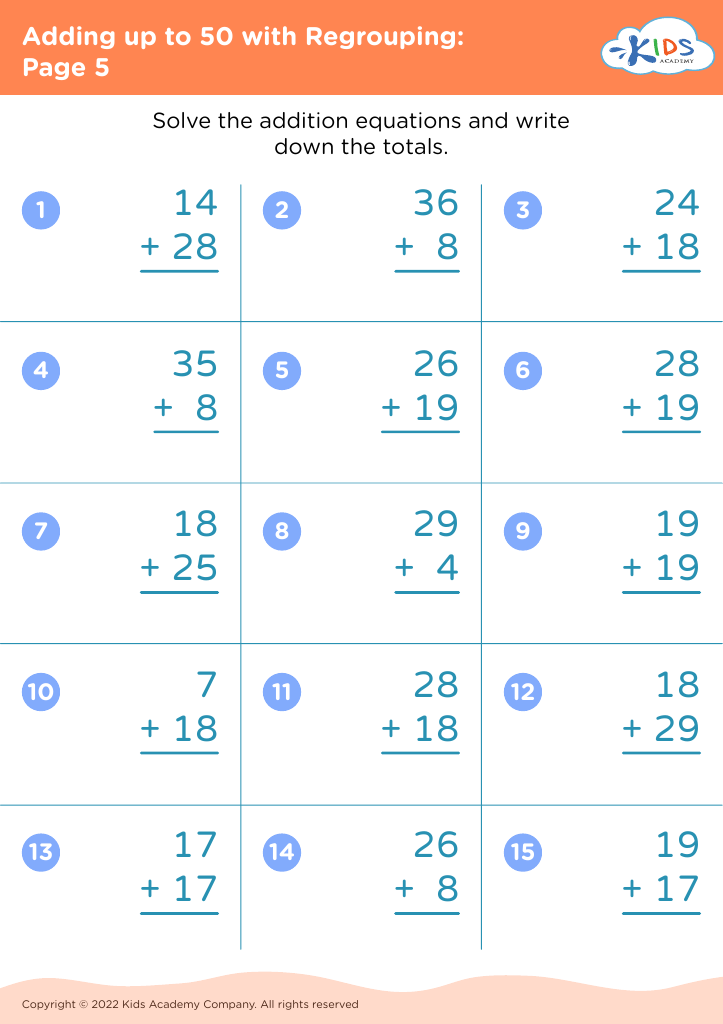
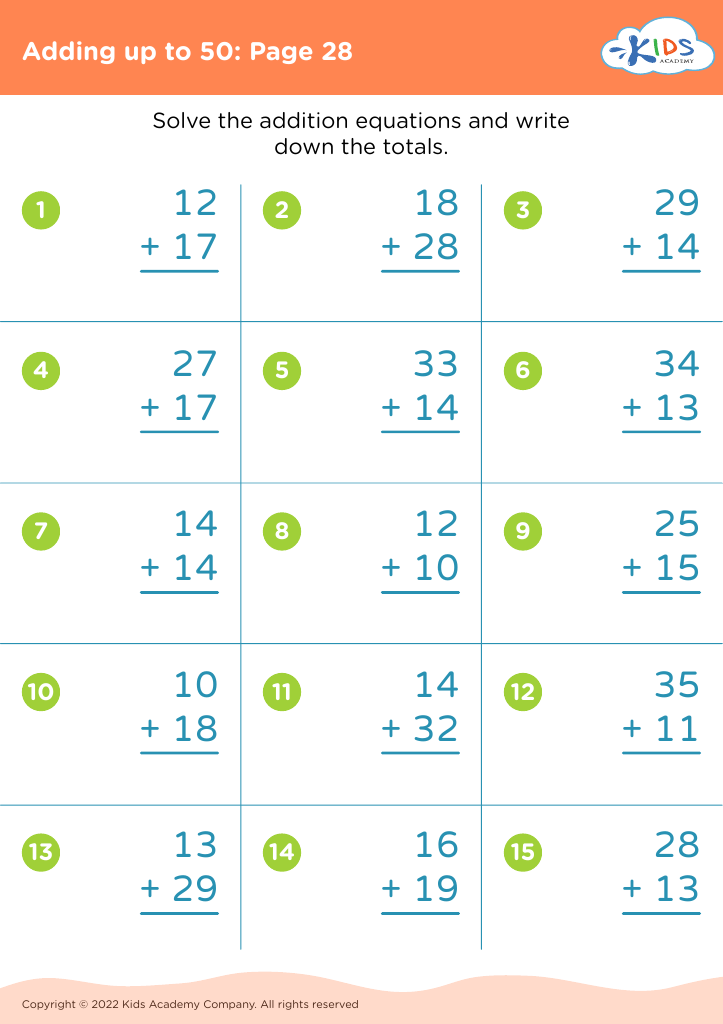
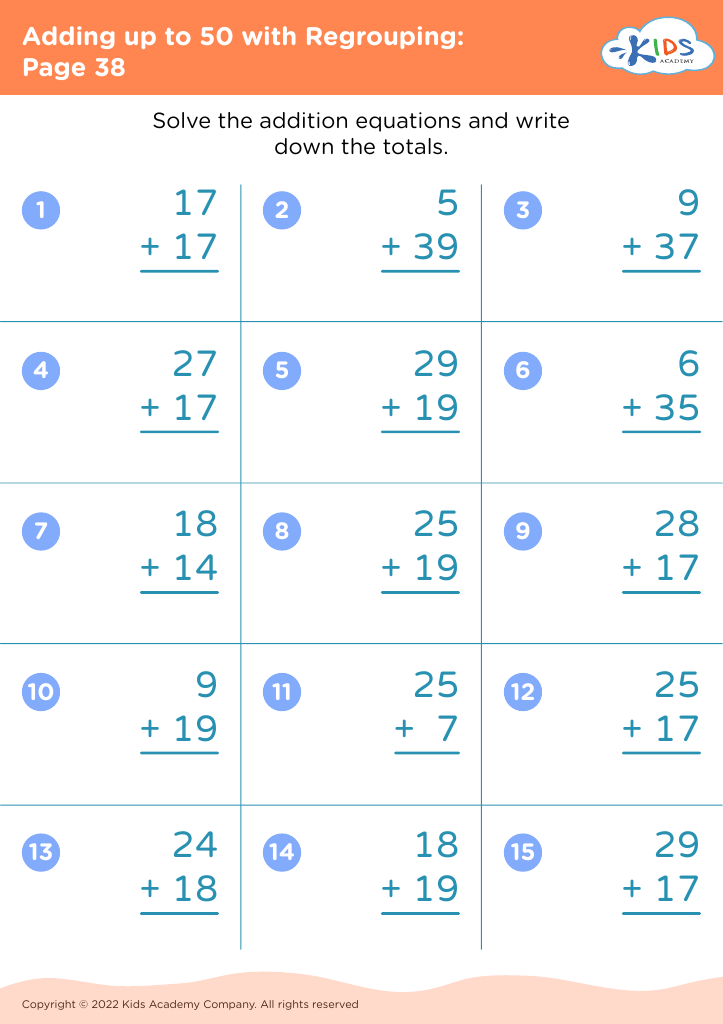
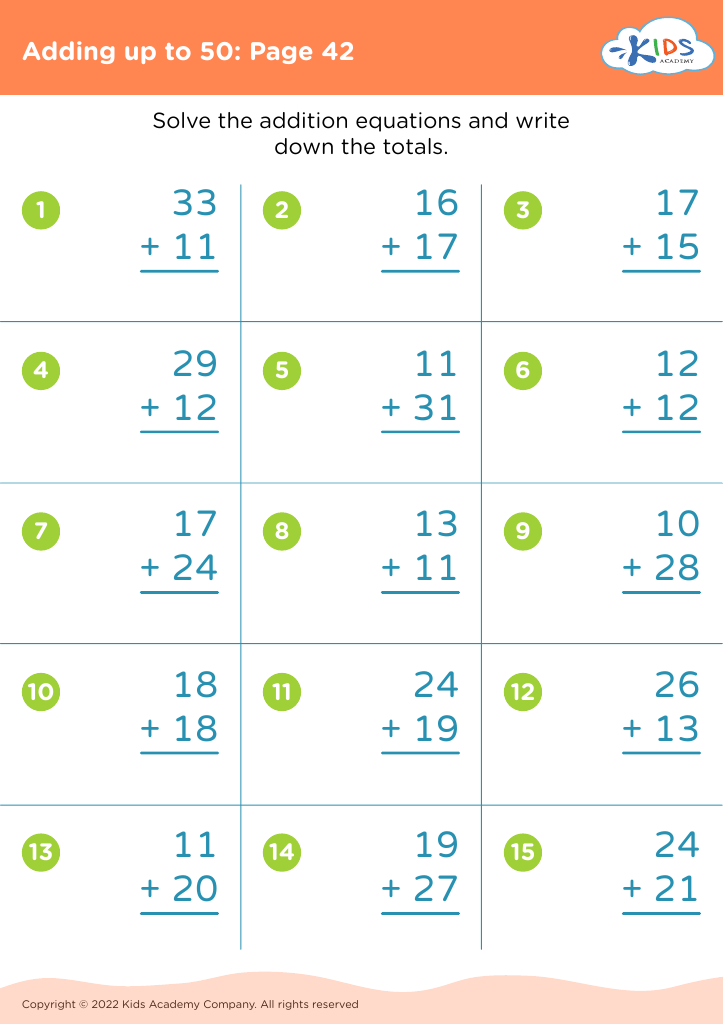
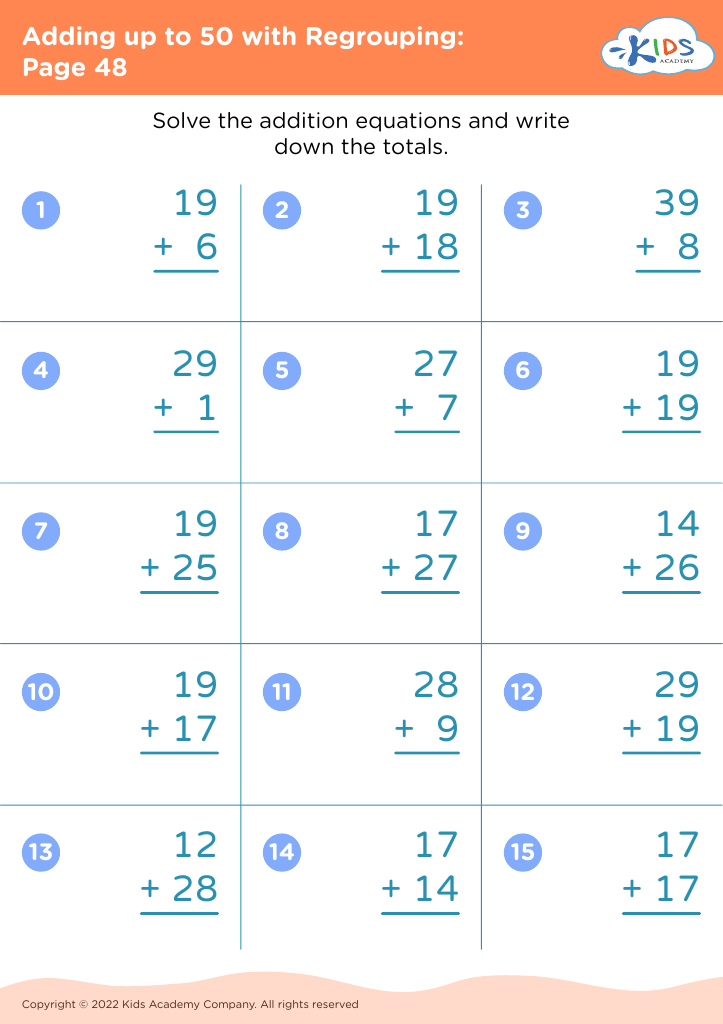
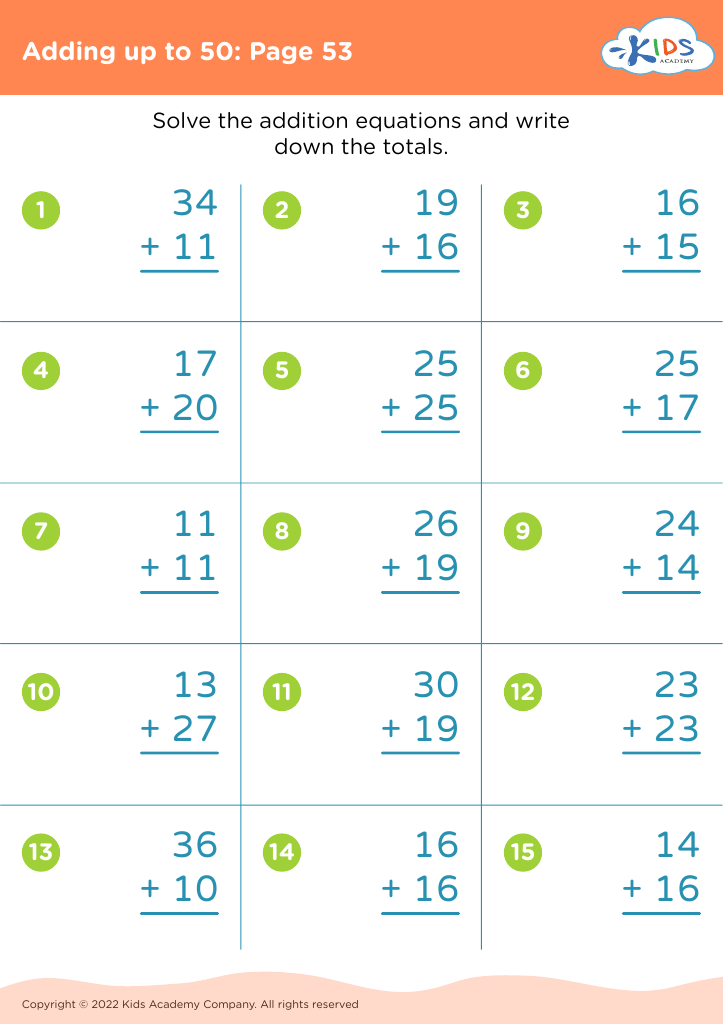
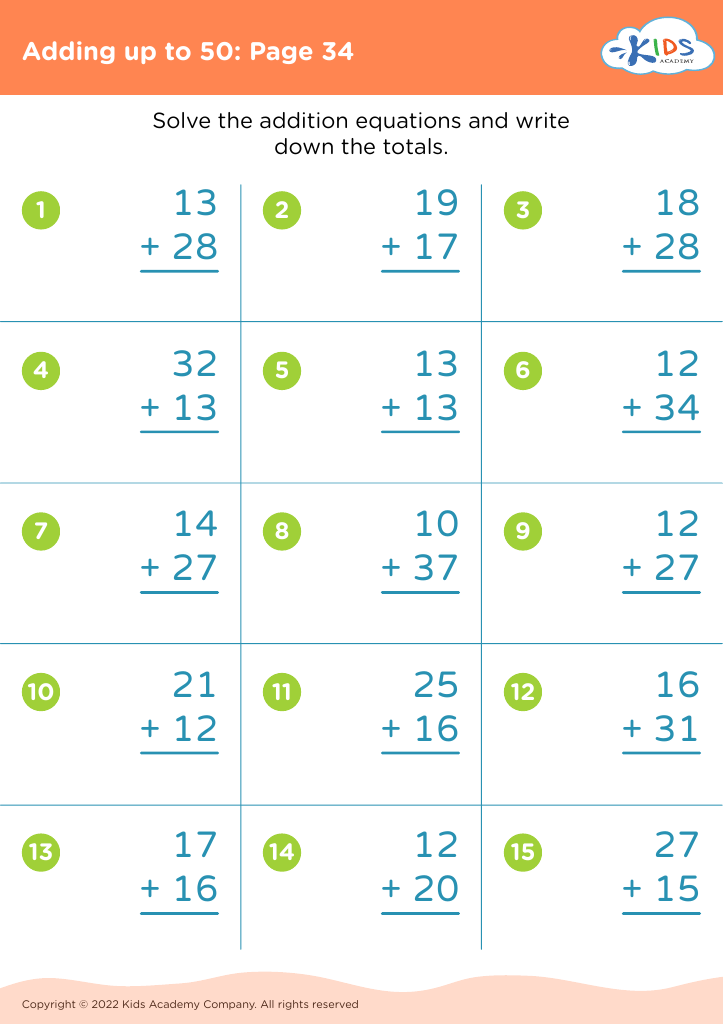




Introducing 8-year-olds to concepts such as fraction comparison and addition up to 50 plays a crucial role in their mathematical development. At this age, children are transitioning from basic arithmetic to more complex mathematical operations, and understanding fractions lays a sound foundation for future learning. Mastery of fractions contributes to numeracy skills, which are essential for higher-level math topics including algebra, geometry, and probability.
Furthermore, comparing fractions helps children grasp proportionality and part-whole relationships, fostering critical thinking and problem-solving abilities. For example, recognizing that 1/2 is larger than 1/3 or understanding that 3/6 is equivalent to 1/2 reinforces numerical literacy and the concept of equivalence, which is vital for understanding percentages and ratios later on.
Adding numbers up to 50 enhances mental arithmetic skills and prepares children to tackle more complex calculations. It boosts their confidence in handling multi-digit addition and improves their ability to perform in real-life situations, such as making purchases or dividing items fairly. Developing these skills early equips children with the tools they need for everyday tasks, thus empowering them to become proficient, intuitive, and confident in mathematics.
For parents and teachers, focusing on these fundamental skills means nurturing a positive attitude towards math, laying down the groundwork for academic success, and equipping children with abilities that extend far beyond the classroom.








