Filters

20 filtered results

Clear all filters
Favorites
With answer key
Interactive

20 filtered results

Difficulty Level

Grade


Explore our engaging "Fraction Simplification Adding up to 50 Worksheets" designed specifically for 8-year-olds! These worksheets offer a fun and interactive way for young learners to practice simplifying fractions while mastering addition that totals up to 50. With vibrant illustrations and age-appropriate problems, students will develop essential math skills in a creative environment. Each worksheet is tailored to reinforce understanding of fractions, enabling kids to build confidence in their mathematical abilities. Perfect for classroom or home use, our resources ensure that learning is enjoyable and effective. Start simplifying fractions and mastering addition with our playful worksheets today!
Check out this FREE Trial Lesson on Adding up to 50 for age 8!

Exactly the Same, or Not

Favorites
With answer key
Interactive
  • 8
  • Fraction simplification
  • Adding up to 50
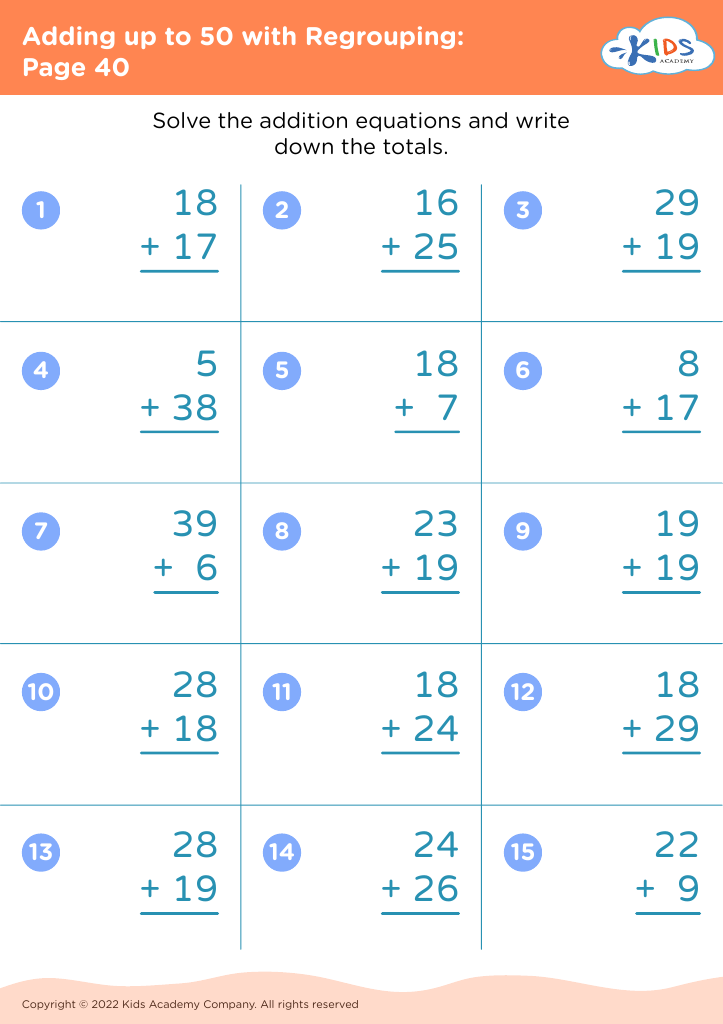
Adding up to 50 with Regrouping: Page 40
Worksheet
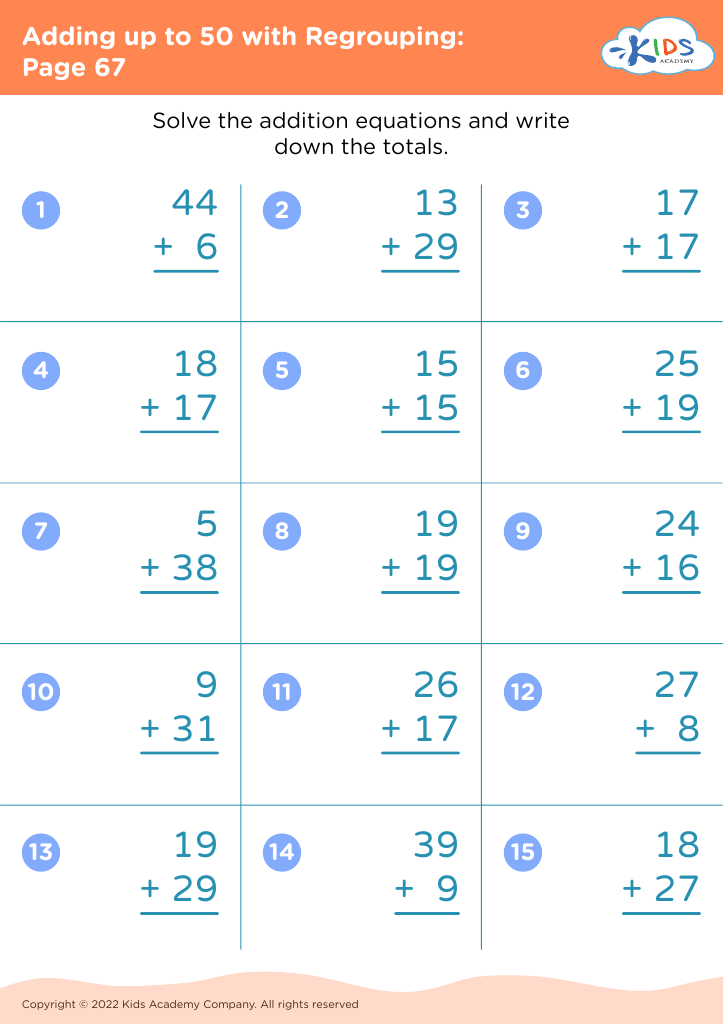
Adding up to 50 with Regrouping: Page 67
Worksheet
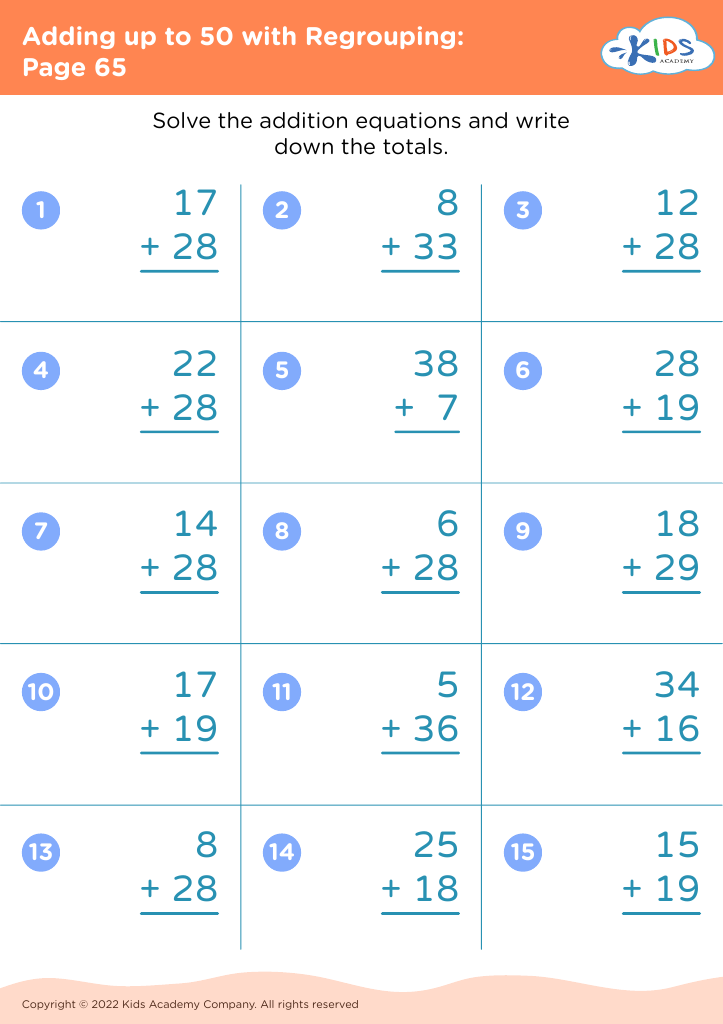
Adding up to 50 with Regrouping: Page 65
Worksheet
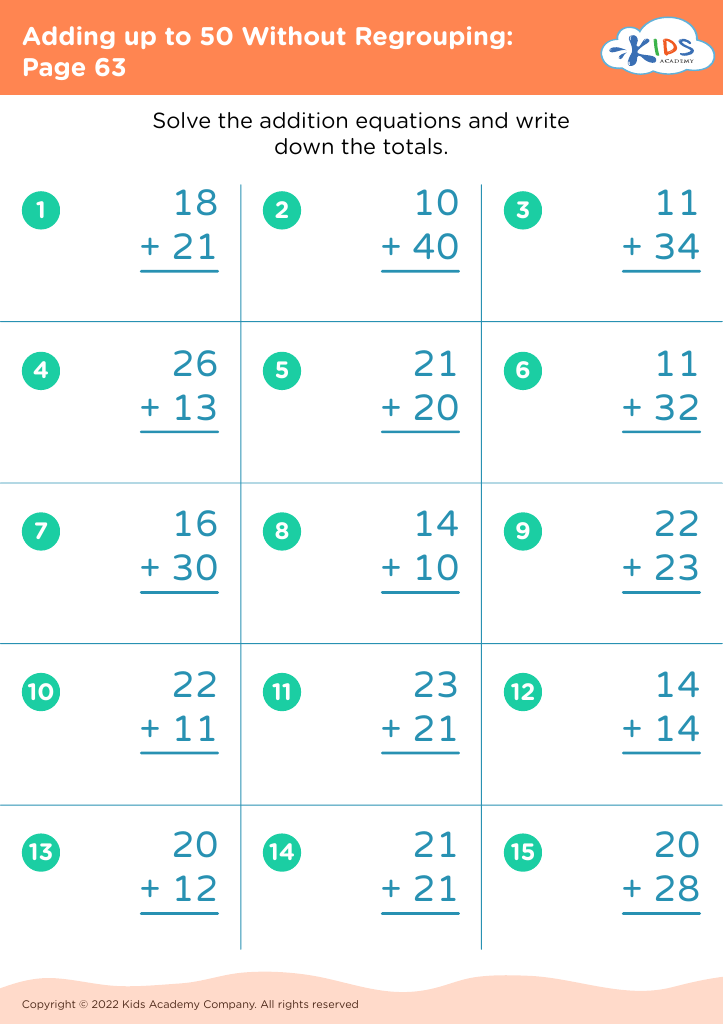
Adding up to 50 Without Regrouping: Page 63
Worksheet
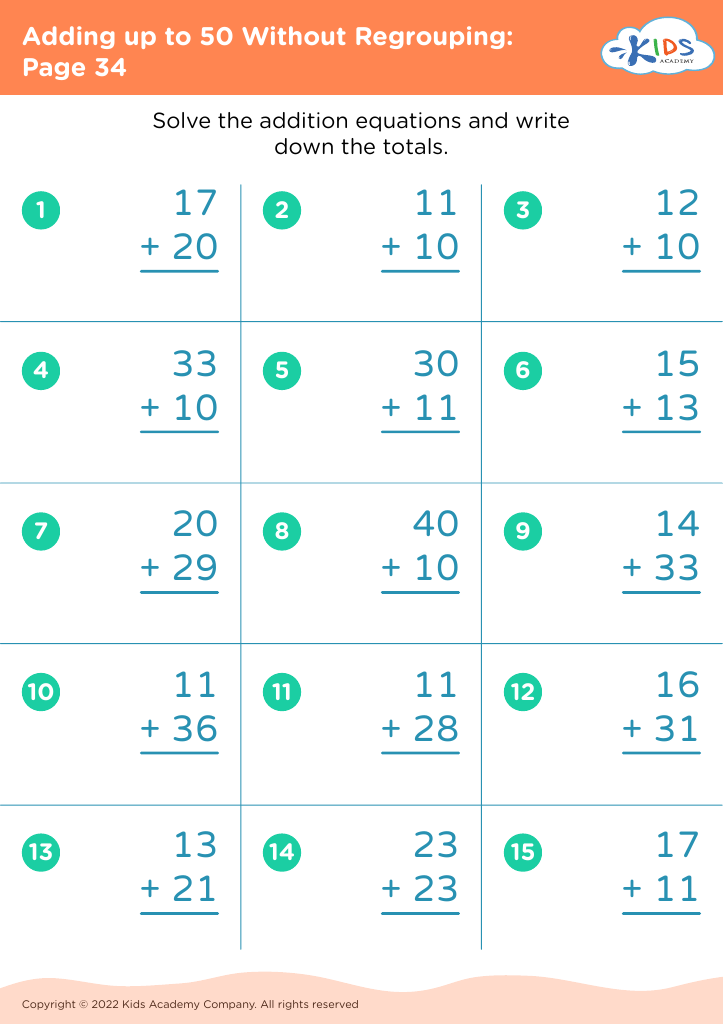
Adding up to 50 Without Regrouping: Page 34
Worksheet
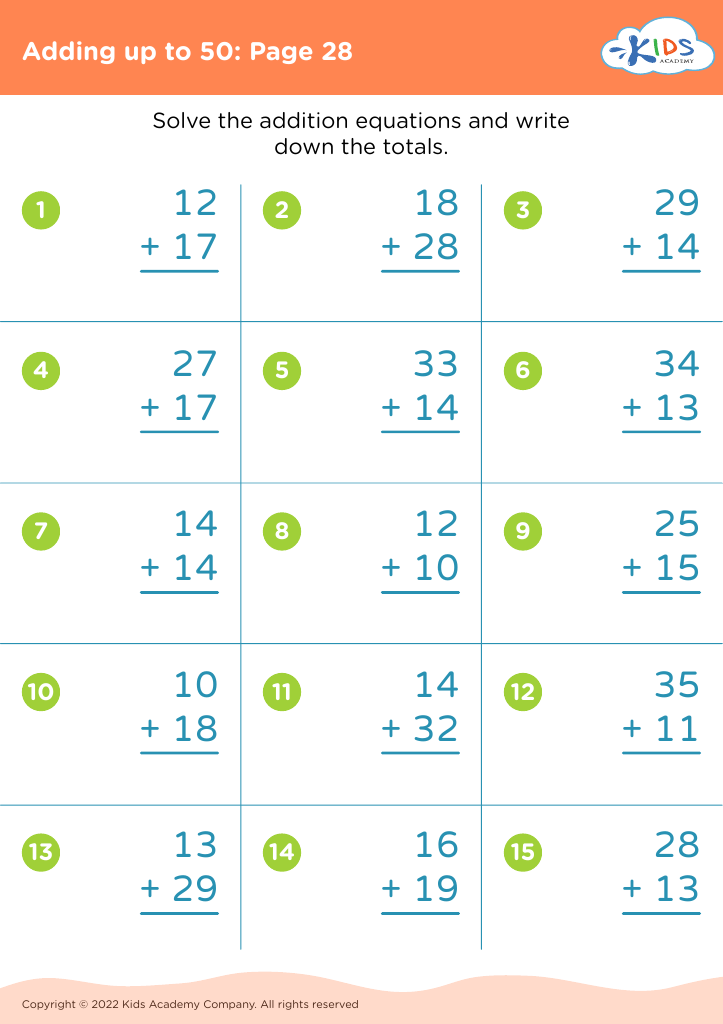
Adding up to 50: Page 28

Adding up to 50: Page 28

Adding up to 50: Page 28
Worksheet
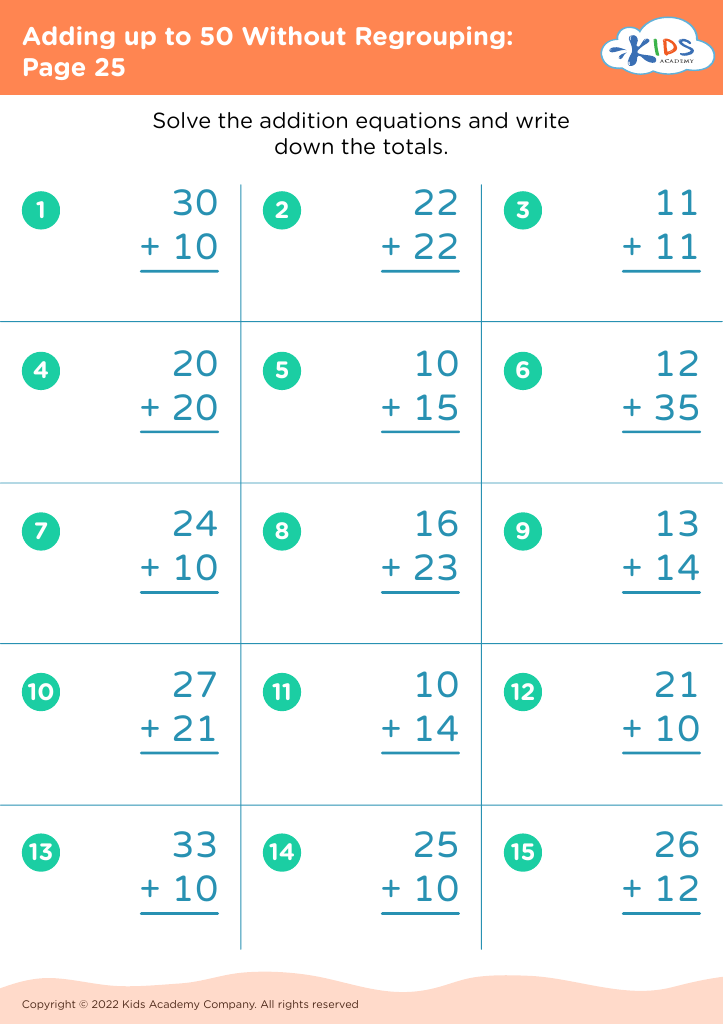
Adding up to 50 Without Regrouping: Page 25
Worksheet
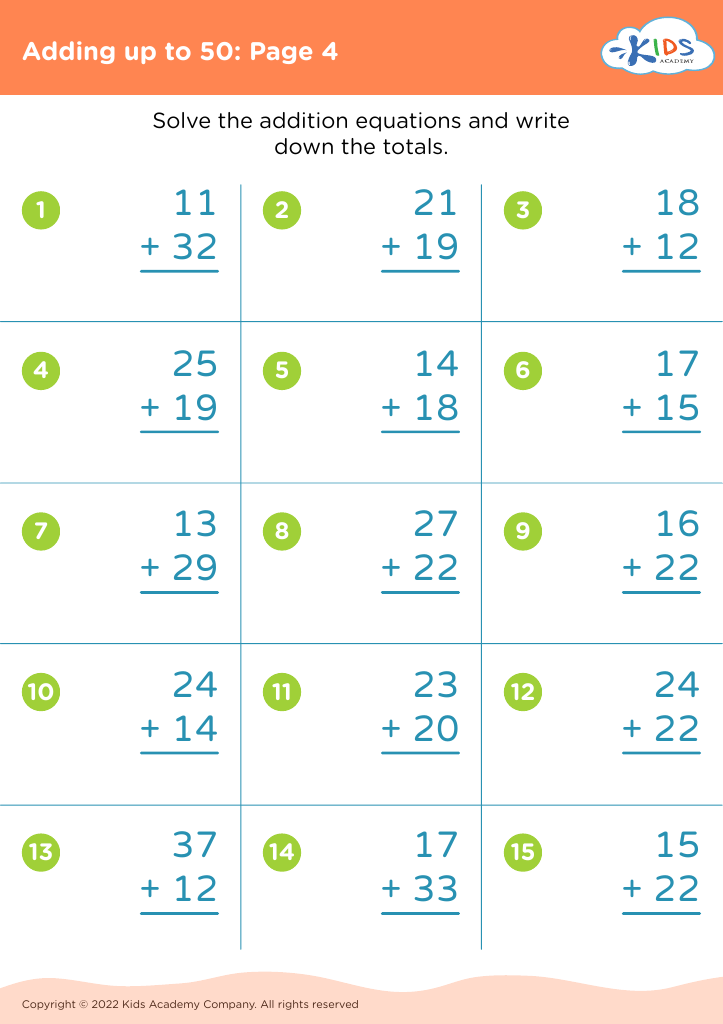
Adding up to 50: Page 4

Adding up to 50: Page 4

Adding up to 50: Page 4
Worksheet
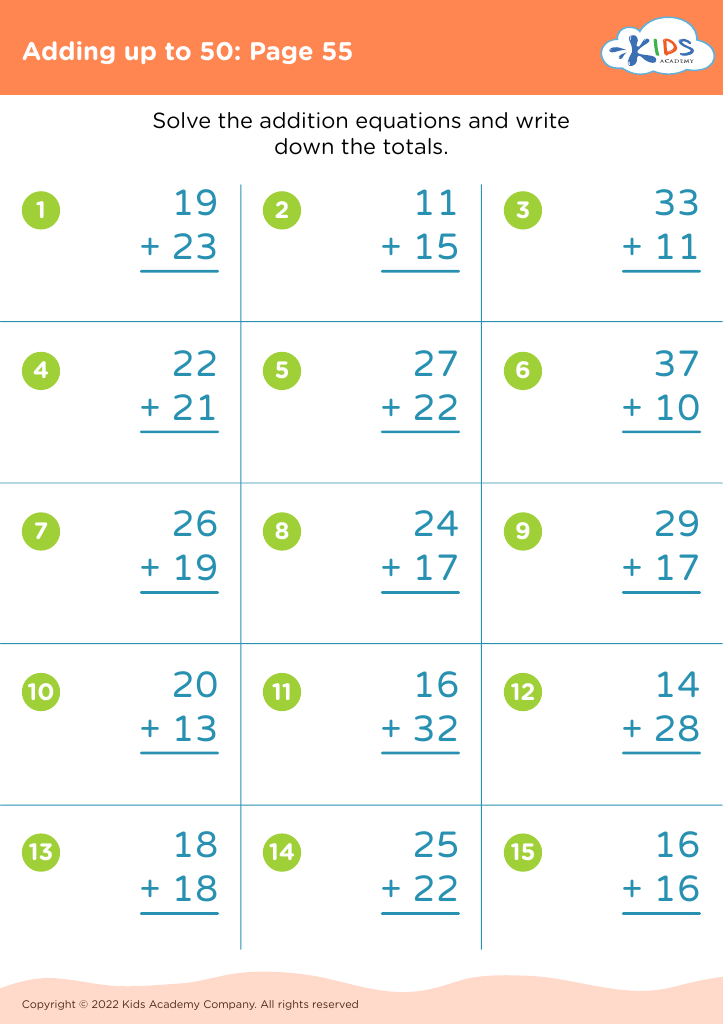
Adding up to 50: Page 55

Adding up to 50: Page 55

Adding up to 50: Page 55
Worksheet
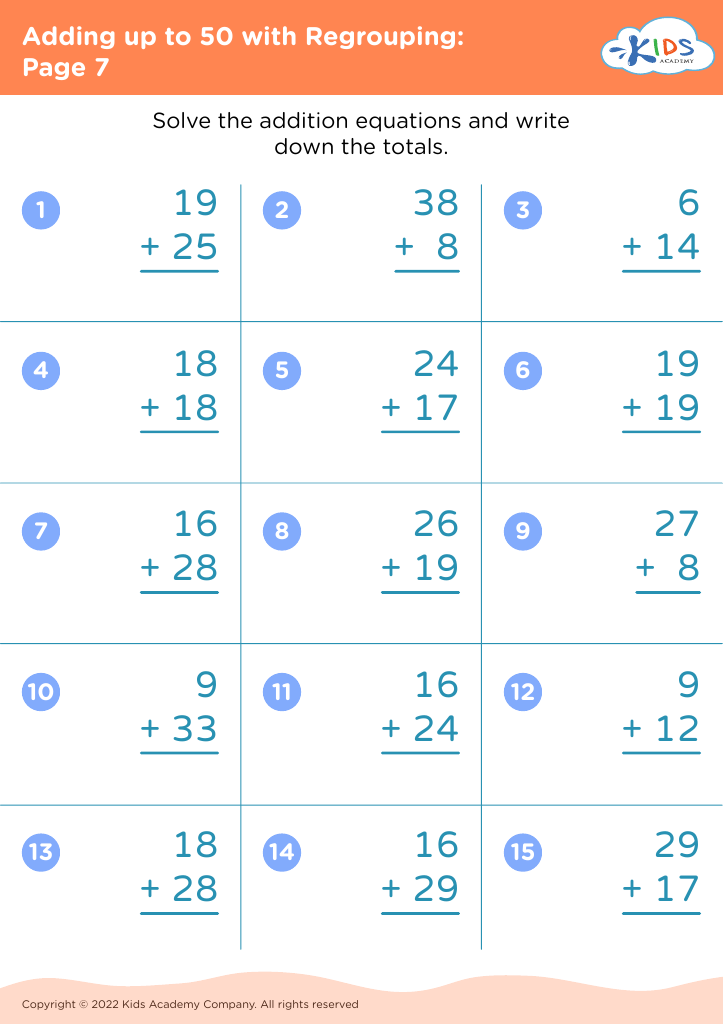
Adding up to 50 with Regrouping: Page 7
Worksheet
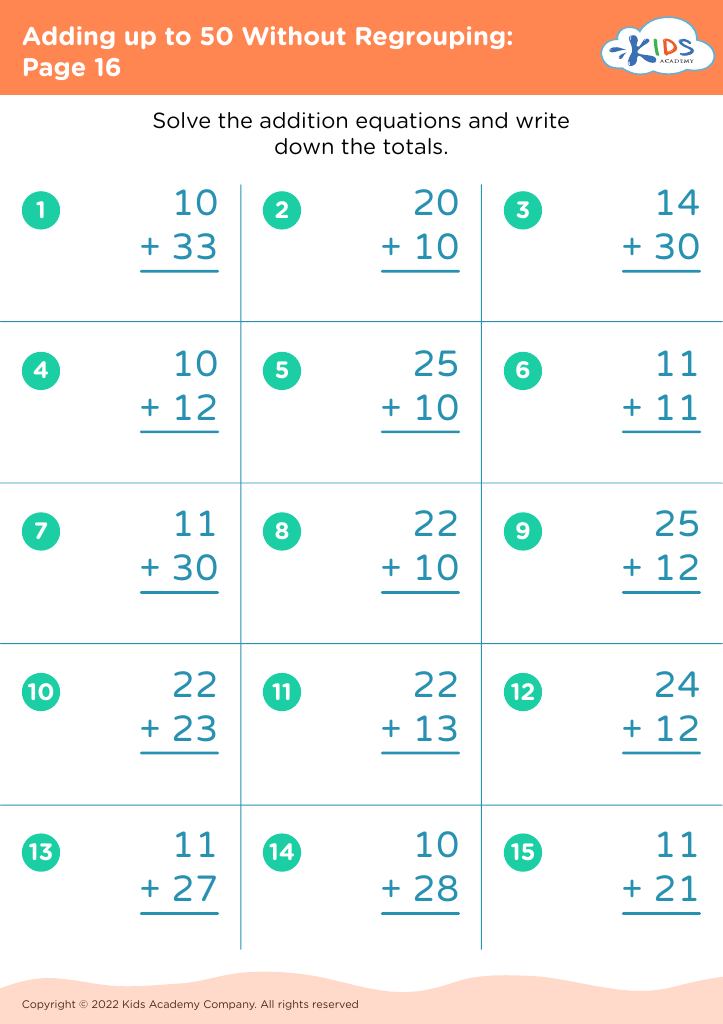
Adding up to 50 Without Regrouping: Page 16
Worksheet
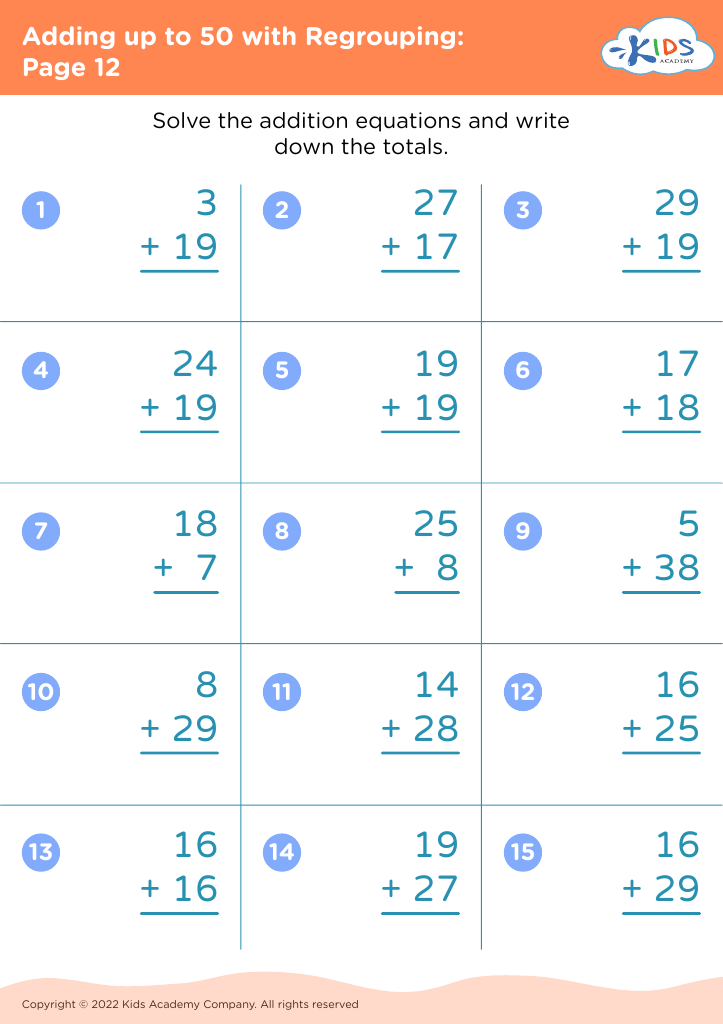
Adding up to 50 with Regrouping: Page 12
Worksheet
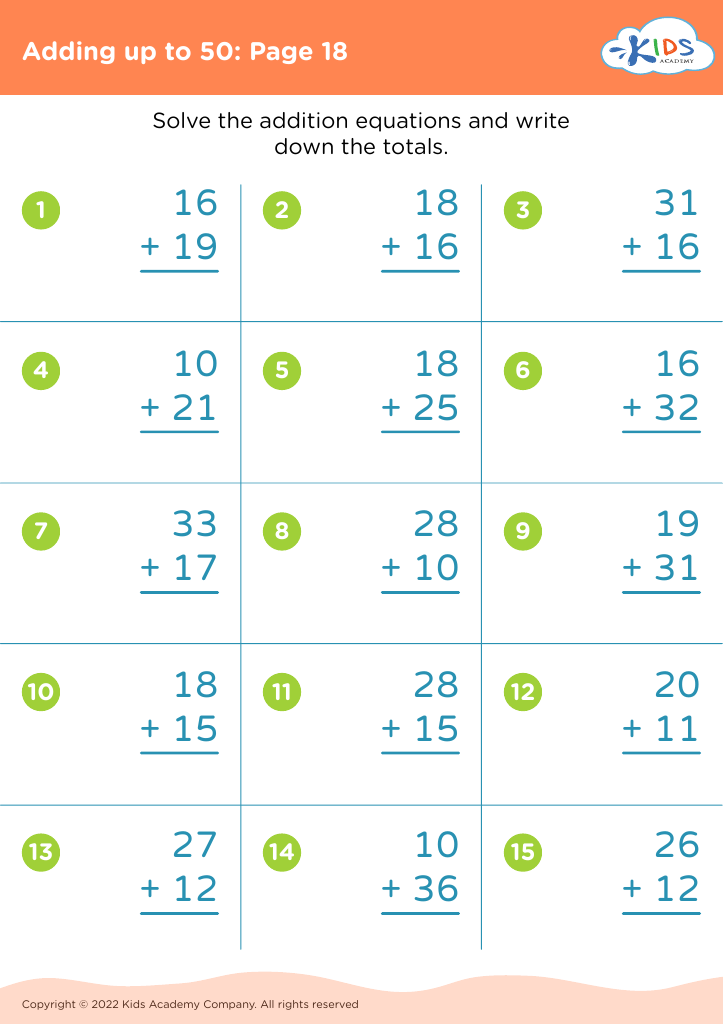
Adding up to 50: Page 18

Adding up to 50: Page 18

Adding up to 50: Page 18
Worksheet
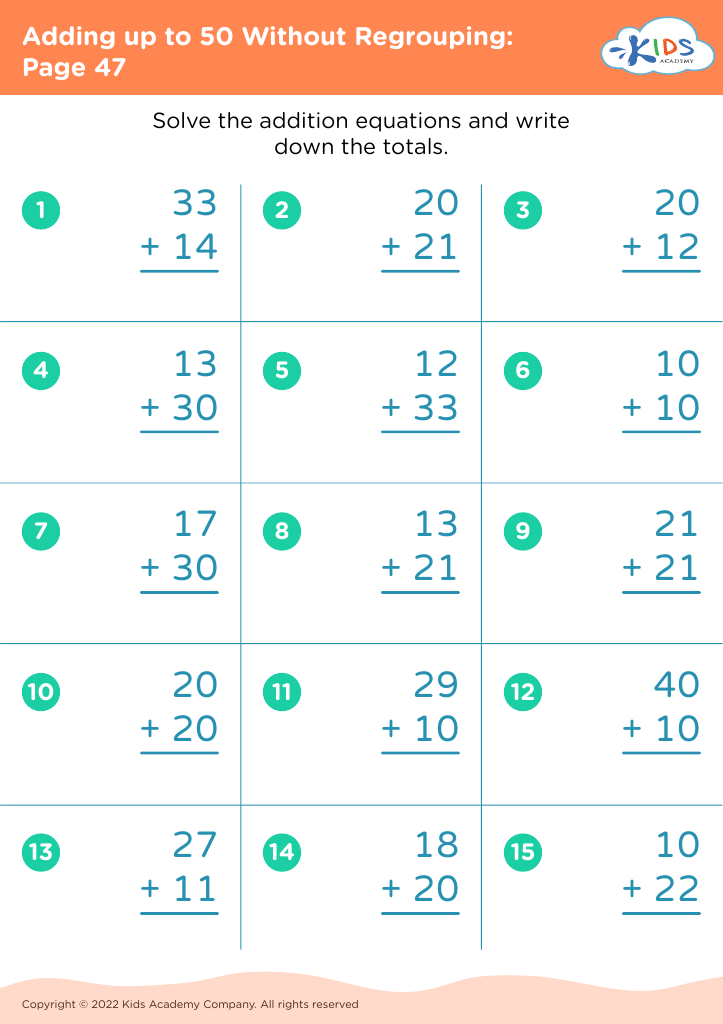
Adding up to 50 Without Regrouping: Page 47
Worksheet
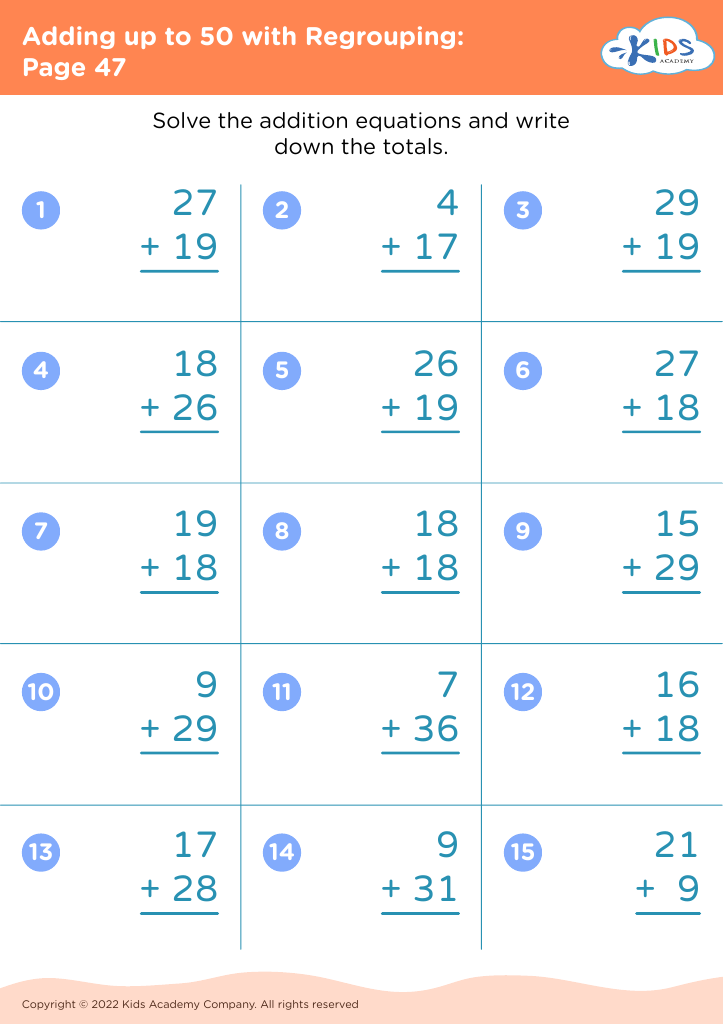
Adding up to 50 with Regrouping: Page 47
Worksheet
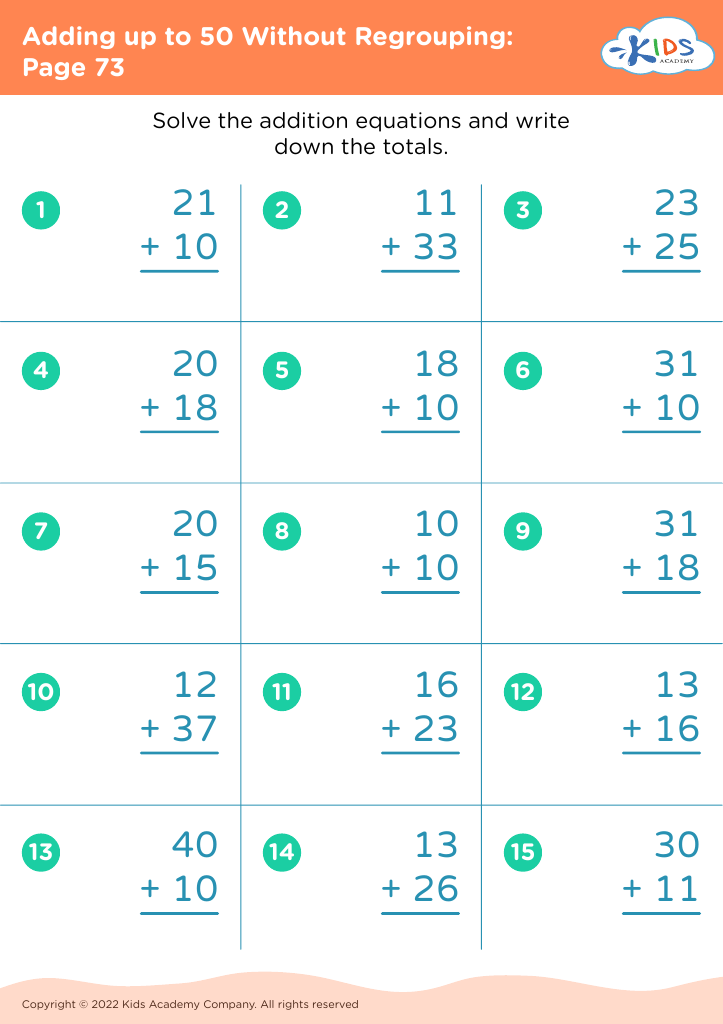
Adding up to 50 Without Regrouping: Page 73
Worksheet
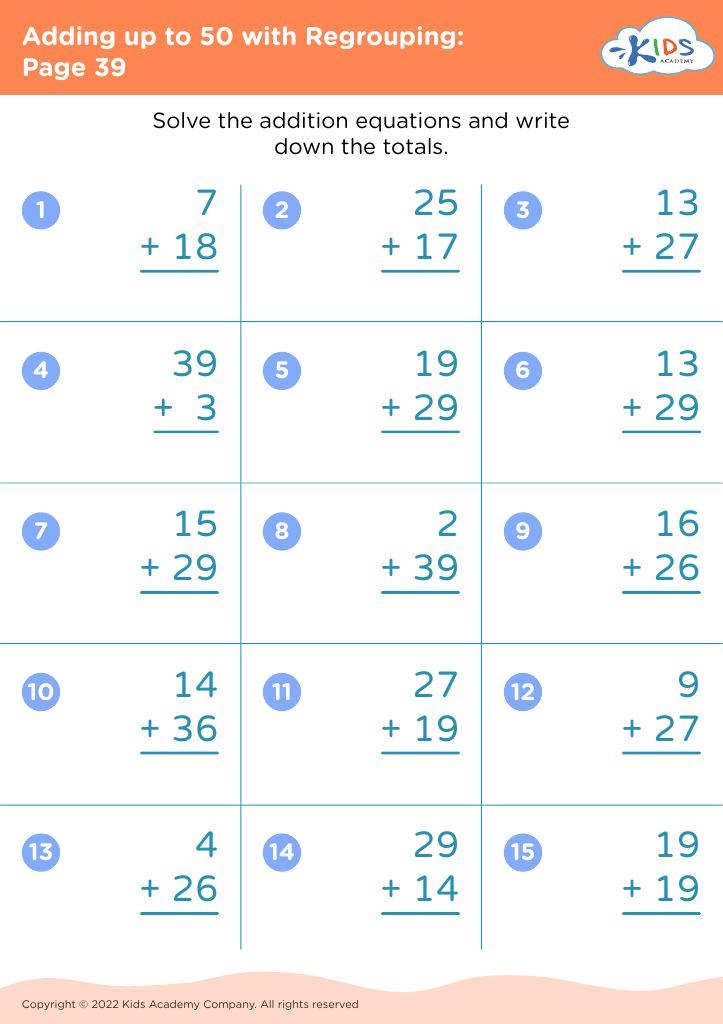
Adding up to 50 with Regrouping: Page 39
Worksheet
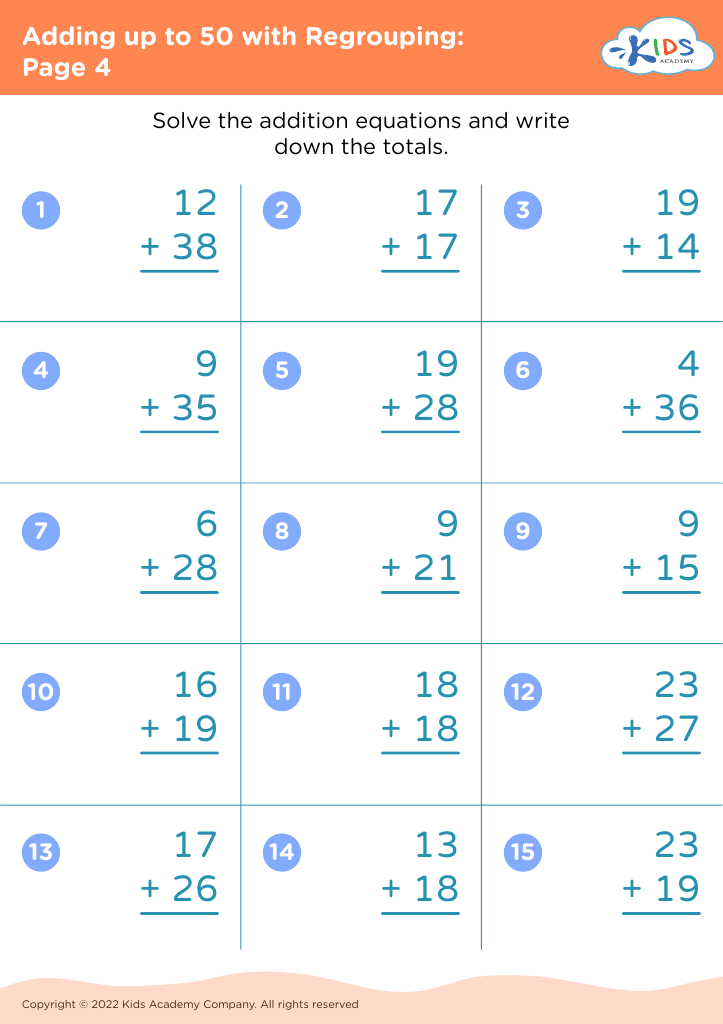
Adding up to 50 with Regrouping: Page 4
Worksheet
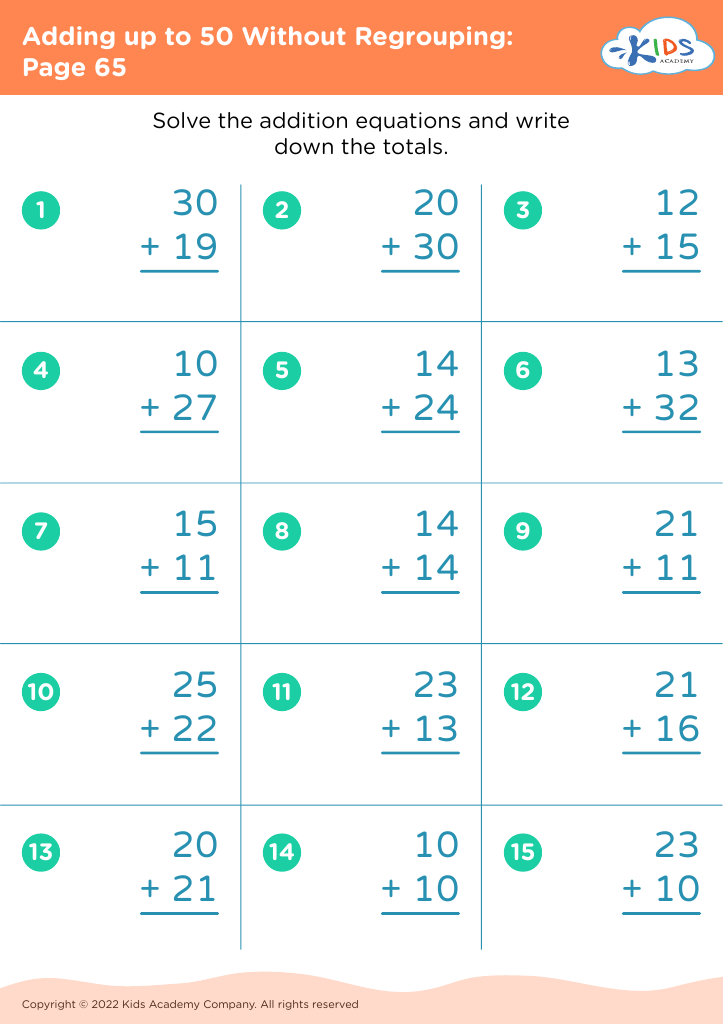
Adding up to 50 Without Regrouping: Page 65
Worksheet
Adding up to 50: Page 34

Adding up to 50: Page 34

Adding up to 50: Page 34
Worksheet


Parents and teachers should prioritize teaching 8-year-olds the concept of fraction simplification and addition, especially when numbers add up to 50, because it builds essential mathematical foundations. At this age, children are developing critical thinking and problem-solving skills. Understanding fractions entails recognizing parts of a whole, which is vital not only in mathematics but in real-life situations, such as cooking or sharing. When students learn to simplify fractions, they enhance their computational skills and confidence in number sense.

Adding fractions, particularly to a sum like 50, reinforces their abilities to manipulate numbers and work with larger concepts in later years, such as ratios and proportions. This also prepares them for future topics in measurement and data analysis. Furthermore, engaging with fractions can improve their overall mathematical reasoning and mindset.

Additionally, mastering these skills helps students perform better academically, fostering a positive attitude toward math. It ensures that they do not find advanced topics overwhelming later on. When parents and teachers work together to emphasize these concepts, they help instill a sense of achievement and understanding that will benefit students throughout their educational journeys and beyond. Encouraging practice at home and in the classroom will lay a solid groundwork for future learning.