Improve number recognition Adding up to 50 Worksheets for 8-Year-Olds
5 filtered results
-
From - To
Enhance your child's number recognition skills with our "Adding Up to 50" worksheets designed specifically for 8-year-olds! These engaging activities help students practice recognizing and working with numbers up to 50, building a strong mathematical foundation. Our worksheets are thoughtfully crafted to make learning fun and interactive, featuring colorful illustrations and step-by-step exercises that cater to various learning styles. Whether in the classroom or at home, these resources support your child’s ability to confidently add and recognize numbers. Give your young learners the tools they need to succeed in math while enjoying the process!
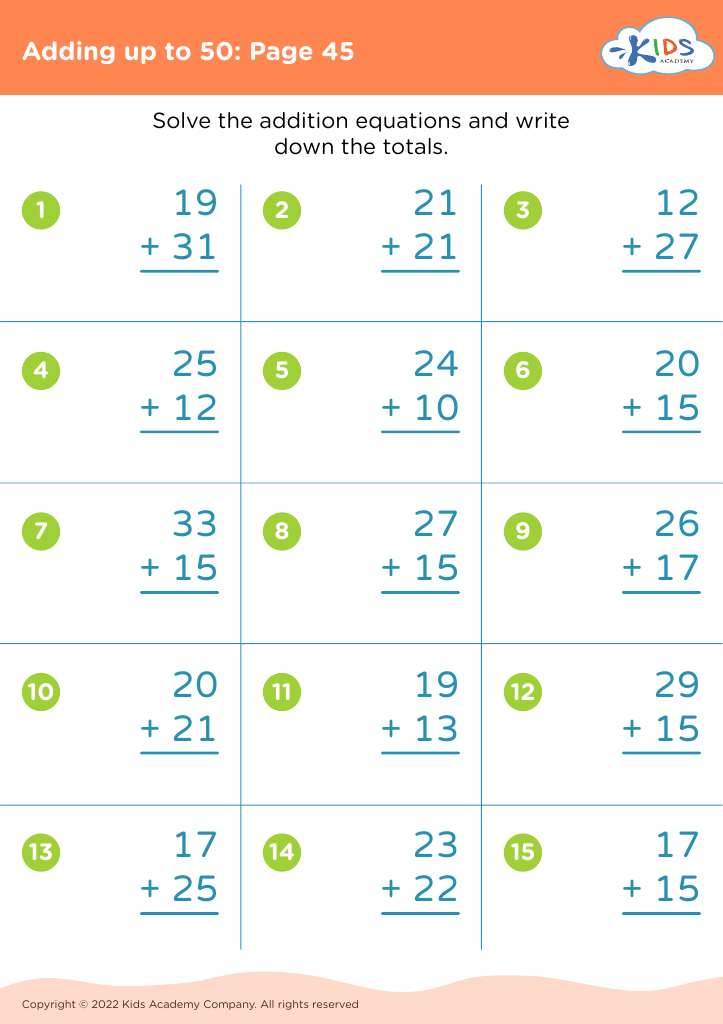
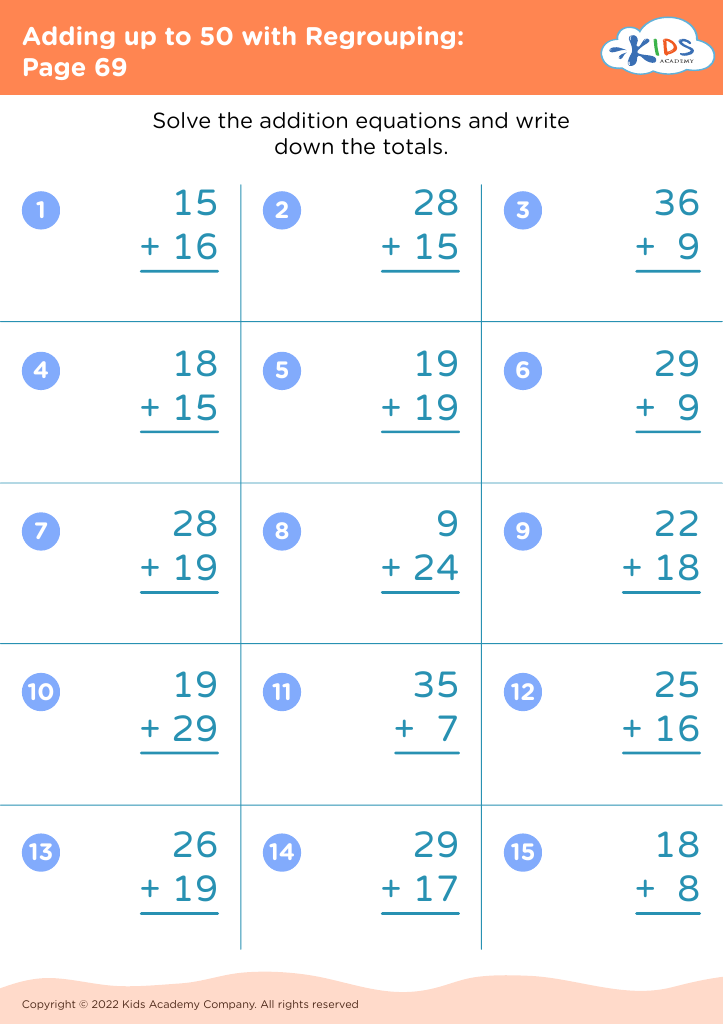
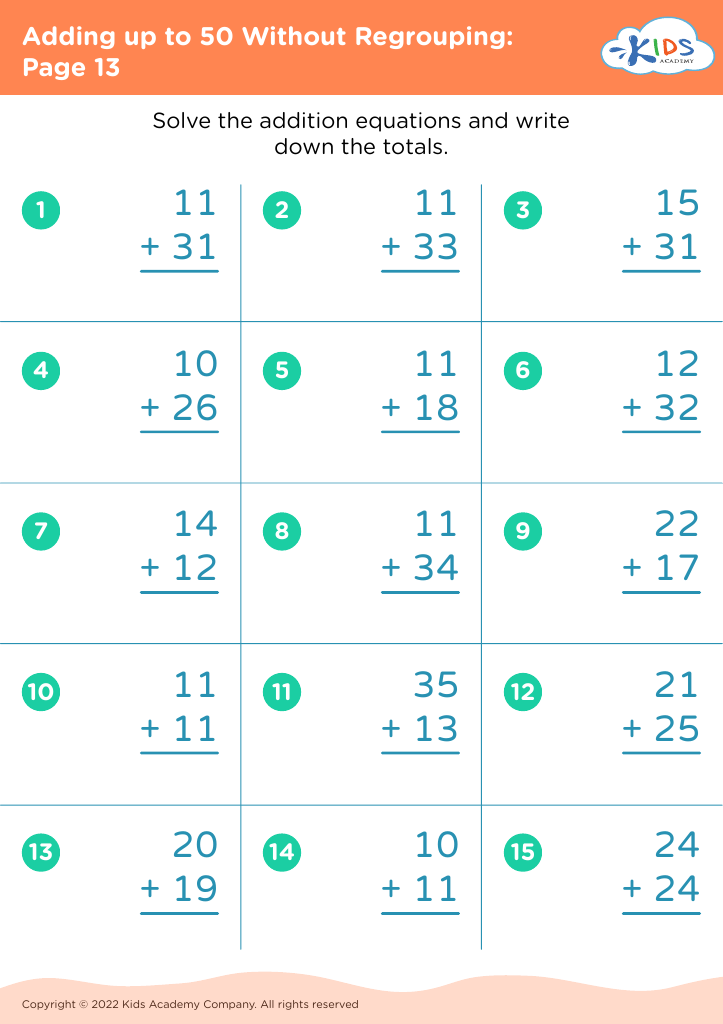
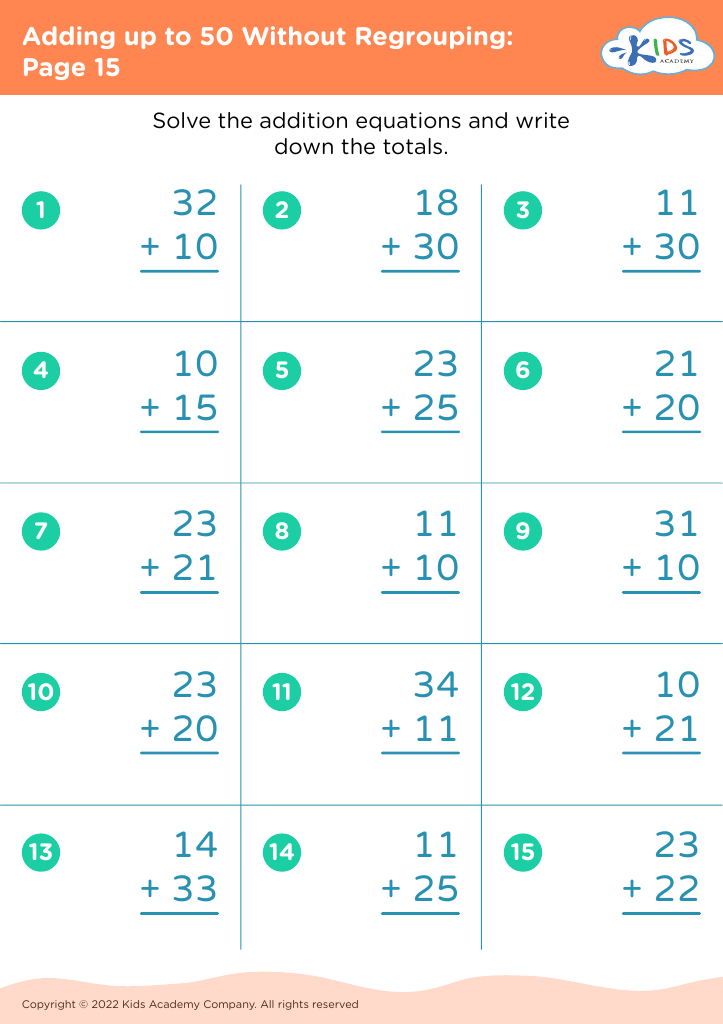
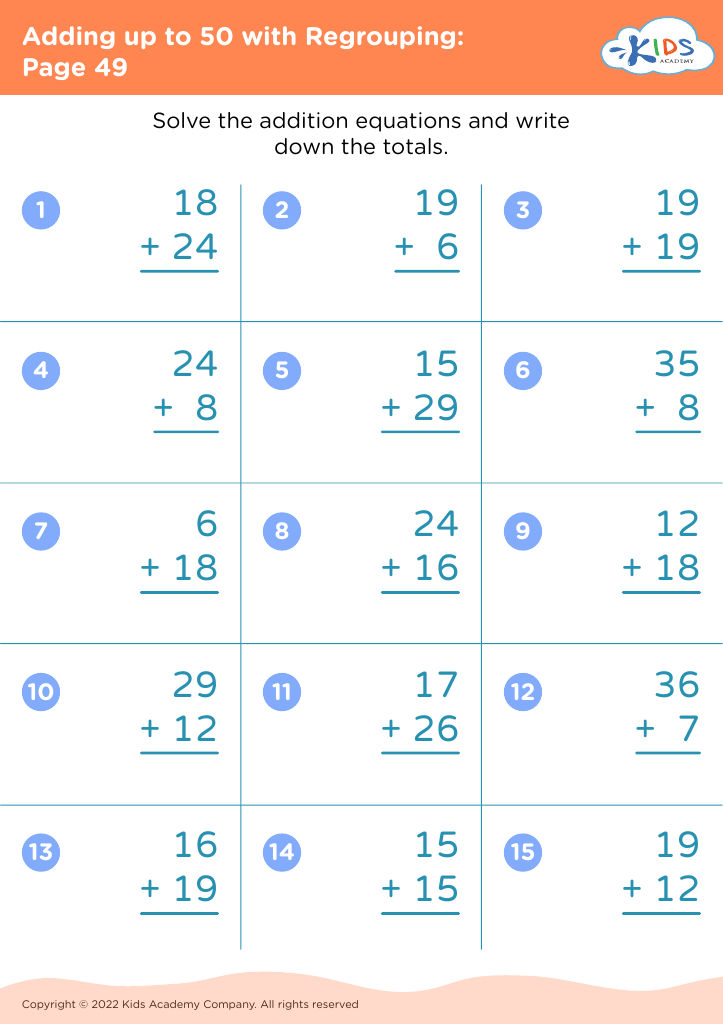




Improving number recognition and addition skills up to 50 is crucial for 8-year-olds, as these competencies lay the foundation for future math learning. At this age, children are developing critical thinking and problem-solving abilities, and strong math skills are essential in fostering these traits. Mastery of number recognition aids in building confidence and a positive learning attitude, as children can tackle real-world situations involving numbers more proficiently, such as handling money or understanding time.
For parents and teachers, emphasizing these skills can lead to greater academic success. Children who can easily recognize numbers and perform basic addition often excel in more complex mathematical concepts, benefiting them in subjects across the board. This foundational knowledge also plays a role in standardized testing and future educational opportunities.
Moreover, fostering a supportive learning environment enhances students' motivation and enjoyment of math, encouraging lifelong learning. Engaging parents in activities that reinforce these skills can strengthen family bonds and create a collaborative approach to education. In summary, prioritizing number recognition and addition practices is essential for enhancing children's cognitive skills, academic performance, and overall confidence in mathematics.








