Improve reading comprehension Adding up to 50 Worksheets for 8-Year-Olds
4 filtered results
-
From - To
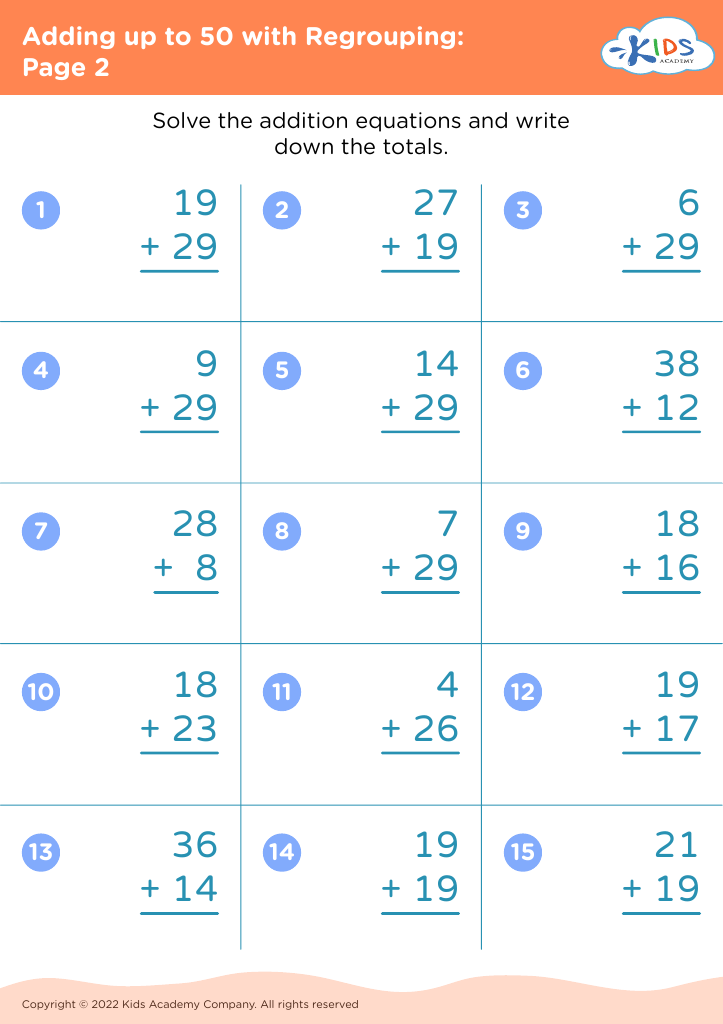
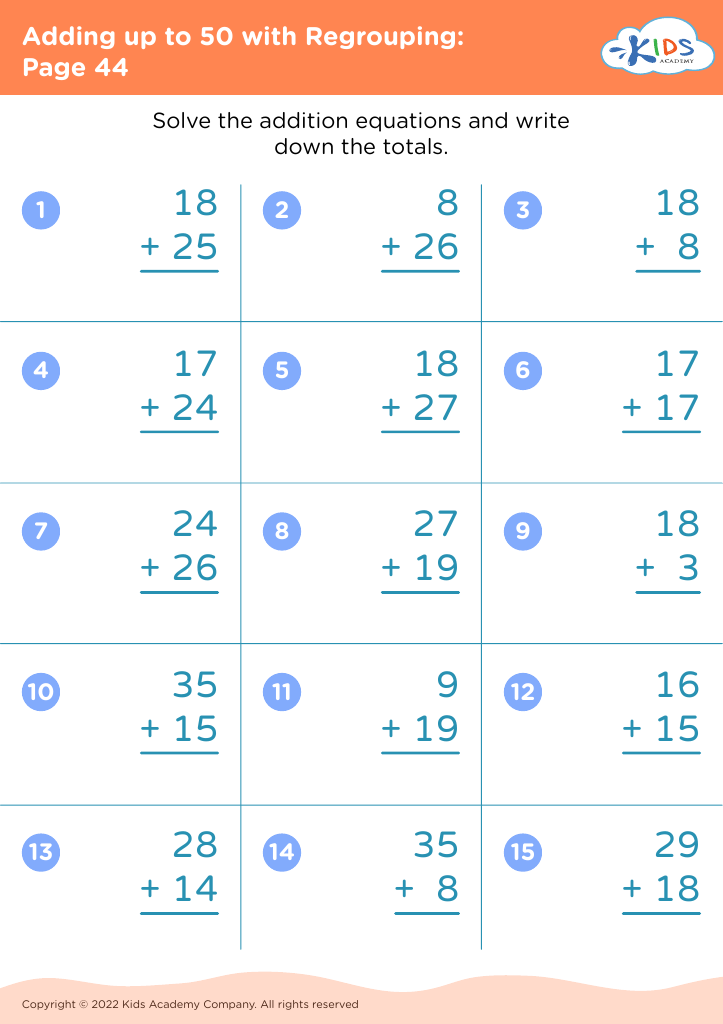
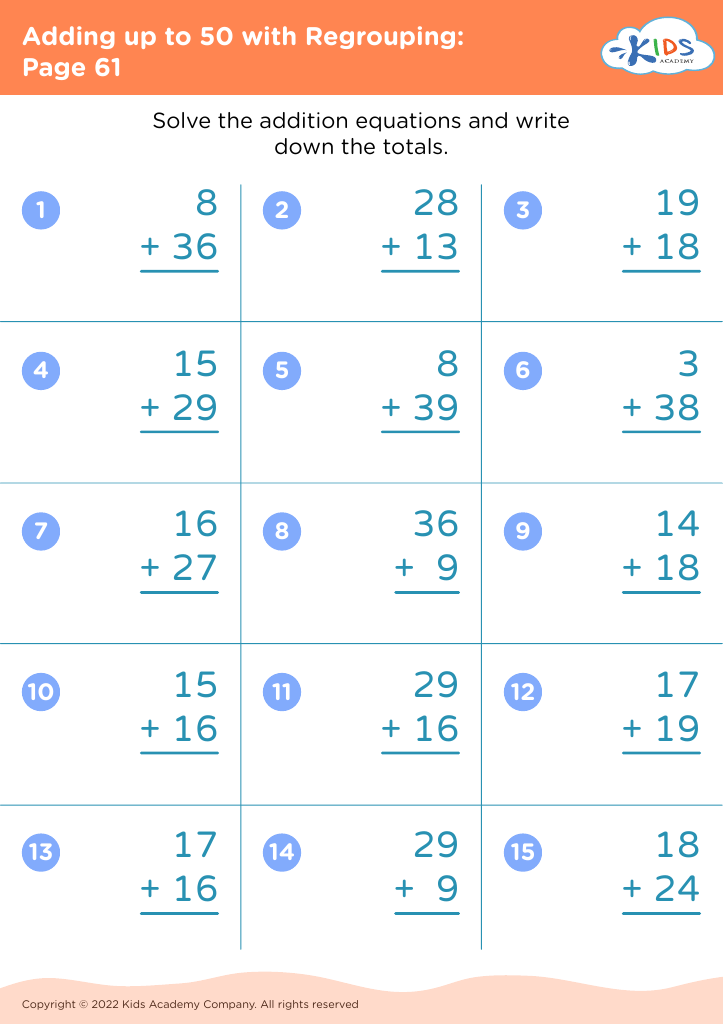
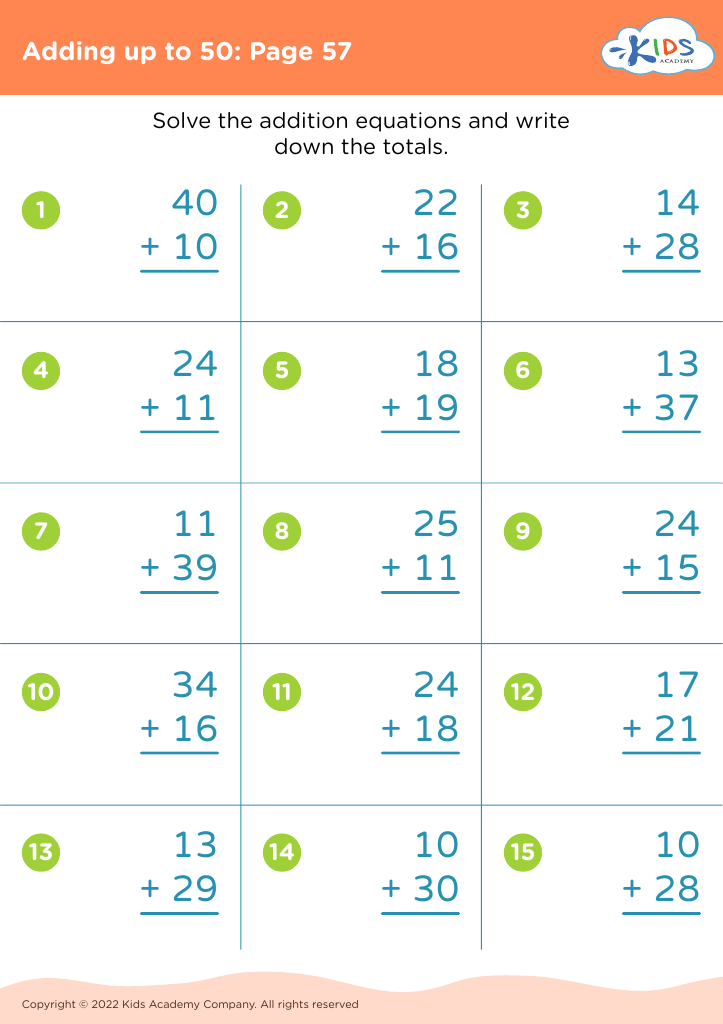
Enhance your 8-year-old's reading comprehension with our engaging "Adding Up to 50" worksheets! Designed to make learning fun, these resources expertly blend math and reading skills. Each worksheet encourages critical thinking and problem-solving while reinforcing vocabulary and sentence structure. As children work through relatable scenarios and colorful illustrations, they'll boost their comprehension levels and gain confidence in their abilities. With a focus on familiar contexts, these activities help young learners make connections between math concepts and real-life situations. Download our comprehensive set of 50 worksheets today and watch your child's reading skills flourish!




Improving reading comprehension for 8-year-olds is crucial for both parents and teachers because it directly impacts children's overall academic success and lifelong learning. At this age, children are transitioning from learning to read to reading to learn; hence, solid reading comprehension skills are essential for understanding complex subjects across all disciplines.
Strong readers are more likely to engage in classroom discussions, analyze texts critically, and develop an appreciation for literature and information, fostering a love for reading. Furthermore, enhanced comprehension doesn't just benefit literacy but also strengthens cognitive abilities such as critical thinking, problem-solving, and creativity.
Investing time in improving reading skills helps children build self-confidence. As they become proficient readers, they are more inclined to participate actively in school, participate in collaborative activities, and show a willingness to tackle challenging material.
For parents, supporting reading comprehension at home reinforces classroom learning, ensuring children receive consistent guidance. Encouraging daily reading, discussions about texts, and asking questions help children make connections and deepen their understanding. Overall, prioritizing reading comprehension is an investment in a child's emotional and intellectual development, laying the foundation for future academic and personal success.








