Logical thinking Adding up to 50 Worksheets for 8-Year-Olds
3 filtered results
-
From - To
Enhance your child’s logical thinking skills with our engaging "Adding Up to 50" worksheets! Designed specifically for 8-year-olds, these printable activities help students explore mathematical concepts while boosting their critical thinking abilities. Your child will solve a variety of problems that involve addition strategies, number patterns, and logic puzzles—all aimed at reinforcing their understanding of numbers up to 50. Perfect for classroom use or at-home study, our worksheets provide interactive learning experiences that promote analytical thinking. Help your child build confidence in math and set a strong foundation for their future learning with these thoughtfully crafted resources!
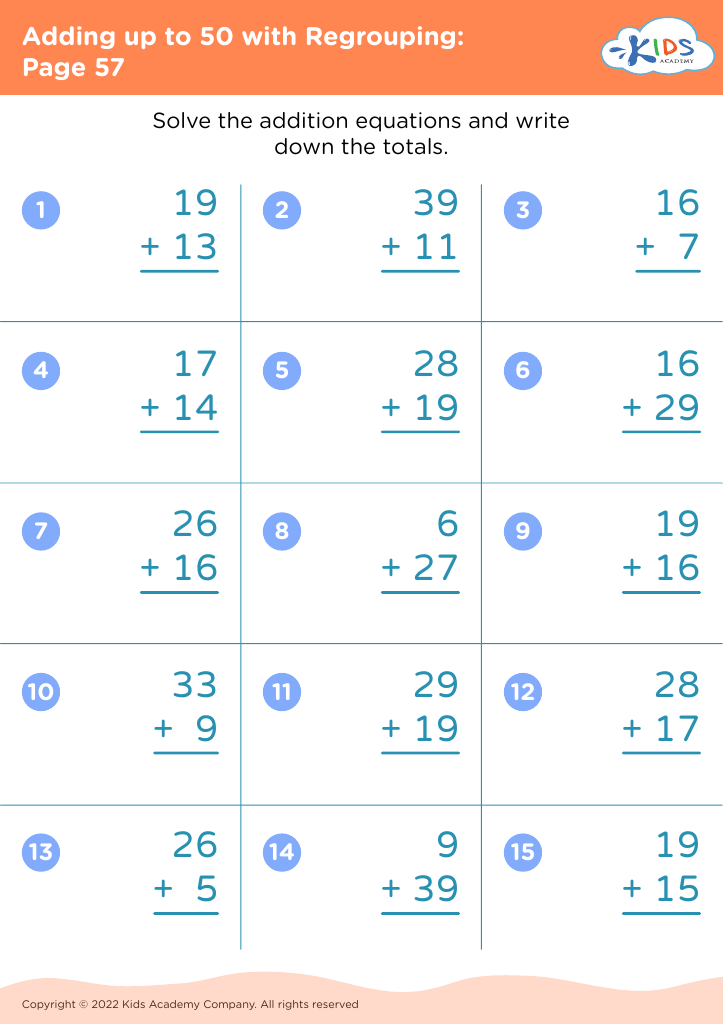
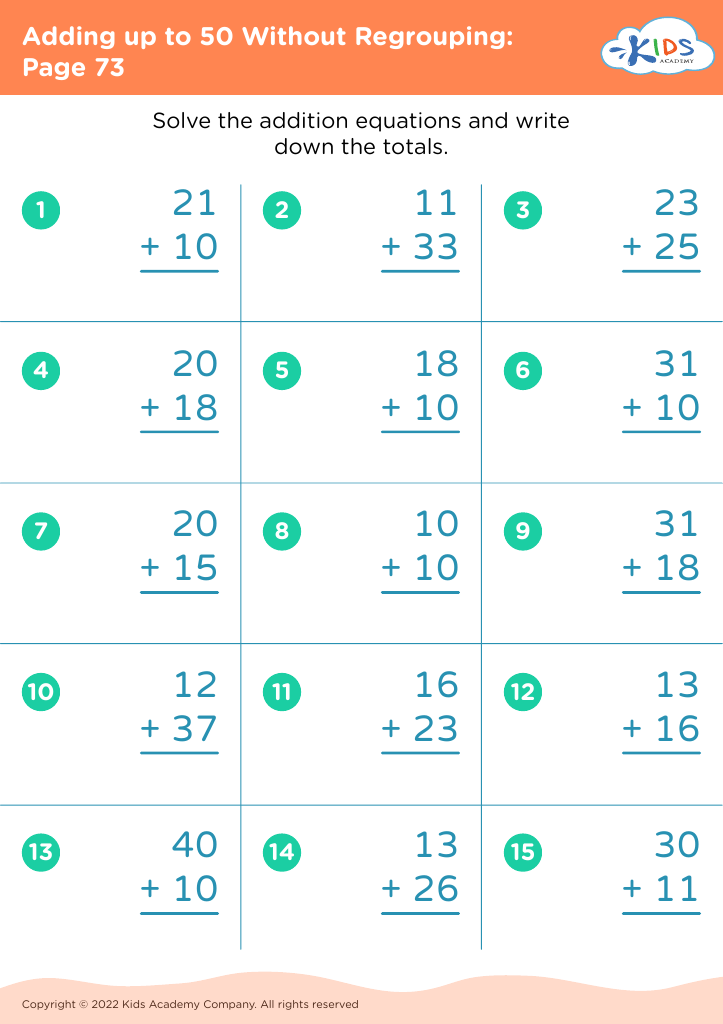
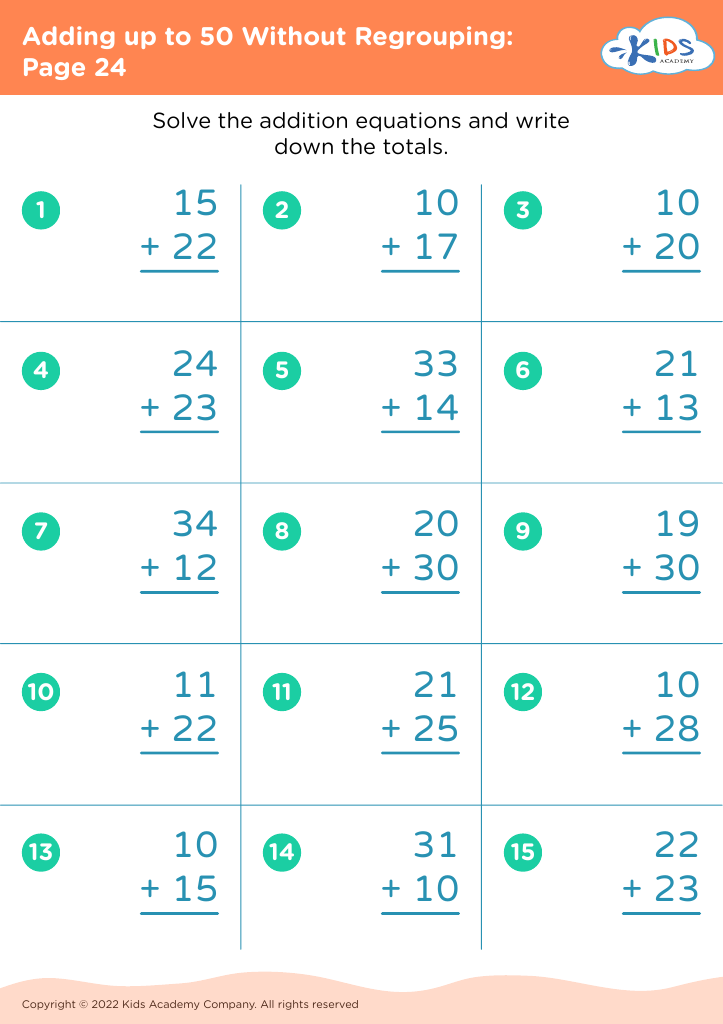




Logical thinking is a crucial cognitive skill that significantly contributes to a child's overall development, especially for 8-year-olds who are beginning to explore more complex concepts. Teaching children to engage in logical thinking helps them understand relationships between numbers, build problem-solving skills, and develop critical reasoning. Initially focusing on adding up to 50 provides a manageable framework within which they can experiment with calculations while enhancing their confidence in math.
By mastering these early math concepts, children not only learn fundamental arithmetic but also grasp the importance of organization and sequencing, which are key to logical reasoning. Such skills are essential in everyday situations, such as making decisions, planning events, or resolving conflicts, both in academic settings and life outside school.
Moreover, logical thinking fosters perseverance, encouraging children to think about multiple ways to solve a problem rather than giving up when they encounter challenges. For parents and teachers, nurturing this ability can lead to more enthusiastic learners who take initiative and remain curious. Ultimately, emphasizing logical thinking through exercises like adding up to 50 builds a strong foundation that students will rely on throughout their education and beyond.








