Mathematical reasoning Adding up to 50 Worksheets for 8-Year-Olds
4 filtered results
-
From - To
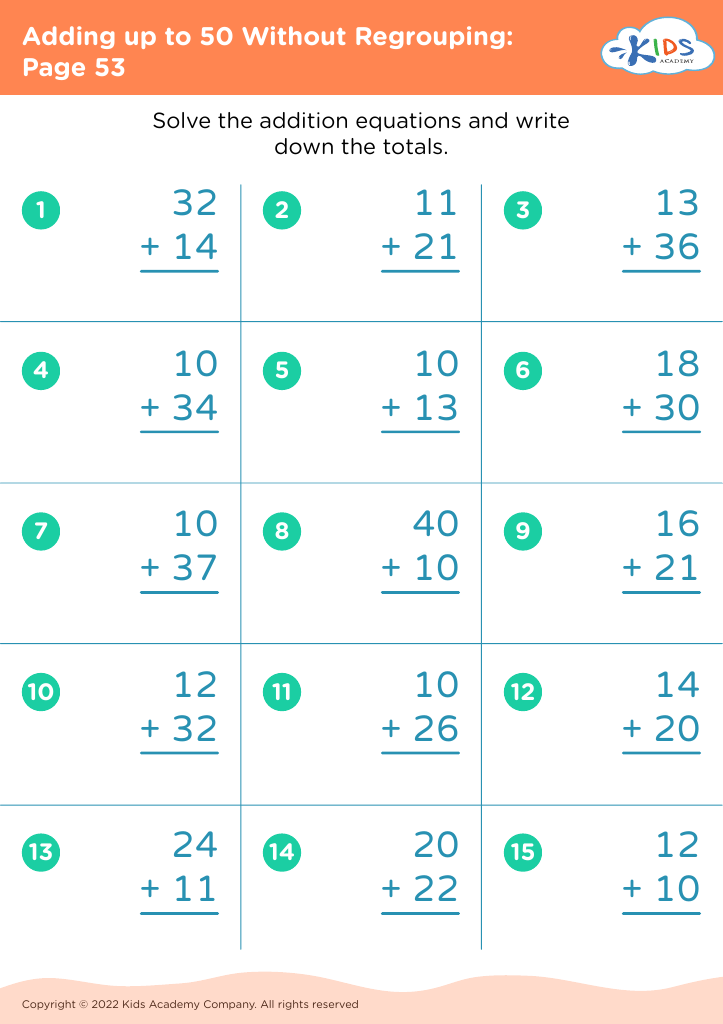
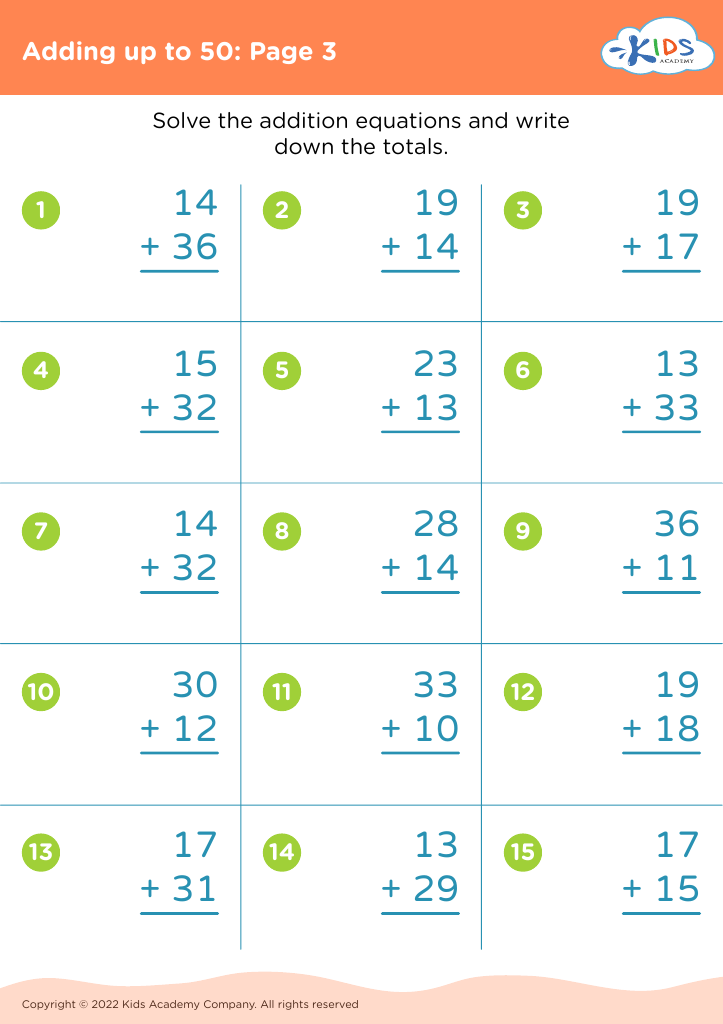
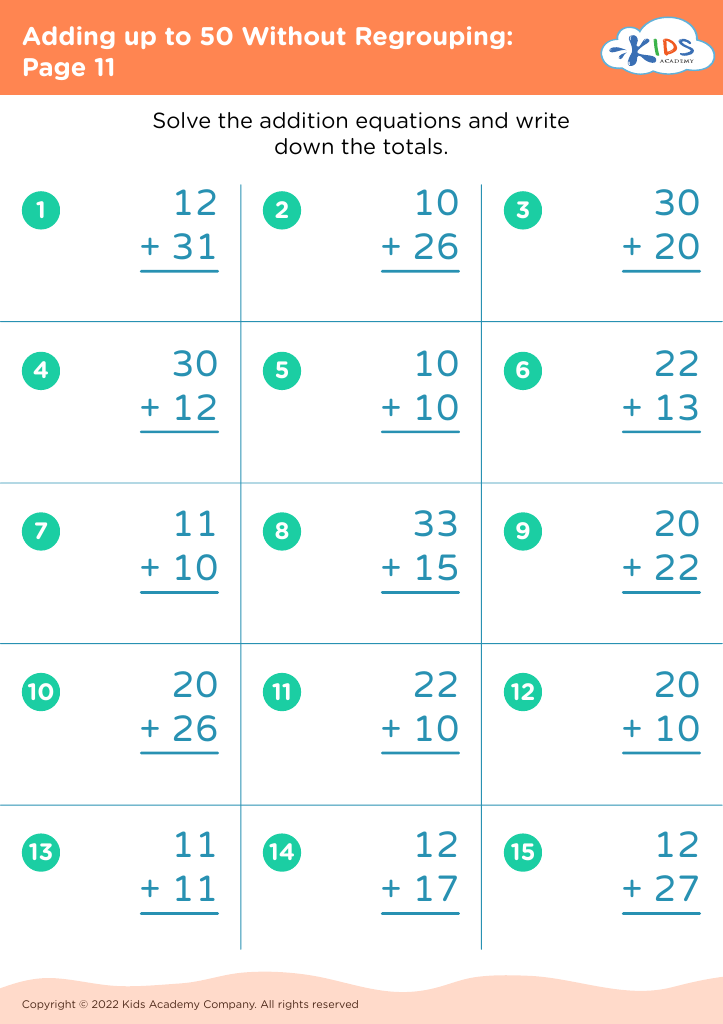
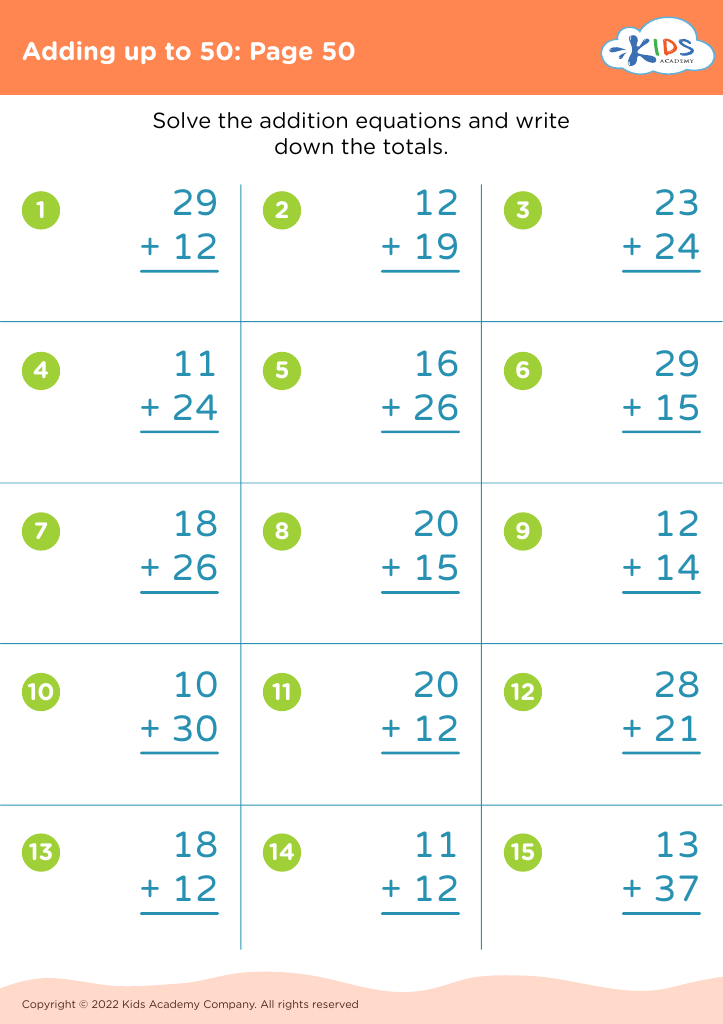
Discover our "Mathematical Reasoning Adding up to 50 Worksheets for 8-Year-Olds" on Kids Academy! Tailored for young learners, these engaging worksheets are designed to boost your child’s math skills through fun and interactive exercises. Each worksheet provides varied problems that enhance addition proficiency while developing critical thinking and problem-solving abilities. Ideal for classroom and home use, our carefully crafted resources support foundational arithmetic learning and make mastering addition up to 50 an enjoyable journey. Equip your 8-year-old with the skills for academic success and confidence in math with Kids Academy's expert-created worksheets! Visit us today to explore and download.




Mathematical reasoning and the ability to add up to 50 are critical foundational skills for 8-year-olds that set the stage for success in more advanced math concepts and everyday problem-solving. For parents and teachers, fostering these skills early on is crucial for several reasons.
First, it builds confidence and a positive attitude toward mathematics. When children master adding numbers up to 50, they feel a sense of accomplishment that encourages them to tackle more challenging math topics with enthusiasm. This early success can spark a lifelong interest in the subject.
Second, it enhances critical thinking and logic. As children learn various strategies to add numbers, such as breaking them into smaller parts or using mental math techniques, they develop a deeper understanding of number concepts. This type of reasoning boosts their overall problem-solving abilities, which is applicable beyond math.
Third, practical life skills are developed through mathematical reasoning. Being able to quickly and accurately perform basic addition helps children in everyday tasks, such as calculating money, measuring ingredients in cooking, or determining time intervals.
Finally, mathematical reasoning supports academic achievement across subjects. A strong grasp of math fundamentals contributes to success in science, technology, and even reading comprehension, as it improves analytical and sequential thinking.
In conclusion, emphasizing mathematical reasoning and proficiency in adding up to 50 for 8-year-olds prepares them for future academic challenges, practical life scenarios, and nurtures holistic cognitive development.








