Problem-solving abilities Adding up to 50 Worksheets for 8-Year-Olds
4 filtered results
-
From - To
Unlock your child's potential with our "Problem-Solving Abilities Adding Up to 50 Worksheets" designed specifically for 8-year-olds! This comprehensive set features engaging and interactive problem-solving worksheets that encourage critical thinking and foster mathematical skills. Each sheet is crafted to help children practice addition, improve their number sense, and approach challenges with confidence. As they work through fun and relatable scenarios, kids will enhance their problem-solving abilities while mastering addition up to 50. Download these valuable resources today and watch your child thrive in math while enjoying the learning process! Perfect for home or school use.
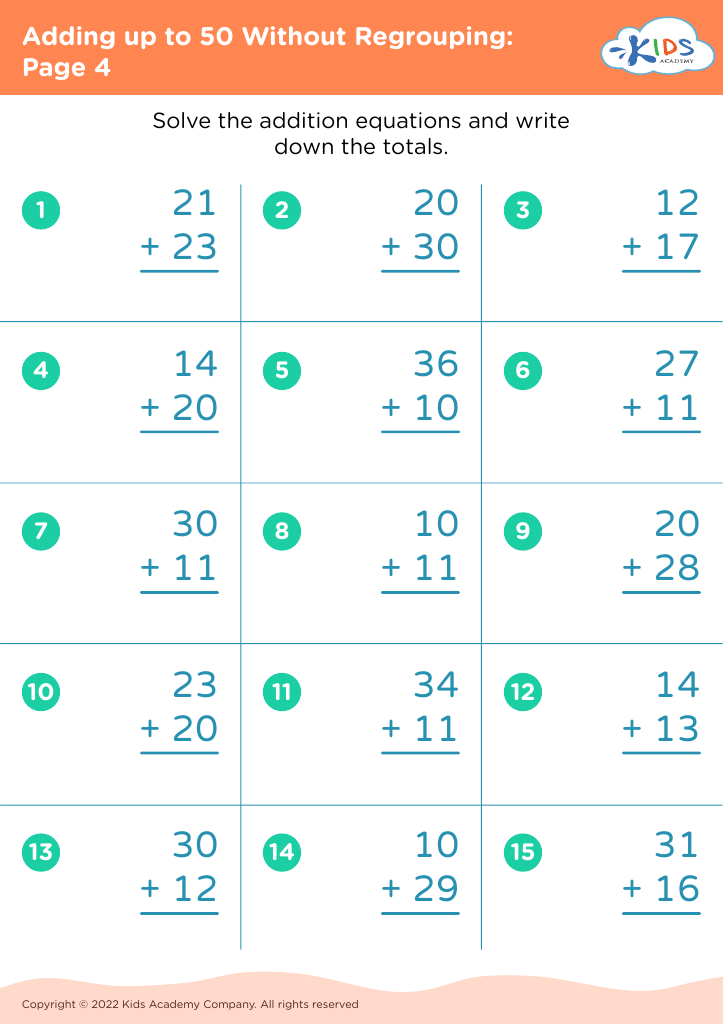
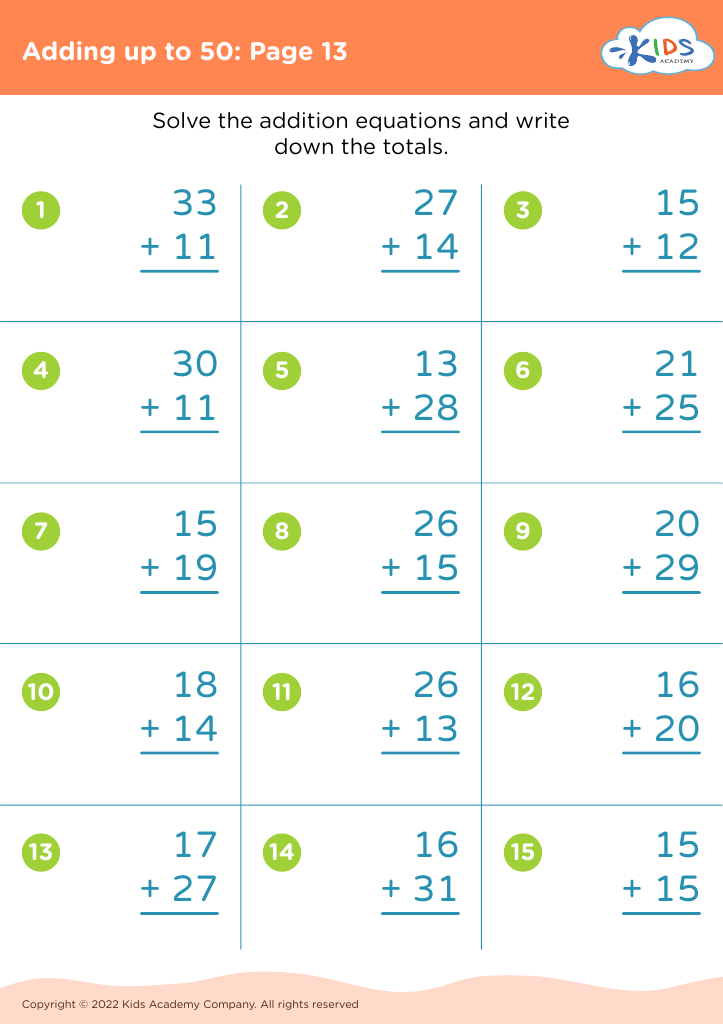
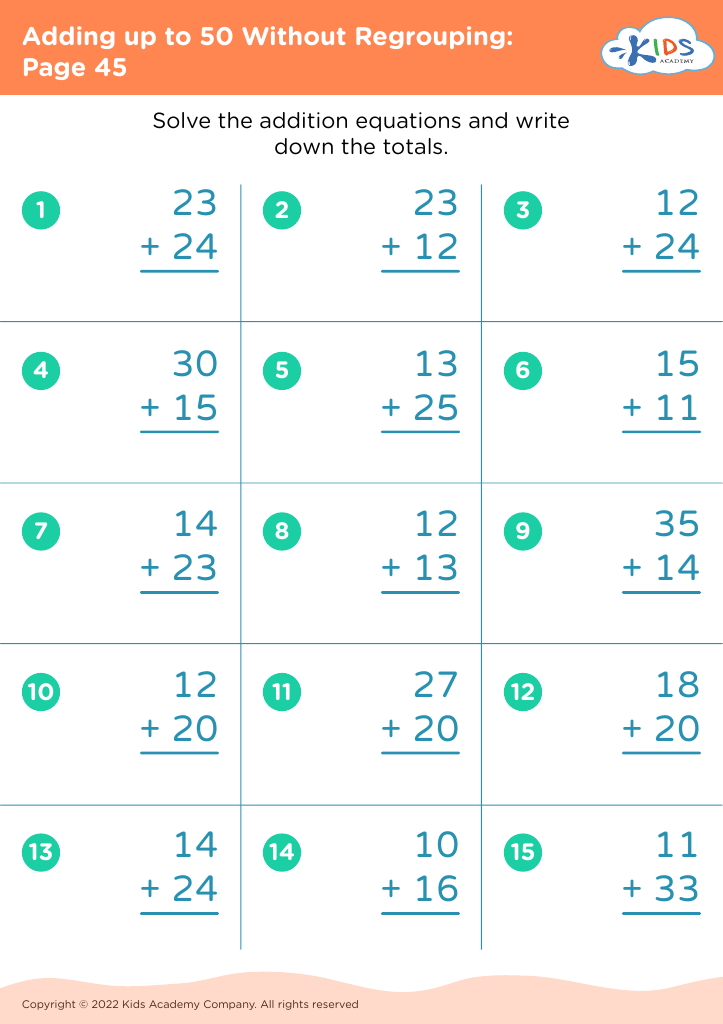
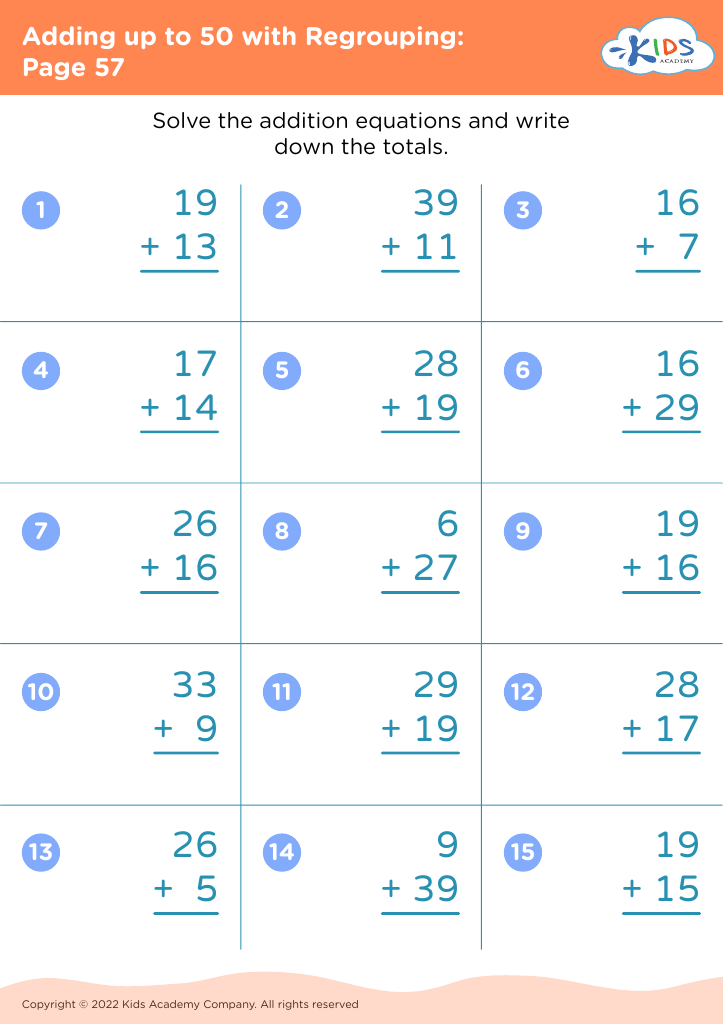




Problem-solving abilities are crucial for the cognitive and emotional development of 8-year-olds, making it essential for parents and teachers to prioritize these skills. At this age, children transition from simple arithmetic to more complex mathematical concepts, and the ability to solve problems involving addition, such as reaching a total of 50, is foundational in building their confidence and competence in math.
Developing problem-solving skills enhances critical thinking, equipping children with the tools to analyze situations, assess possible solutions, and make informed decisions. This ability is not limited to math; it extends to everyday challenges they encounter. When children engage in problem-solving, they learn perseverance, creativity, and adaptability, essential traits in an ever-changing world.
Moreover, strong problem-solving skills correlate with greater academic success and are often linked to improved literacy and reasoning abilities, fostering a well-rounded educational development. By nurturing these skills, parents and teachers can help children build a positive mindset towards learning, encouraging them to view challenges as opportunities rather than obstacles. Ultimately, fostering problem-solving skills allows children to navigate not only their academic journeys but also their personal lives with confidence and resilience.








