Problem-Solving Skills Adding up to 50 Worksheets for 8-Year-Olds - Page 2
26 filtered results
-
From - To
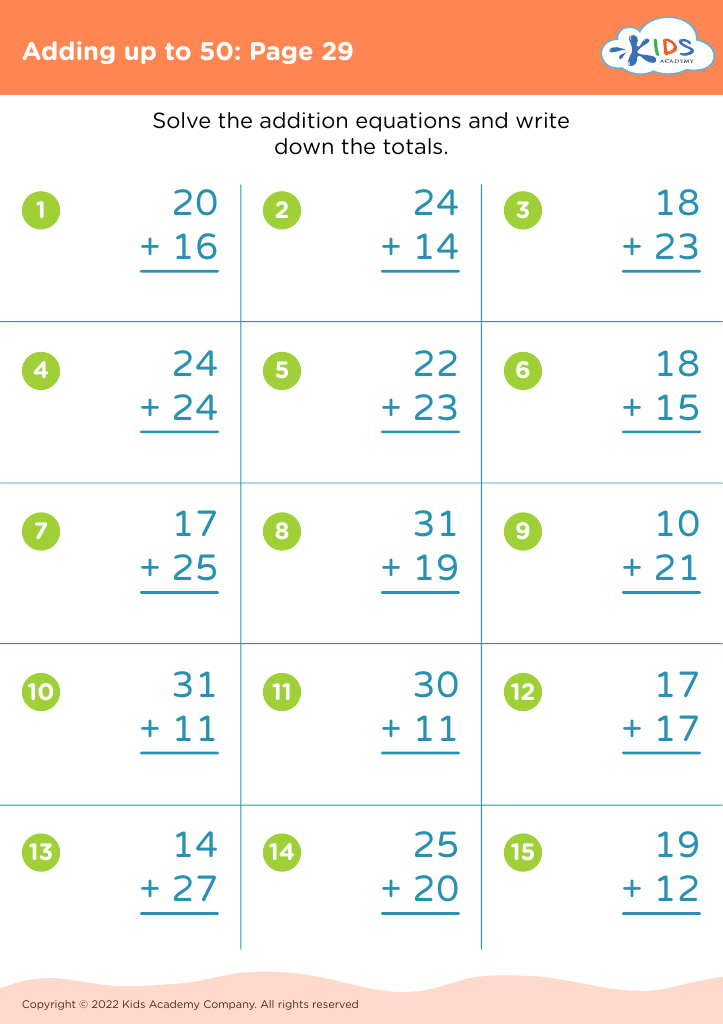
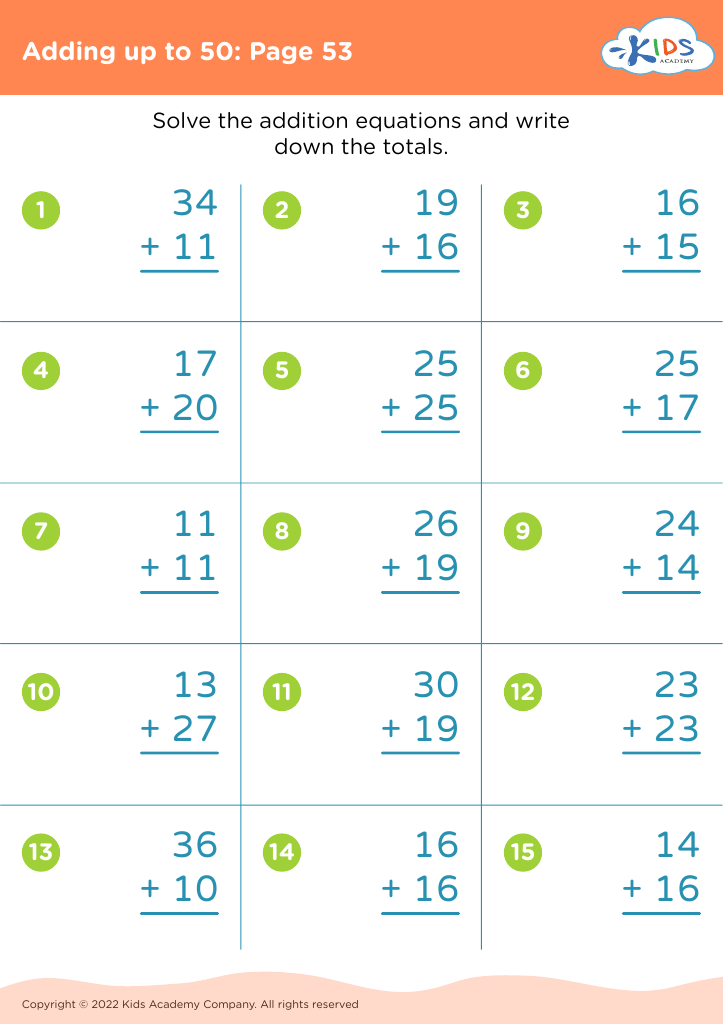




Developing problem-solving skills in 8-year-olds, especially for math problems that involve adding up to 50, is crucial for both cognitive and practical life benefits. At this age, children are at a key developmental stage where they begin to build foundational intellectual and social skills. By tackling addition problems up to 50, children not only enhance their arithmetic proficiency but also develop their critical thinking and logical reasoning skills which are essential for more complex mathematical concepts in the future.
Math problems requiring addition hone a child’s ability to recognize patterns, follow step-by-step processes, and apply appropriate strategies to find solutions. Mastering these skills can boost their confidence and interest in learning, which permeates into other academic areas.
Furthermore, problem-solving is a crucial life skill. When children learn to solve mathematical problems, they also practice how to approach real-life challenges methodically and calmly, evaluate different angles, and make informed decisions. This kind of skill development supports their independence, resilience, and ability to face broader life challenges in school and social interactions positively.
Teachers and parents play a key role in facilitating this development through engaging and supportive learning environments. Activities such as interactive games, related storytelling, and practical examples effectively motivate and reinforce problem-solving skills, setting children up for future success.








