Simplifying Fractions Adding up to 50 Worksheets for 8-Year-Olds
8 filtered results
-
From - To
Help your 8-year-olds master simplifying fractions with our engaging "Simplifying Fractions Adding up to 50 Worksheets." Tailored specifically for young learners, these worksheets make learning math fun and interactive. Each worksheet provides a variety of exercises that challenge students to simplify fractions that sum to 50, offering both practice and reinforcement of key concepts. Ideal for classroom use or at-home learning, our worksheets encourage critical thinking and problem-solving skills while boosting math confidence. Explore our diverse collection and watch your child's understanding of fractions flourish as they enjoy solving colorful, age-appropriate problems!
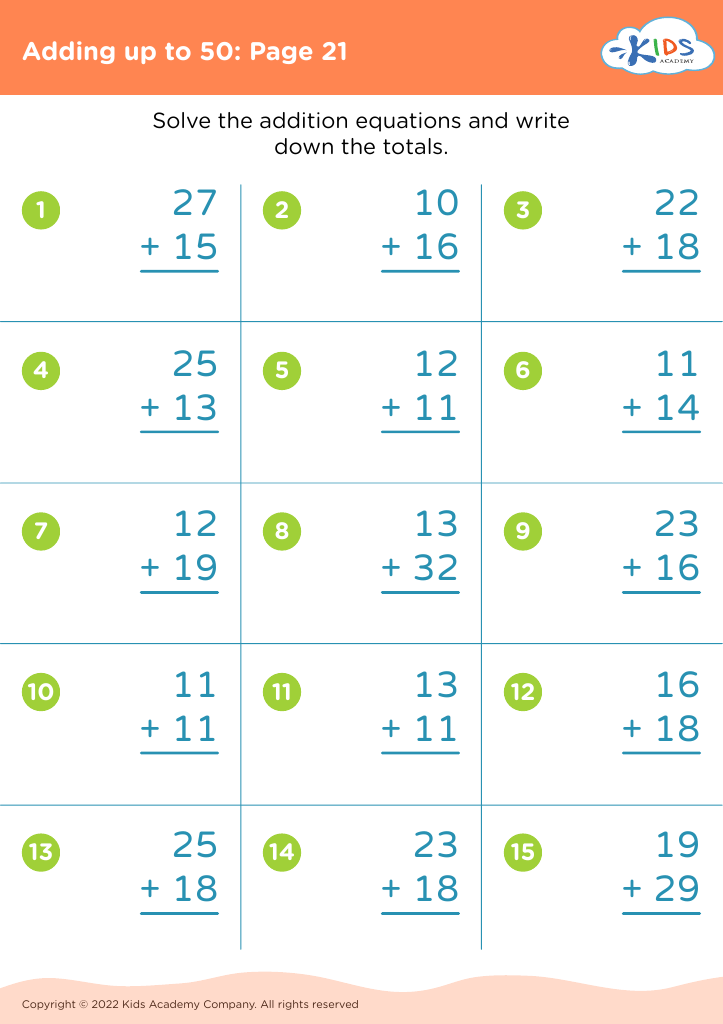
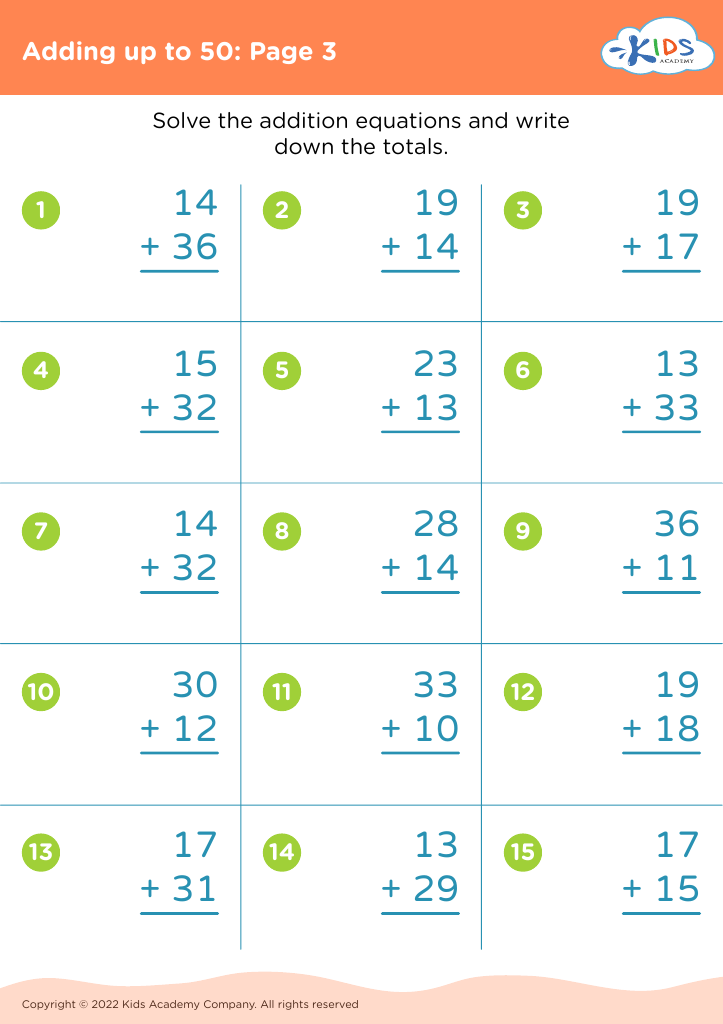
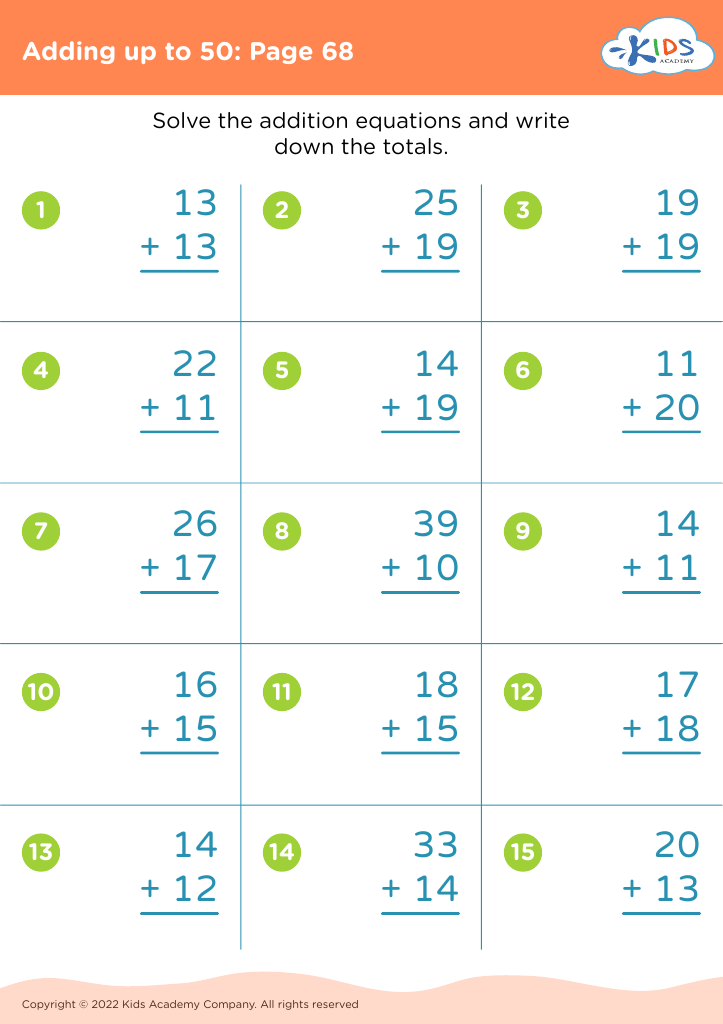
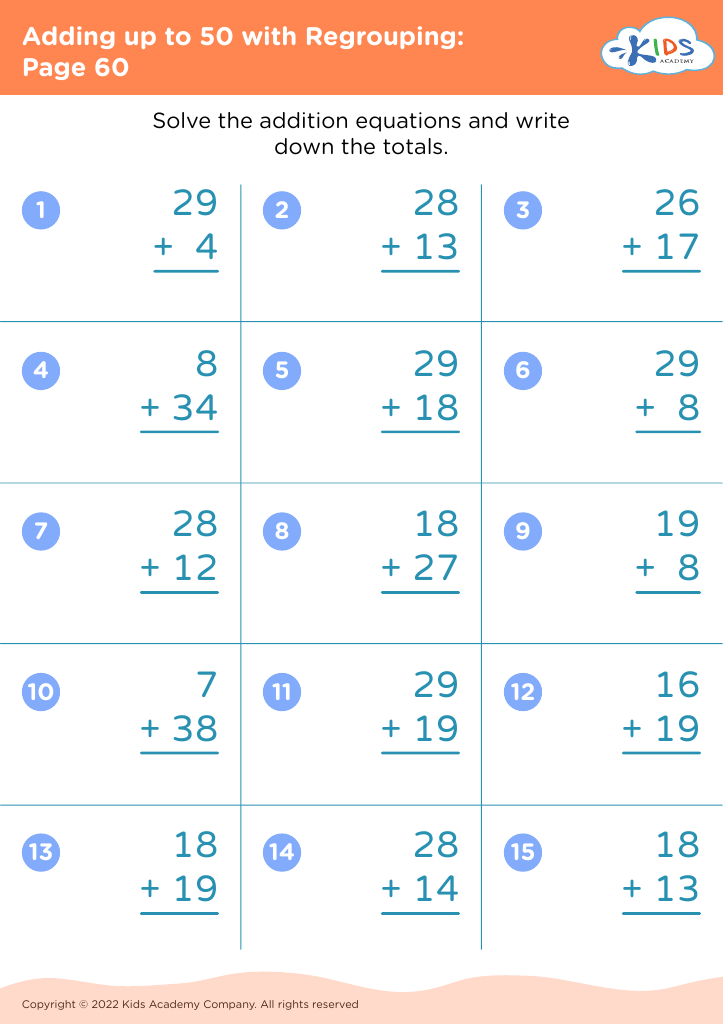
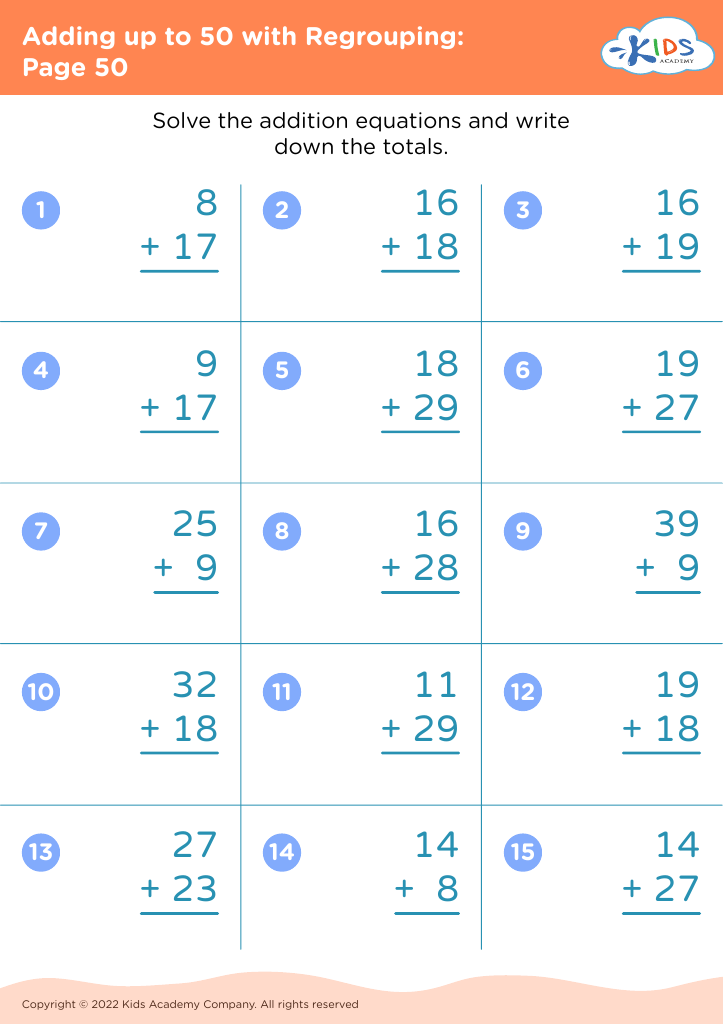
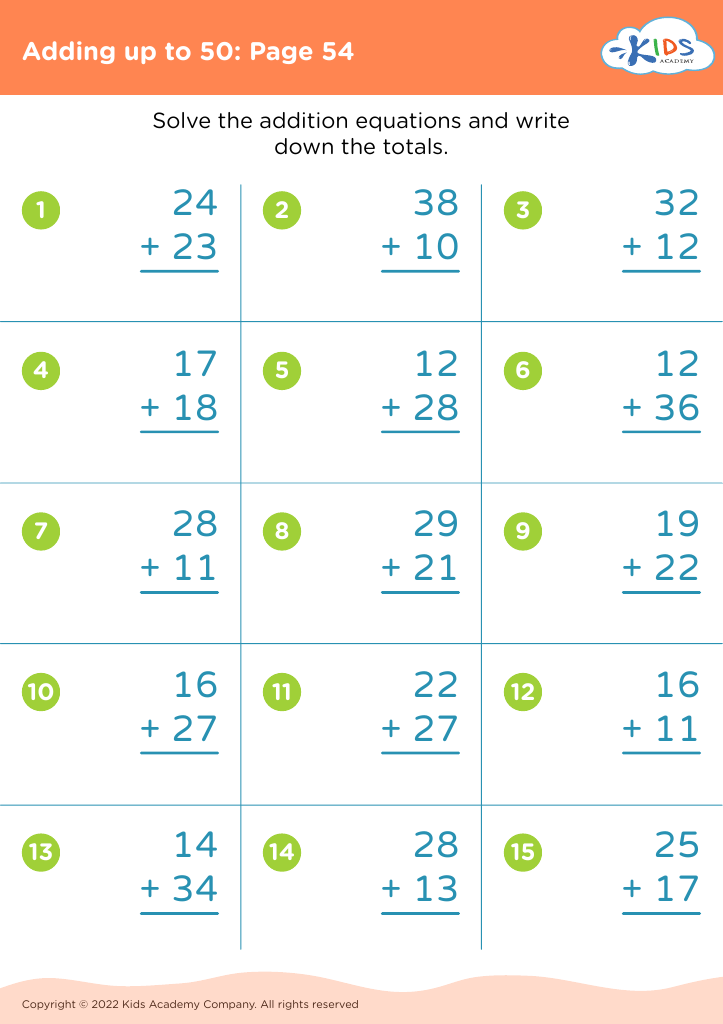
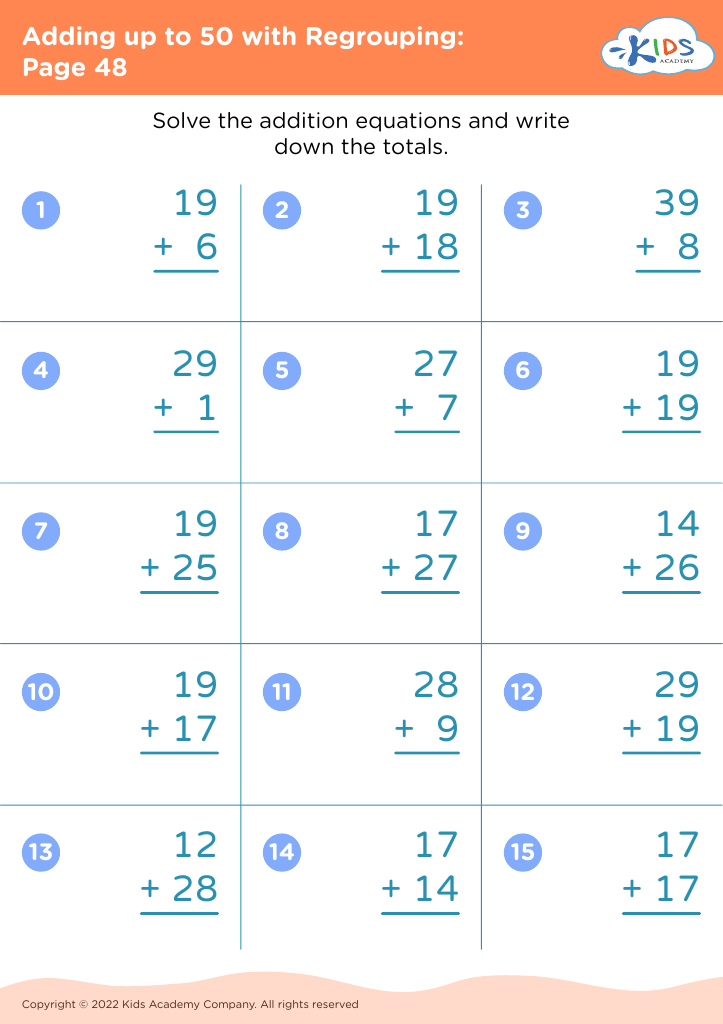
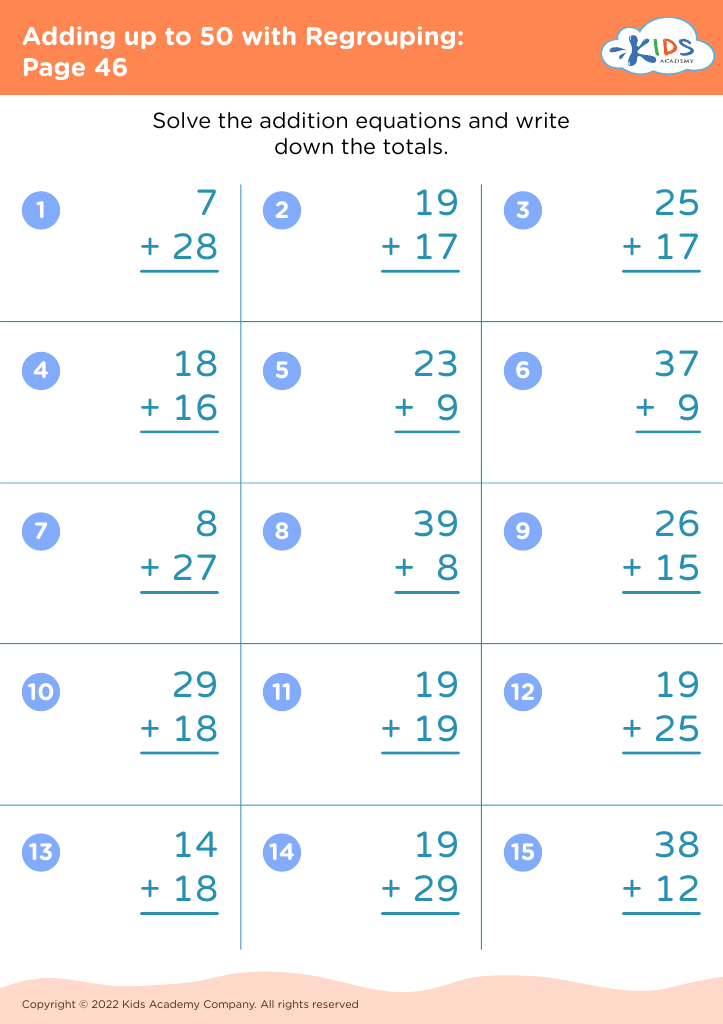




Teaching 8-year-olds how to simplify fractions that add up to 50 is crucial for several reasons. First, it builds foundational math skills necessary for more advanced concepts. Understanding fractions helps children grasp proportional reasoning, which is widely applicable in everyday life and more complex math problems later on.
Second, simplifying fractions is a practical life skill. It aids children in understanding recipes, measurements in crafts, and sharing resources evenly—essential life lessons that teach them fairness and cooperation. By tackling the challenge of adding fractions to a specific sum, students also enhance their problem-solving skills and critical thinking.
Moreover, engaging with these concepts at an early age helps foster a positive attitude toward math. When parents and teachers illustrate fraction problems in fun and relatable contexts, children develop confidence in their mathematical abilities, setting the groundwork for lifelong learning.
Finally, addressing this topic collaboratively, whether at home or in school, encourages communication about mathematics. Open dialogues about fractions serve to demystify math, transforming it into a shared exploration instead of a daunting subject. Such collaboration helps nurture a supportive learning environment, crucial for children's academic success and self-esteem.








