Understanding fractions Adding up to 50 Worksheets for 8-Year-Olds
47 filtered results
-
From - To
Unlock your child's math potential with our "Understanding Fractions Adding Up to 50 Worksheets" designed specifically for 8-year-olds. These engaging and interactive worksheets not only facilitate a solid grasp of fractions but also incorporate addition exercises that total 50. Your child will enjoy learning as they explore various fraction concepts, leading to greater confidence in their math abilities. With age-appropriate challenges and fun activities, these worksheets make mastering fractions an enjoyable experience. Perfect for homeschooling or classroom use, our resources help foster critical thinking skills while building a strong foundation in mathematics. Download and empower your young learner today!
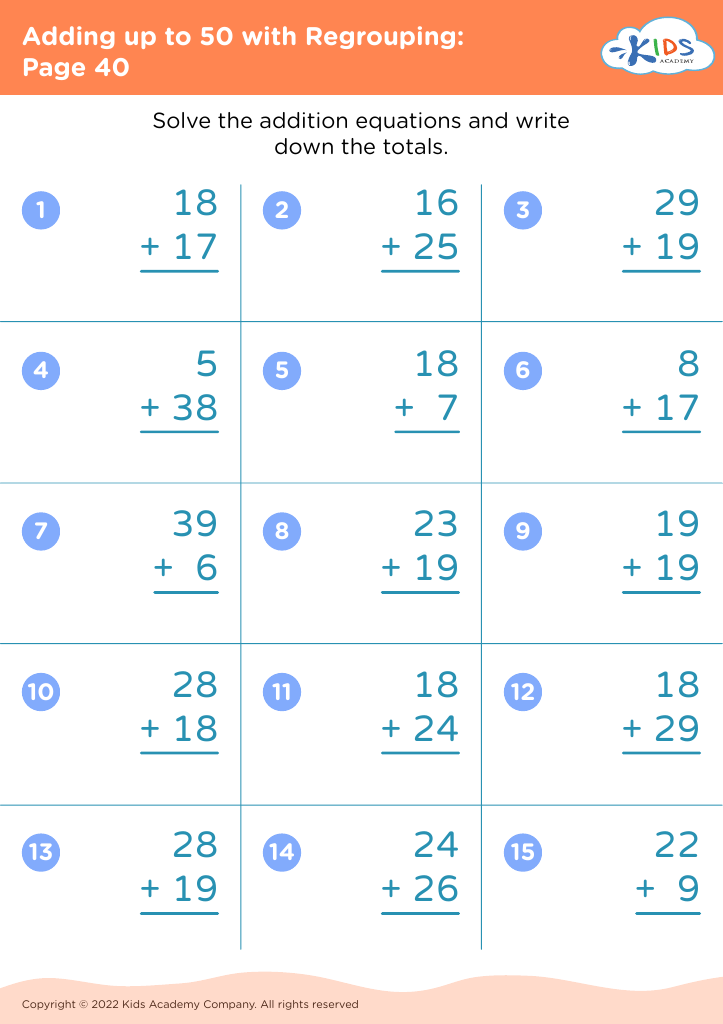
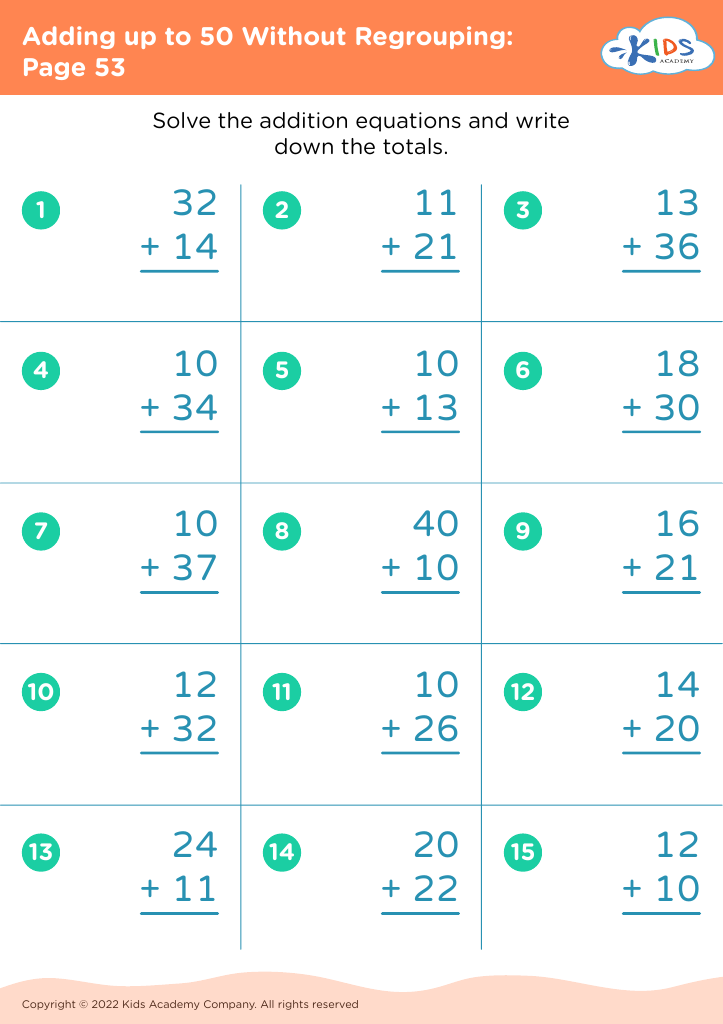
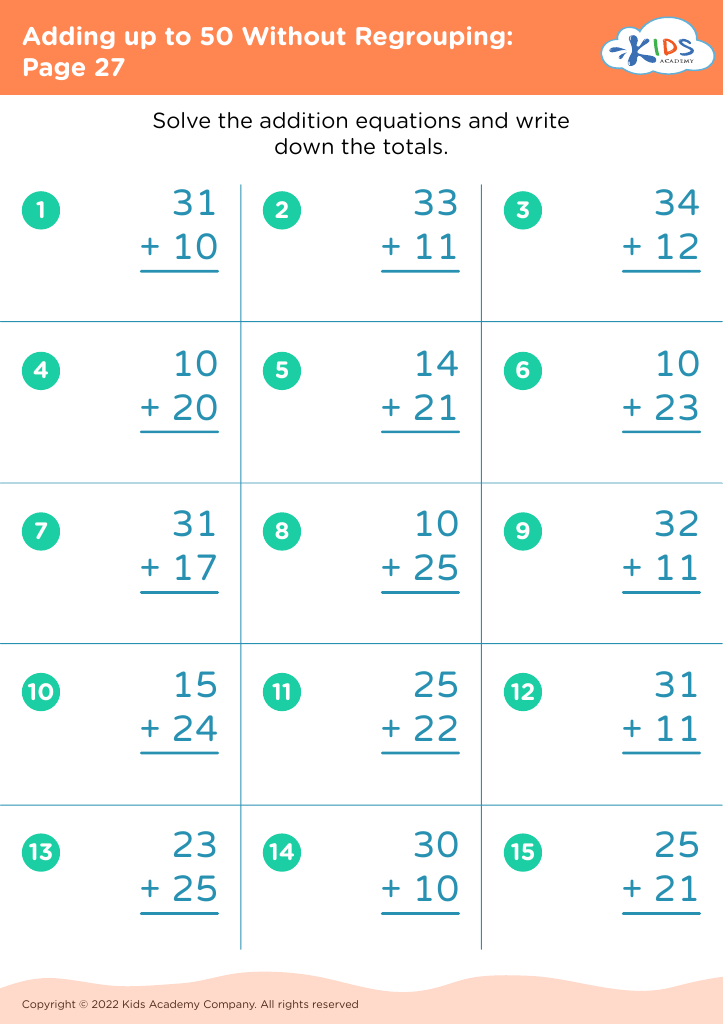
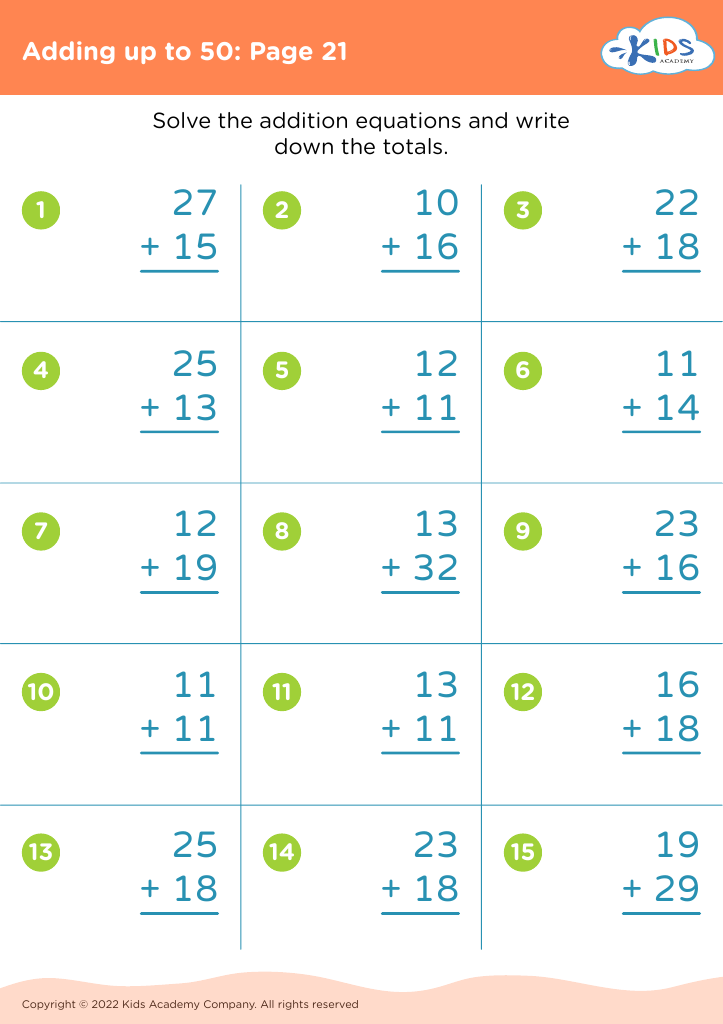
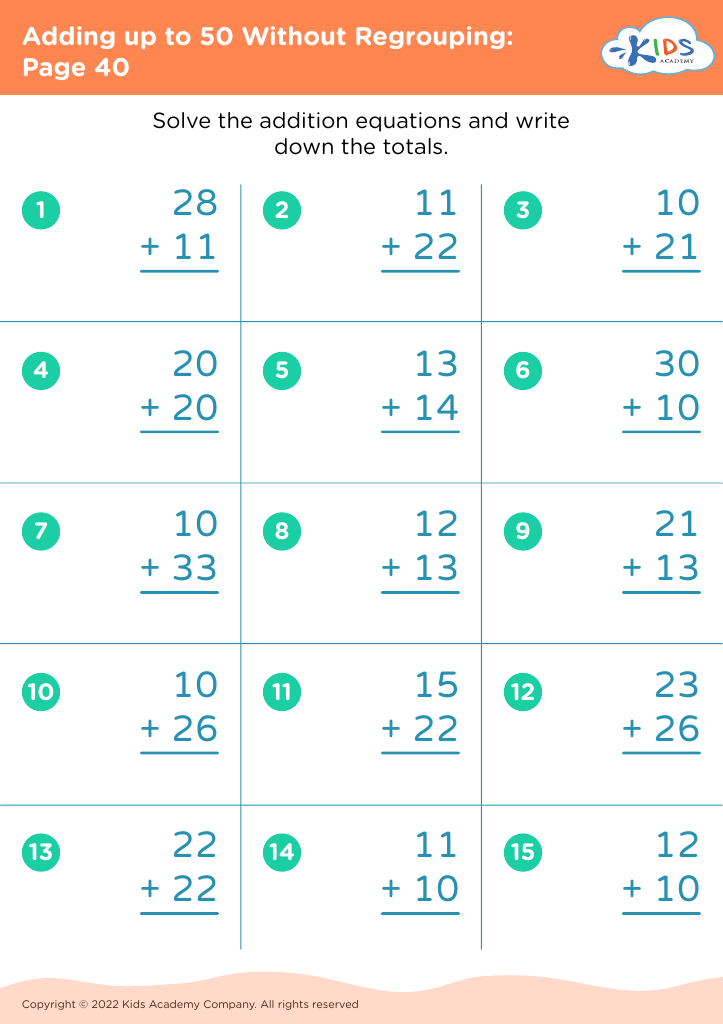
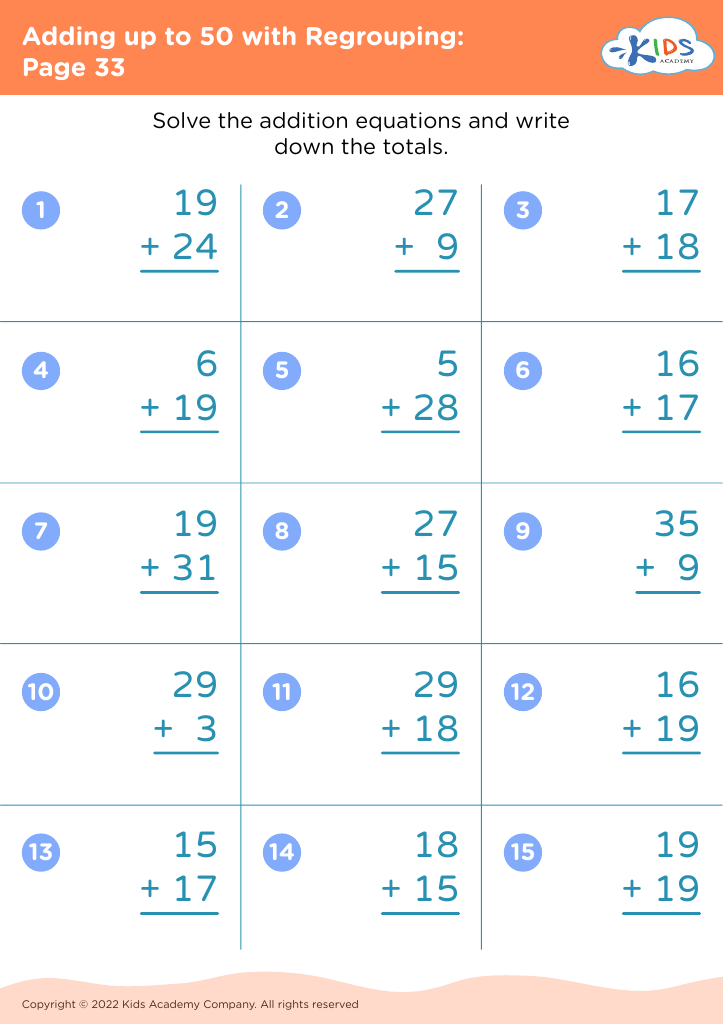
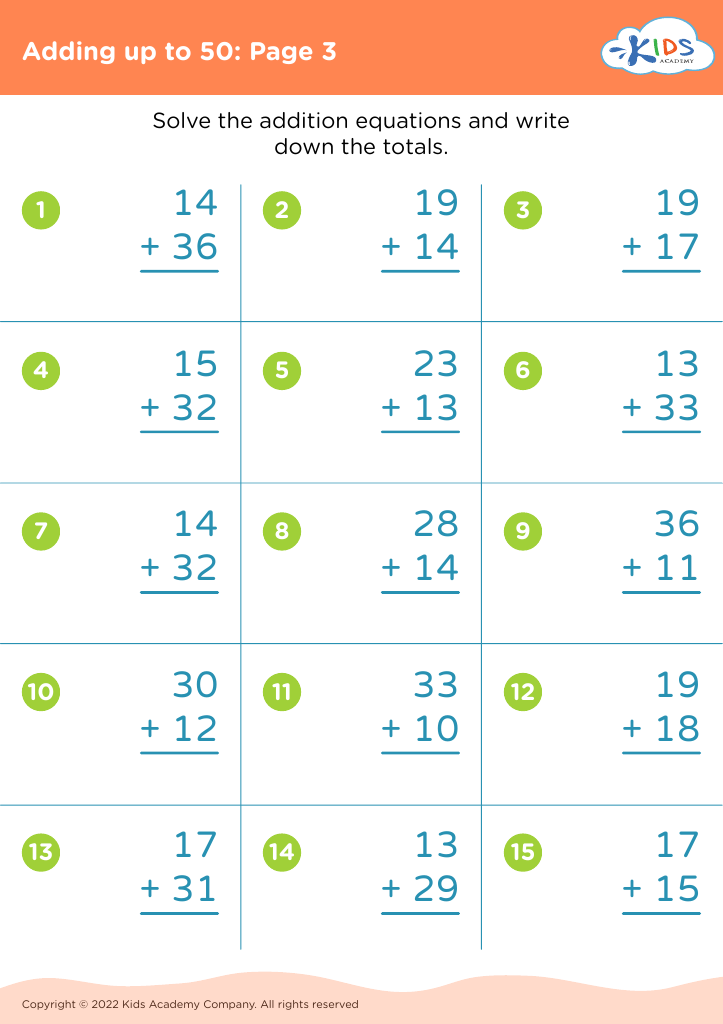
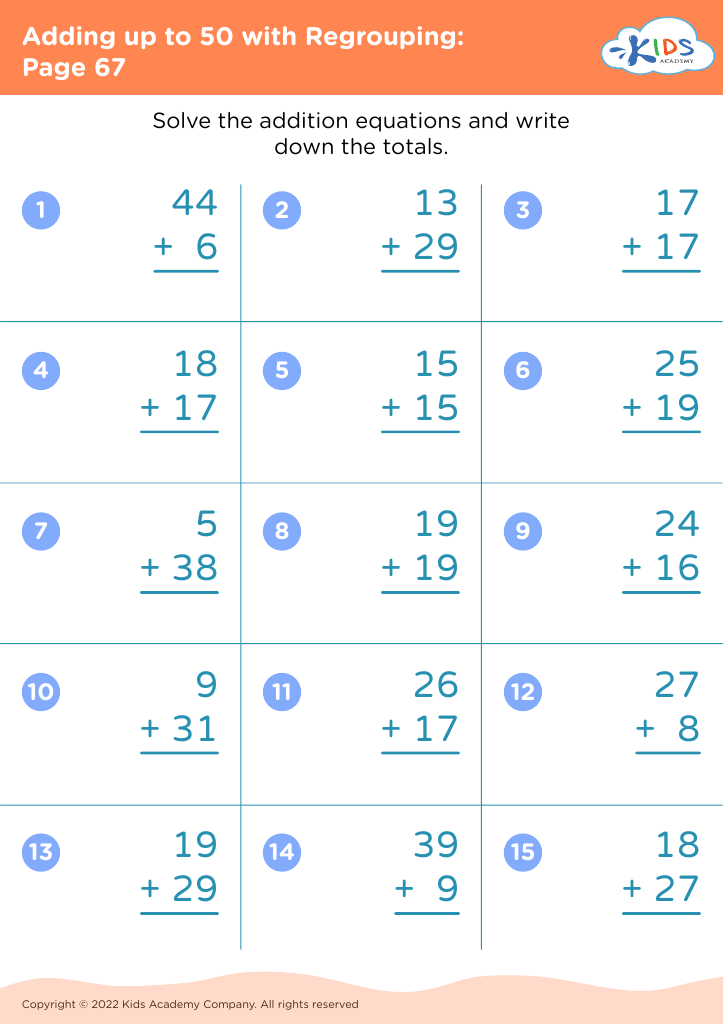
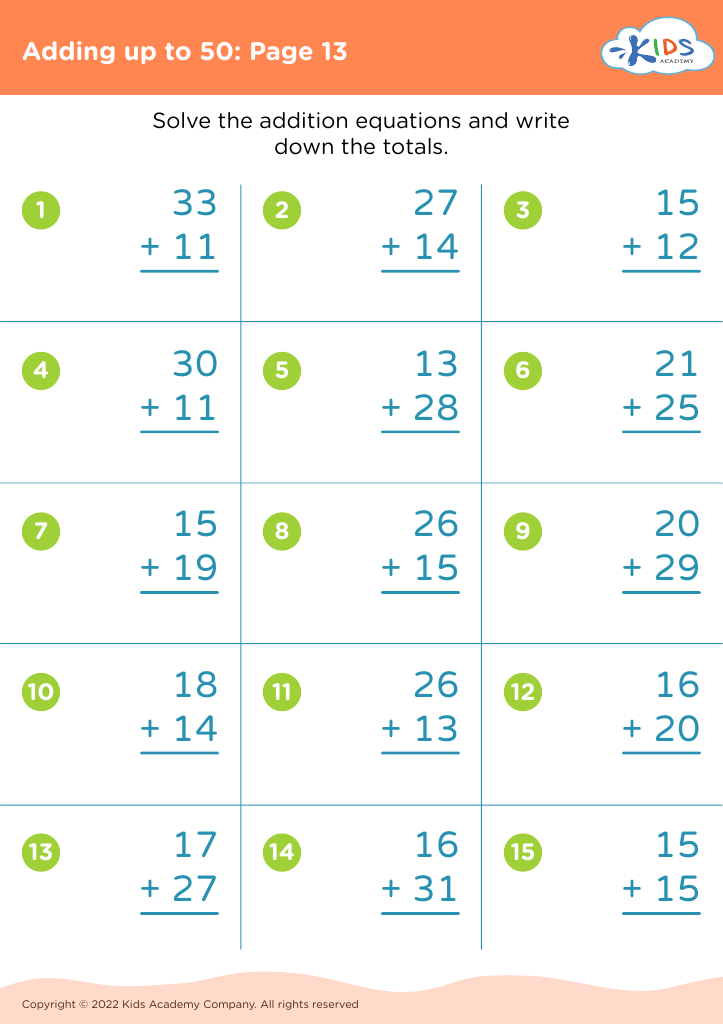
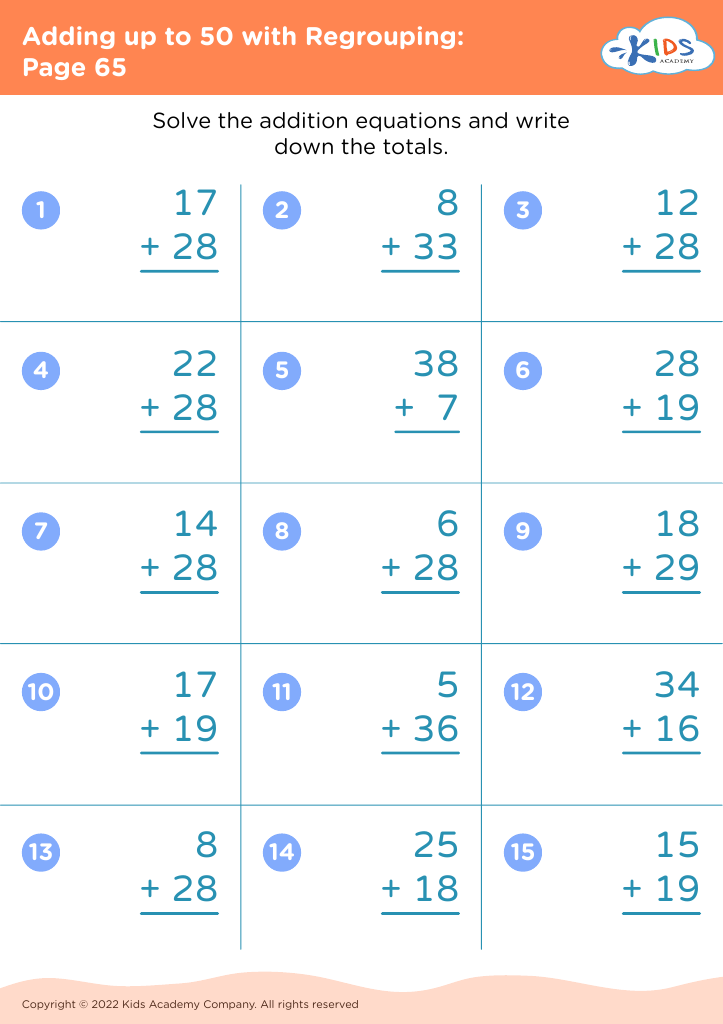
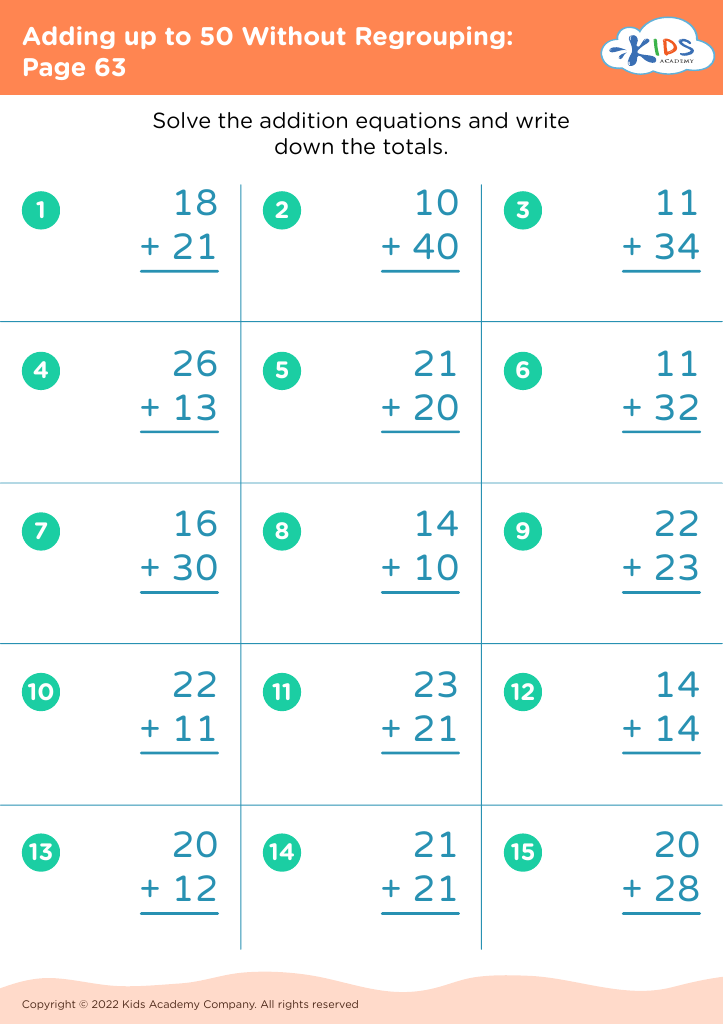
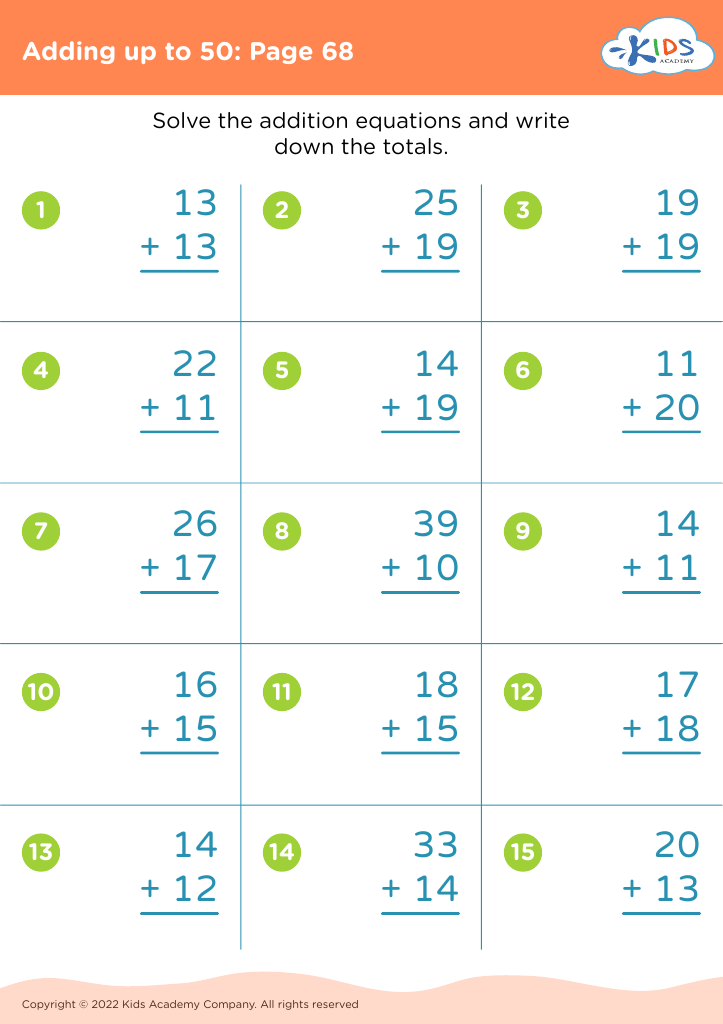
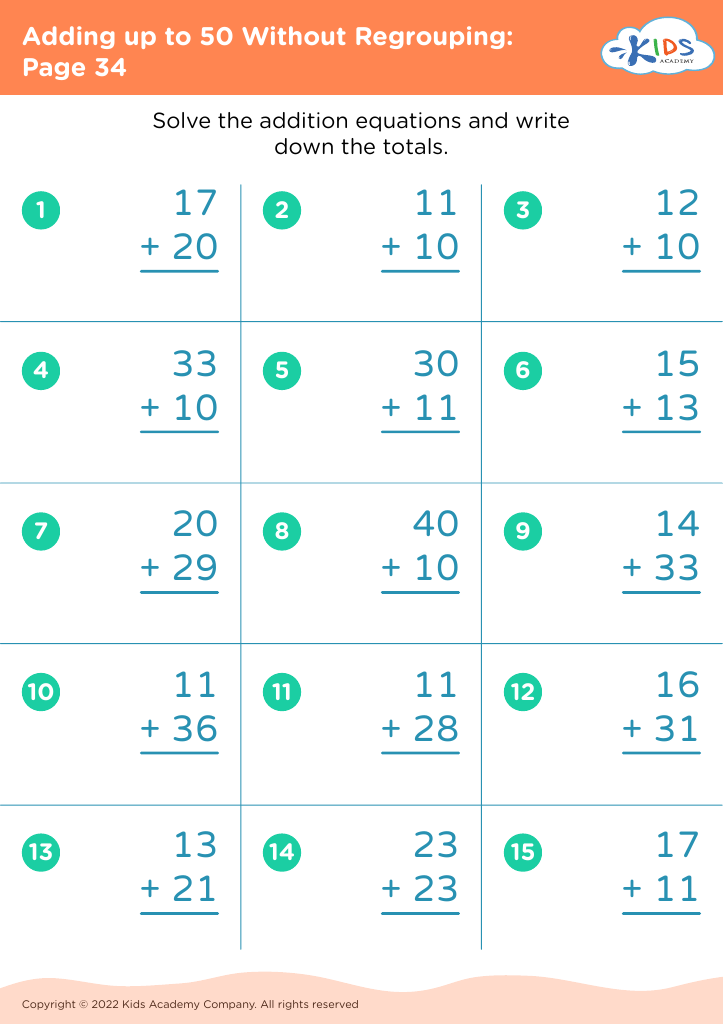
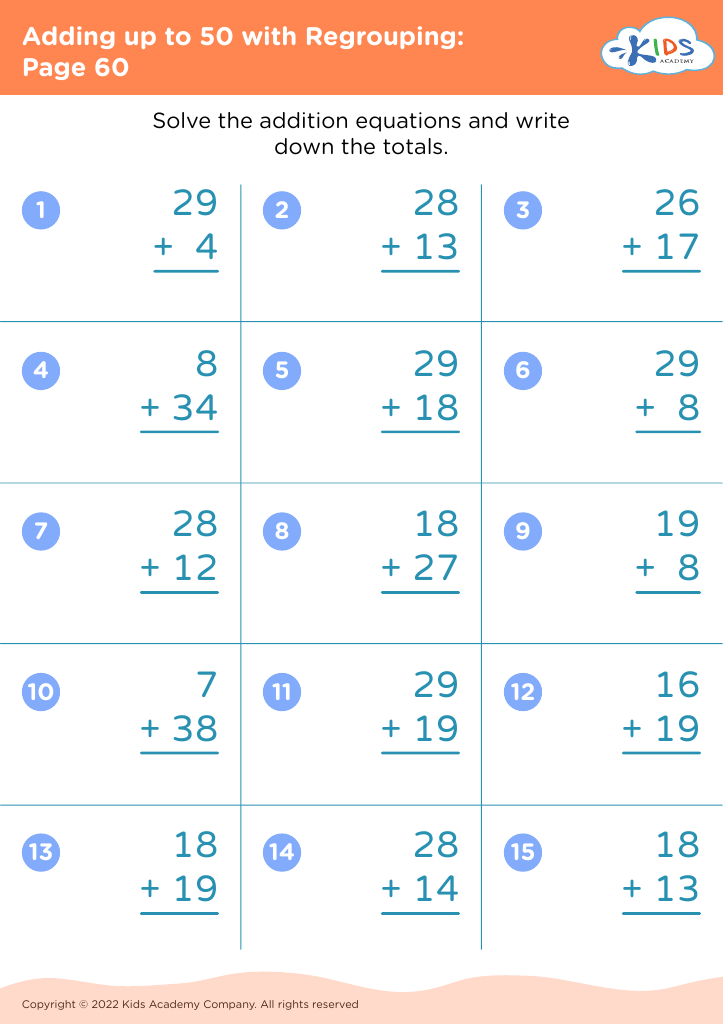
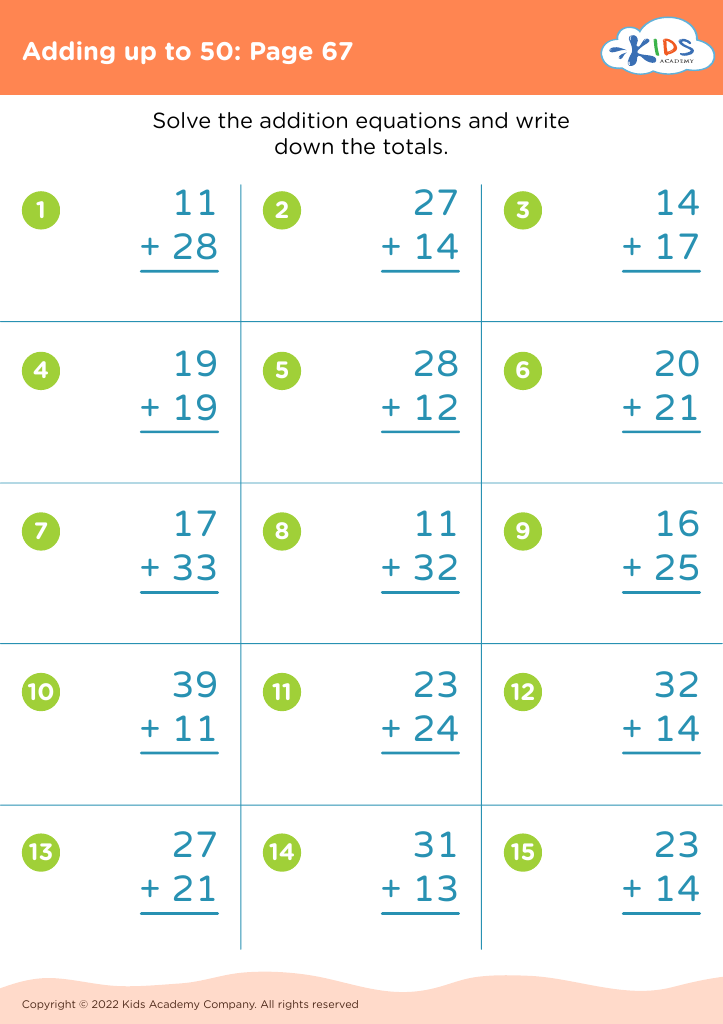
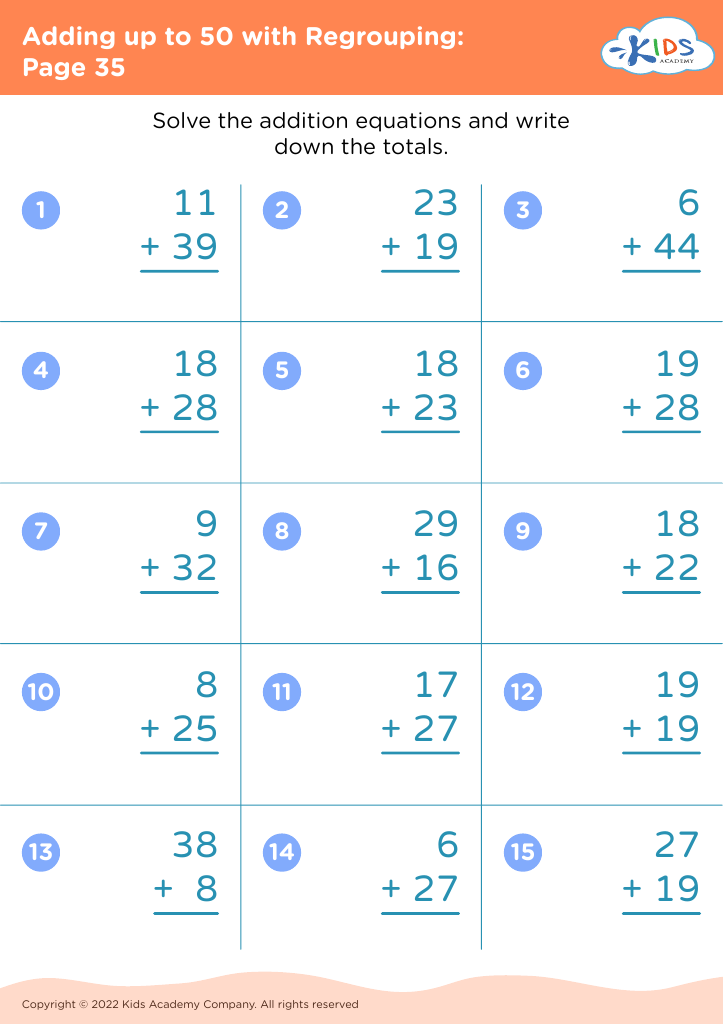
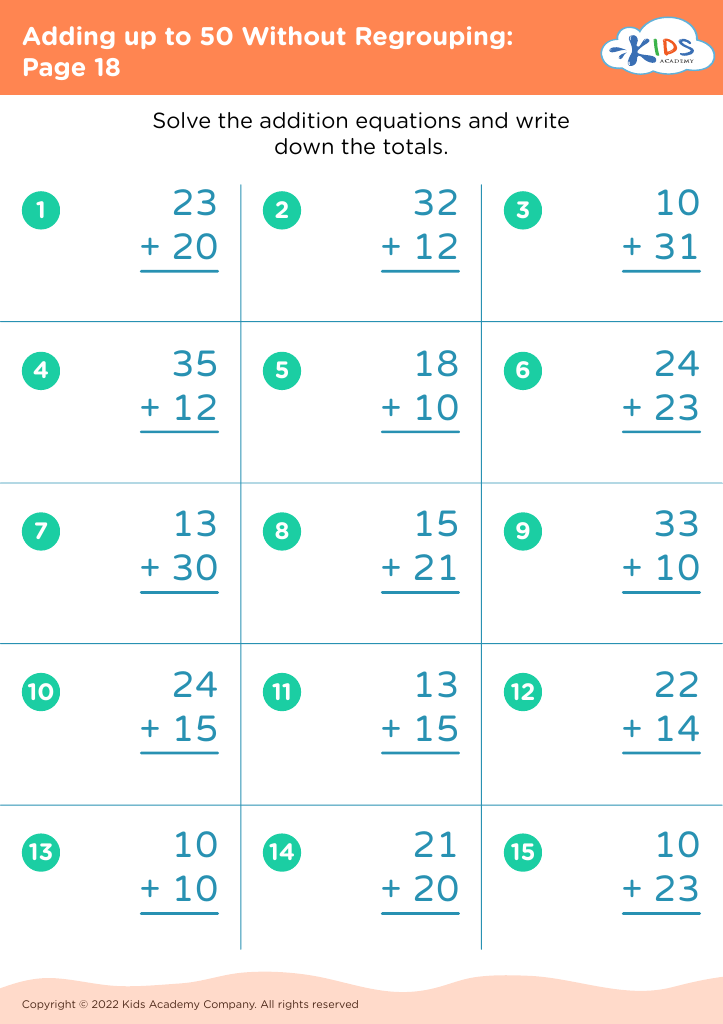
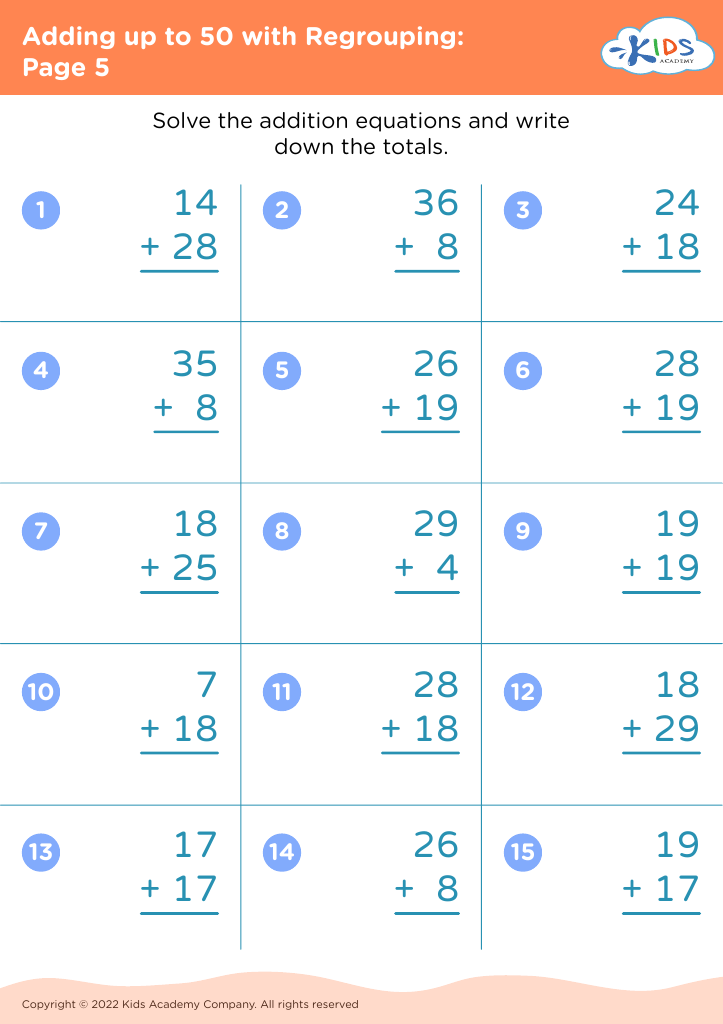
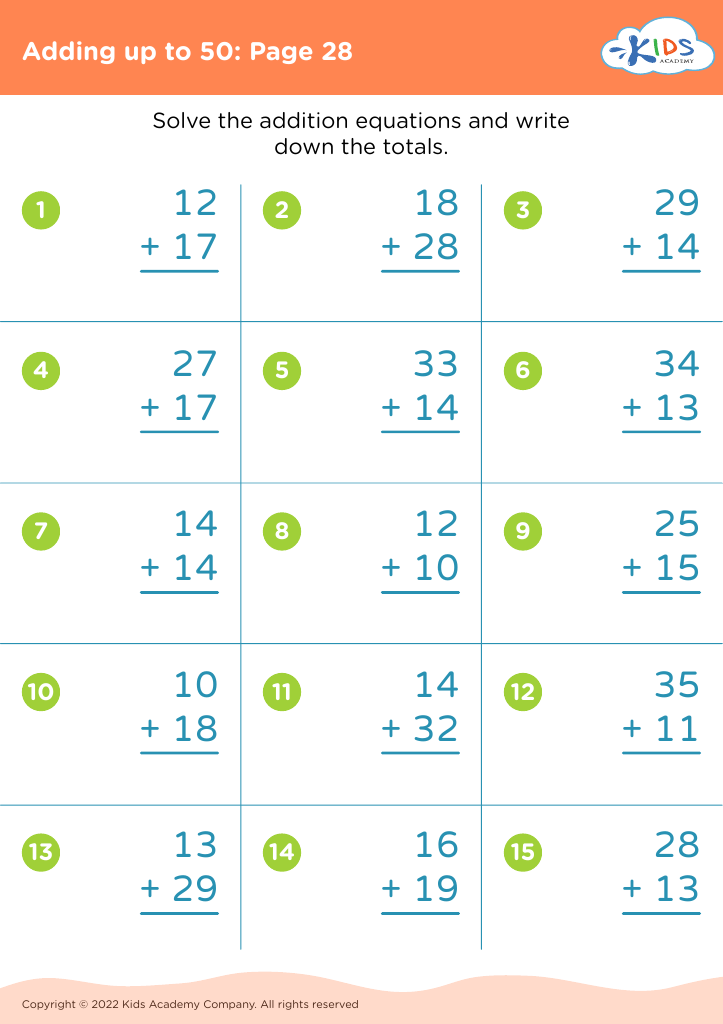
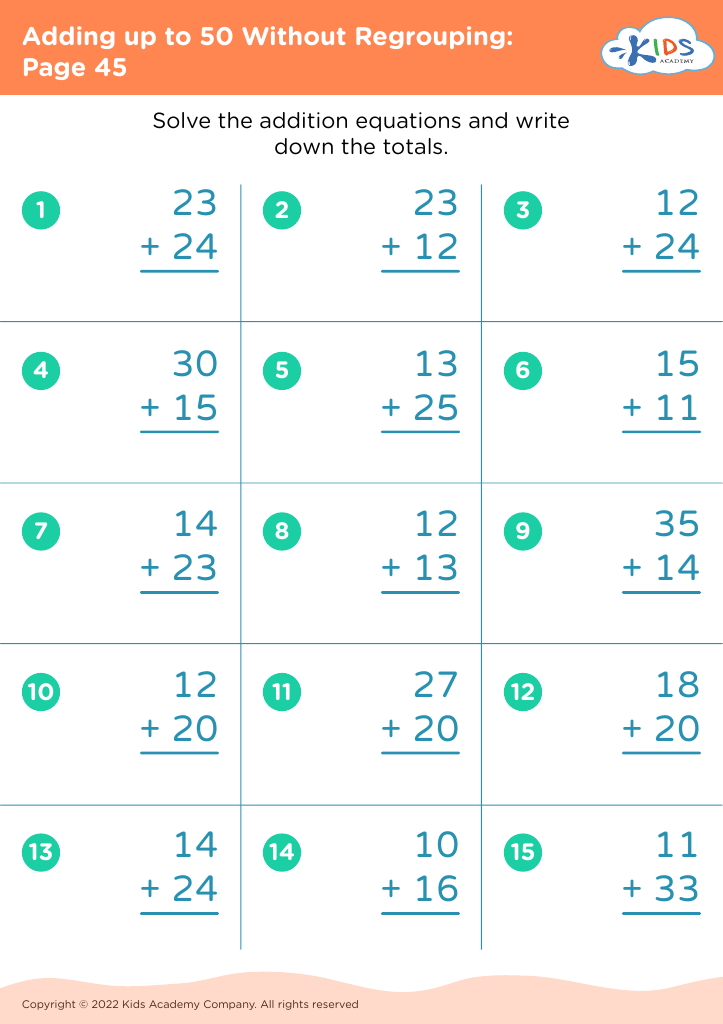
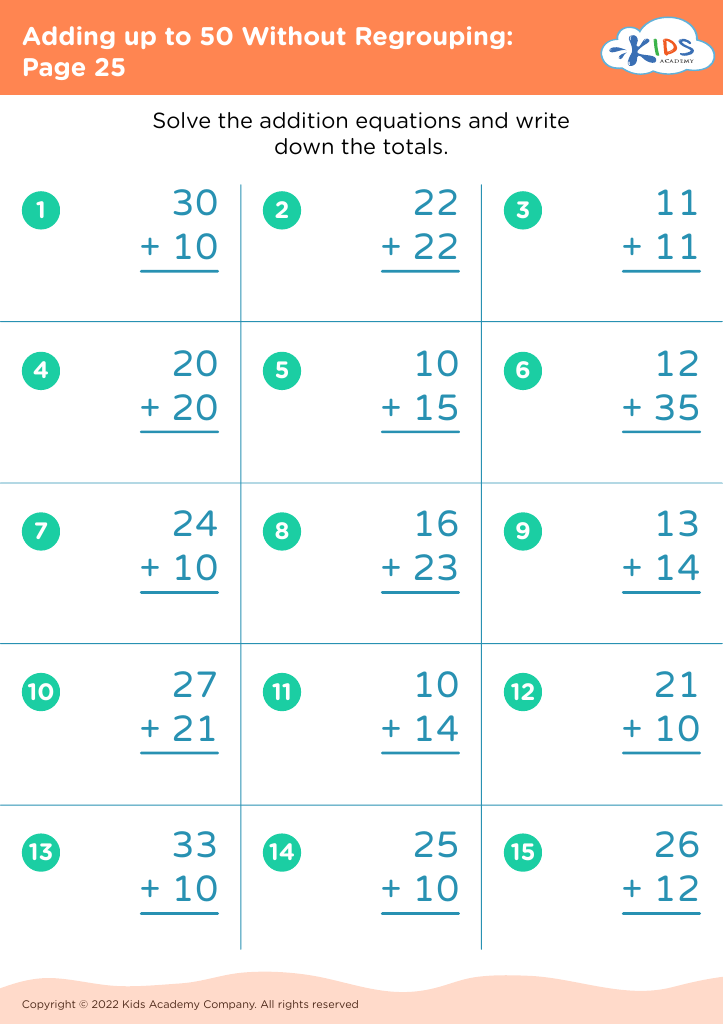
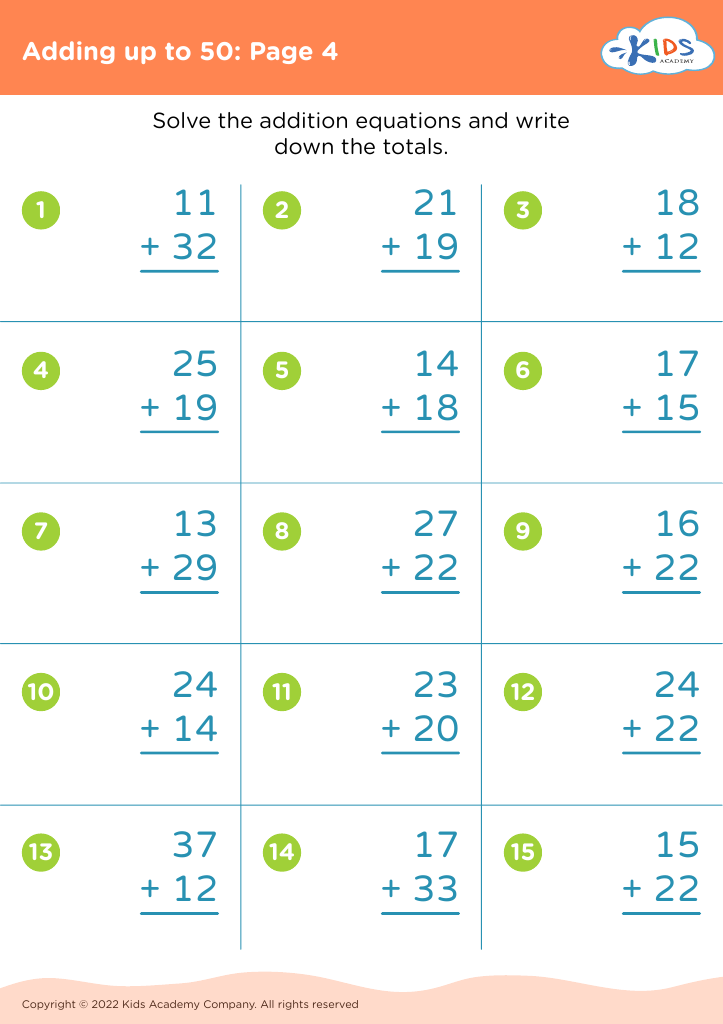
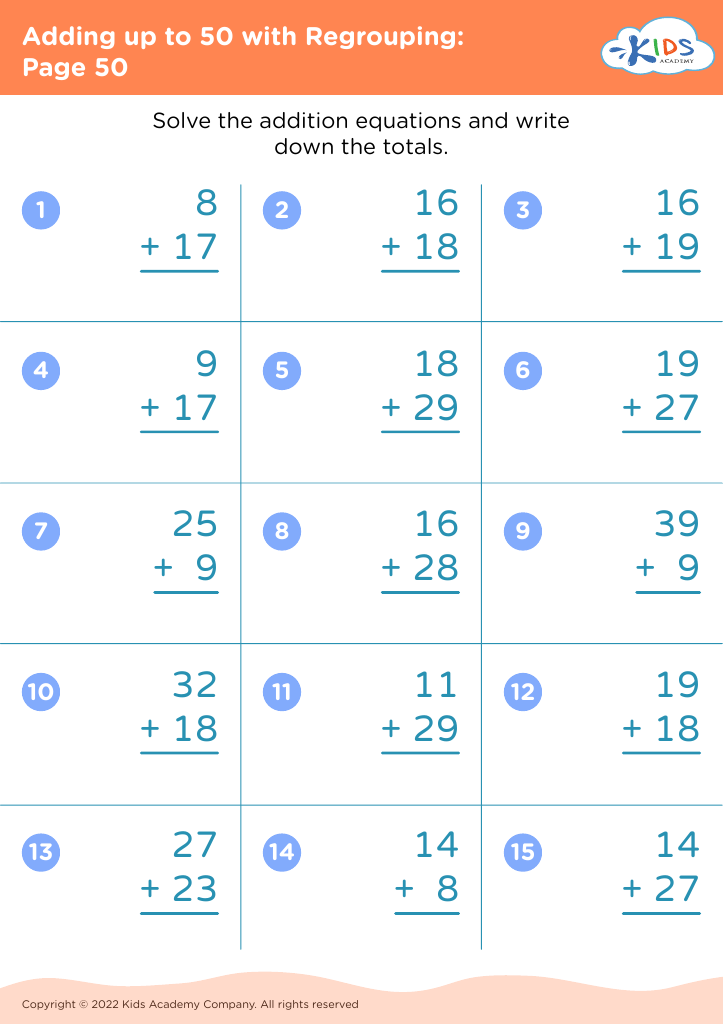
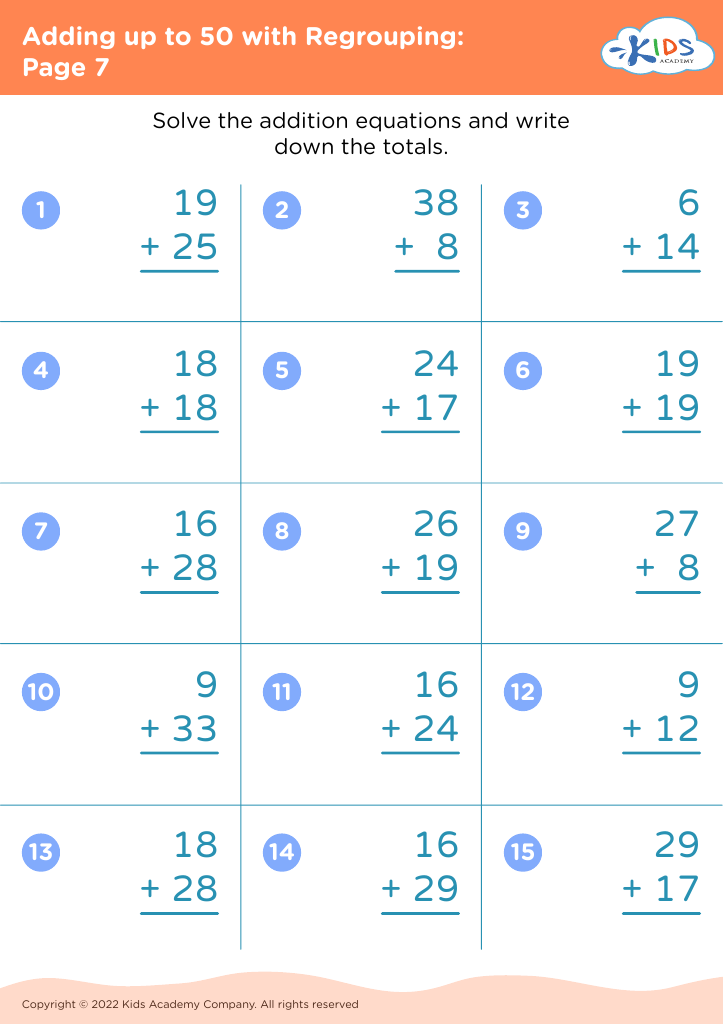




Understanding fractions is crucial for 8-year-olds as it builds a fundamental math literacy that they will use throughout their education and daily lives. As students encounter fractions, skills in comparing, adding, and subtracting parts become essential for grasping more complex mathematical concepts later on. Adding fractions leading up to 50 provides a tangible context to apply their understanding, enhancing problem-solving abilities and critical thinking.
Moreover, fractions are a building block for concepts like ratios, proportions, and percentages, all of which are prevalent in real-world situations, from cooking to budgeting. When parents and teachers engage with students in learning fractions, they also foster a growth mindset, demonstrating that math can be fun and rewarding.
Additionally, mastery of fractions aligns with educational standards and benchmarks, preparing students for higher-level math in future grades. It boosts their confidence, ensuring they do not back away from math-related subjects. Collaborative activities or practical applications can make learning more interesting, making it a shared responsibility to create a supportive learning environment. Ultimately, a solid understanding of fractions at this age can inspire a lifelong appreciation for math, helping children develop skills essential for their academic and professional journeys.








