Addition of fractions Addition & Subtraction Worksheets for 8-Year-Olds
3 filtered results
-
From - To
Unlock your child's math potential with our "Addition of Fractions: Addition & Subtraction Worksheets for 8-Year-Olds." Designed to engage and challenge, these worksheets offer an exciting approach to mastering fraction addition and subtraction. Kids will learn to add and subtract fractions through colorful exercises and well-structured problems suited to their age and skill level. With a focus on hands-on practice, our worksheets build a solid mathematical foundation while making learning fun. Ideal for classroom use or additional practice at home, these resources will boost confidence and competence in young learners. Visit Kids Academy to boost your 8-year-old's fraction-solving skills today!
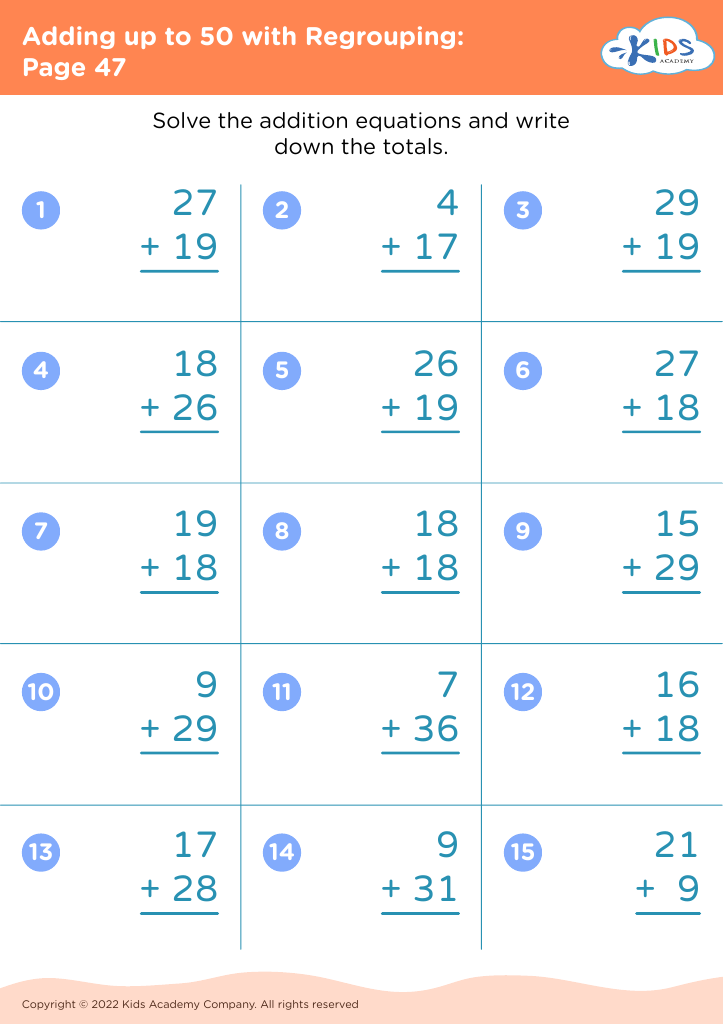
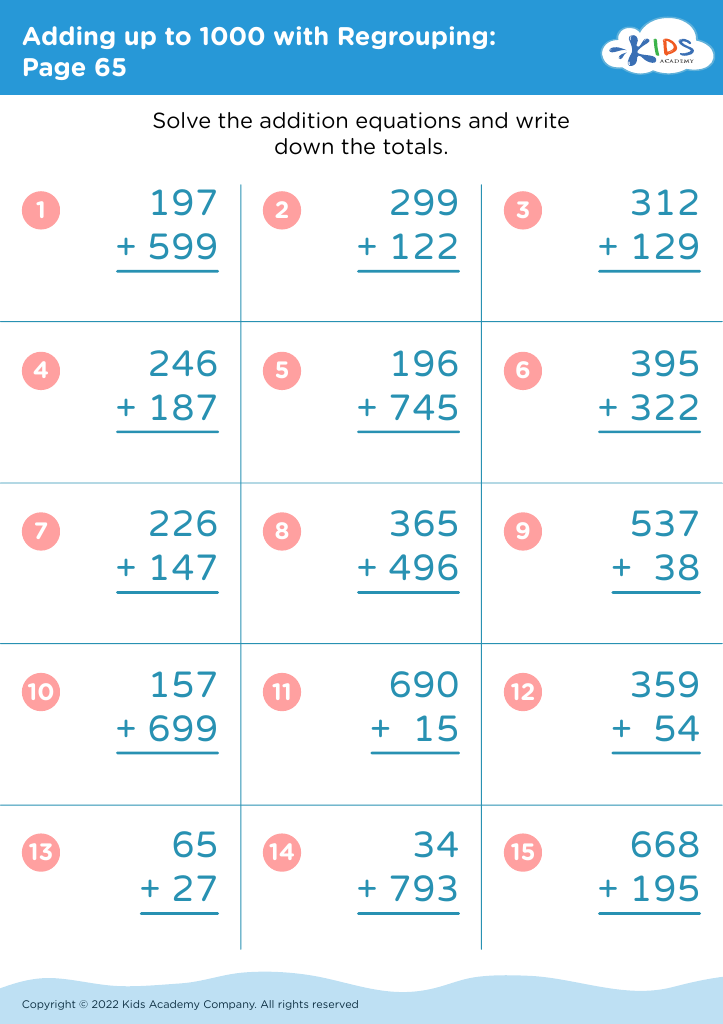
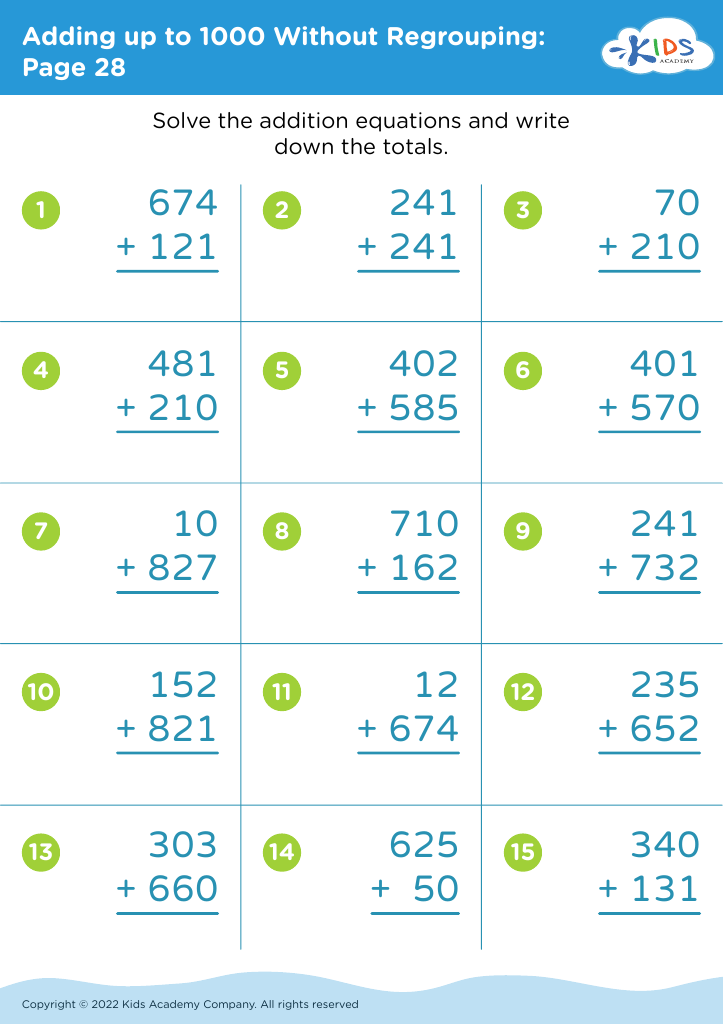








At the age of 8, children are at a crucial stage in their cognitive development, learning foundational mathematical concepts that will support their academic and everyday lives. Grasping the addition and subtraction of fractions is essential for a few reasons. Firstly, it strengthens their number sense and understanding of how parts make up a whole, which is pivotal in math and other subjects.
Doing fraction operations develops logical thinking and problem-solving skills. When children learn to identify common denominators and simplify fractions, they leverage critical thinking. These skills extend far beyond math, promoting cognitive growth that aids in reading comprehension, science, and social studies.
Additionally, understanding fractions provides a sturdy foundation for more advanced math topics, such as percentages, ratios, and algebra, which they will encounter later in their academic journey. Early mastery equips them with the confidence to tackle complex problems in higher grades.
On a practical level, fractions are part of everyday activities like cooking, measuring, and dividing objects into equal parts. When children know how to add and subtract fractions, they can perform these tasks efficiently, enhancing their real-world coping skills.
Therefore, ensuring 8-year-olds can add and subtract fractions is not just about meeting curriculum standards; it's about fostering a holistic cognitive, academic, and practical development.








