Check out this FREE Trial Lesson on Addition & Subtraction for age 8!

Short and Long Vowel Sort

Favorites
With answer key
Interactive
  • 8
  • Comparing Fractions
  • Addition & Subtraction
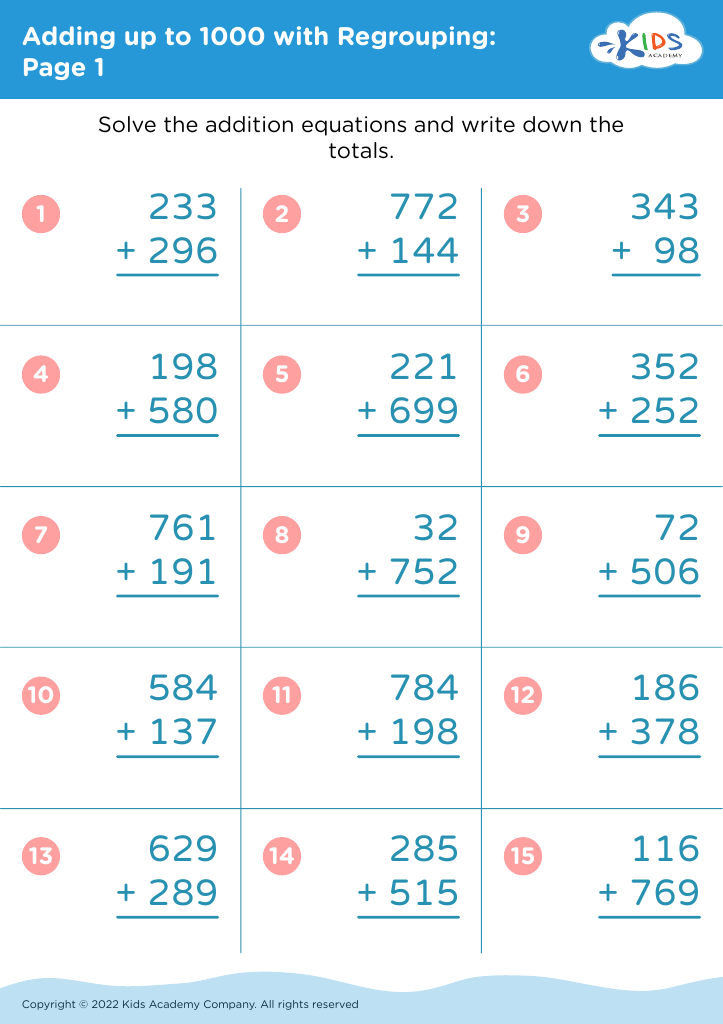
Adding up to 1000 with Regrouping: Page 1
Worksheet
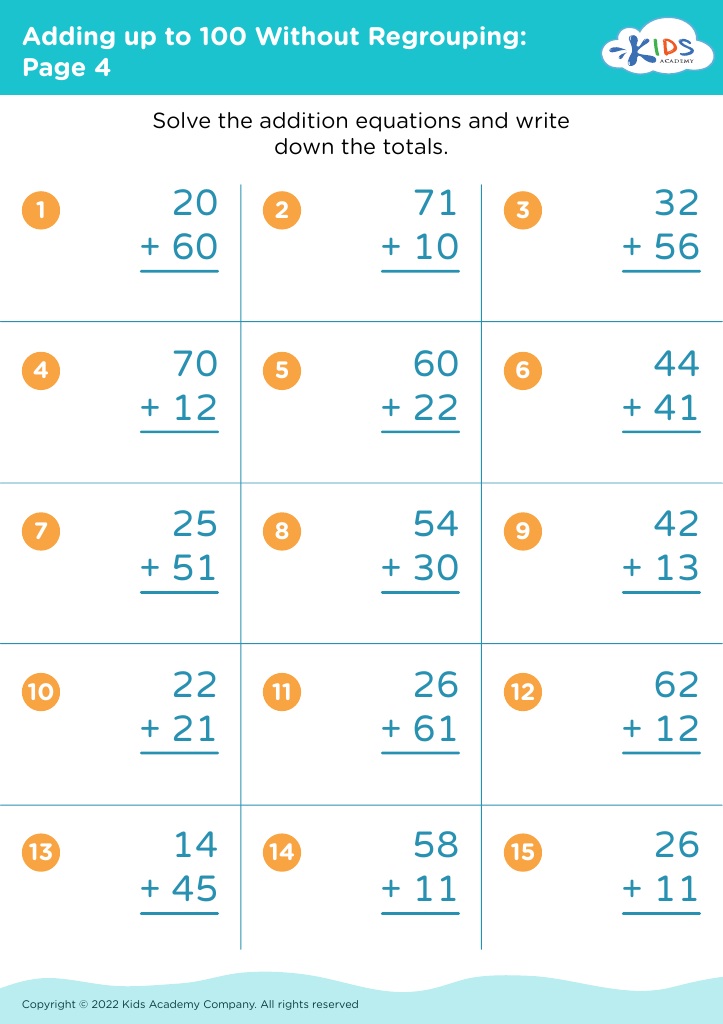
Adding up to 100 Without Regrouping: Page 4
Worksheet
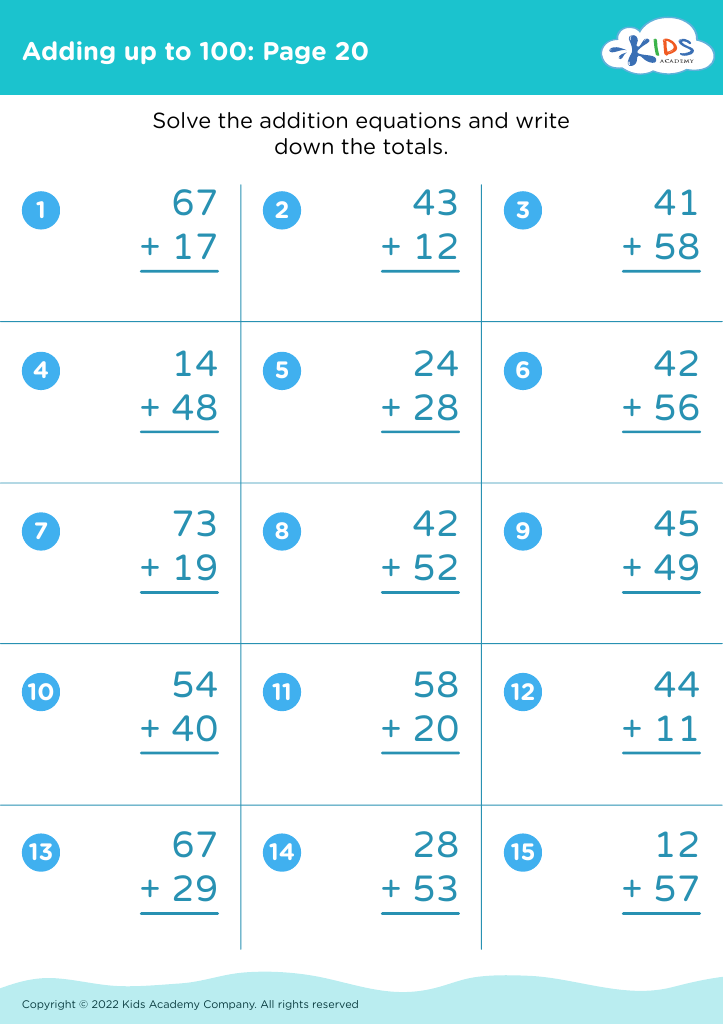
Adding up to 100: Page 20

Adding up to 100: Page 20

Adding up to 100: Page 20
Worksheet
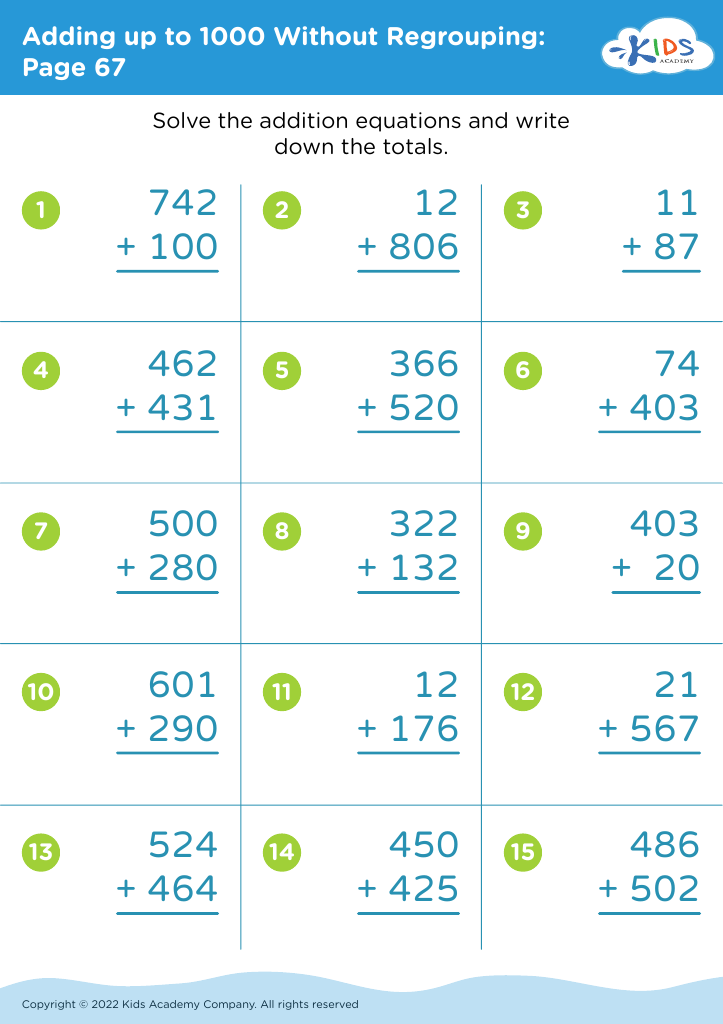
Adding up to 1000 Without Regrouping: Page 67
Worksheet
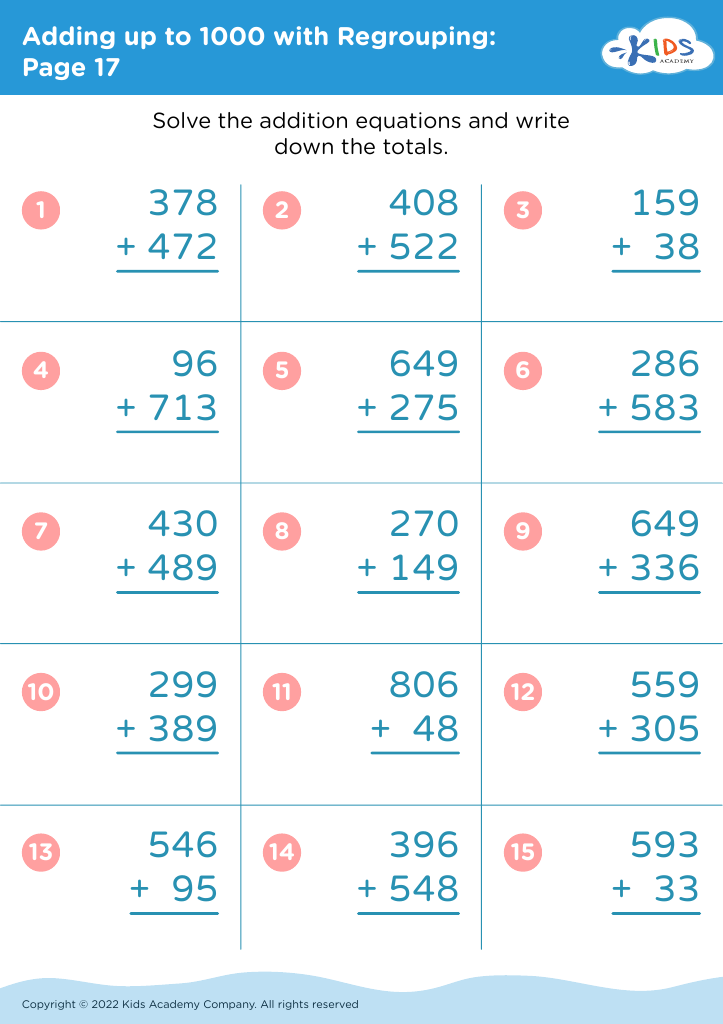
Adding up to 1000 with Regrouping: Page 17
Worksheet
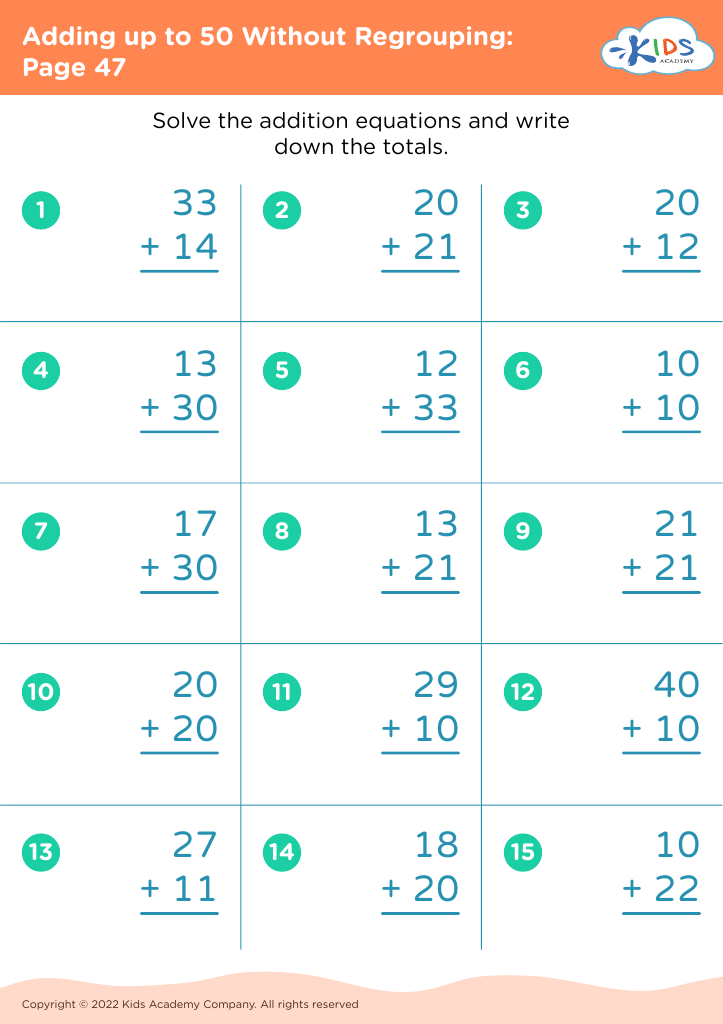
Adding up to 50 Without Regrouping: Page 47
Worksheet
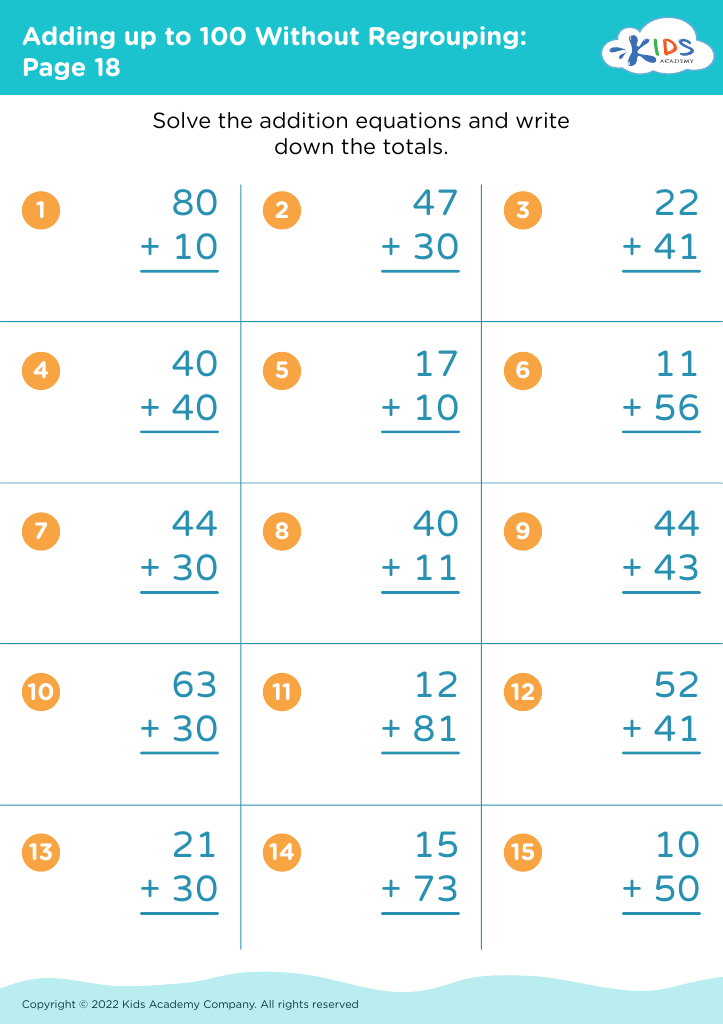
Adding up to 100 Without Regrouping: Page 18
Worksheet
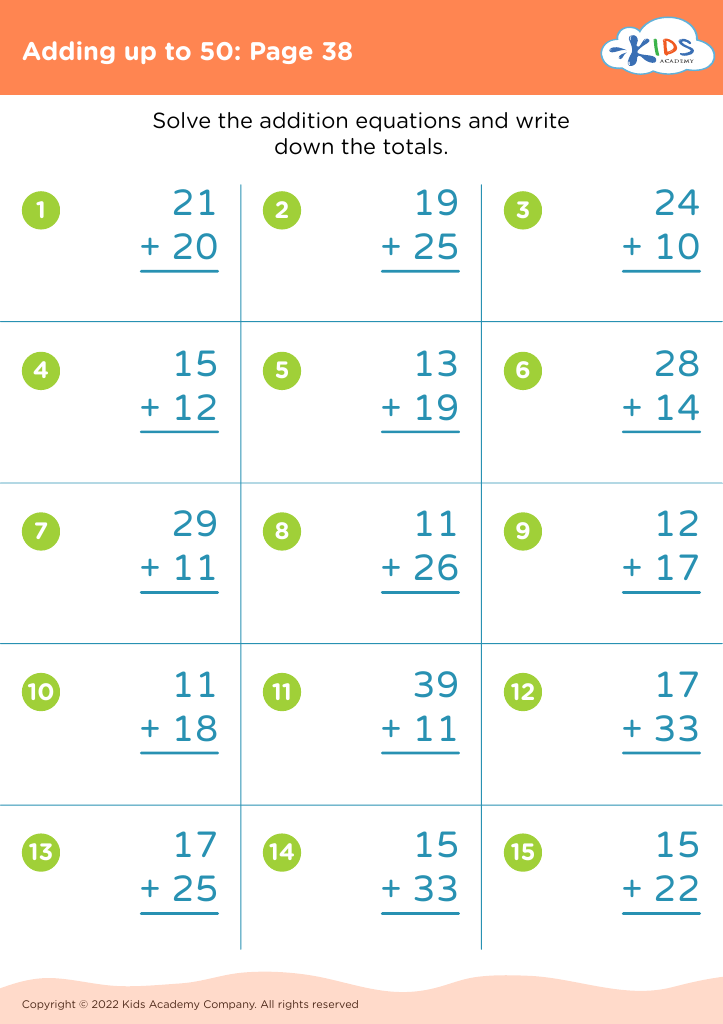
Adding up to 50: Page 38

Adding up to 50: Page 38

Adding up to 50: Page 38
Worksheet
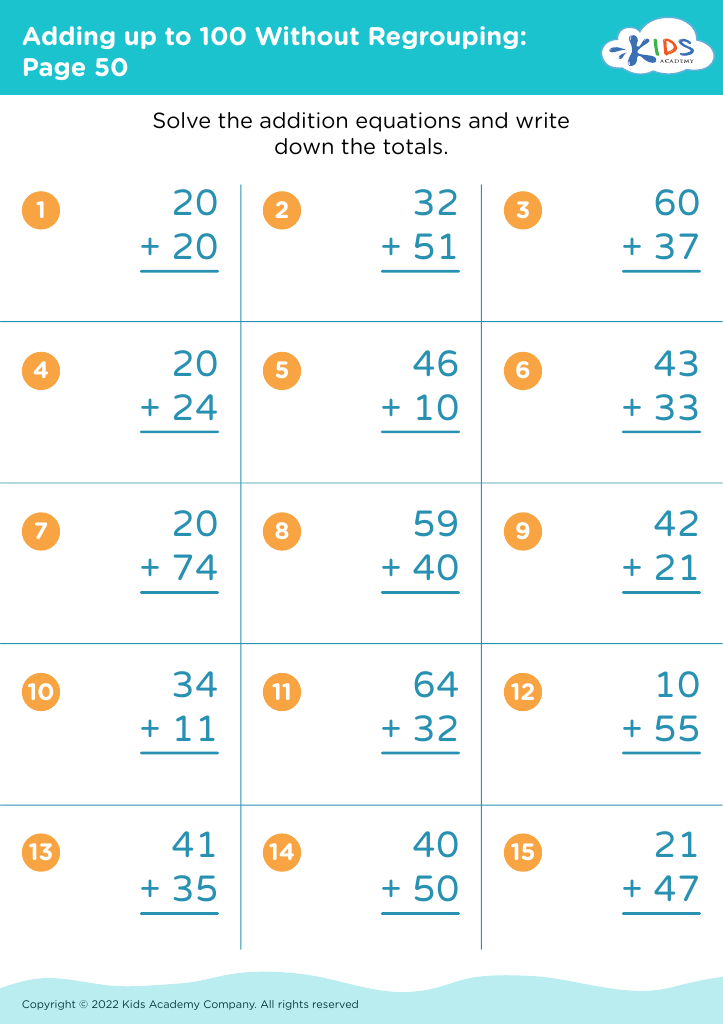
Adding up to 100 Without Regrouping: Page 50
Worksheet
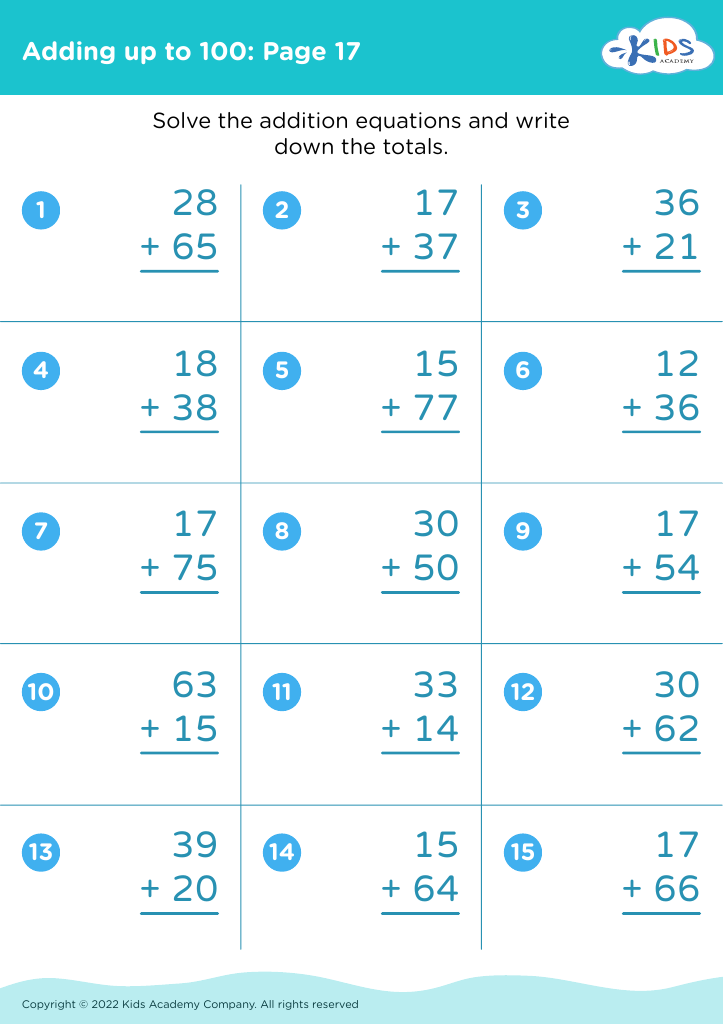
Adding up to 100: Page 17

Adding up to 100: Page 17

Adding up to 100: Page 17
Worksheet
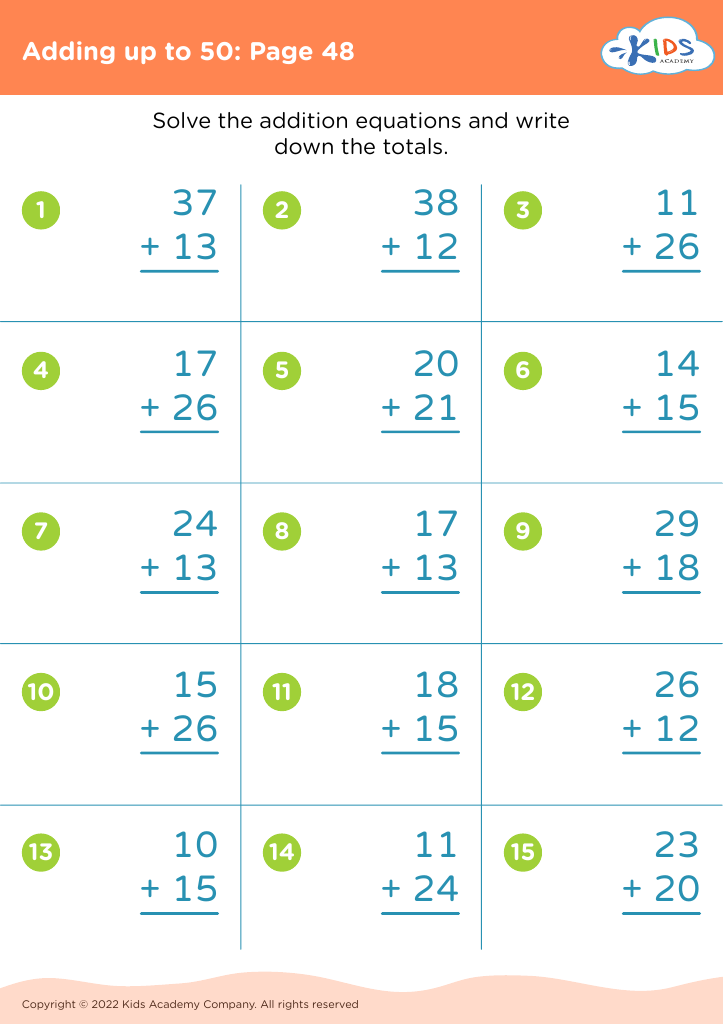
Adding up to 50: Page 48

Adding up to 50: Page 48

Adding up to 50: Page 48
Worksheet
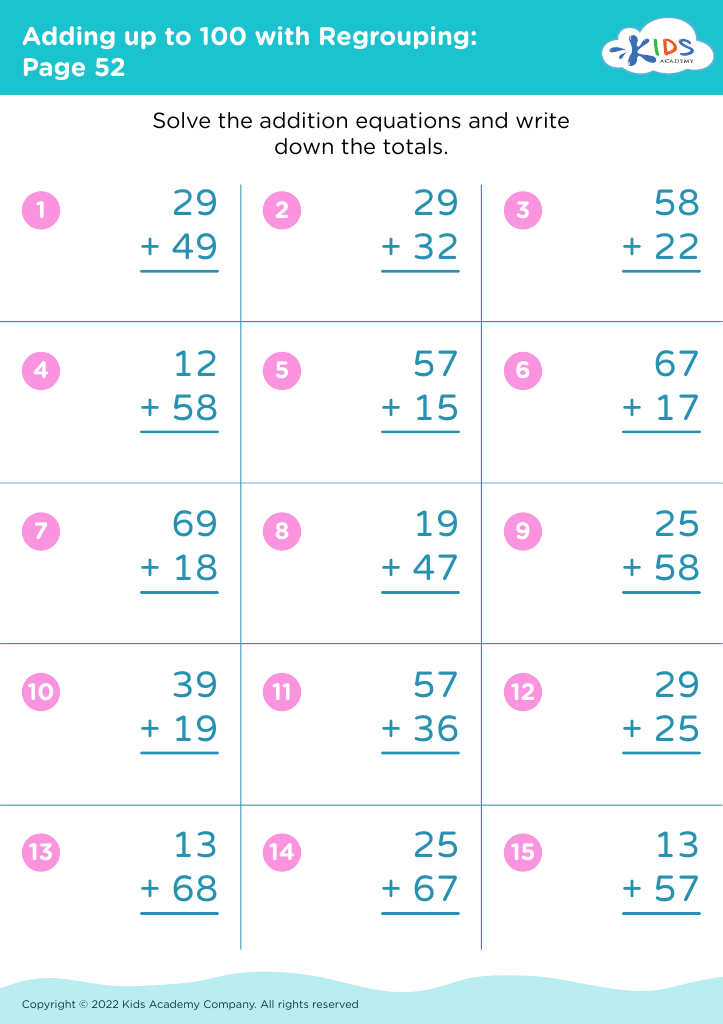
Adding up to 100 with Regrouping: Page 52
Worksheet
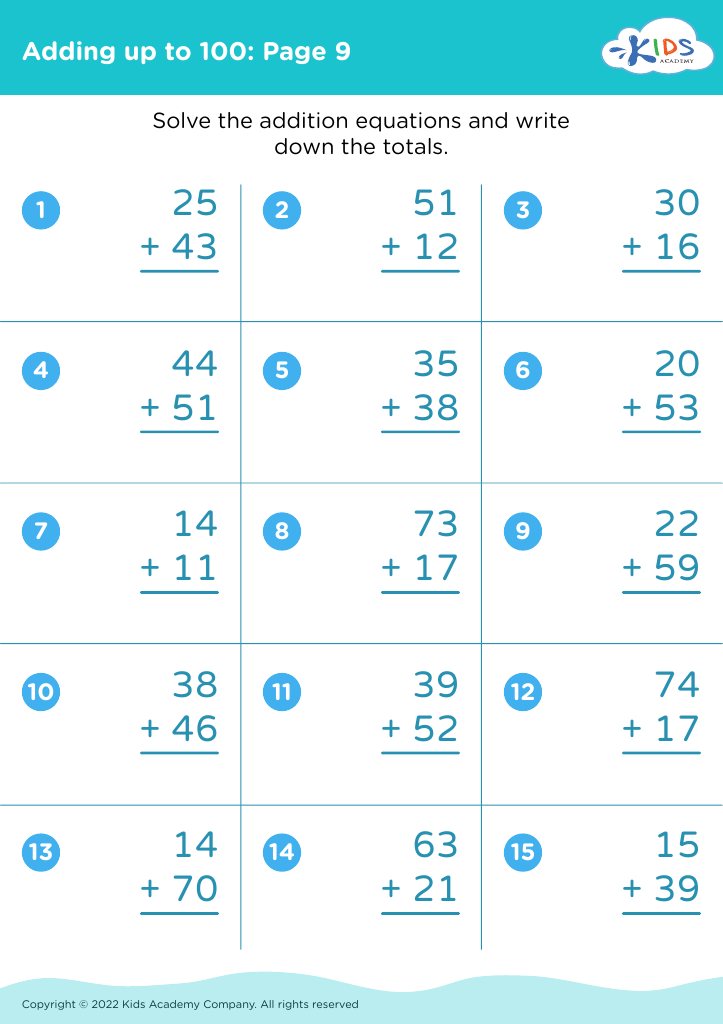
Adding up to 100: Page 9

Adding up to 100: Page 9

Adding up to 100: Page 9
Worksheet
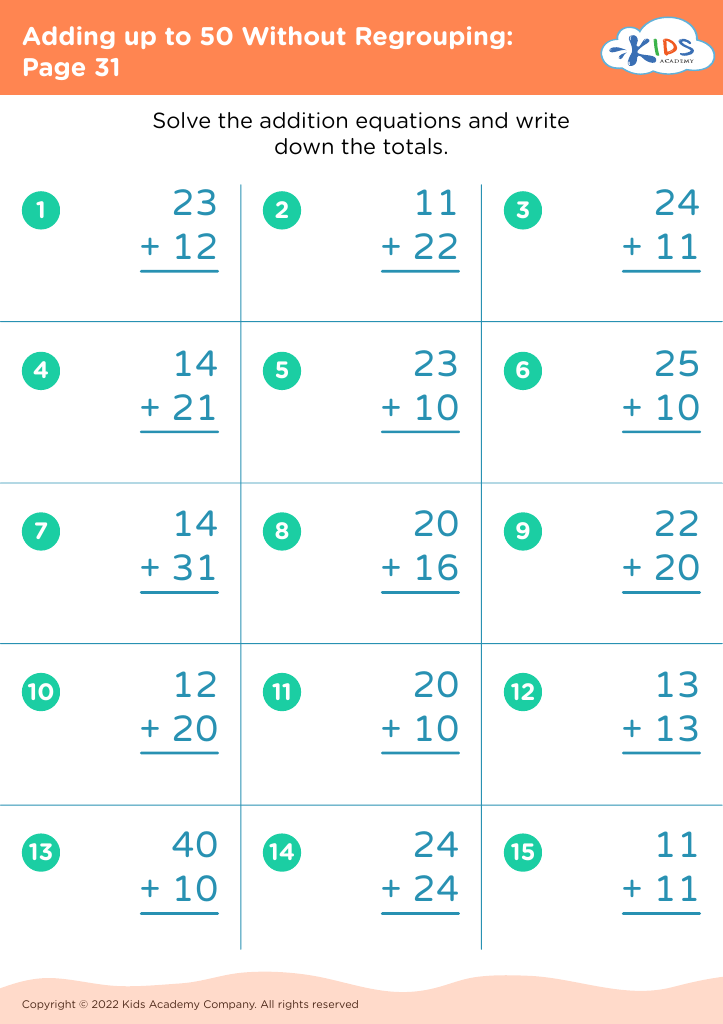
Adding up to 50 Without Regrouping: Page 31
Worksheet
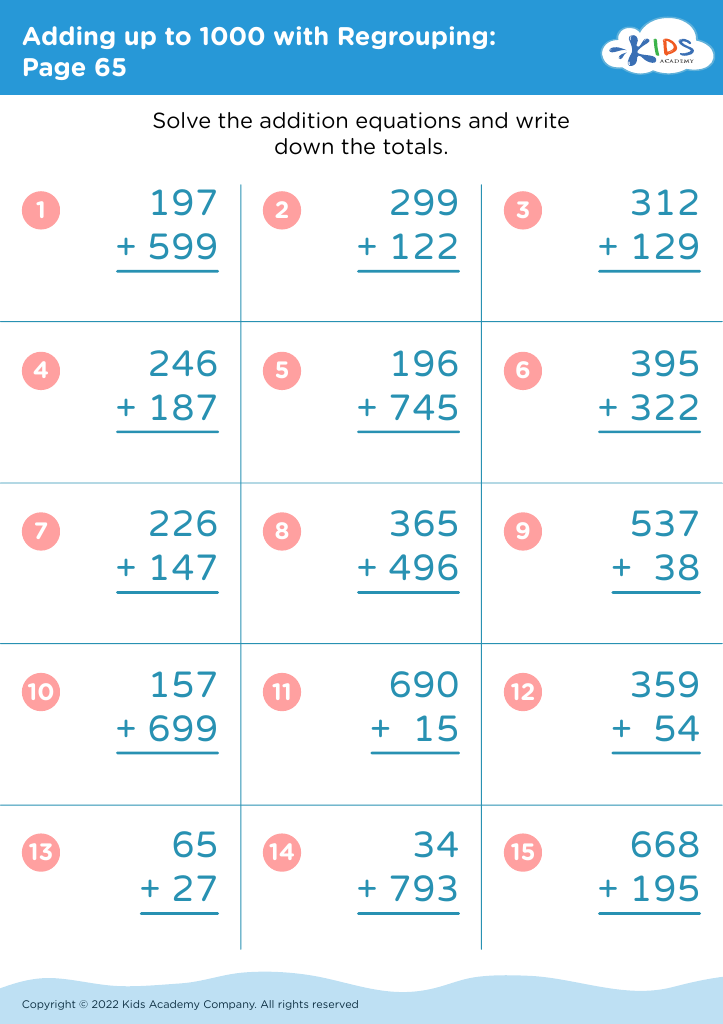
Adding up to 1000 with Regrouping: Page 65
Worksheet
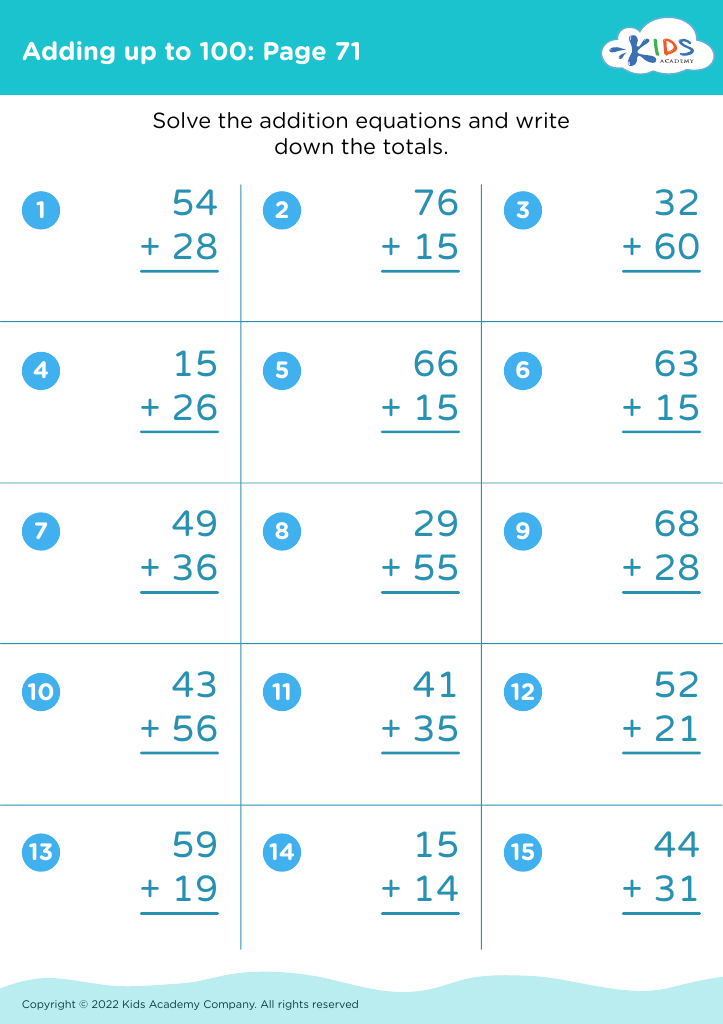
Adding up to 100: Page 71

Adding up to 100: Page 71

Adding up to 100: Page 71
Worksheet
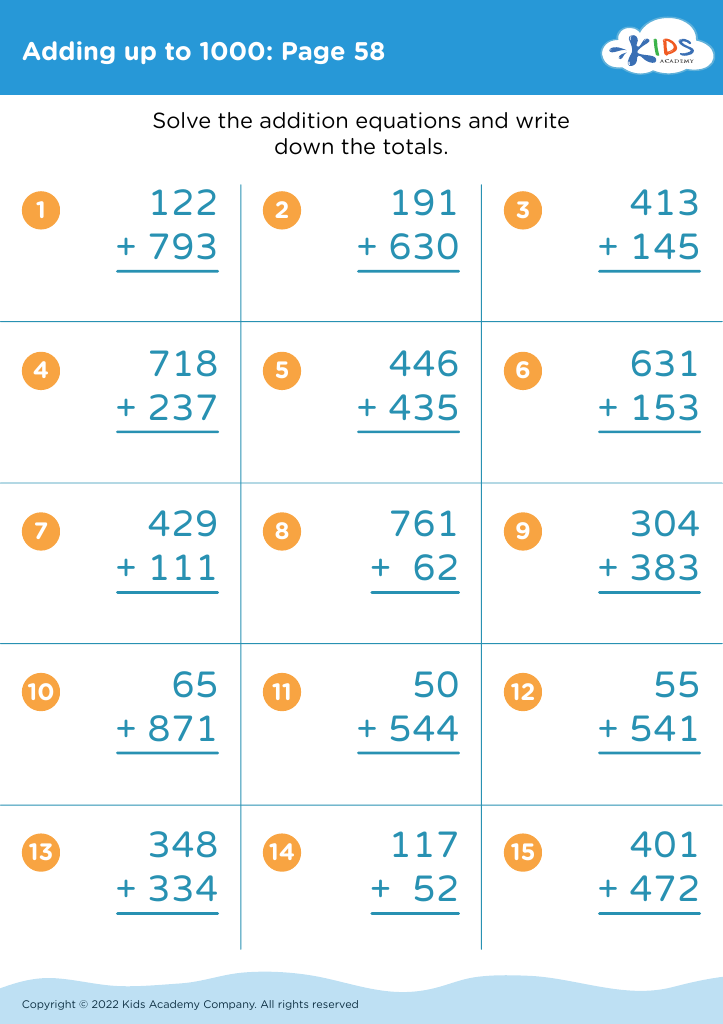
Adding up to 1000: Page 58

Adding up to 1000: Page 58

Adding up to 1000: Page 58
Worksheet
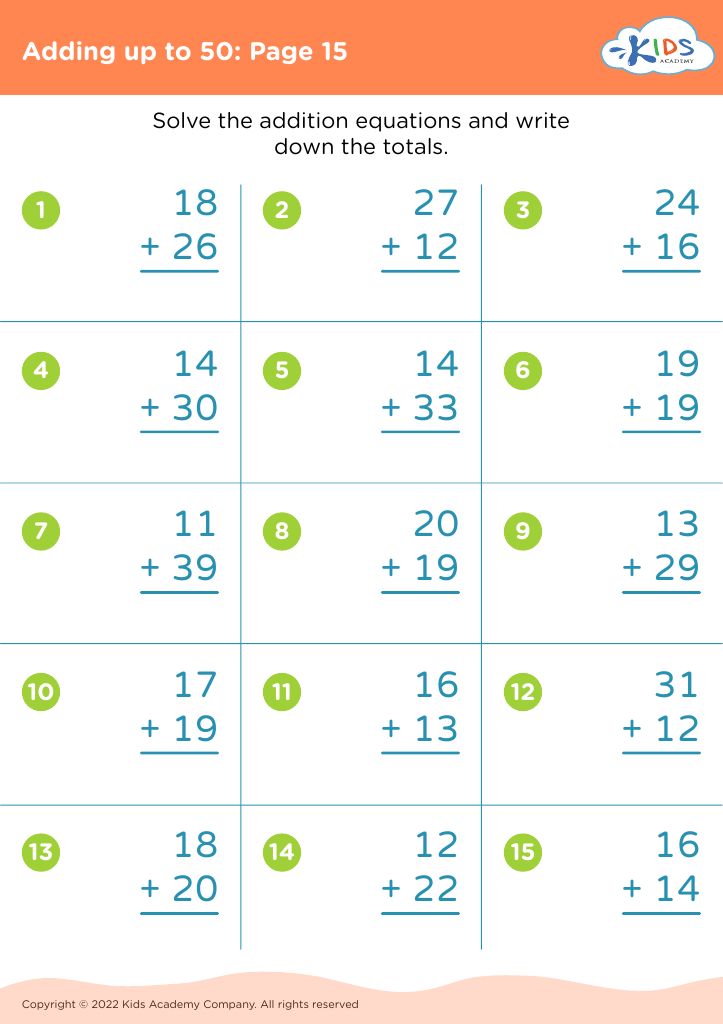
Adding up to 50: Page 15

Adding up to 50: Page 15

Adding up to 50: Page 15
Worksheet
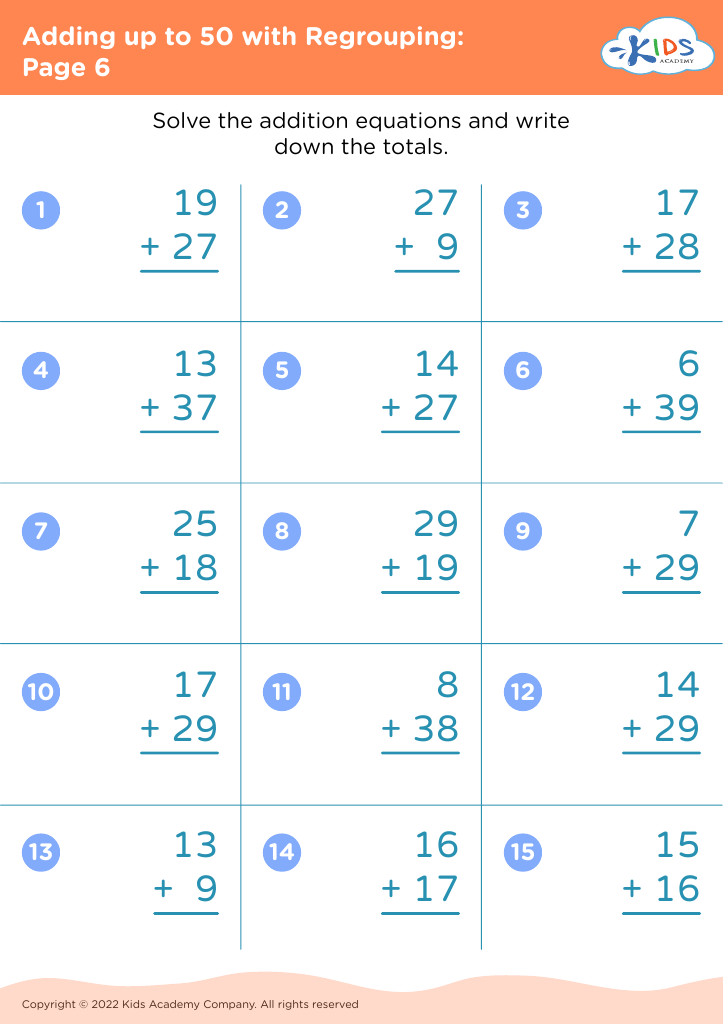
Adding up to 50 with Regrouping: Page 6
Worksheet
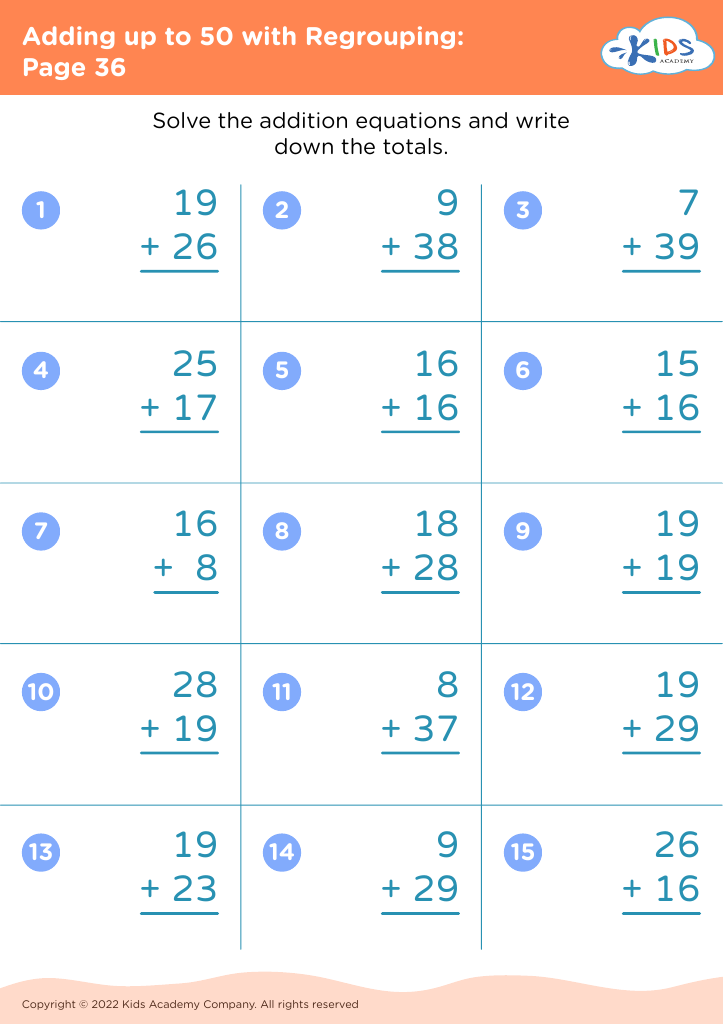
Adding up to 50 with Regrouping: Page 36
Worksheet
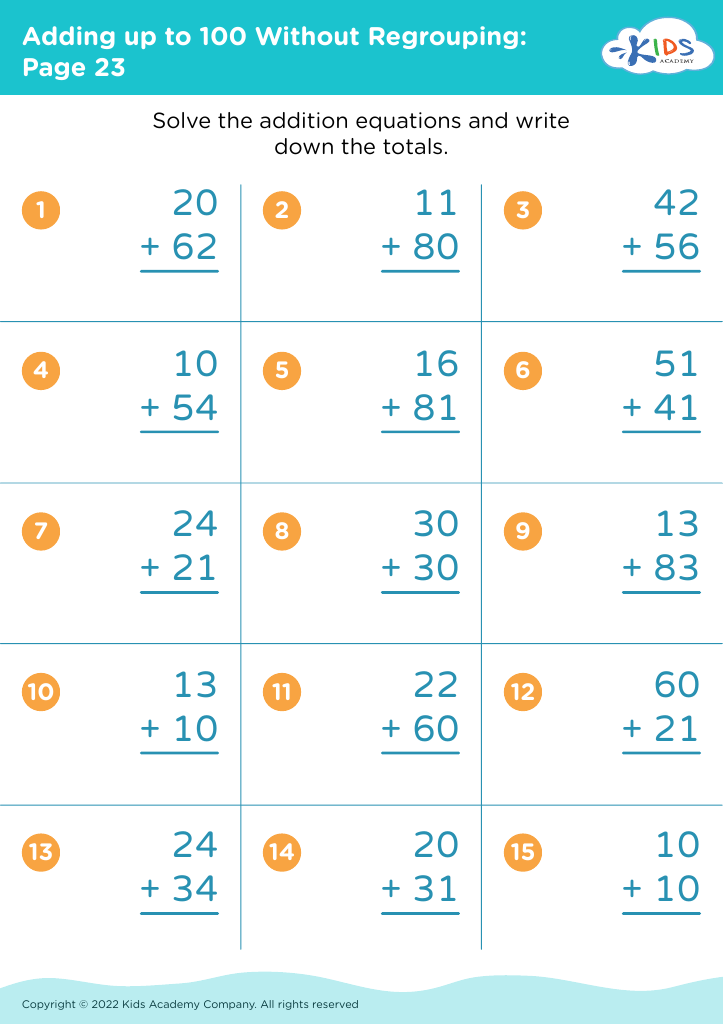
Adding up to 100 Without Regrouping: Page 23
Worksheet
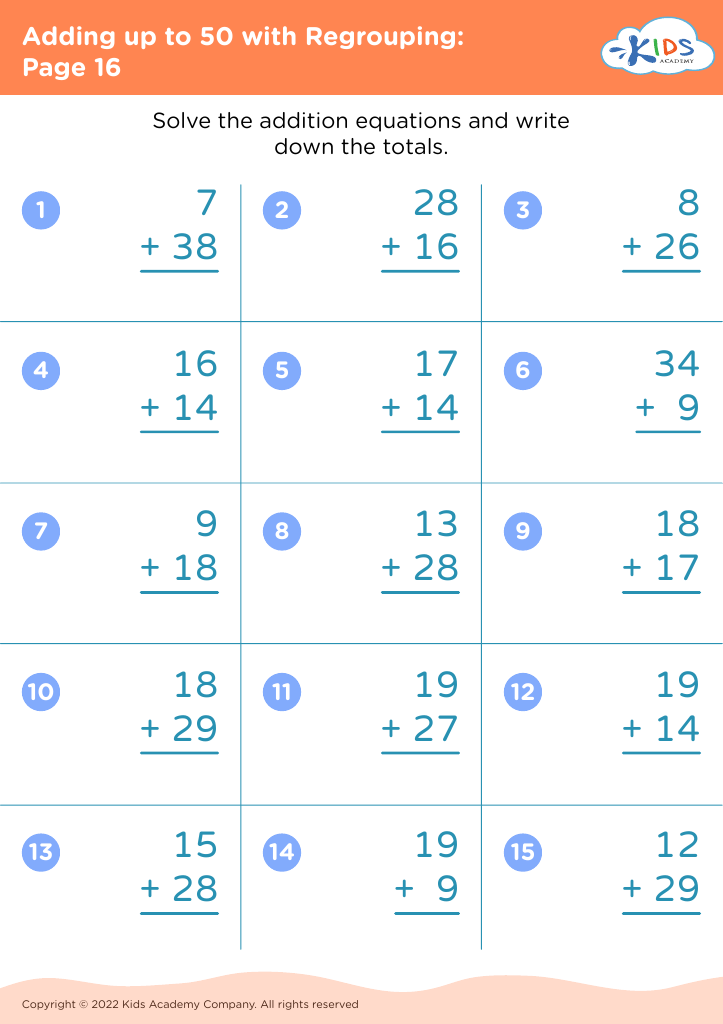
Adding up to 50 with Regrouping: Page 16
Worksheet
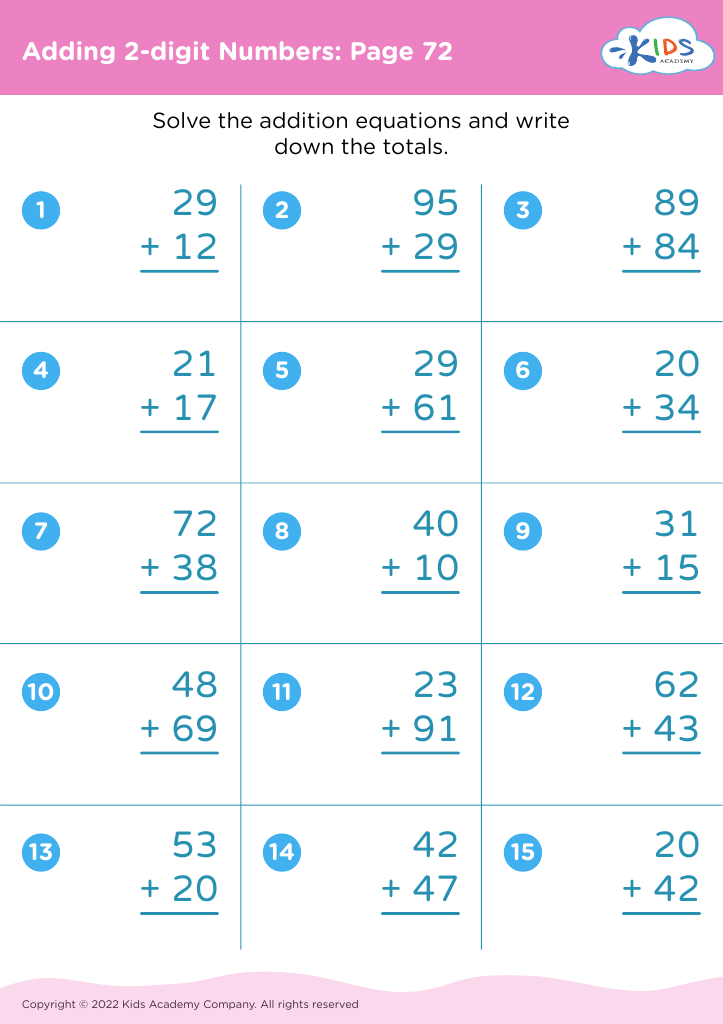
Adding 2-digit Numbers: Page 72

Adding 2-digit Numbers: Page 72

Adding 2-digit Numbers: Page 72
Worksheet
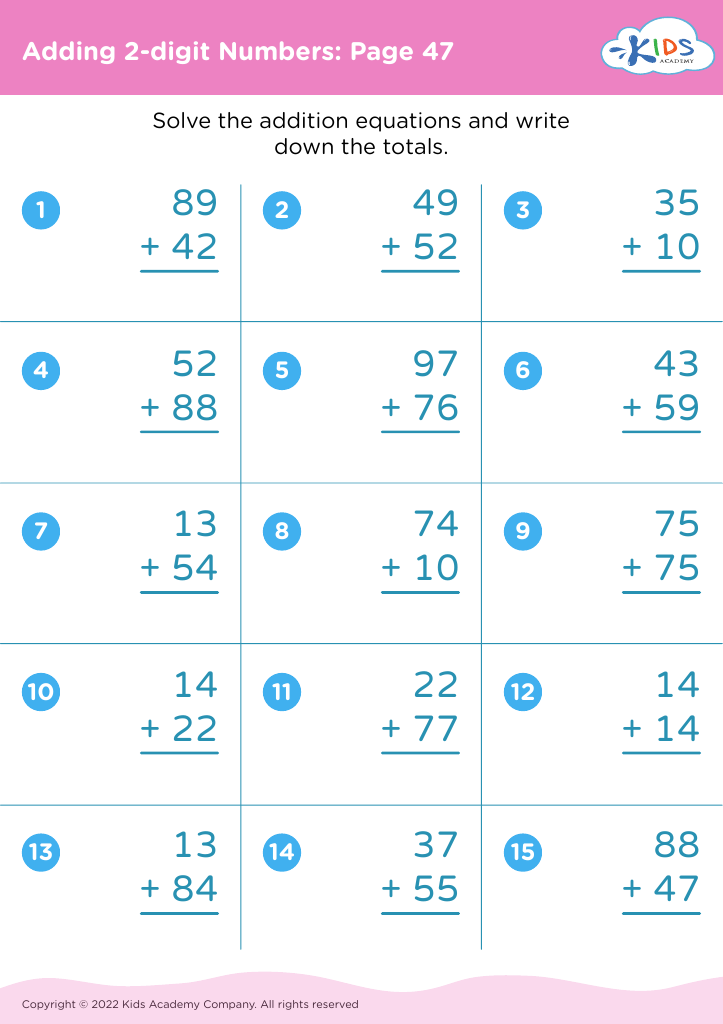
Adding 2-digit Numbers: Page 47

Adding 2-digit Numbers: Page 47

Adding 2-digit Numbers: Page 47
Worksheet


Comparing, adding, and subtracting fractions is vital for 8-year-olds as it establishes foundational mathematics skills essential for their academic progression and everyday problem-solving. At this age, students are often introduced to more complex numerical concepts. Their ability to understand fractions helps them grasp more advanced topics in later grades, such as ratios, percentages, and algebra.

For parents and teachers, fostering this understanding promotes critical thinking, reasoning, and boosts confidence in handling various mathematical tasks. When children learn to compare fractions, they enhance their number sense and discern proportional relationships. Mastery of fraction addition and subtraction builds skills in combining and breaking down quantities, which is applicable in daily activities like cooking, dividing portions, or managing time and finances.

Teaching these concepts also aids in developing a strong work ethic and patience; fractions can be challenging, requiring practice and persistence. By focusing on these skills early, parents and teachers are preparing children for future success in both academics and life by making the learning process engaging and relevant. This nurturing creates a positive mathematical mindset, fostering a lifelong appreciation and aptitude for mathematics.