Comparing lengths Addition & Subtraction Worksheets for 8-Year-Olds
3 filtered results
-
From - To
Our "Comparing Lengths Addition & Subtraction Worksheets for 8-Year-Olds" provide engaging practice to build essential math skills. These printable activities challenge kids to compare lengths and solve addition and subtraction problems in a fun context, perfect for their age group. Each worksheet is designed to reinforce understanding of measurements, enhance critical thinking, and improve problem-solving abilities. With our worksheets, students will not only sharpen their math skills but also enjoy learning through interactive exercises. Perfect for classroom or home use, they make mastering math exciting and enjoyable for young learners. Let Kids Academy help your child achieve academic success!
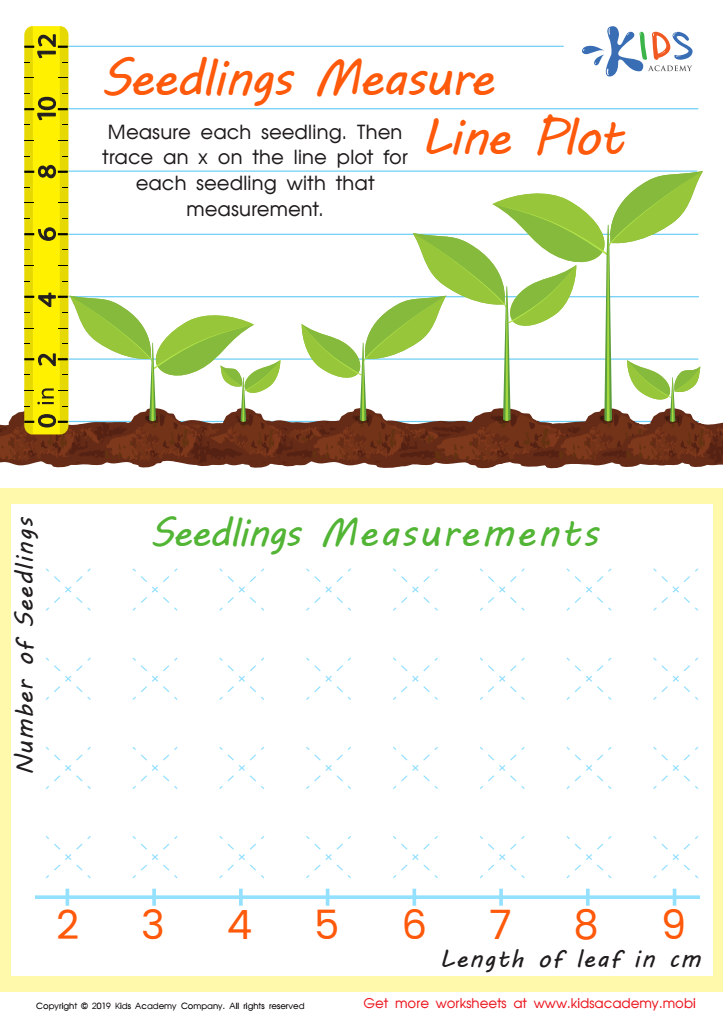
Seedling Measure Line Plot Worksheet
 Assign to My Students
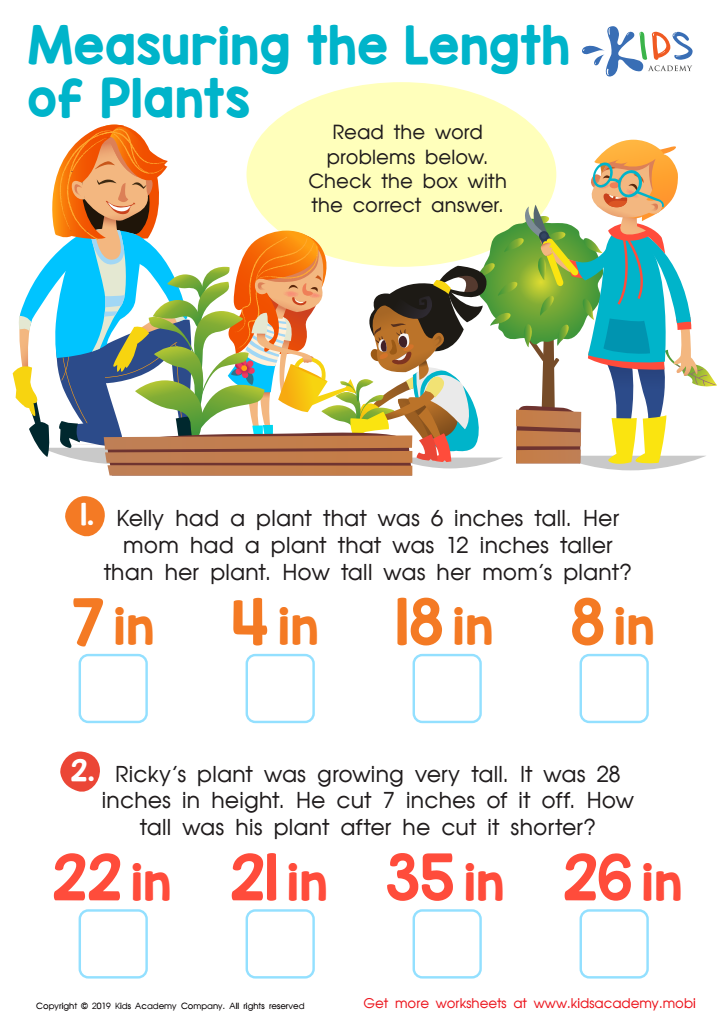
Measuring the Length of Plants Worksheet








Parents and teachers should care about teaching 8-year-olds to compare lengths, and addition and subtraction skills because these foundational math concepts are crucial for children's cognitive development and daily problem-solving abilities. Comparing lengths helps children understand measurement and spatial relationships, which are essential for tasks ranging from following a recipe to building a model.
Addition and subtraction are the basis for all arithmetic operations and provide a platform for more complex mathematical ideas in the future. Mastery of these concepts enhances logical thinking, pattern recognition, and critical thinking skills. When children can confidently perform these operations, they build the self-esteem needed to tackle more challenging subjects.
Integrating these math skills into fun, practical activities nurtures a positive attitude toward learning. For instance, measuring objects around the house or classroom and solving simple word problems linked with their interests make learning relatable and enjoyable. Additionally, these skills boost a child's ability to function independently, improve academic performance across subjects, and lay a foundation essential for future STEM learning.
Appreciating the importance of these skills and encouraging robust practice can pave the way for a successful academic journey, equipping children with the essential skills needed for both academic achievement and real-world problem-solving.








