Counting practice Addition & Subtraction Worksheets for 8-Year-Olds - Page 3
55 filtered results
-
From - To
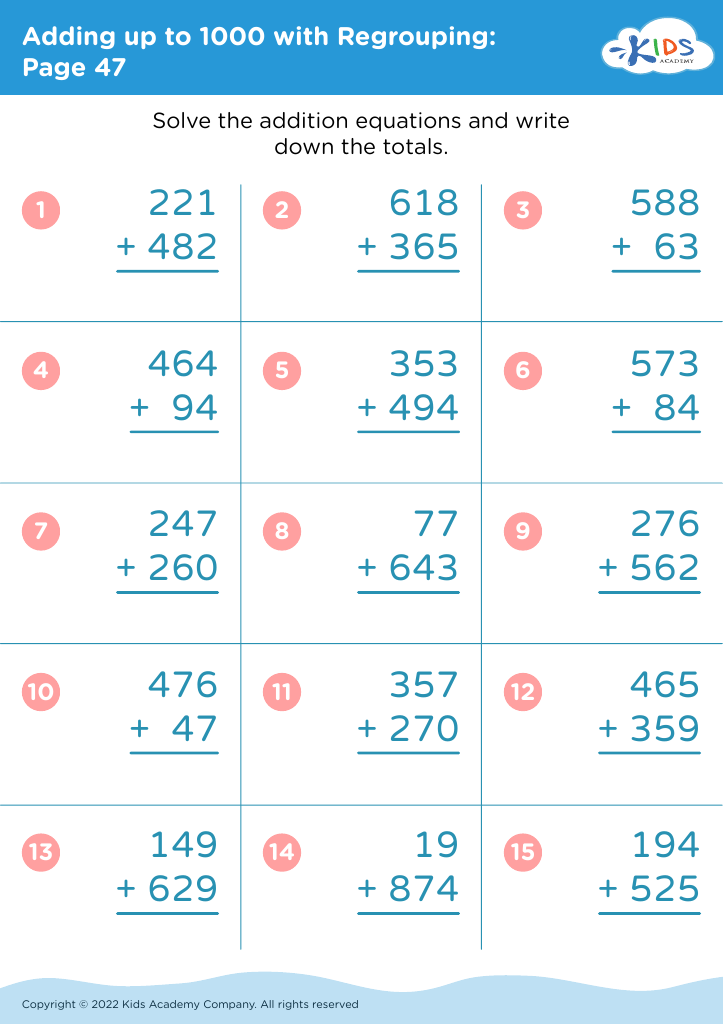
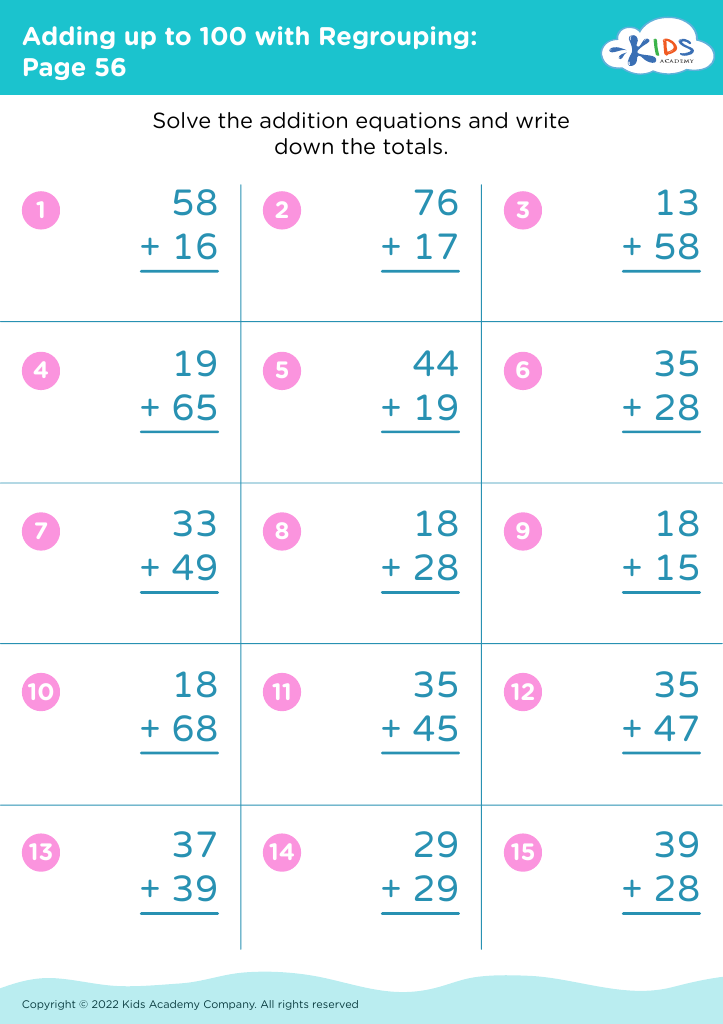
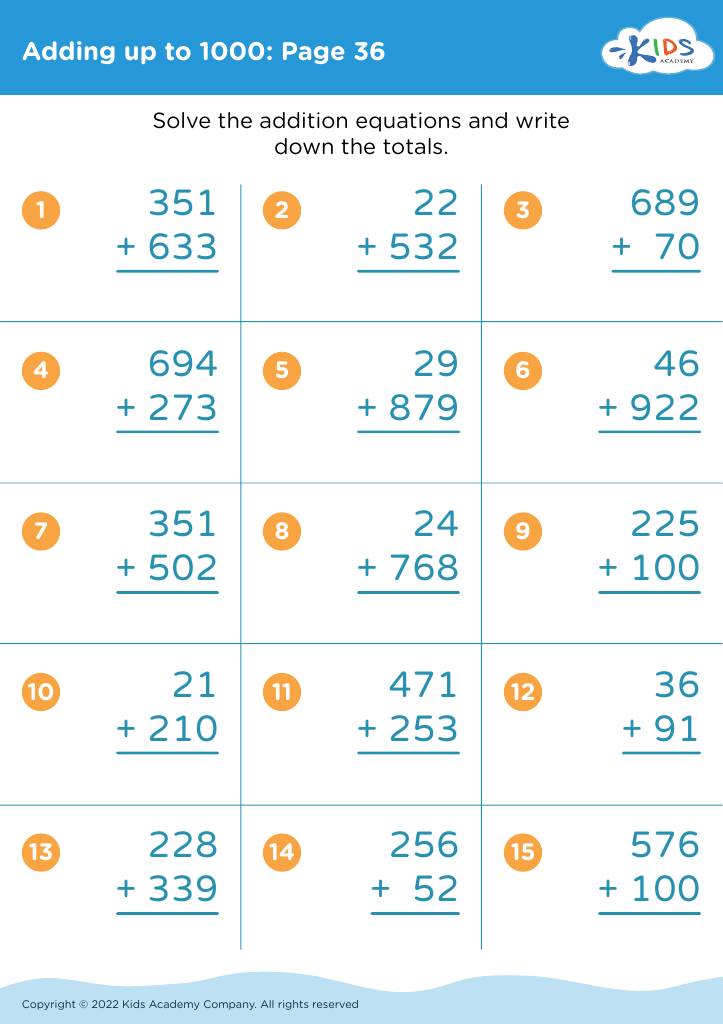
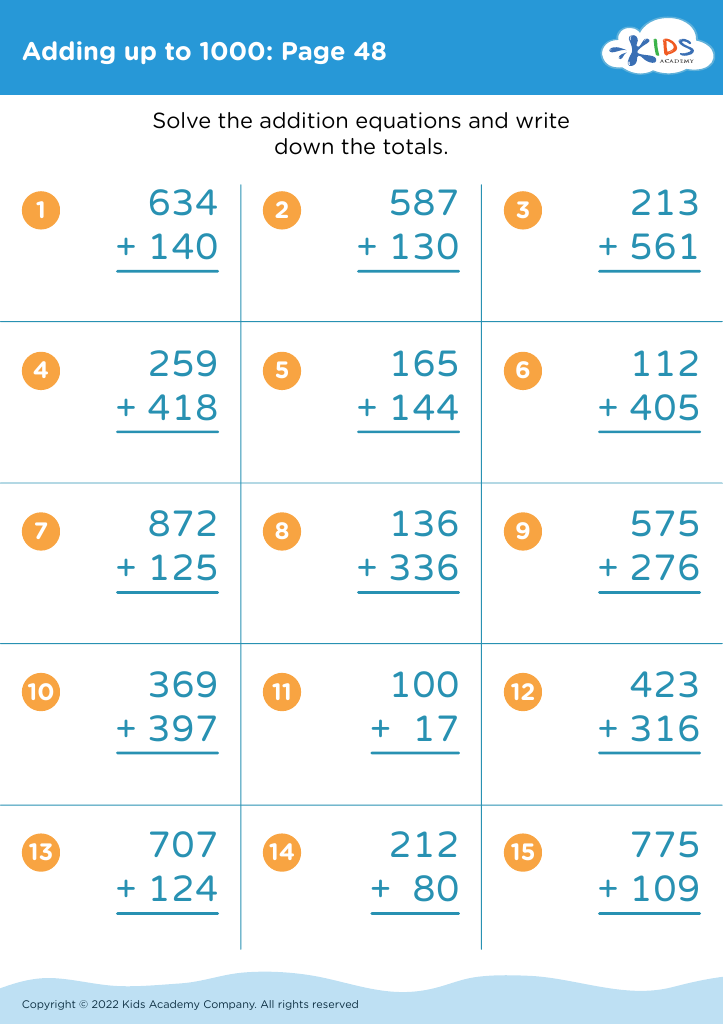
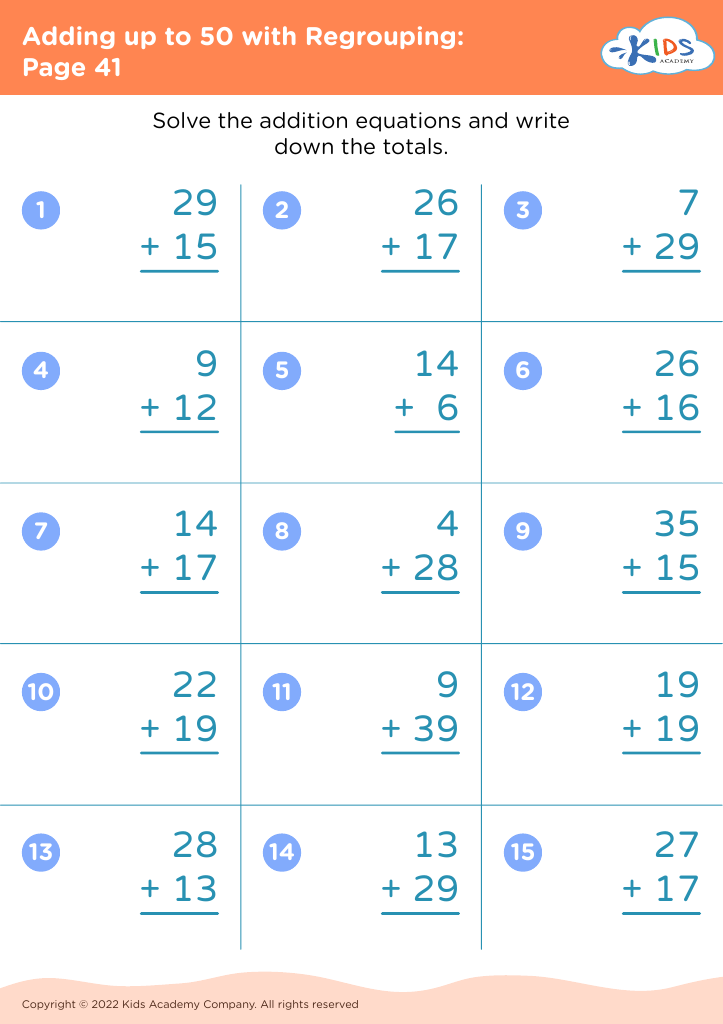
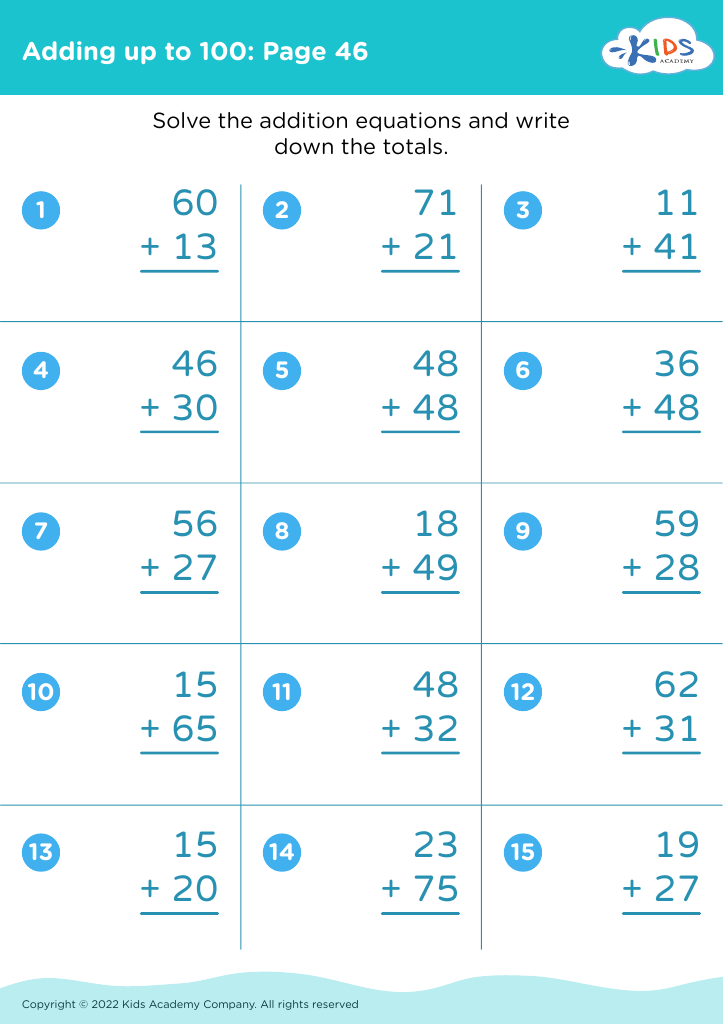
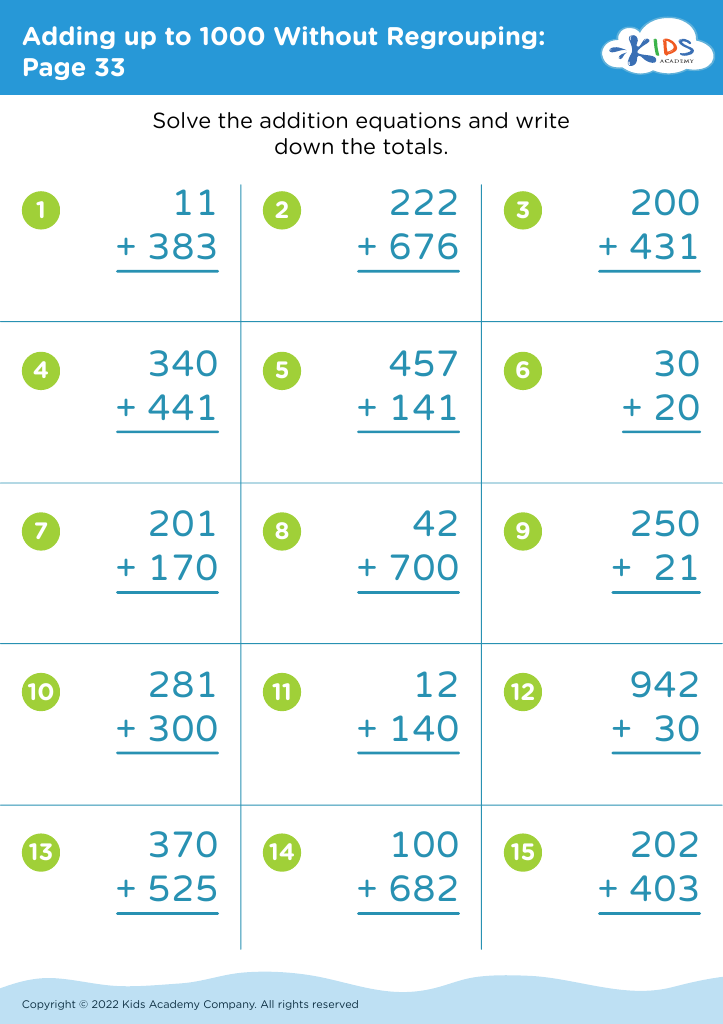








Counting practice in addition and subtraction is vital for 8-year-olds, as it forms the foundation of their mathematical understanding. At this age, children are transitioning from simple arithmetic to more complex problem-solving. Practicing these skills enables them to build confidence and fluency, essential components for success in later math concepts such as multiplication, division, and fractions.
Moreover, mastering basic addition and subtraction helps children develop critical thinking skills. Regular practice enhances their ability to recognize patterns, understand number relationships, and solve real-life problems. When parents and teachers engage in counting activities, they create opportunities for interactive learning, making math enjoyable and relevant.
Additionally, proficiency in these fundamental skills is crucial for academic achievement. Children who struggle with addition and subtraction may face challenges in more advanced math topics, leading to frustration and a lack of motivation. By fostering counting practice, parents and teachers help cultivate a positive attitude towards math, encouraging persistence and resilience in the face of challenges.
Ultimately, caring about counting practice in addition and subtraction not only supports academic success but also equips children with skills essential for everyday decision-making and problem-solving as they grow into responsible, numerate adults.








