
Develop addition skills Addition & Subtraction Worksheets for 8-Year-Olds
4 filtered results
Difficulty Level
Grade
Age
-
From - To
Subject
Activity
Standards
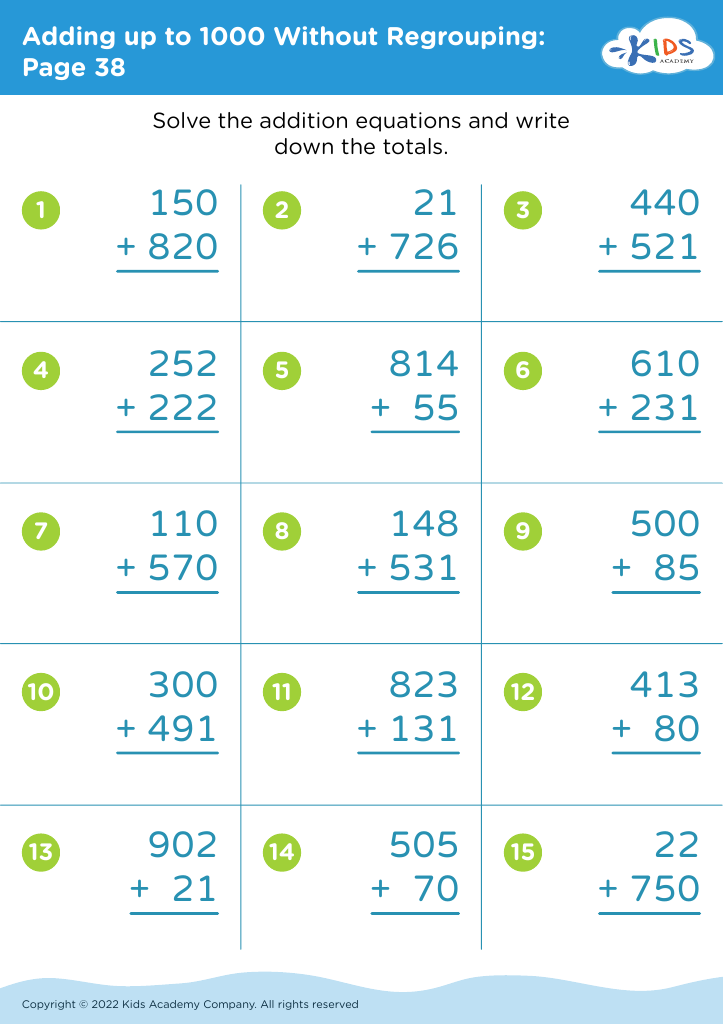
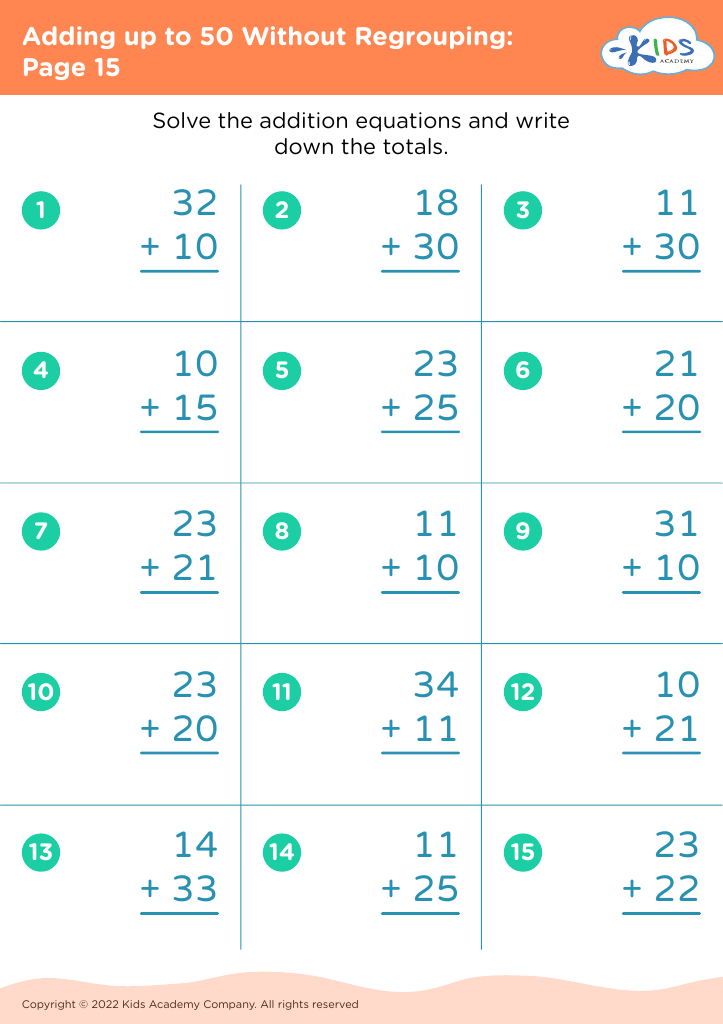
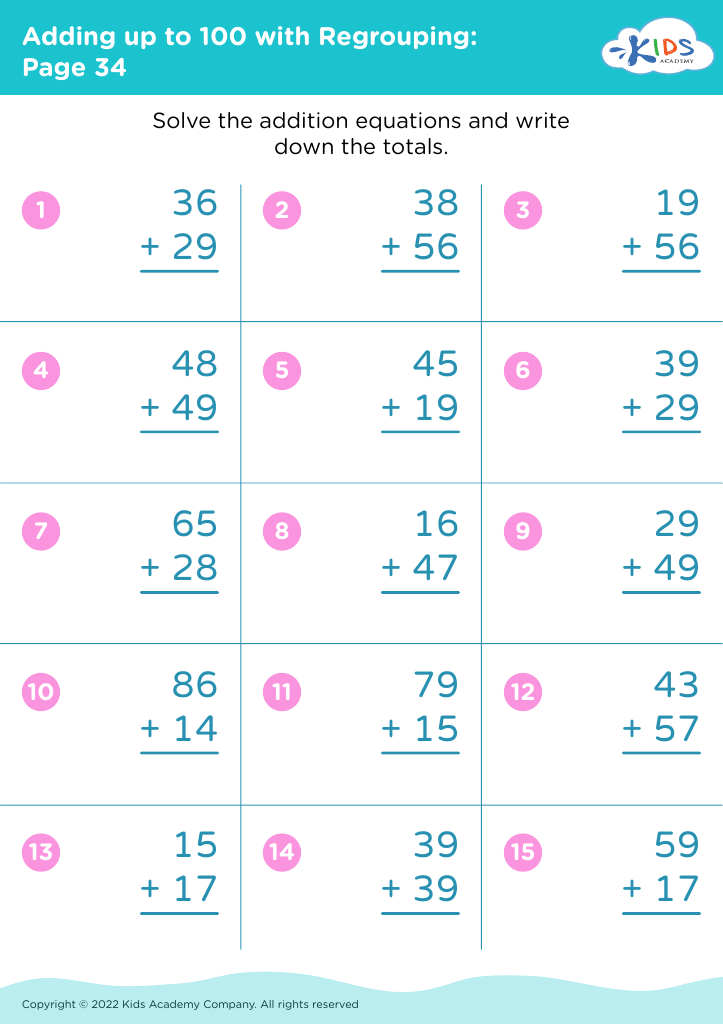
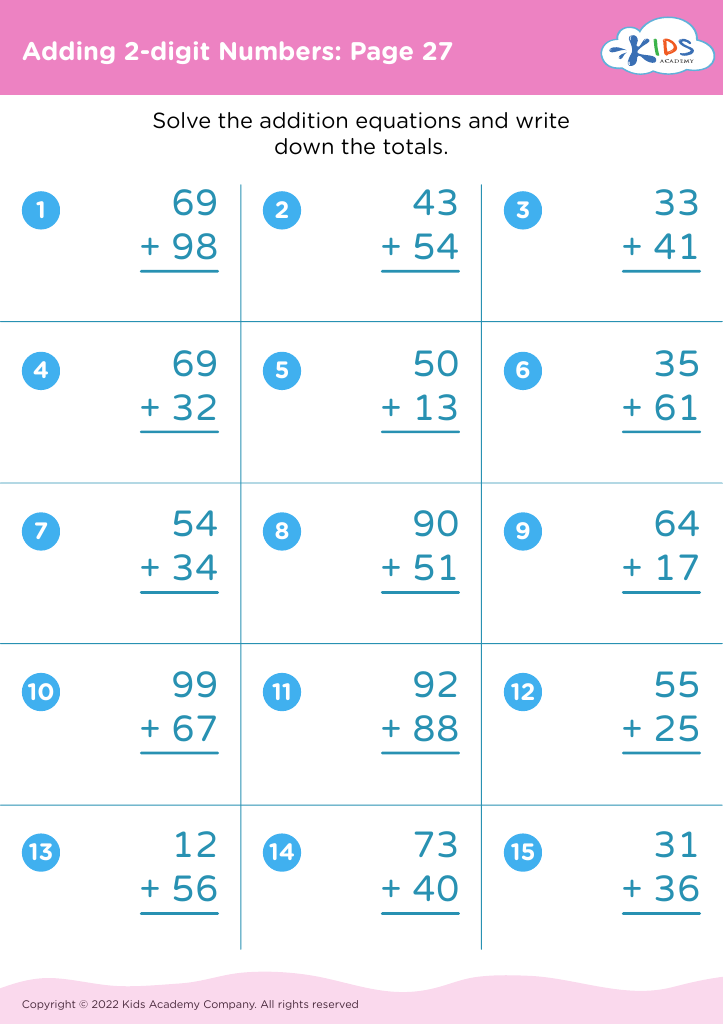
Boost your 8-year-old's math proficiency with our engaging addition & subtraction worksheets! Specifically designed for developing addition skills, our worksheets make learning both fun and effective. They help children practice essential math concepts through a variety of colorful and captivating exercises. Tailored to young learners, the worksheets reinforce basic addition principles, enabling kids to solve problems more efficiently. By consistently working on these activities, your child will gain confidence and fluency in addition, setting a solid groundwork for future math success. Explore our worksheets to make math learning enjoyable and productive for your 8-year-old!
Favorites
With answer key
Interactive
Learning Skills
Join Kids Academy for Free
Who is primarily going to use this learning content?








Developing addition and subtraction skills in 8-year-olds is essential for their overall cognitive development and academic success. First, these fundamental arithmetic operations are foundational for more advanced math concepts that children will encounter later in their education, such as multiplication, division, fractions, and algebra. If a child has a strong grasp of addition and subtraction, they are more likely to excel in these areas as well.
Secondly, proficiency in addition and subtraction fosters improved problem-solving abilities. Children learn to break down complex problems into manageable steps, enhancing their logical reasoning and analytical thinking. These skills extend beyond math and are valuable in everyday decision-making and other subjects like science and engineering.
Moreover, mathematical competence contributes to a child’s confidence and self-esteem. Early success in math can foster a positive attitude toward the subject, which can motivate children to engage more deeply and persist through challenges. It’s not just about numbers; strong arithmetic skills can improve a child's language, memory, and attention span, benefiting their overall academic achievements.
Parents and teachers play a critical role in developing these skills, providing the necessary support, practice opportunities, and encouragement. Engaging in fun, real-world activities like shopping or cooking can make learning addition and subtraction enjoyable and memorable, cementing these vital skills.








