Develop number recognition Addition & Subtraction Worksheets for 8-Year-Olds
5 filtered results
-
From - To
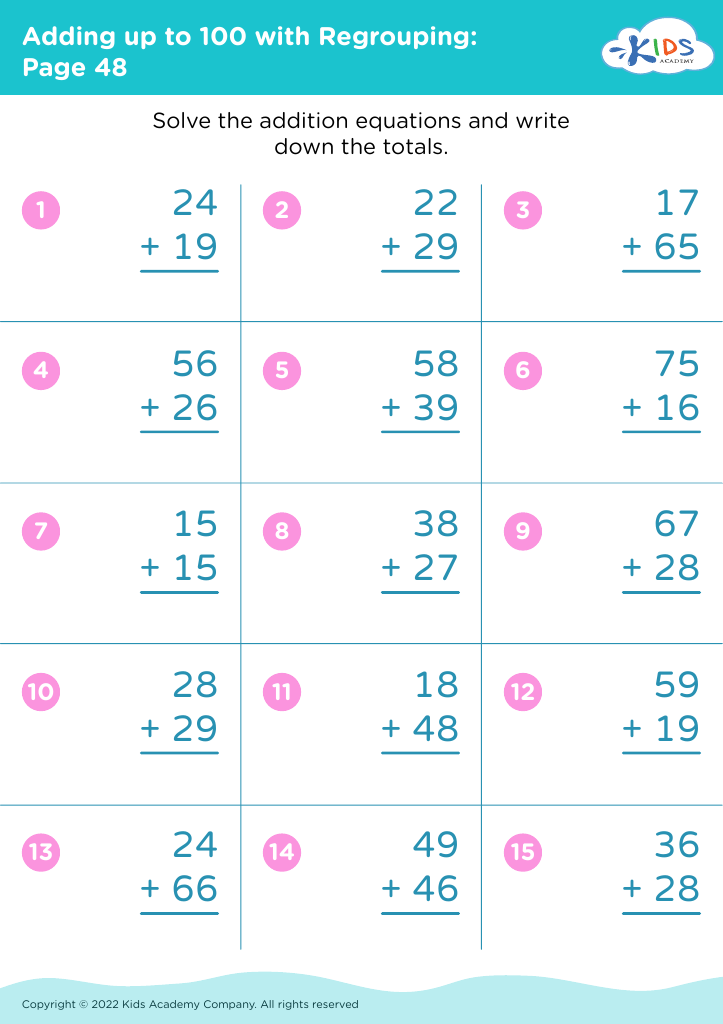
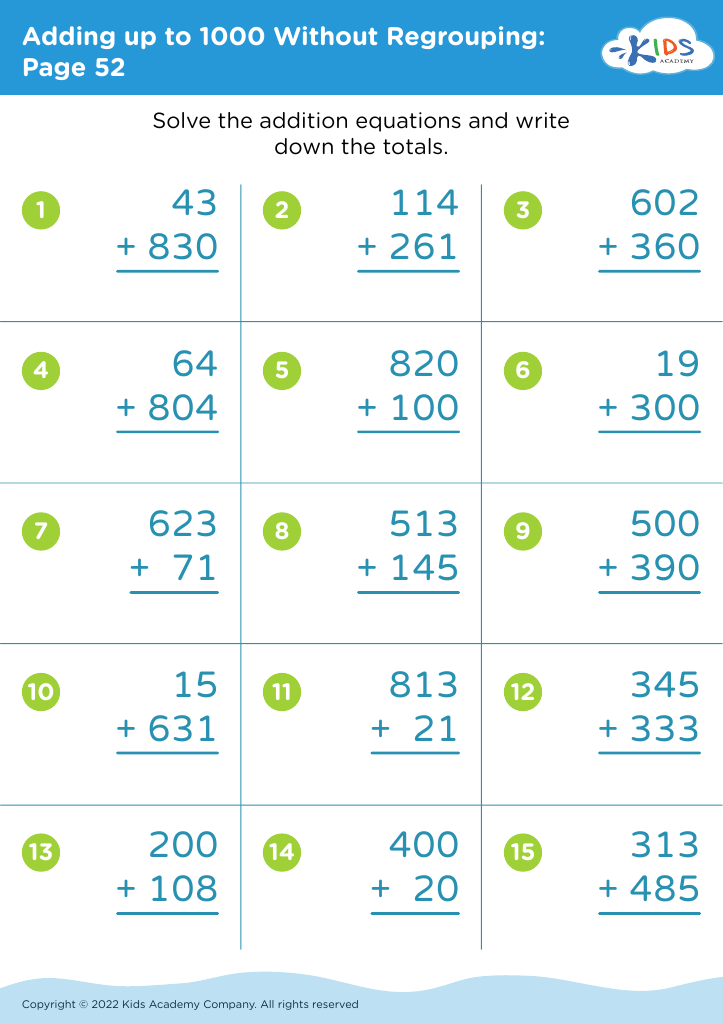
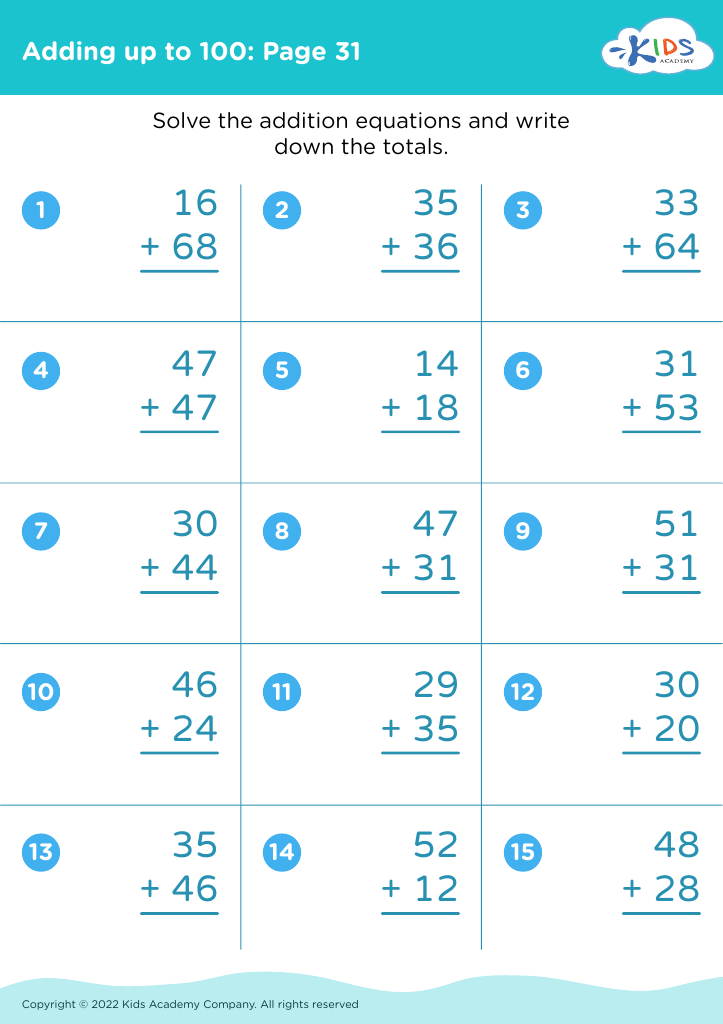
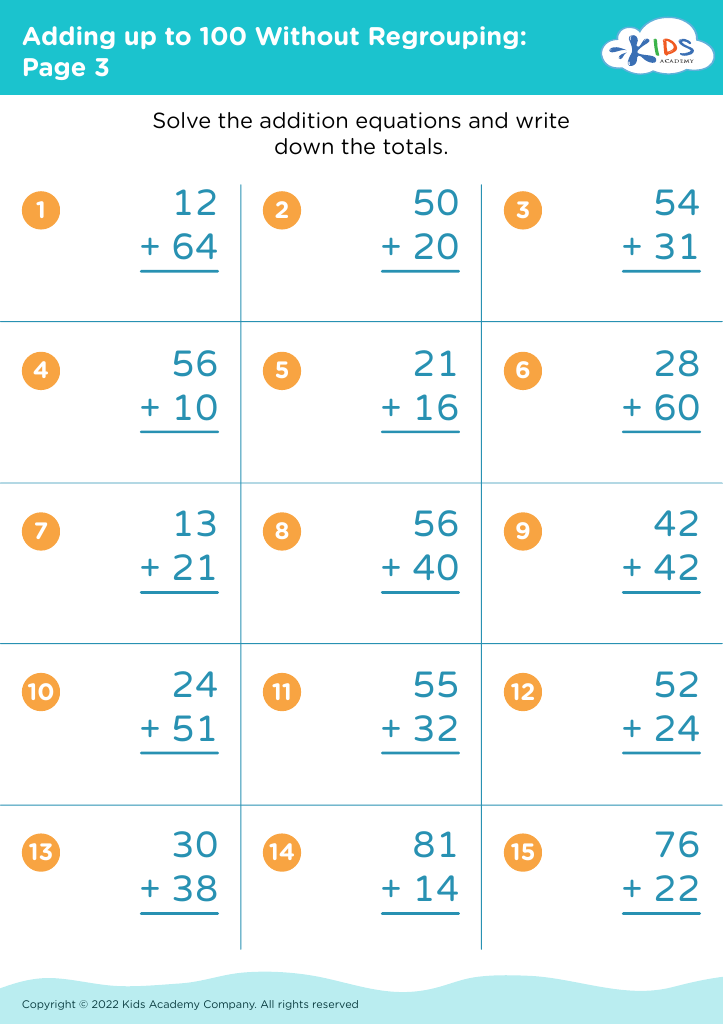
Our "Develop Number Recognition Addition & Subtraction Worksheets for 8-Year-Olds" are thoughtfully designed to build foundational math skills. These engaging worksheets help children identify and understand numbers while mastering basic addition and subtraction concepts. With vibrant illustrations and varied exercises, kids stay motivated and enjoy learning. Tailored to meet educational standards, our resources ensure a strong numerical foundation, enhancing problem-solving abilities in a fun and interactive way. Ideal for both classrooms and at-home practice, these worksheets support teachers and parents in making math exciting and accessible. Set the stage for math success with our expertly crafted worksheets!
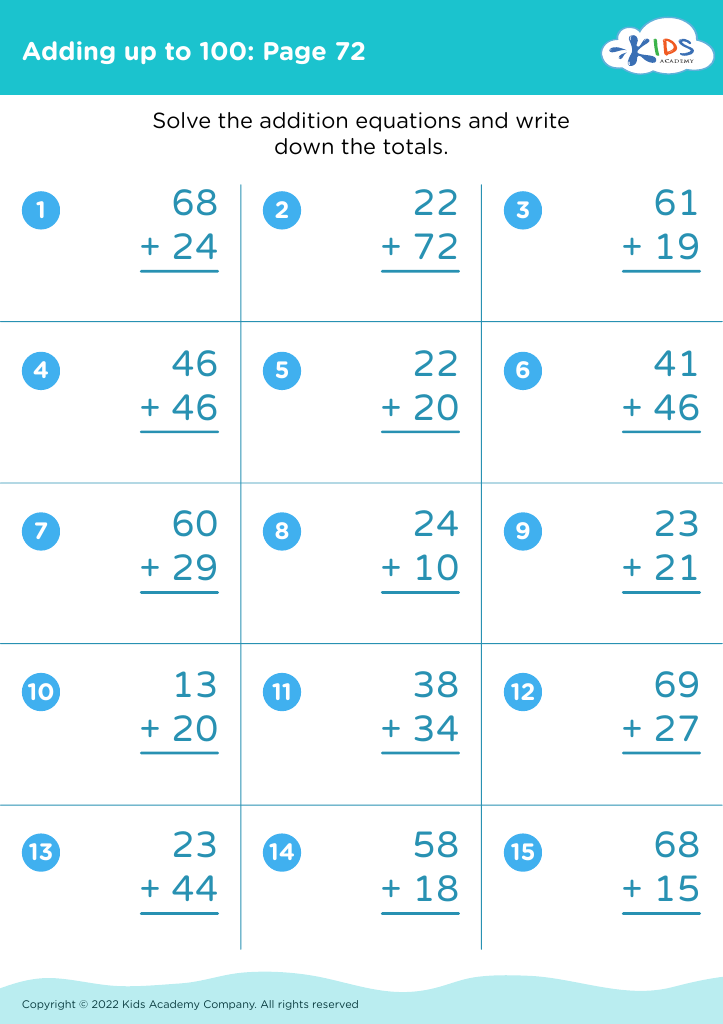








Developing number recognition and basic arithmetic skills, such as addition and subtraction, is crucial for 8-year-olds due to their foundational importance in a child's education and overall cognitive development. At this age, children typically transition from concrete to more abstract modes of thinking, and strong number sense provides the building blocks necessary for tackling more complex mathematical concepts later on.
Firstly, number recognition allows children to understand and interact with numeric symbols, a skill essential for real-life tasks such as reading time, handling money, and following instructions involving quantities. These everyday applications emphasize why both parents and teachers should nurture these abilities.
Secondly, addition and subtraction are the cornerstones of arithmetic. Mastering these operations not only boosts a child's confidence in mathematics but also enhances problem-solving skills. These skills are reflected in various life situations, from simple decision-making to logical reasoning.
Moreover, early proficiency in these areas can prevent future learning struggles. Children who establish a solid mathematical foundation are more likely to enjoy the subject and perform well academically. This positive attitude can influence their performance across other disciplines and foster a lifelong love for learning.
Therefore, investing time and resources into developing these skills benefits children academically and equips them with practical, life-long capabilities. Parents and teachers play pivotal roles in this educational journey, making their involvement crucial.








