Developing logical thinking Addition & Subtraction Worksheets for 8-Year-Olds
4 filtered results
-
From - To
Unlock your child's potential with our "Developing Logical Thinking: Addition & Subtraction Worksheets for 8-Year-Olds." These engaging worksheets are designed to enhance critical thinking and problem-solving skills while mastering fundamental math concepts. Each activity encourages children to apply logic and reasoning in various scenarios, helping them understand the 'why' behind addition and subtraction. With a mix of challenges and fun, these worksheets aim to keep young learners motivated and excited about math. Perfect for home or classroom use, our resources support educators and parents in fostering confident, independent thinkers ready to tackle more complex mathematical concepts in the future.
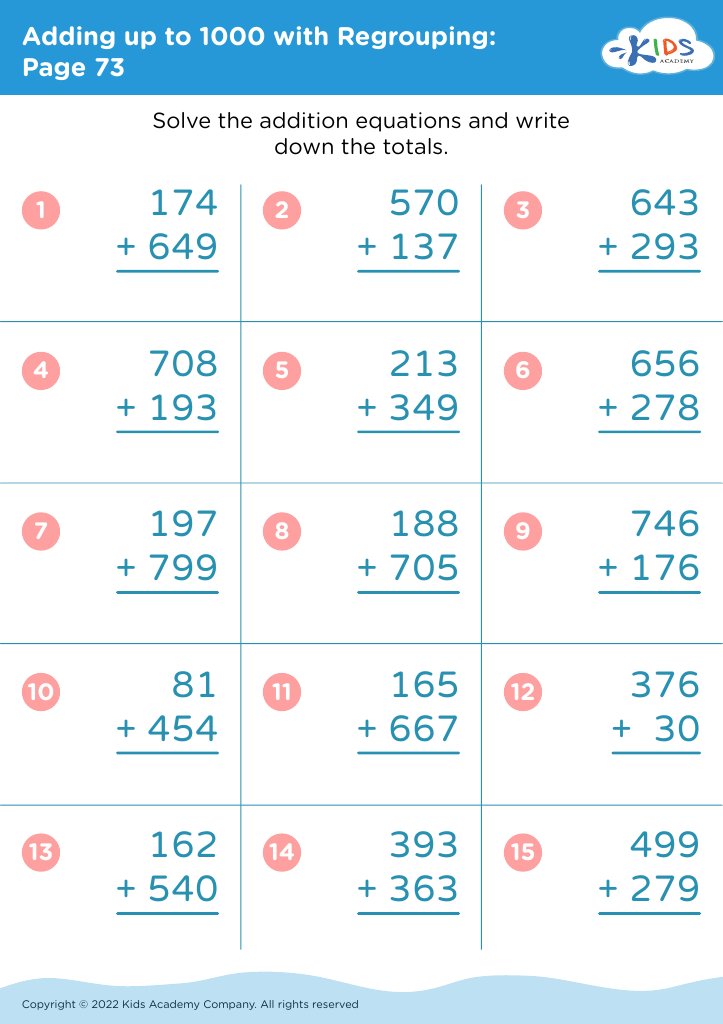
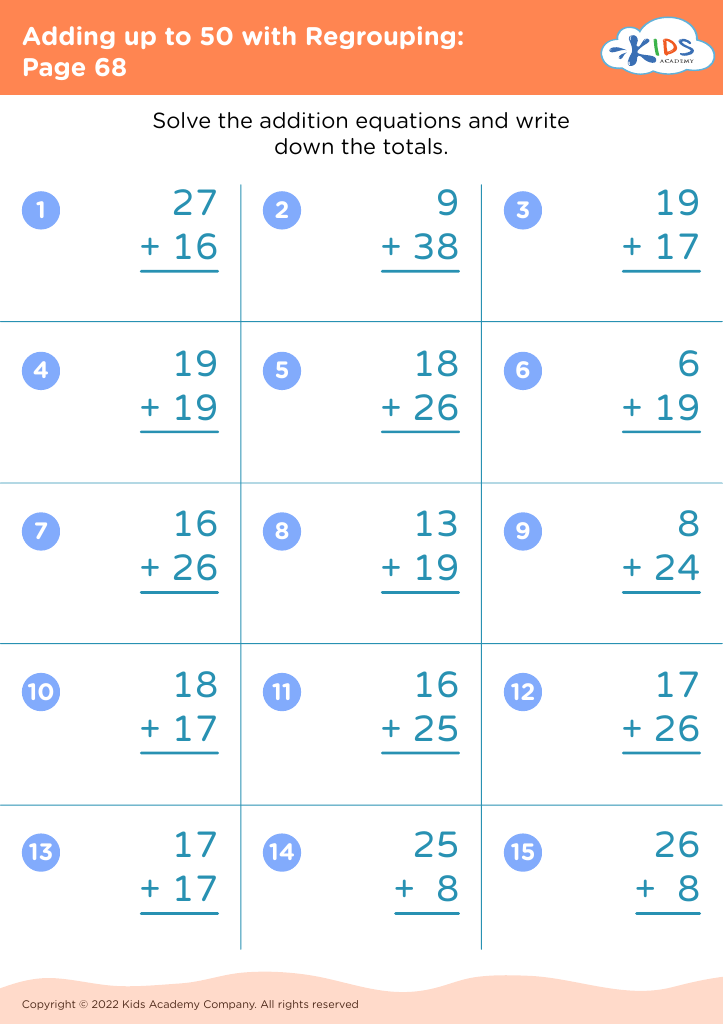
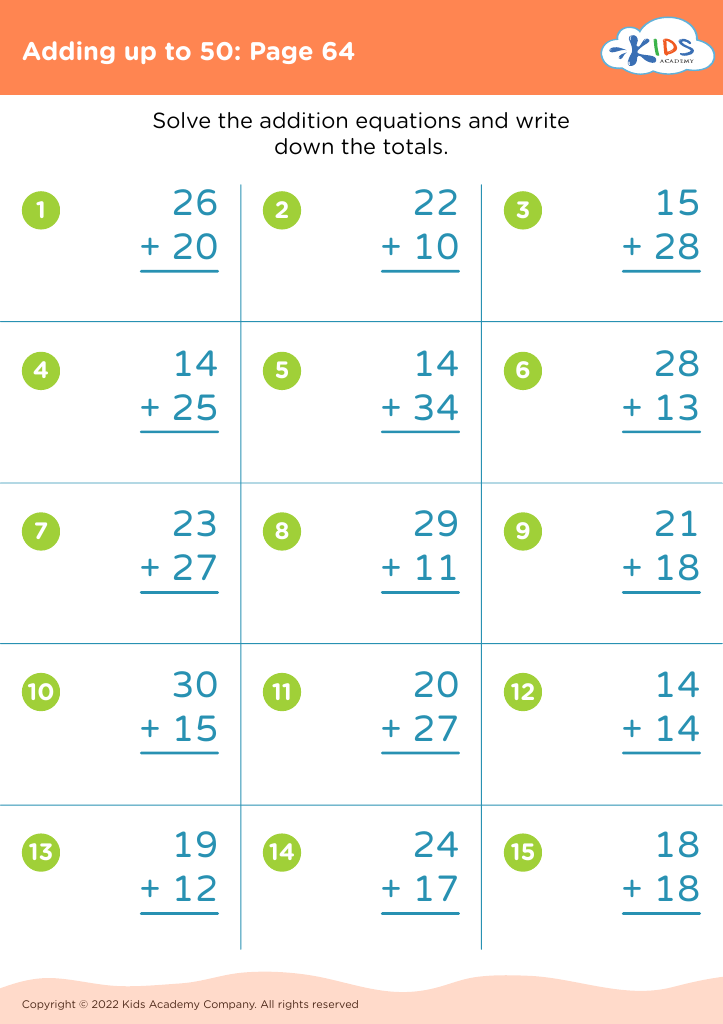
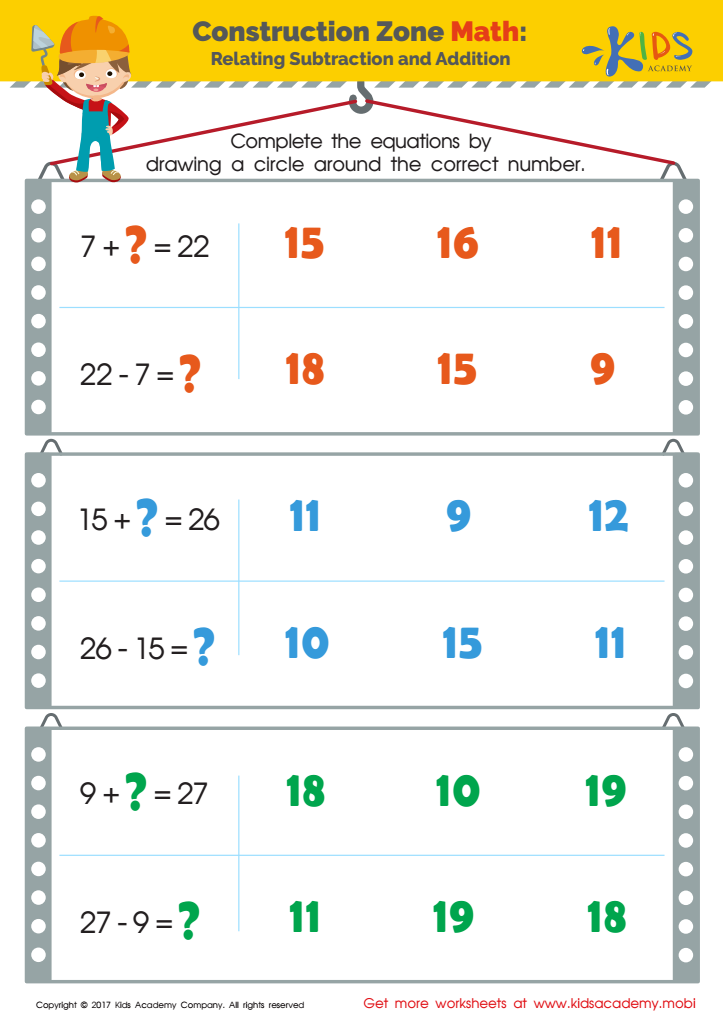
Related Addition and Subtraction Facts Worksheet
 Assign to My Students








Developing logical thinking in addition and subtraction for 8-year-olds is crucial for several reasons. At this age, children are transitioning from basic arithmetic skills to more complex problem-solving abilities. Strengthening their logical thinking lays a solid foundation for advanced mathematics and critical reasoning, which are vital for future academic success.
Logical thinking helps children understand the relationships between numbers, fostering a deeper comprehension of concepts such as regrouping in subtraction or carrying in addition. This understanding promotes confidence, allowing students to tackle more challenging math problems without anxiety. Moreover, these skills extend beyond mathematics, enhancing critical thinking in other subjects such as science and reading, where logical reasoning is necessary to draw conclusions or analyze information.
Parents and teachers play a pivotal role in this developmental process. By creating engaging activities and real-life applications that encourage logical reasoning, they can spark children's interest in mathematics. Additionally, promoting teamwork and discussion around problem-solving can boost social skills and articulate thought processes. Ultimately, nurturing these skills at a young age fosters a love for learning and equips children with essential life skills for effective decision-making in day-to-day life.








