Identify shapes Addition & Subtraction Worksheets for 8-Year-Olds
10 filtered results
-
From - To
Welcome to our "Identify Shapes Addition & Subtraction Worksheets for 8-Year-Olds" page! These expertly crafted worksheets combine mathematics with geometry, helping young learners sharpen their addition and subtraction skills while recognizing various shapes. Designed specifically for children aged 8, these engaging activities promote critical thinking and problem-solving. Students will explore numbers and shapes through interactive exercises, reinforcing both arithmetic and shape identification. Our colorful, engaging resources foster a fun learning environment, making math enjoyable and accessible. Perfect for classroom use or at-home practice, these worksheets support educational growth while keeping kids entertained. Download today and watch your child's confidence soar!
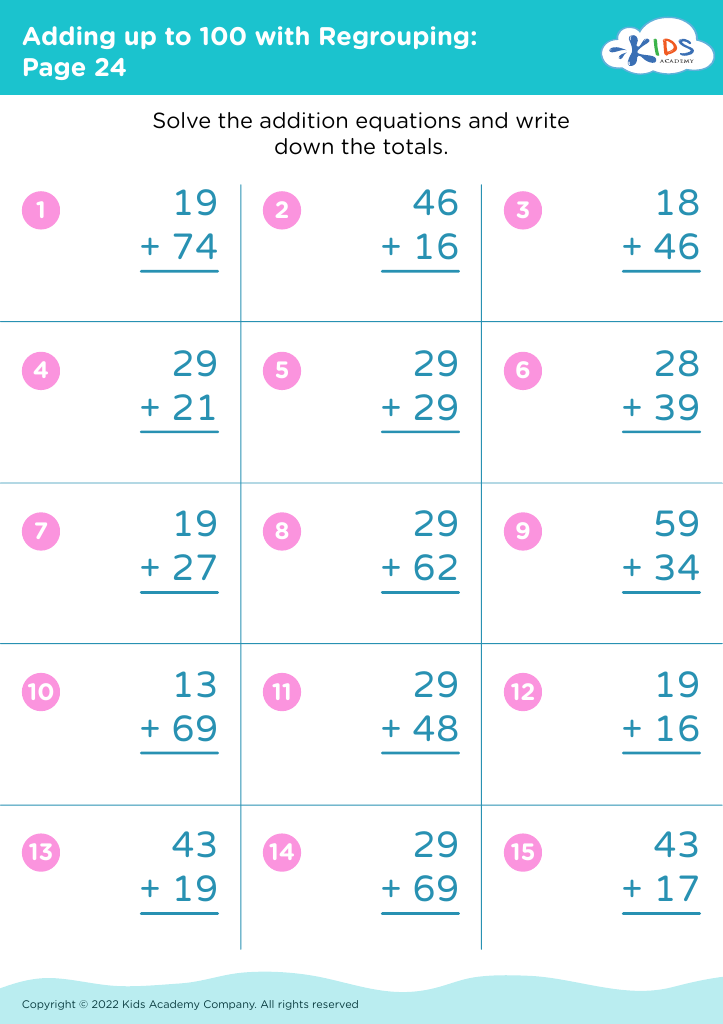
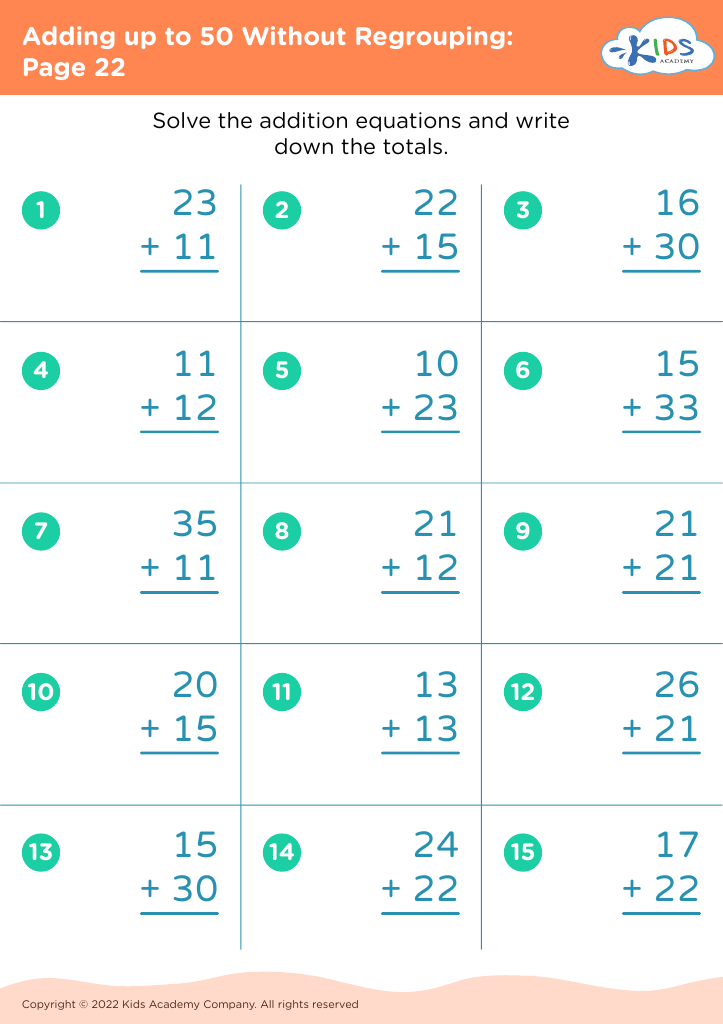
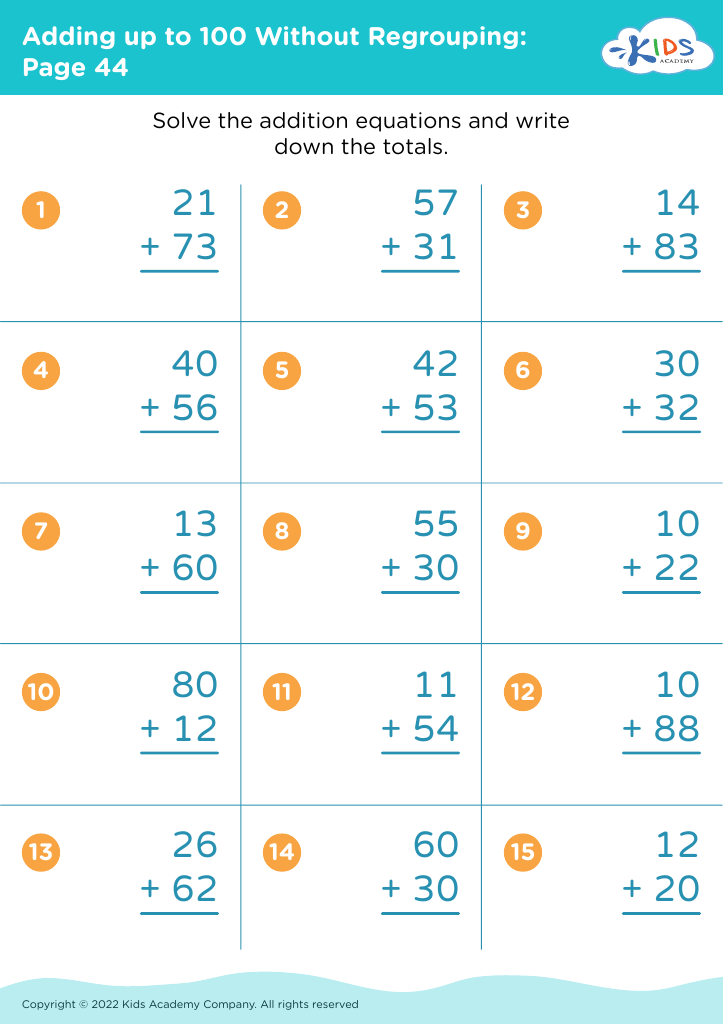
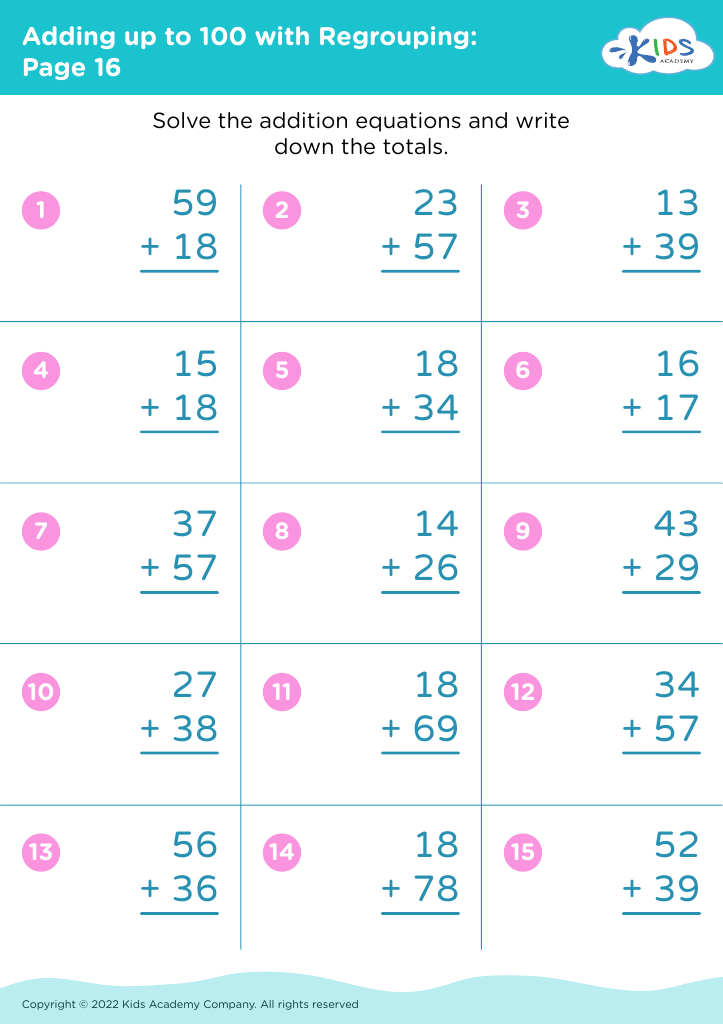








Parents and teachers should emphasize the significance of identifying shapes, addition, and subtraction for 8-year-olds as these concepts are foundational to children's overall mathematical understanding and cognitive development. Mastery of shapes helps students recognize and classify objects in their environment, promoting spatial awareness, which is crucial for future studies in geometry and advanced math. Engaging with different shapes also cultivates their observation skills, allowing them to connect mathematical concepts to real-world applications.
Addition and subtraction are fundamental operations that build the backbone of math skills. At this age, children typically begin to encounter more complex math problems, including multi-digit calculations and word problems. A solid grasp of these operations not only fosters computational proficiency but also enhances critical thinking. Understanding how to manipulate numbers equips children with problem-solving skills essential in everyday life.
Moreover, these math skills are intricately connected to various subjects, including science and art. For example, recognizing shapes can lead to exploring patterns in nature, while addition and subtraction underline basic science experiments. By nurturing these skills, parents and teachers help children build confidence and a positive attitude toward math, planting the seeds for lifelong learning and academic success.








