Identifying patterns Addition & Subtraction Worksheets for 8-Year-Olds
3 filtered results
-
From - To
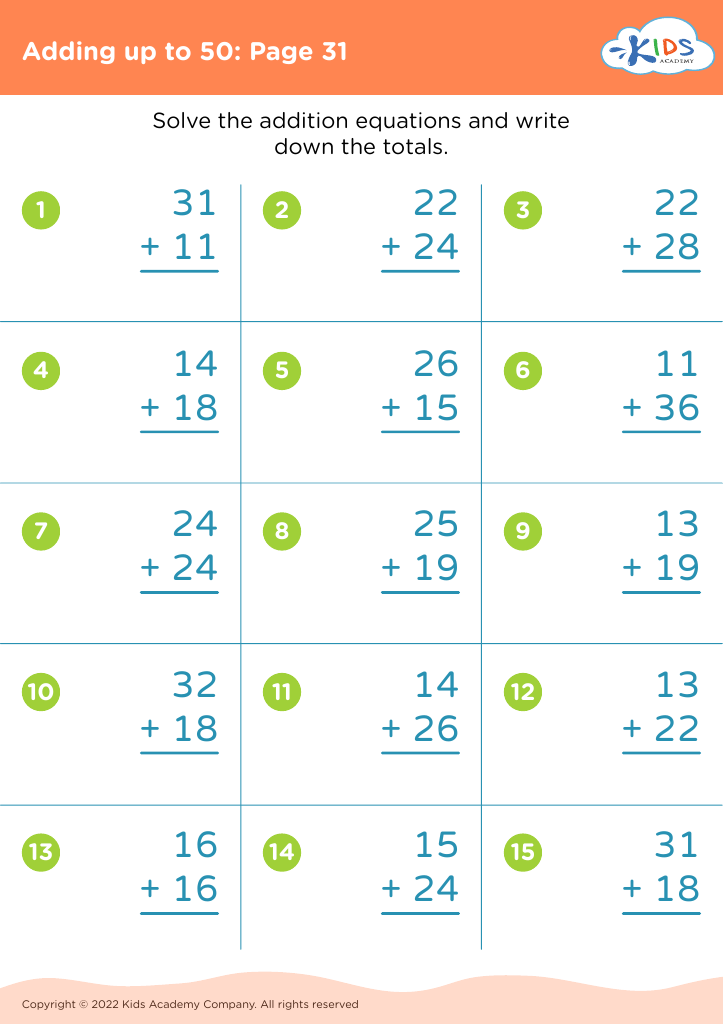
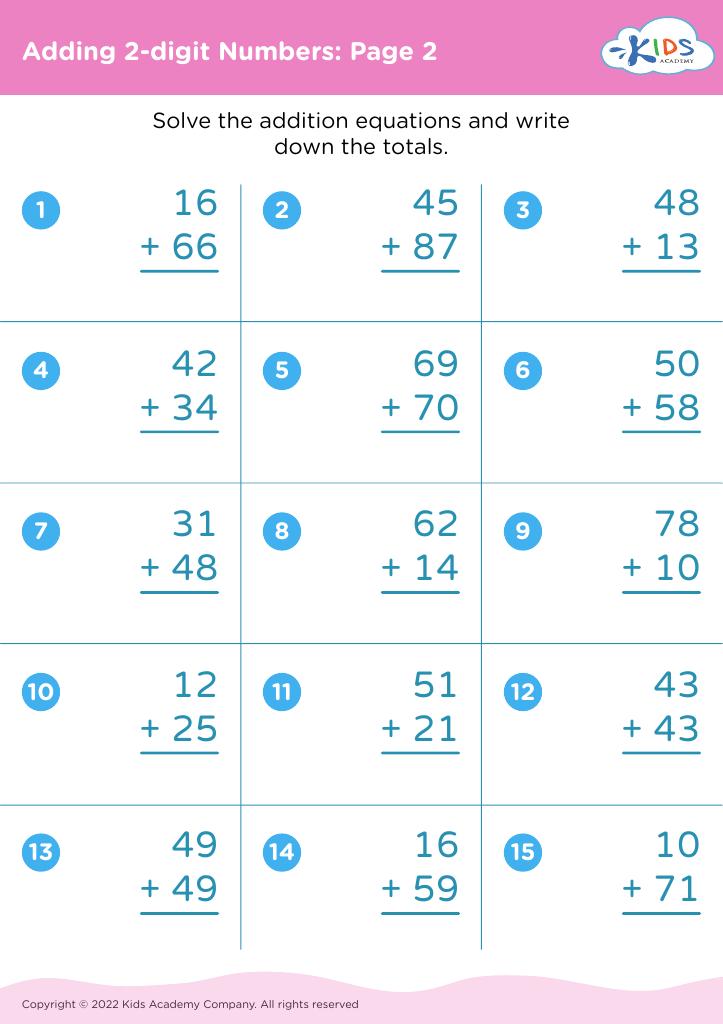
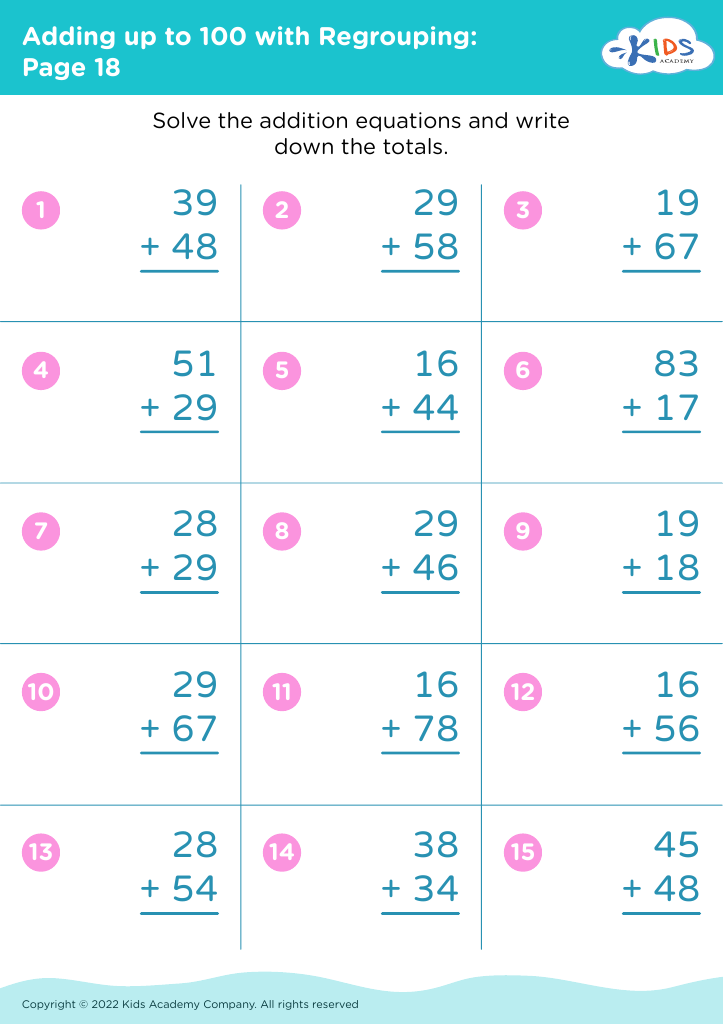
Unlock the joy of math for your 8-year-old with our "Identifying Patterns Addition & Subtraction Worksheets". These engaging printable worksheets are designed to enhance numeracy skills, focusing on uncovering patterns in addition and subtraction. Each activity is carefully crafted to build a solid arithmetic foundation while making learning fun through colorful materials and intriguing problems. Perfect for at-home practice or classroom use, these worksheets support cognitive development, boost problem-solving abilities, and foster a deeper understanding of mathematical concepts. Watch your child gain confidence and excel in math with these expertly designed resources. Start the journey today!








Identifying patterns in addition and subtraction is crucial for 8-year-olds, as it forms the foundation for more advanced mathematical concepts and problem-solving skills. At this age, children transition from concrete to abstract thinking, and spotting patterns helps them internalize and apply mathematical principles more effectively. When children recognize patterns, such as in sequences of numbers or consistent results in operations, they start to understand the underlying rules governing these operations.
For parents and teachers, encouraging pattern recognition in addition and subtraction means fostering a child's logical thinking and analytical skills. It boosts their confidence, as they can predict outcomes and understand why calculations work the way they do. For example, realizing that adding zero to a number doesn’t change the number, or that subtracting a number from itself results in zero, gives children practical tools that simplify complex problems later.
Moreover, pattern recognition supports children's abilities in other subjects and real-life situations, enriching their educational journey. It also aids in developing their attention to detail and memory, as they identify regularities and repetitions. Ultimately, caring about this skill cultivates a love for learning and builds a solid mathematical foundation, benefiting their overall academic growth.








