
Improve math skills Addition & Subtraction Worksheets for 8-Year-Olds
18 filtered results
Difficulty Level
Grade
Age
-
From - To
Subject
Activity
Standards
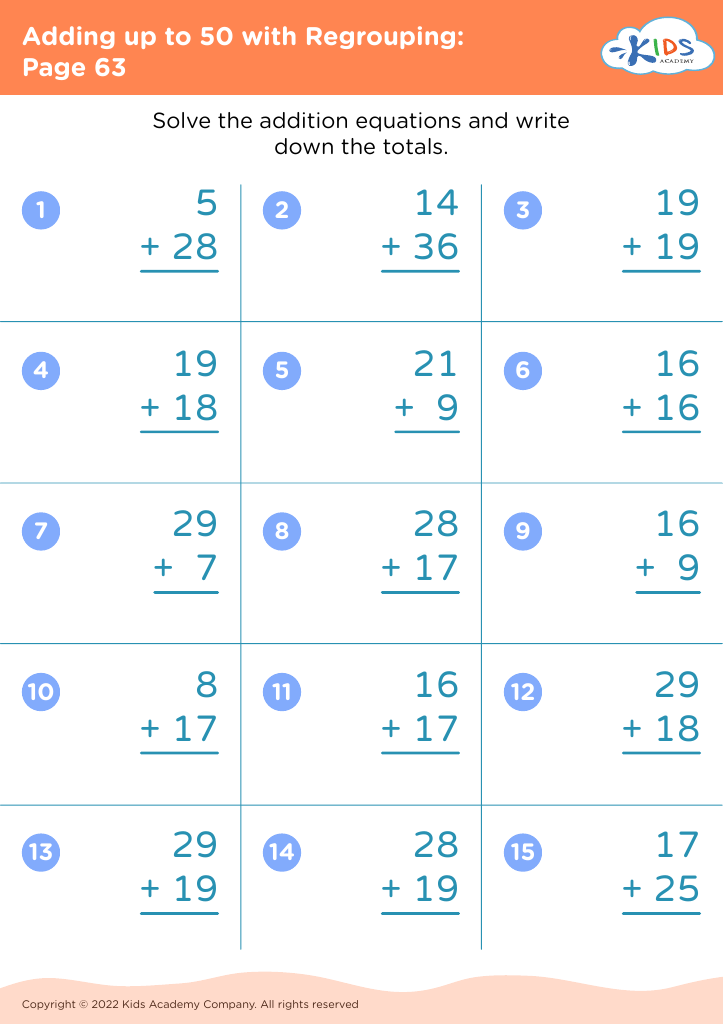
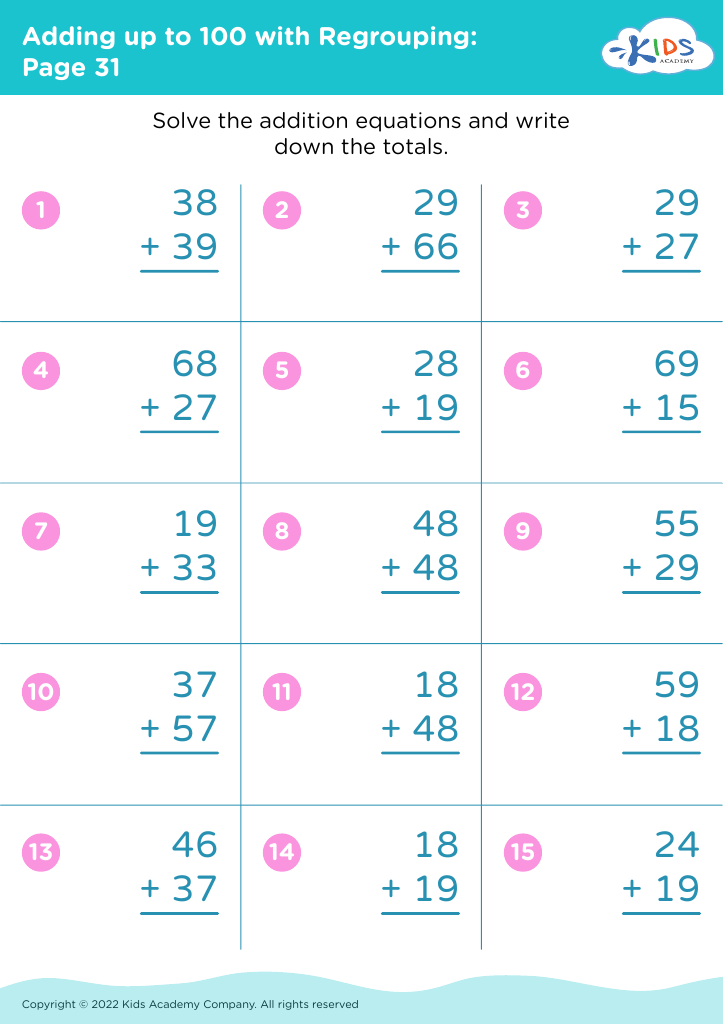
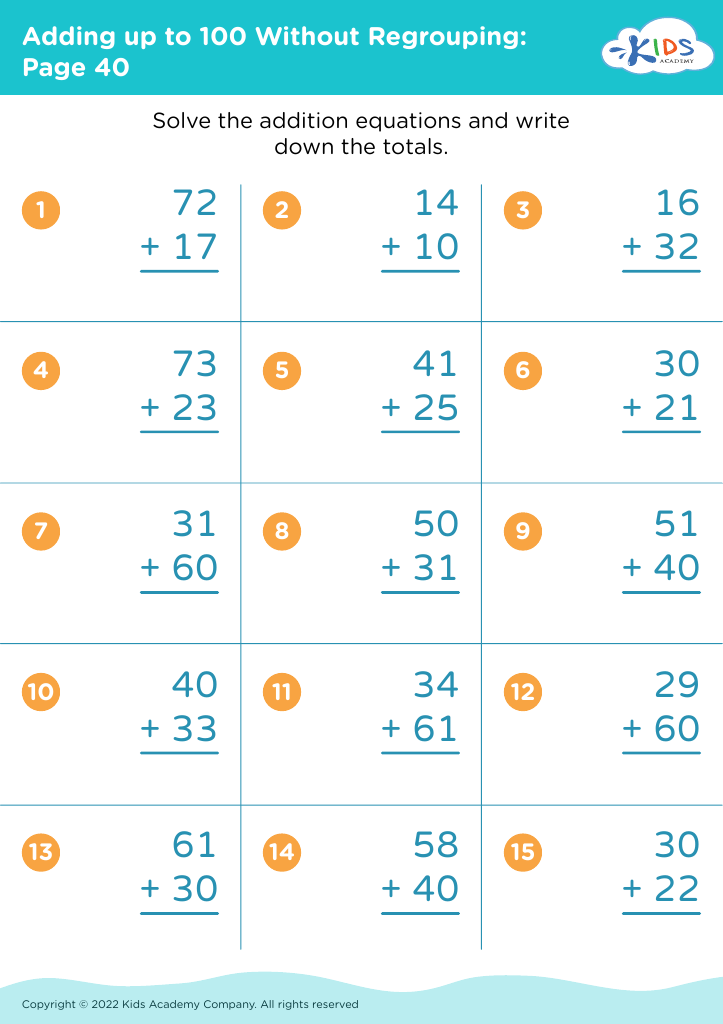
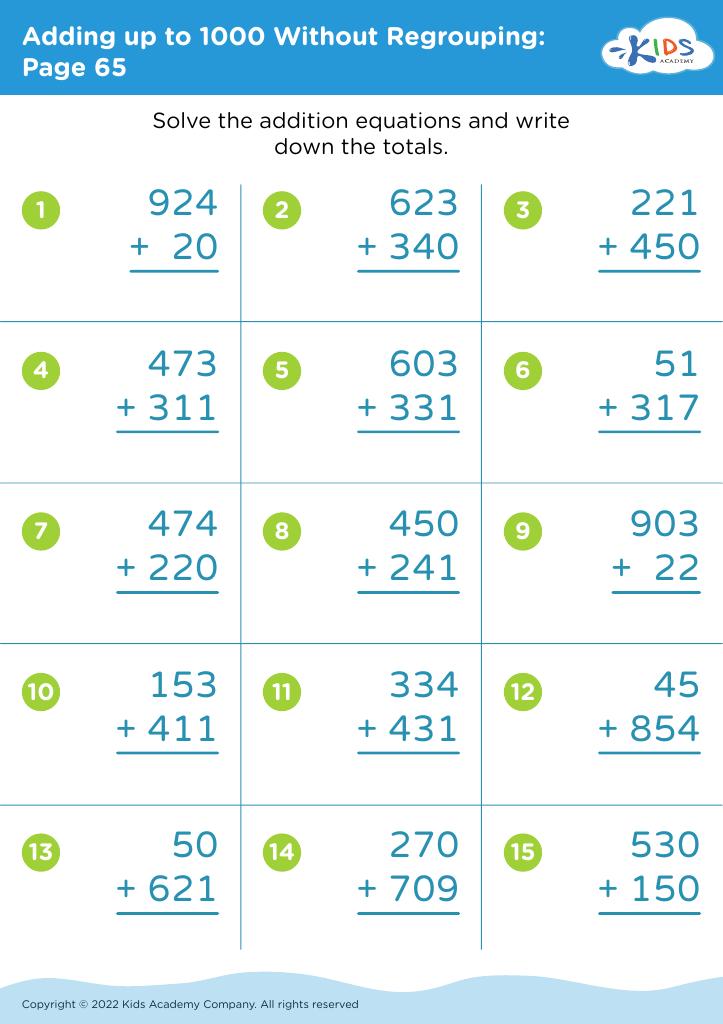
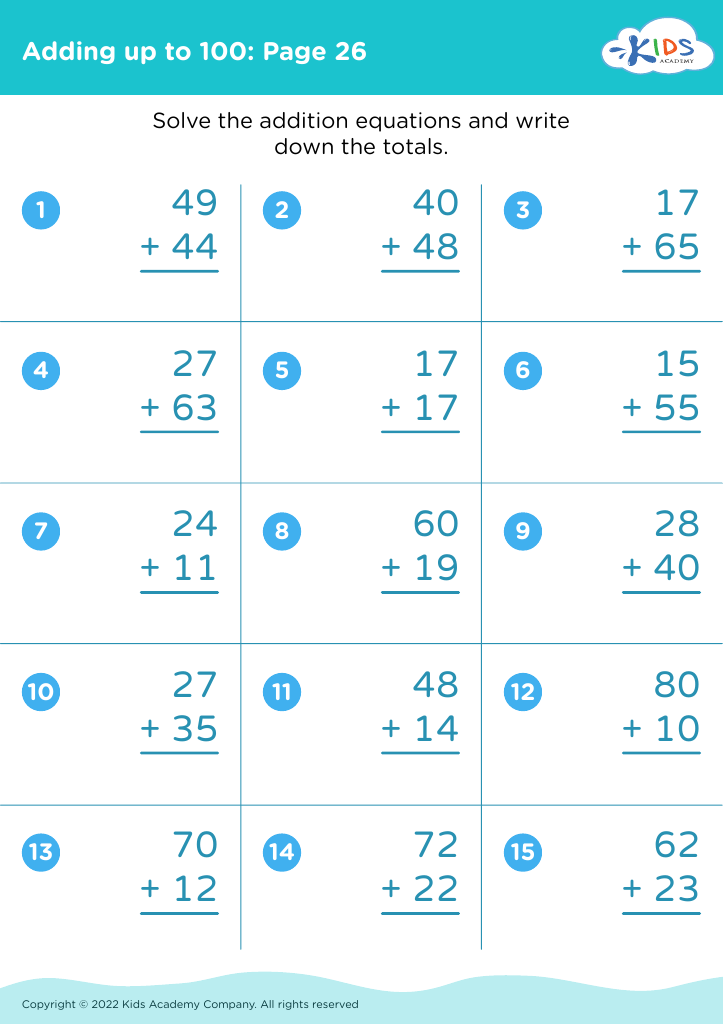
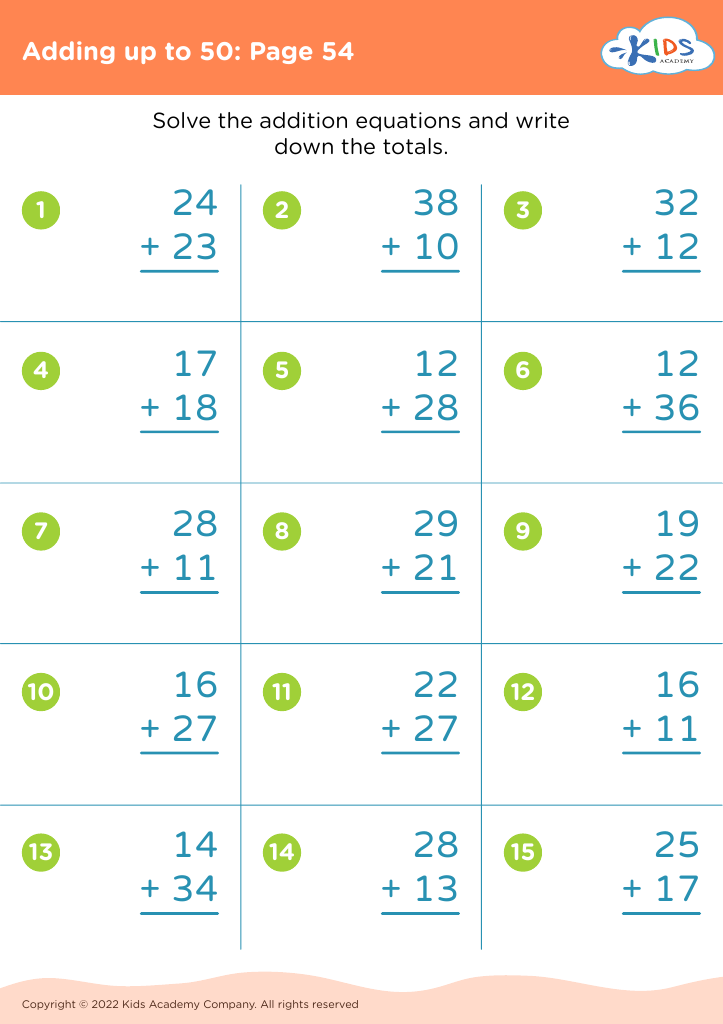
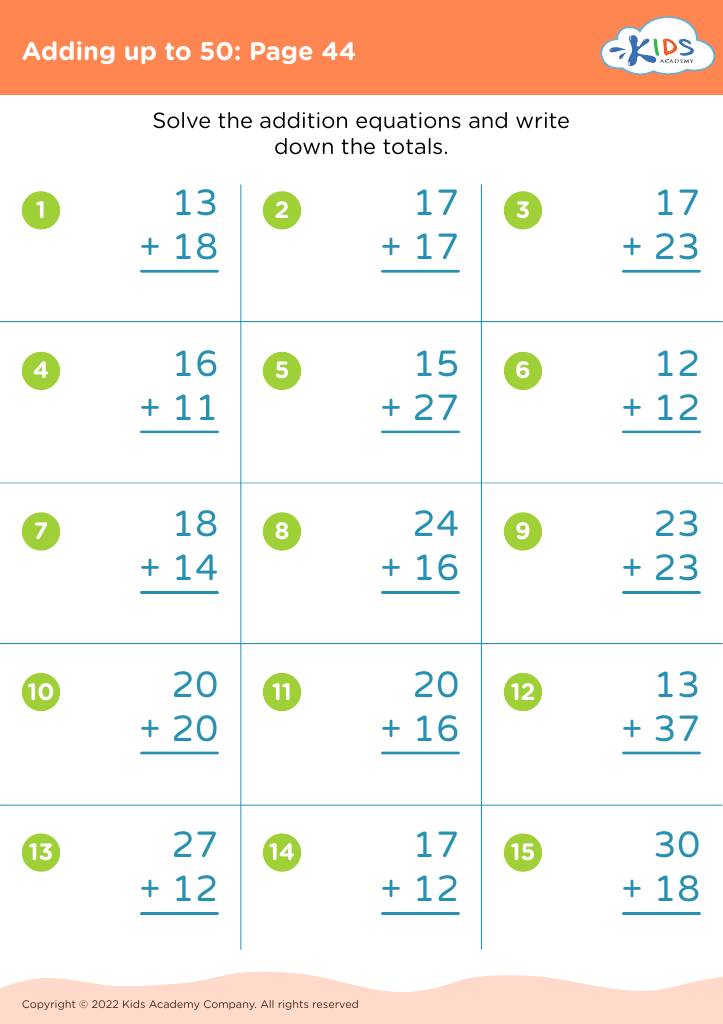
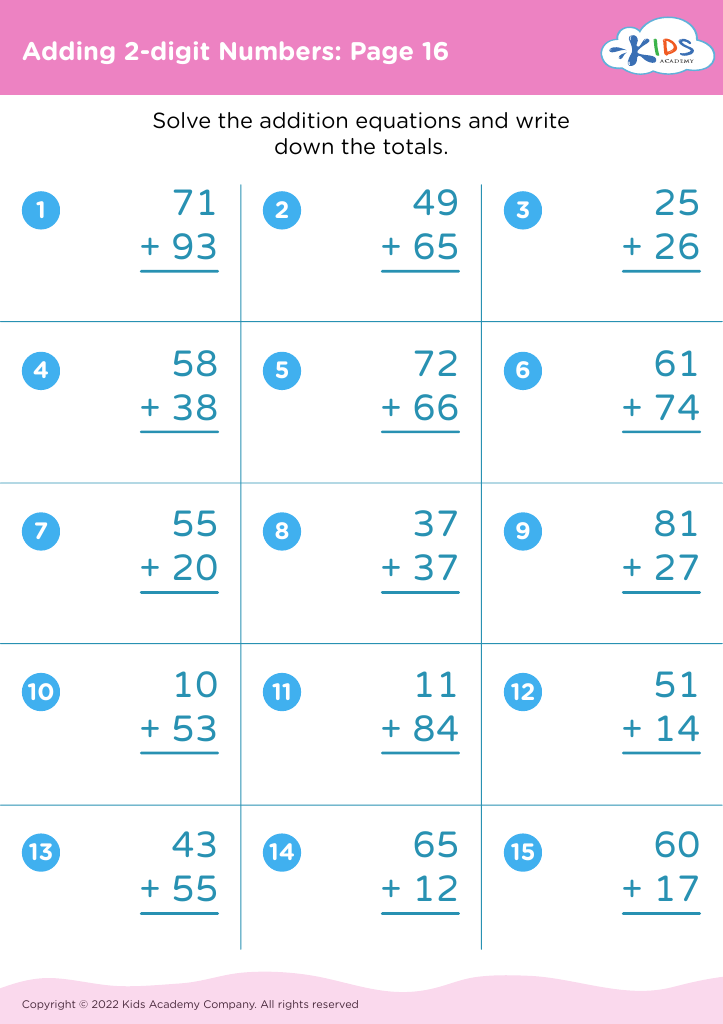
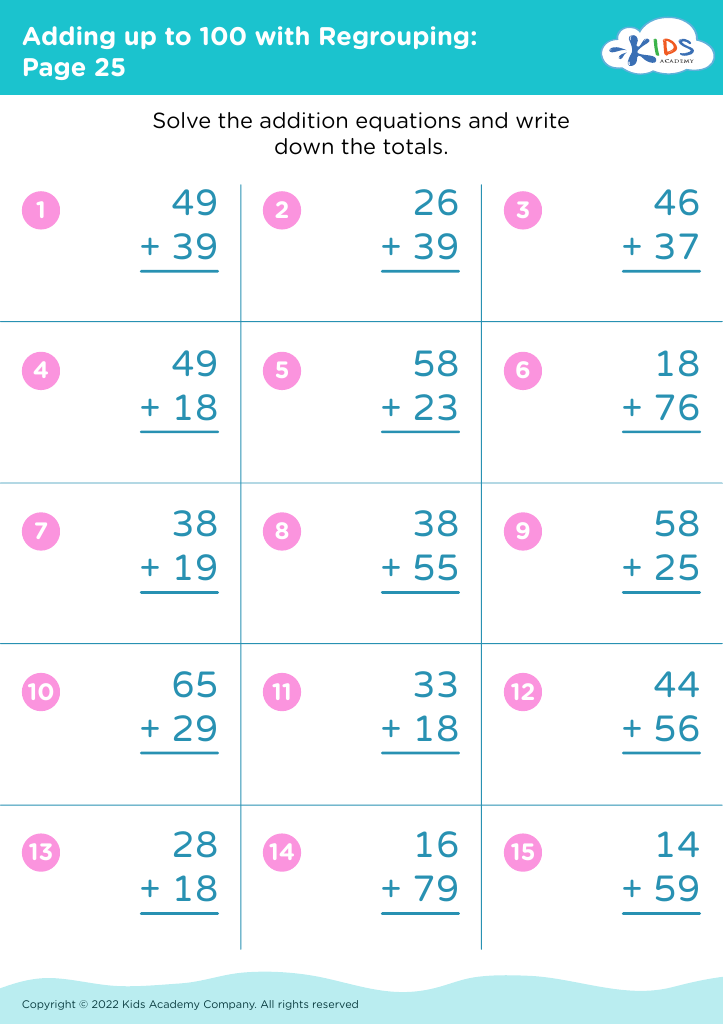
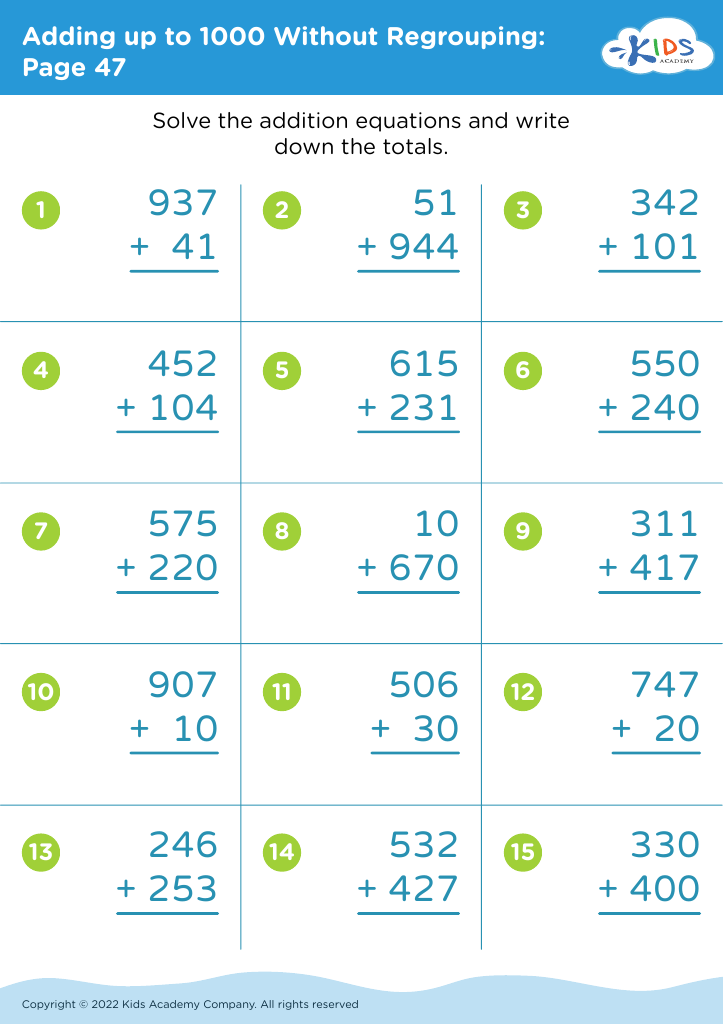
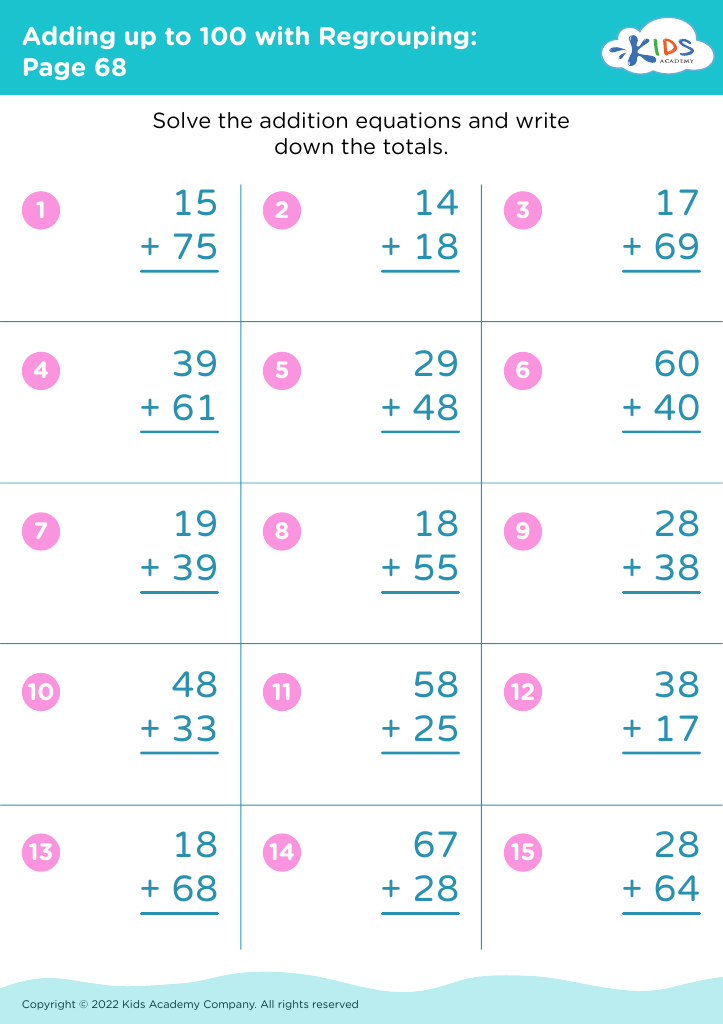
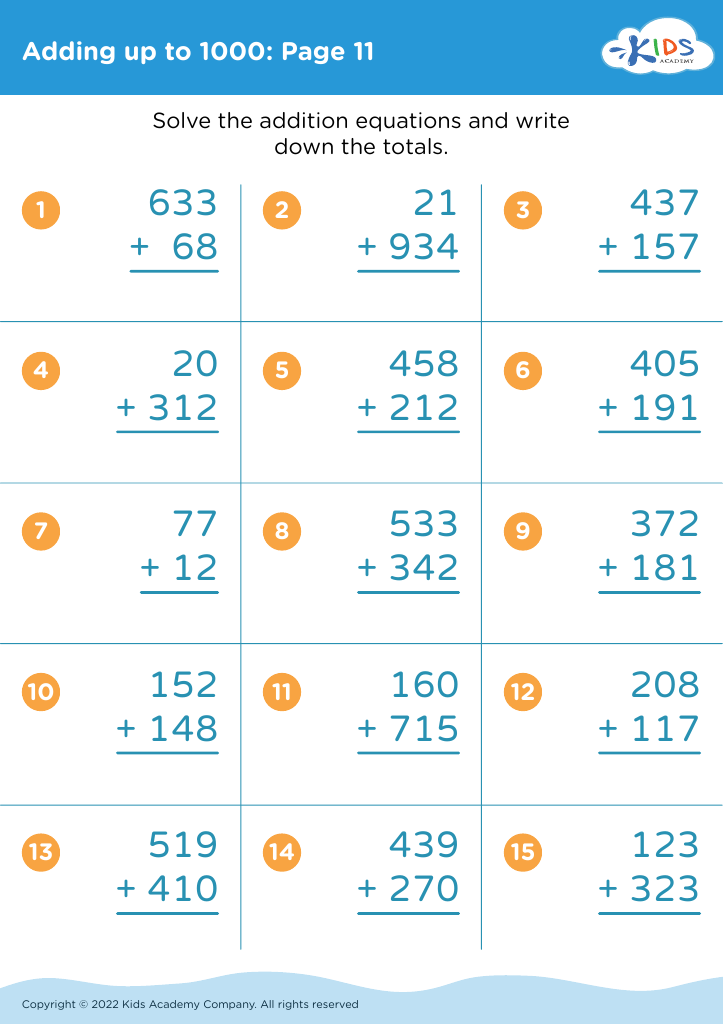
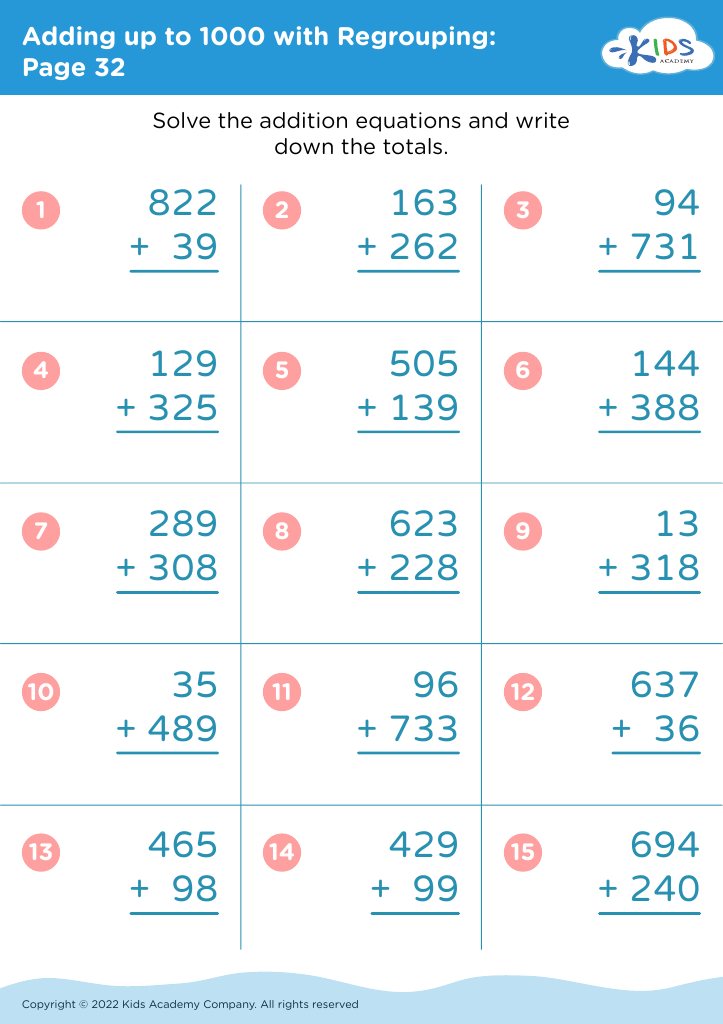
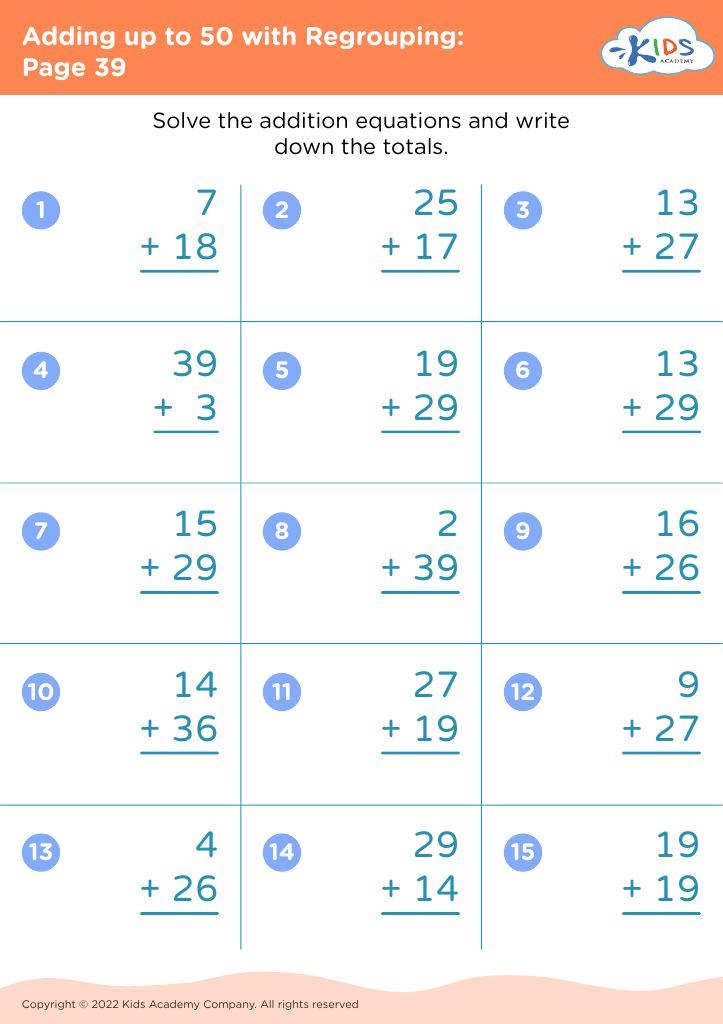
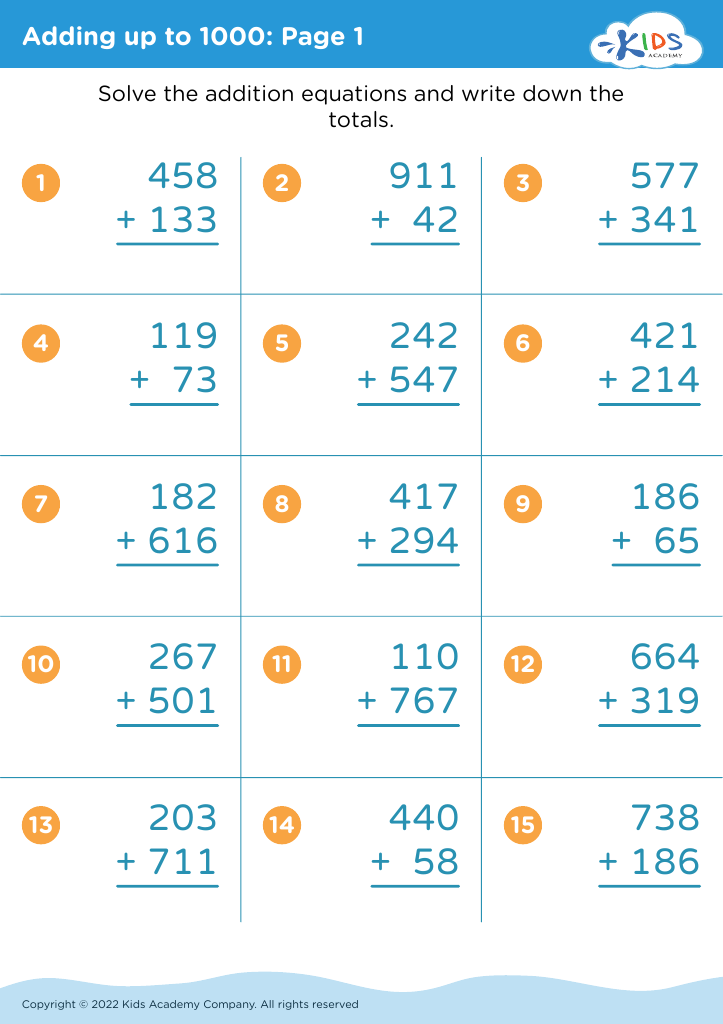
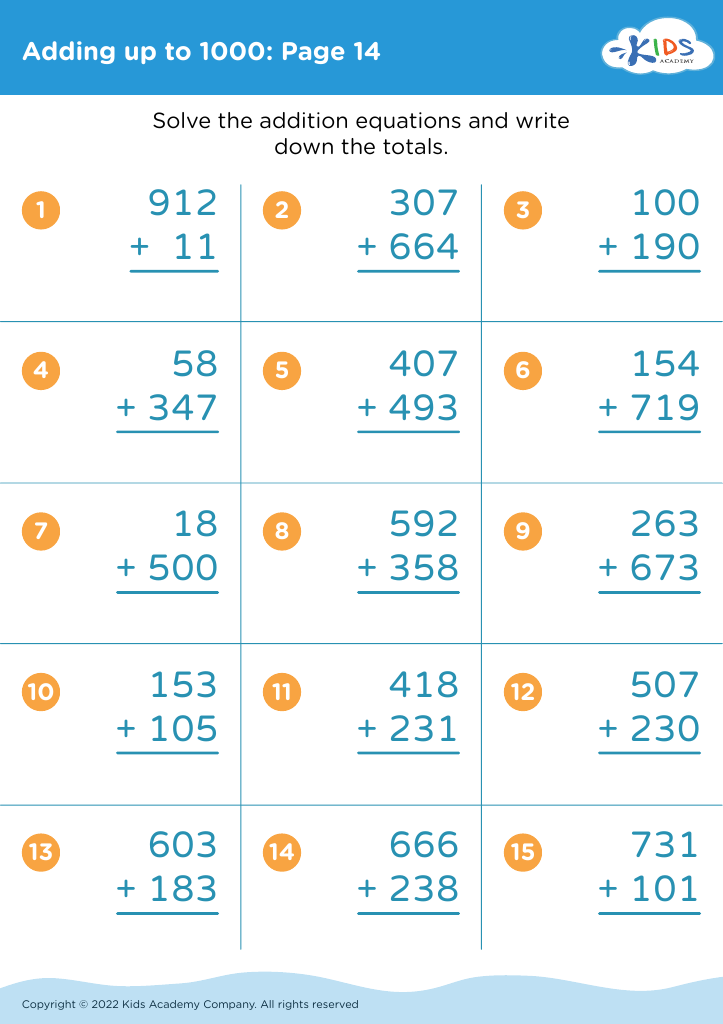
Boost your child's math proficiency with our dedicated Addition & Subtraction Worksheets tailored for 8-year-olds. These engaging, printable worksheets from Kids Academy focus on building strong foundational skills, essential for solving daily math problems. Each sheet provides a variety of interesting activities designed to enhance both addition and subtraction capabilities, all while making learning fun and interactive. Suitable for classroom or at-home practice, our materials are an excellent resource to support your child's educational journey and foster a love for math. Watch your 8-year-old gain confidence and improve their mathematical accuracy today!
Favorites
With answer key
Interactive
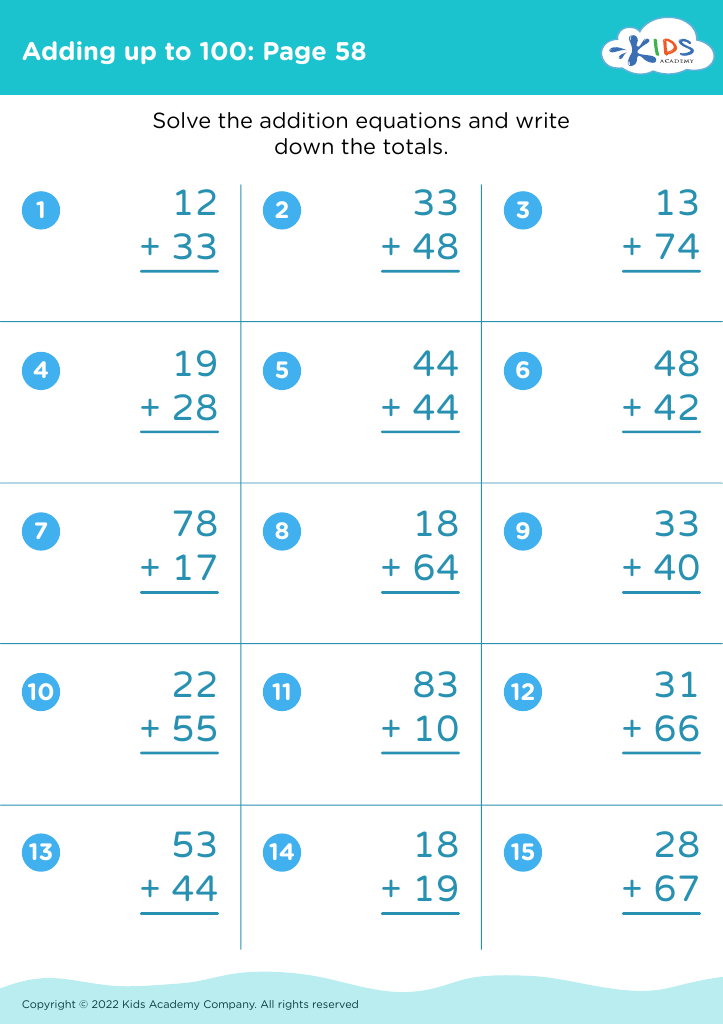
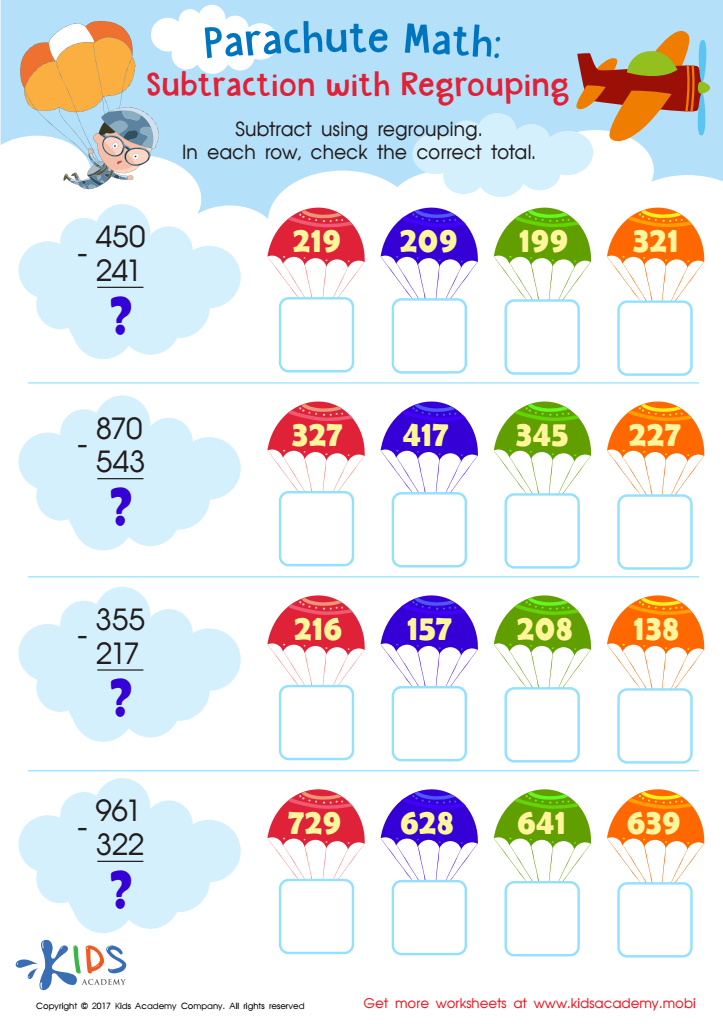
Subtraction with Regrouping for 3rd Grade Worksheet
Kids will have fun mastering subtraction with regrouping with this parachute-themed worksheet! Perfect for 3rd graders, it provides plenty of practice so your child can take to the skies in their math understanding.
 Assign to My Students
Subtraction with Regrouping for 3rd Grade Worksheet
Worksheet
Join Kids Academy for Free
Who is primarily going to use this learning content?








Parents and teachers should care about improving math skills, particularly addition and subtraction, for 8-year-olds because foundational arithmetic skills are the building blocks of later mathematical learning and critical thinking. At this age, children are developing cognitive abilities that allow them to handle abstract concepts more effectively. Proficiency in addition and subtraction ensures they can tackle more advanced topics like multiplication, division, and fractions with confidence.
A good grasp of basic math also extends beyond academics; it enhances problem-solving skills that are essential in everyday life. Children start to understand the value of money, time management, and even basic measurements—all practical skills that backbone daily activities.
Moreover, early success in math can boost a child’s confidence and foster a positive attitude towards the subject, mitigating the onset of math anxiety. When children realize they can successfully solve problems, their enthusiasm for learning grows, seeding long-term academic motivation and persistence.
Parents and teachers play crucial roles in providing the right learning environment and resources, such as games, interactive tools, and encouragement, making the learning process both effective and enjoyable. By focusing on these early skills, they help children set a solid foundation for future studies, equipping them with tools to succeed both academically and in real life.








