Matching skills Addition & Subtraction Worksheets for 8-Year-Olds
3 filtered results
-
From - To
Enhance your child's math skills with our engaging Matching Skills Addition & Subtraction Worksheets designed specifically for 8-year-olds. These printable worksheets promote critical thinking and reinforce fundamental math concepts through interactive matching activities. Students will practice pairing related addition and subtraction problems, fostering their understanding of these essential operations while keeping learning fun. Ideal for use at home or in the classroom, these worksheets are designed to boost confidence and proficiency in math. Download now to provide your child with valuable practice that helps solidify their arithmetic skills and enhances their overall learning experience! Suitable for all young math learners.
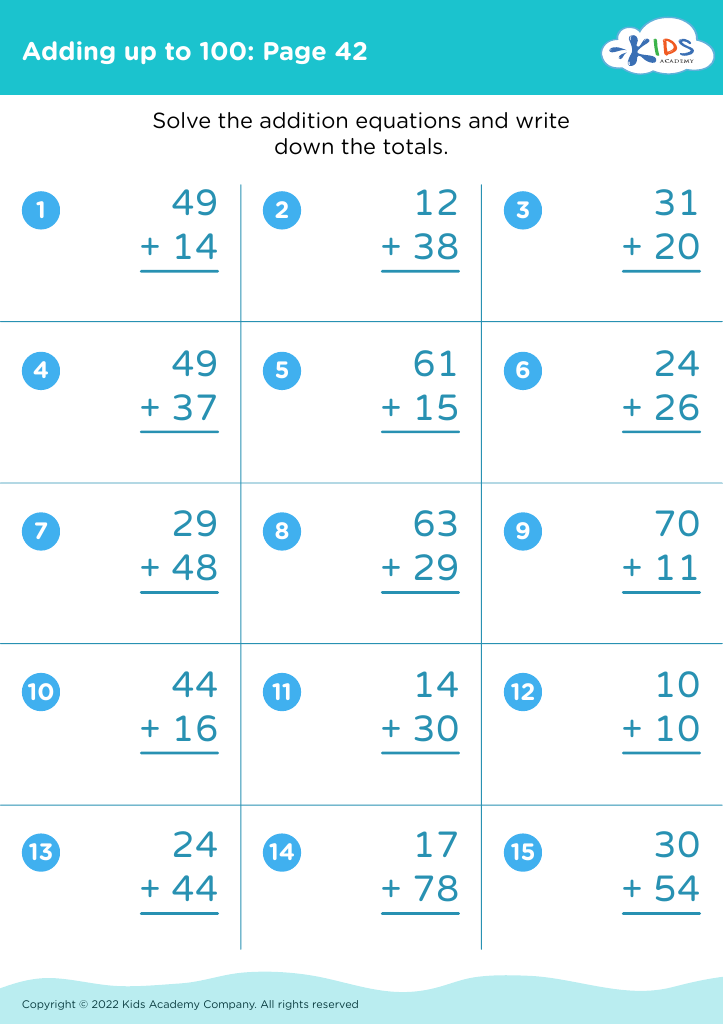
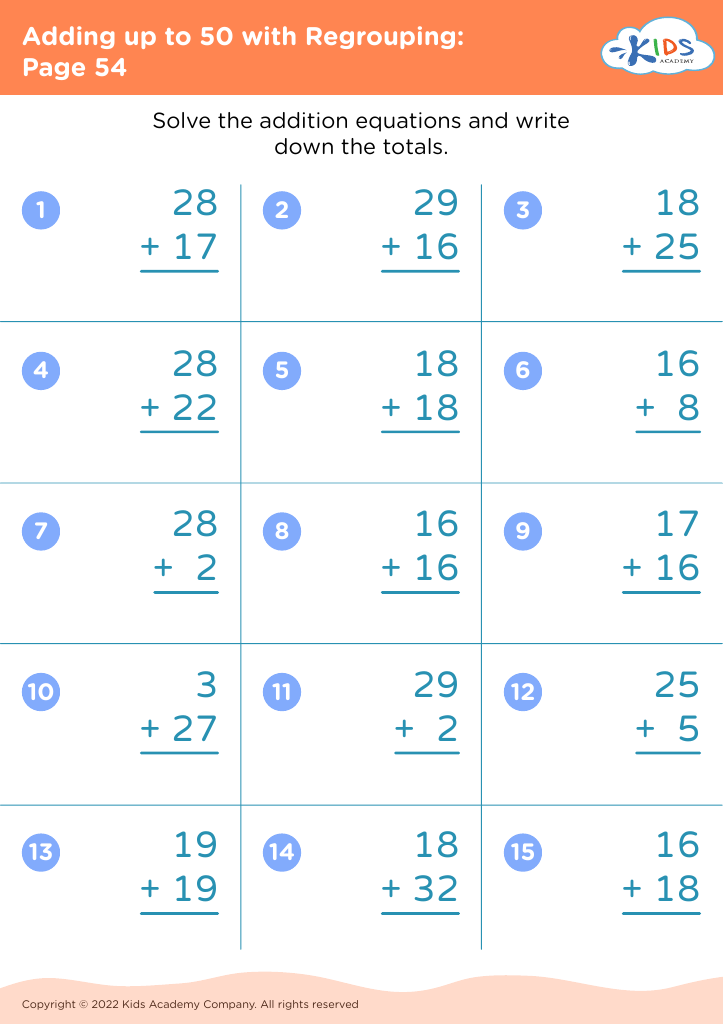
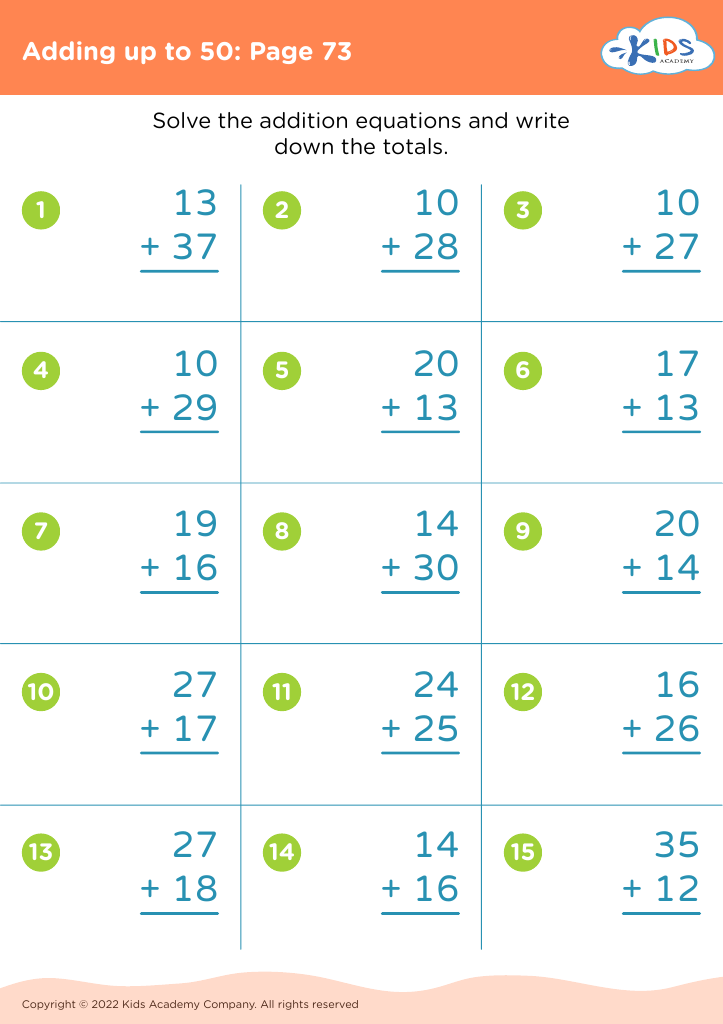








Matching skills in addition and subtraction are crucial for 8-year-olds as these foundational math skills underpin a child's overall academic success and cognitive development. At this age, children are transitioning from simple arithmetic to more complex problem-solving situations, making it essential for them to confidently manipulate numbers. By honing their addition and subtraction abilities, kids not only develop mathematical fluency, but also improve their critical thinking and reasoning skills.
Moreover, mastering these basic operations prepares students for higher-level math, which they will encounter in subsequent grades. Parents and teachers should recognize that strong matching skills enhance a child's confidence and independence in learning—allowing them to approach assignments with a sense of accomplishment. Furthermore, these operations are not isolated; they appear in various real-world contexts, from budgeting to measuring, which underscores their practical importance.
Encouraging practice in matching addition and subtraction skills can bridge gaps in understanding and help identify areas where support is needed. Engaging children through games, activities, and open discussions about math fosters a positive attitude towards learning. In essence, prioritizing these skills is an investment in a child's future, promoting a lifelong appreciation for mathematics.








