Number comparison Addition & Subtraction Worksheets for 8-Year-Olds
3 filtered results
-
From - To
Discover engaging Number Comparison Worksheets designed for 8-year-olds to enhance their addition and subtraction skills! Our specially curated resources help children compare numbers easily, fostering foundational math skills essential for early learners. These printable worksheets are filled with fun, age-appropriate exercises that challenge students to identify greater or smaller numbers, ultimately boosting their understanding of numerical relationships. Ideal for both classroom and home use, our worksheets promote critical thinking and problem-solving abilities. With a variety of activities to keep young minds intrigued, these worksheets provide an excellent way to practice math in an enjoyable manner. Start your child’s math journey today!
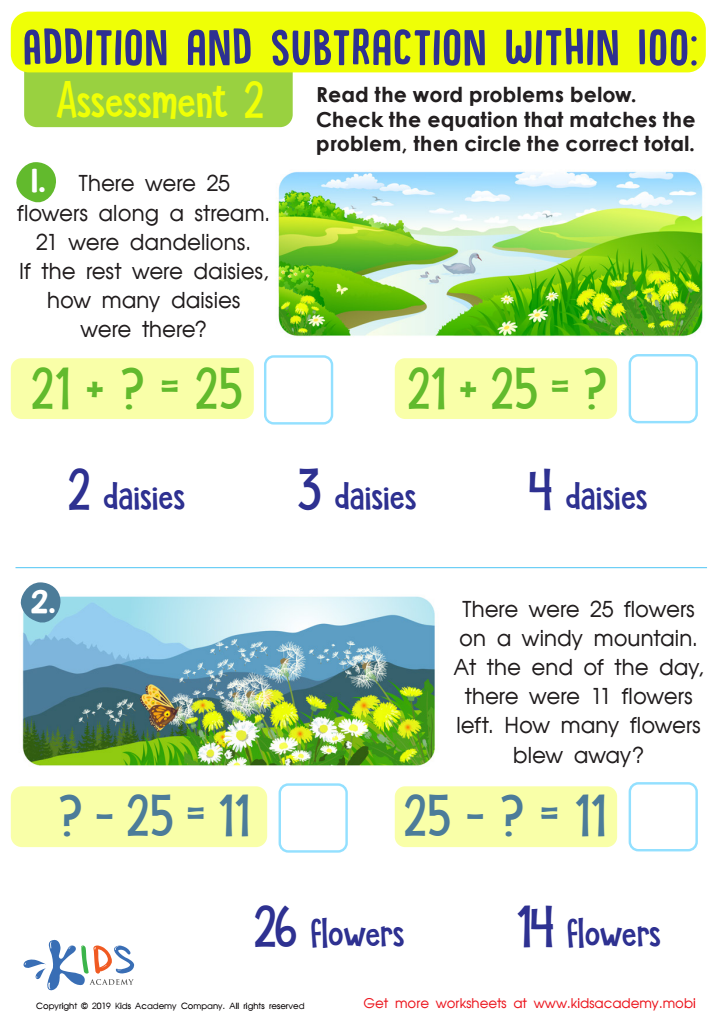
Assessment 2 Math Worksheet
 Assign to My Students
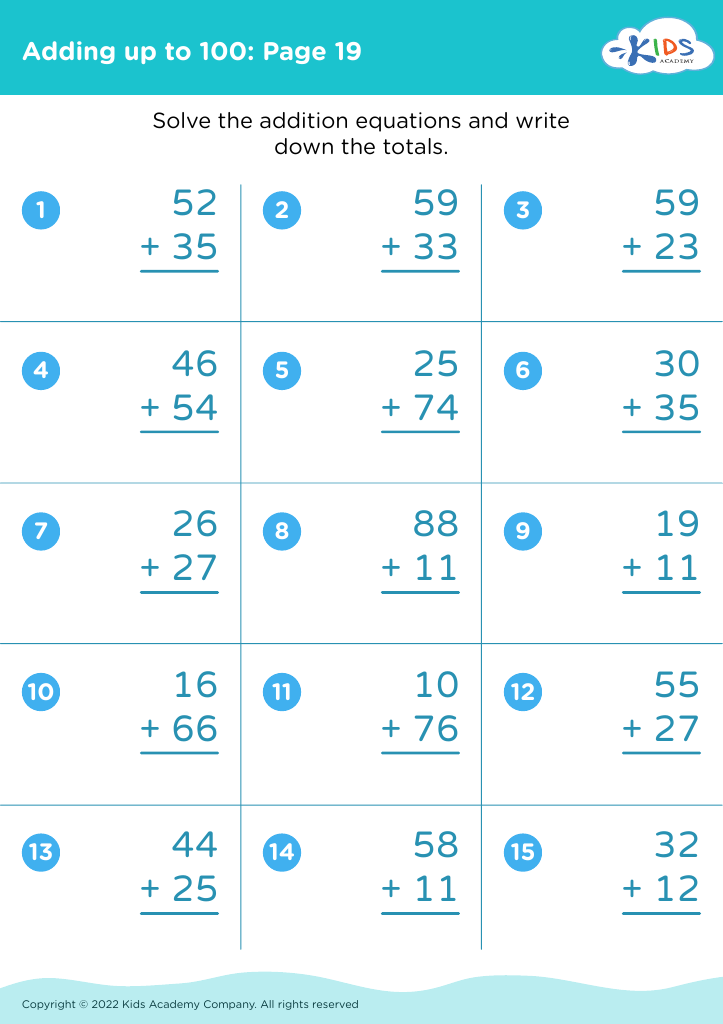
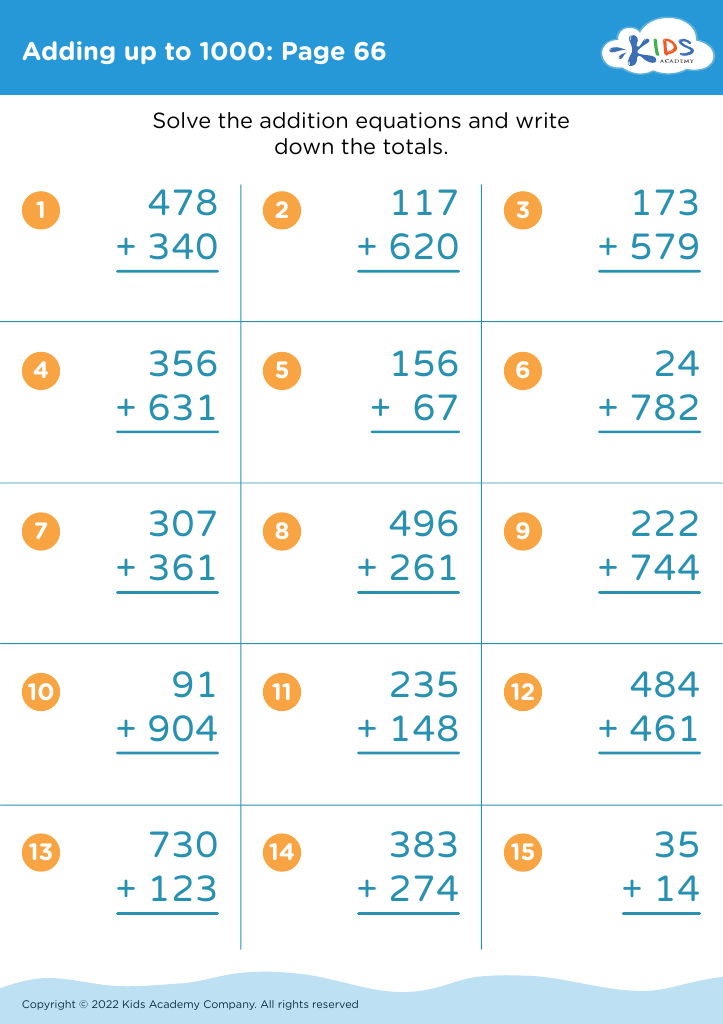








Number comparison, addition, and subtraction are fundamental skills for 8-year-olds that lay the foundation for future mathematical understanding. At this age, children are transitioning from basic arithmetic to more complex problem-solving. Mastering these skills fosters logical thinking and develops a child's ability to analyze numerical relationships.
By prioritizing number comparison, parents and teachers help children learn to identify larger or smaller quantities, which is crucial for everyday decision-making. This skill supports their understanding of place value, fractions, and even early concepts of algebra. Moreover, proficiency in addition and subtraction empowers children to tackle a wide range of problems efficiently, enhancing their confidence in math.
Encouraging practice in these areas also cultivates persistence and resilience, essential traits for academic success. As children grasp the relationships between numbers, they develop a strong number sense, which is linked to their performance in later, more advanced math topics.
Ultimately, fostering these foundational skills equips children not just for academic pursuits but for real-life situations involving budgeting, time management, and various everyday calculations. Thus, parents and teachers play a crucial role in promoting numeracy skills that will serve children throughout their educational journey and beyond.








