Filters

140 filtered results

Clear all filters
Favorites
With answer key
Interactive

140 filtered results

Difficulty Level

Grade


Check out this FREE Trial Lesson on Addition & Subtraction for age 8!

Z

Favorites
With answer key
Interactive
  • 8
  • Number Recognition
  • Addition & Subtraction
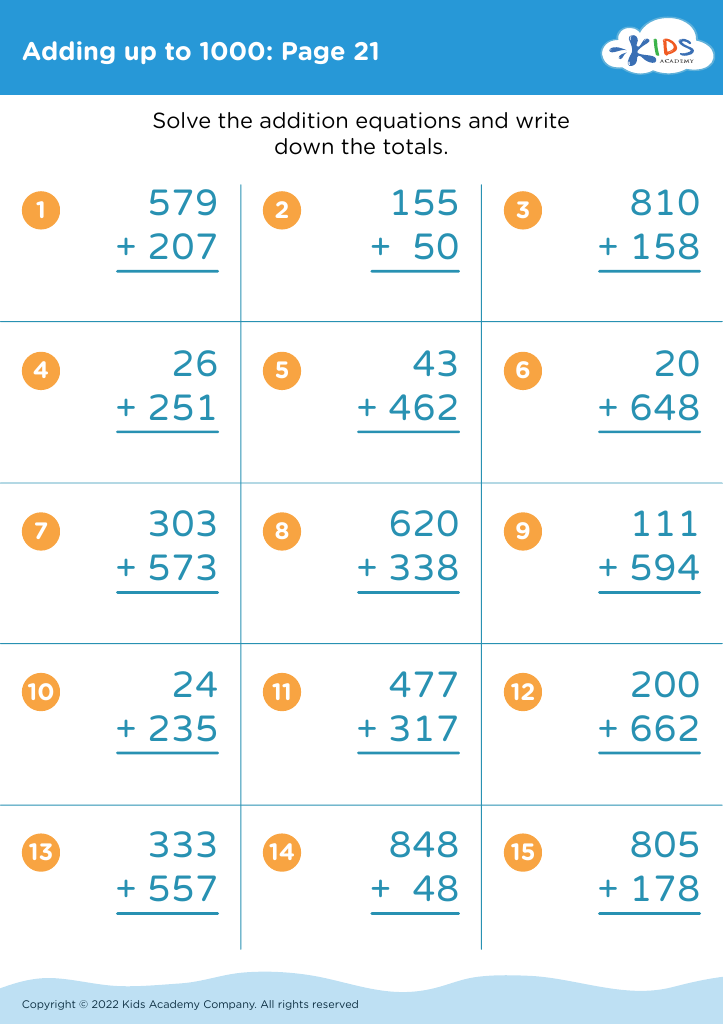
Adding up to 1000: Page 21

Adding up to 1000: Page 21

Adding up to 1000: Page 21
Worksheet
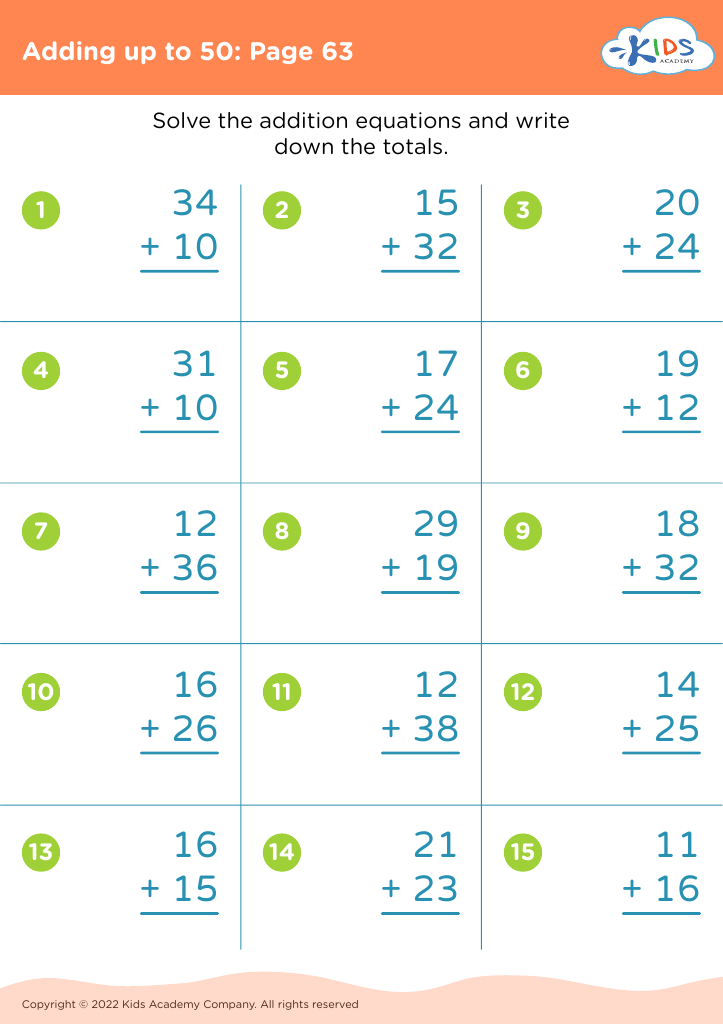
Adding up to 50: Page 63

Adding up to 50: Page 63

Adding up to 50: Page 63
Worksheet
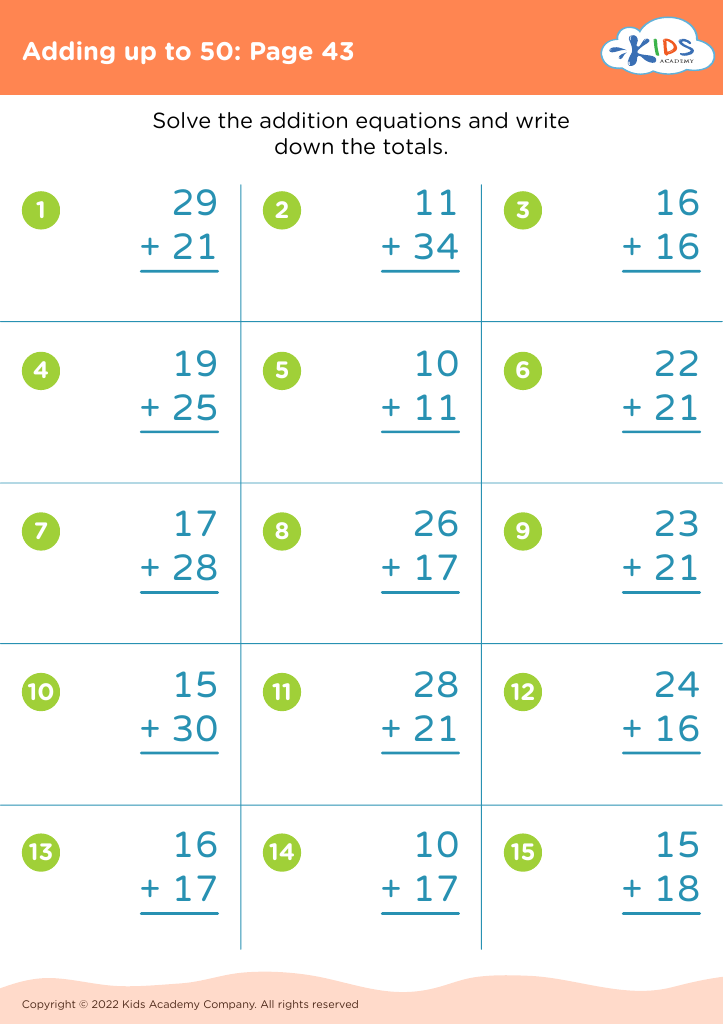
Adding up to 50: Page 43

Adding up to 50: Page 43

Adding up to 50: Page 43
Worksheet
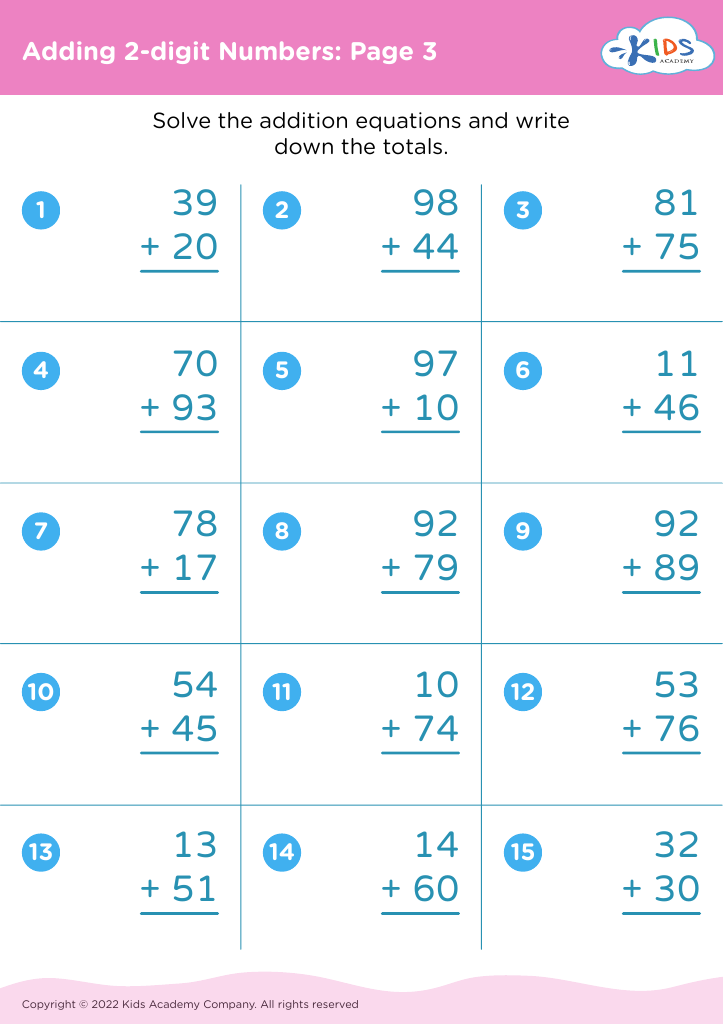
Adding 2-digit Numbers: Page 3

Adding 2-digit Numbers: Page 3

Adding 2-digit Numbers: Page 3
Worksheet
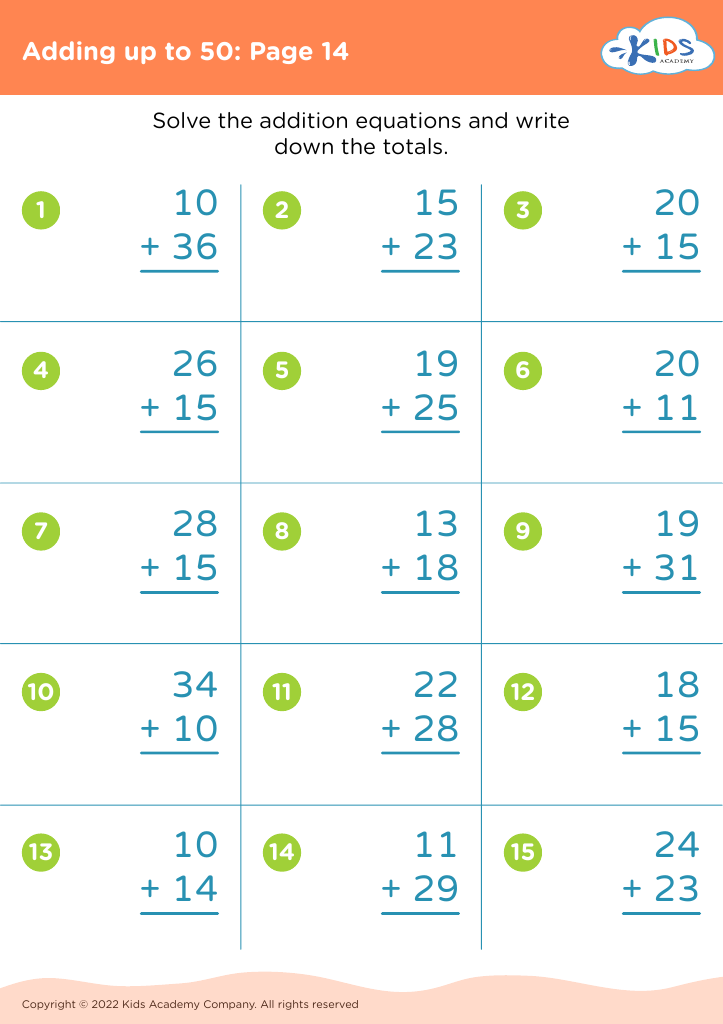
Adding up to 50: Page 14

Adding up to 50: Page 14

Adding up to 50: Page 14
Worksheet
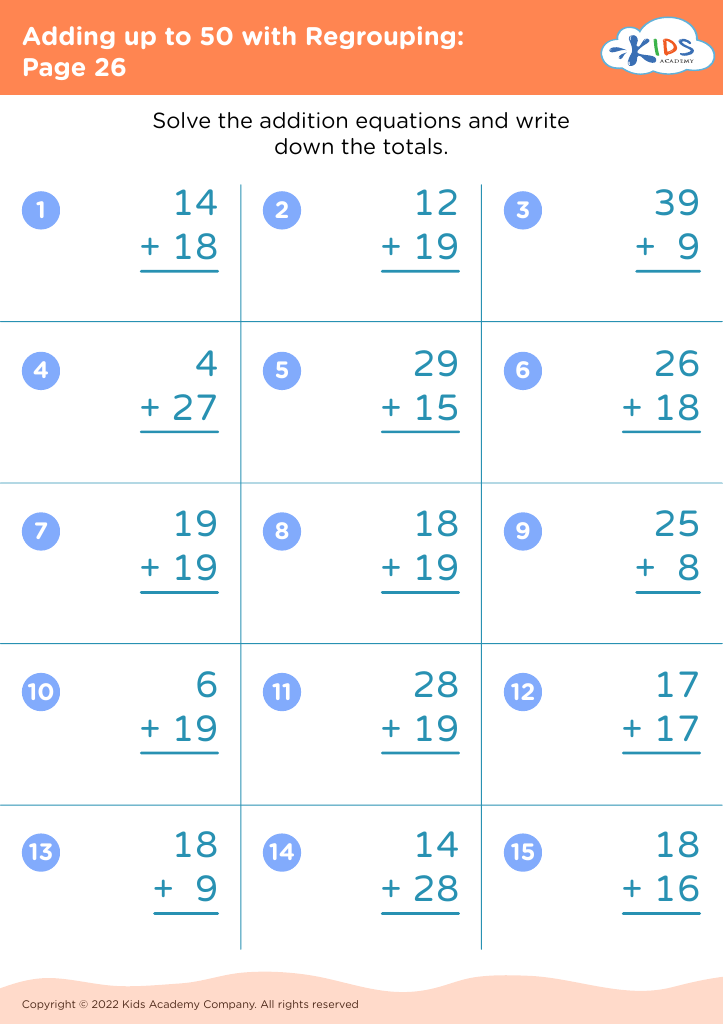
Adding up to 50 with Regrouping: Page 26
Worksheet
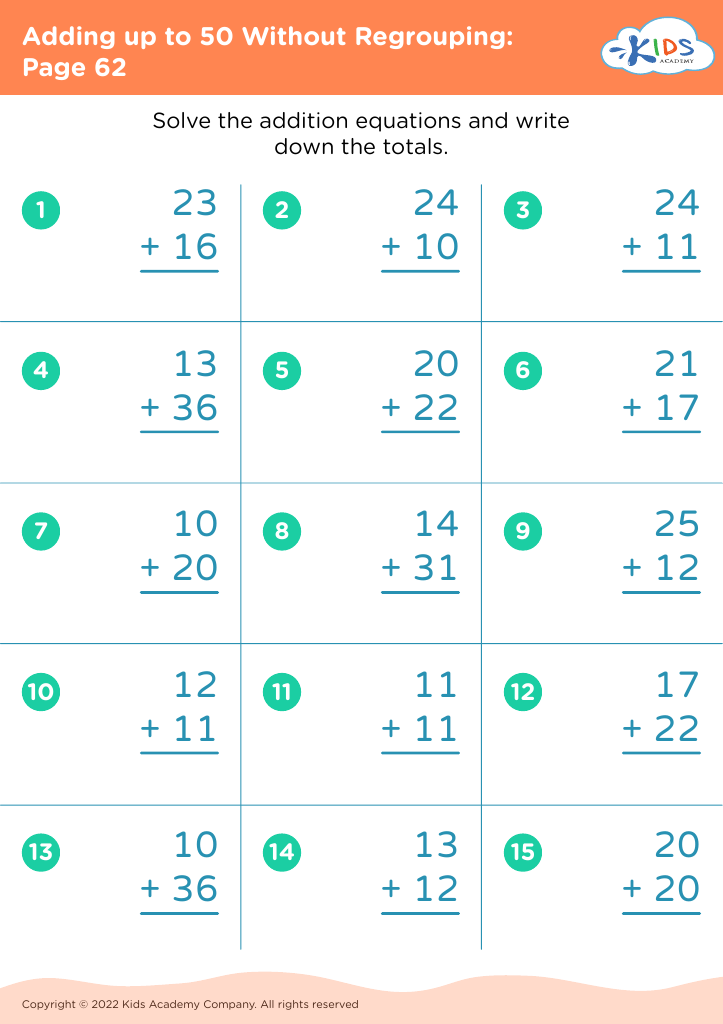
Adding up to 50 Without Regrouping: Page 62
Worksheet
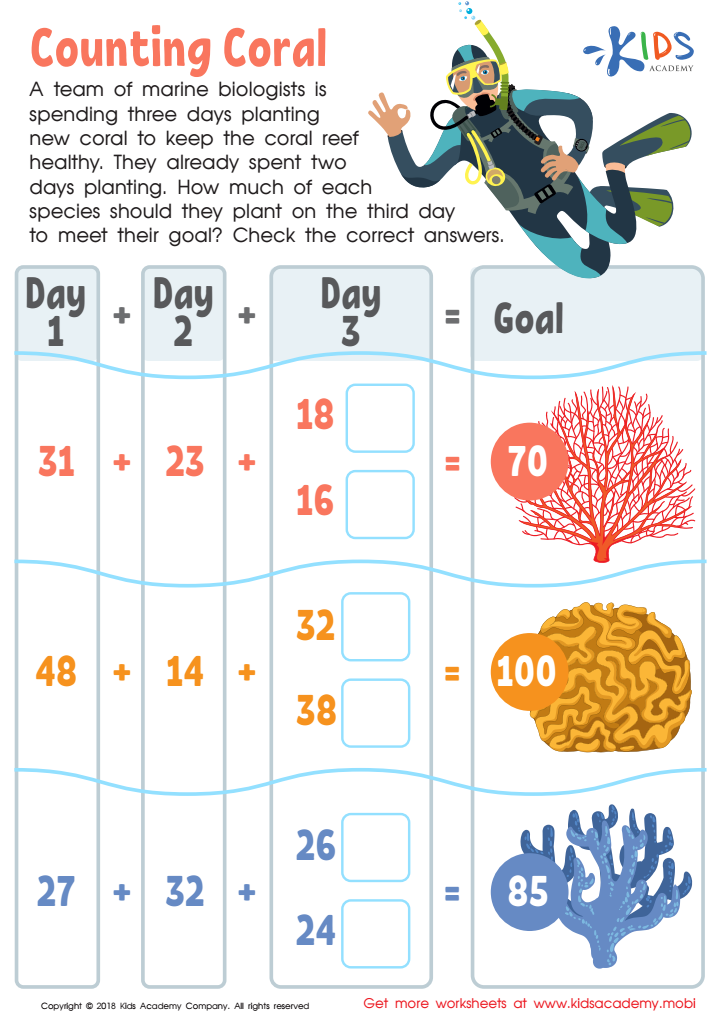
Counting Coral Worksheet

Counting Coral Worksheet

Introduce your child to the team of marine biologists planting coral to keep a reef healthy. They've planted for two days and need to figure out how much of each specie to plant on the third day to reach their goal. Help your child answer the questions on the printout and learn what it takes to be a marine biologist.
Counting Coral Worksheet
Worksheet
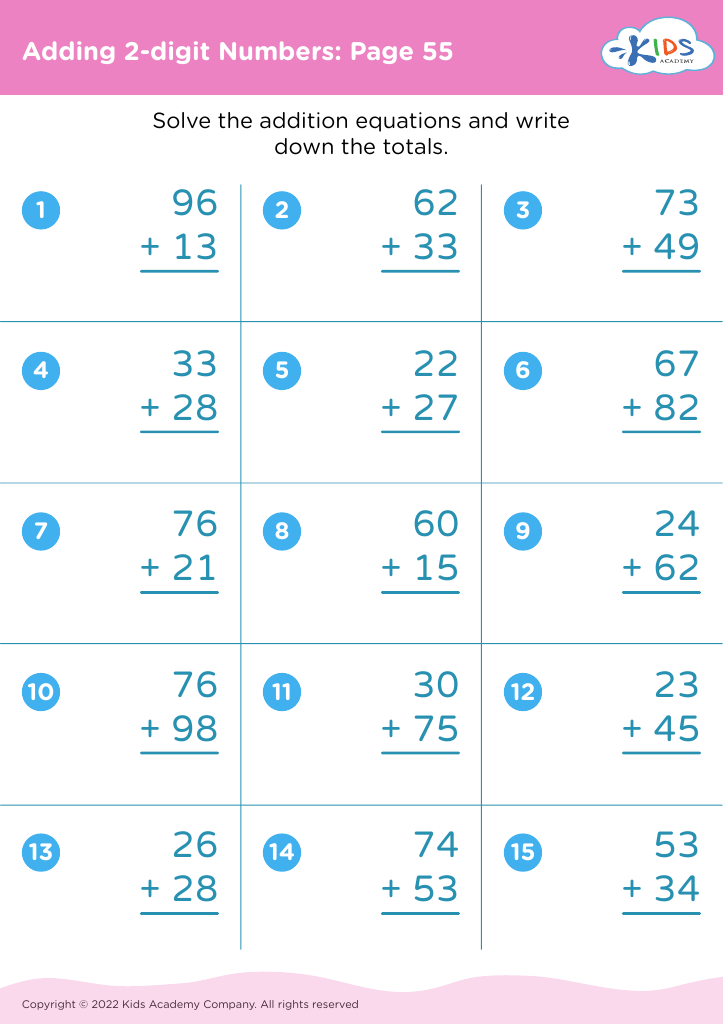
Adding 2-digit Numbers: Page 55

Adding 2-digit Numbers: Page 55

Adding 2-digit Numbers: Page 55
Worksheet
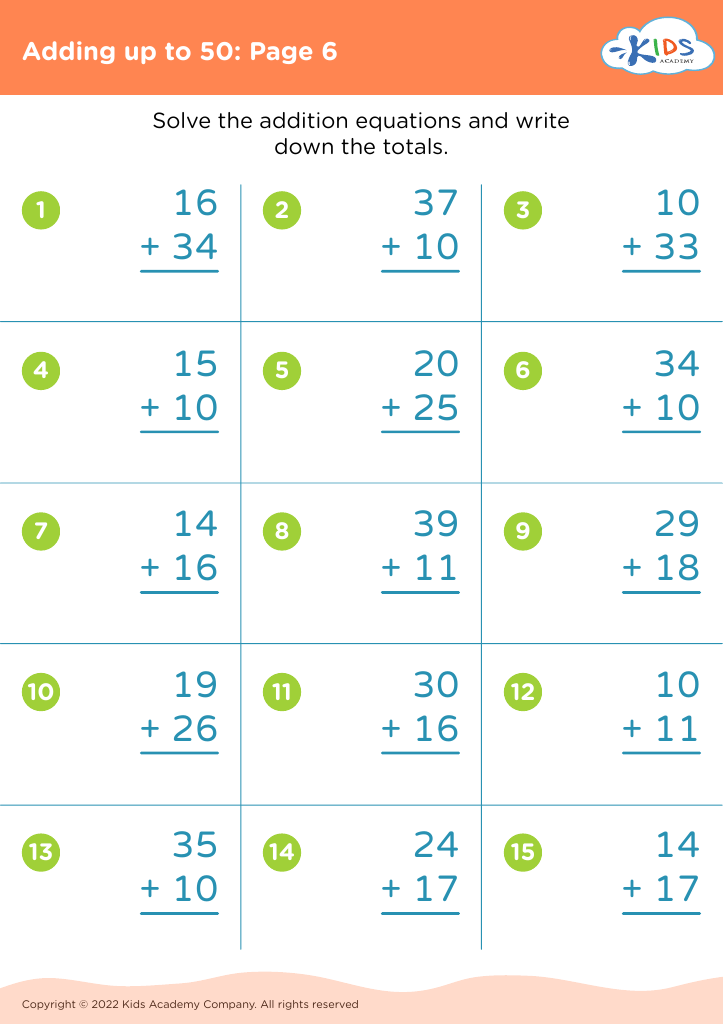
Adding up to 50: Page 6

Adding up to 50: Page 6

Adding up to 50: Page 6
Worksheet
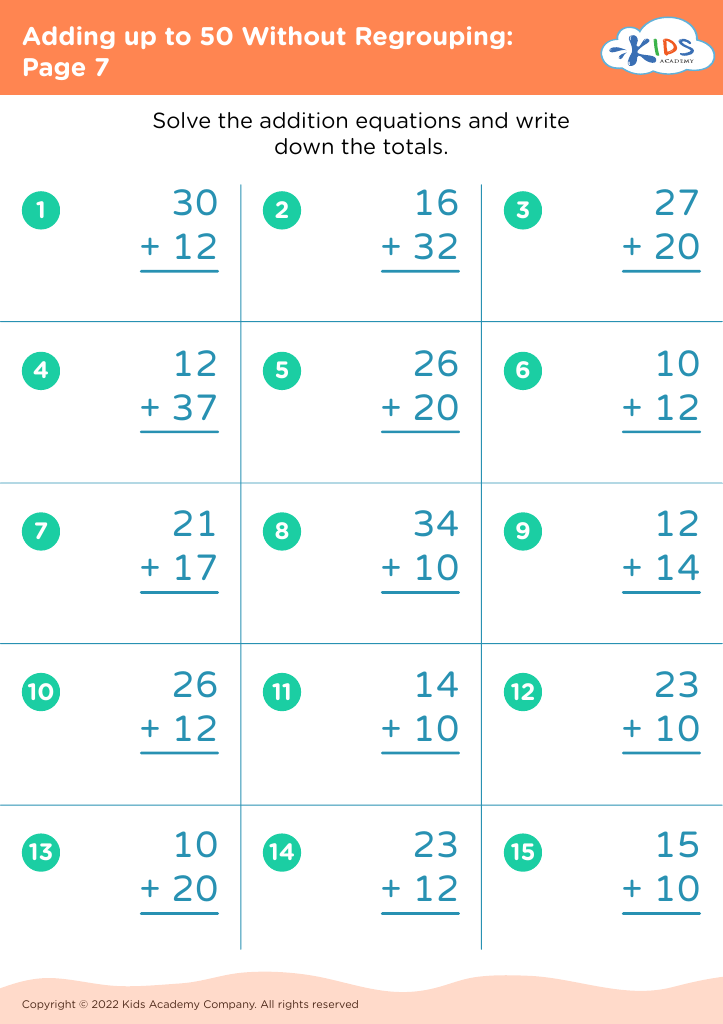
Adding up to 50 Without Regrouping: Page 7
Worksheet
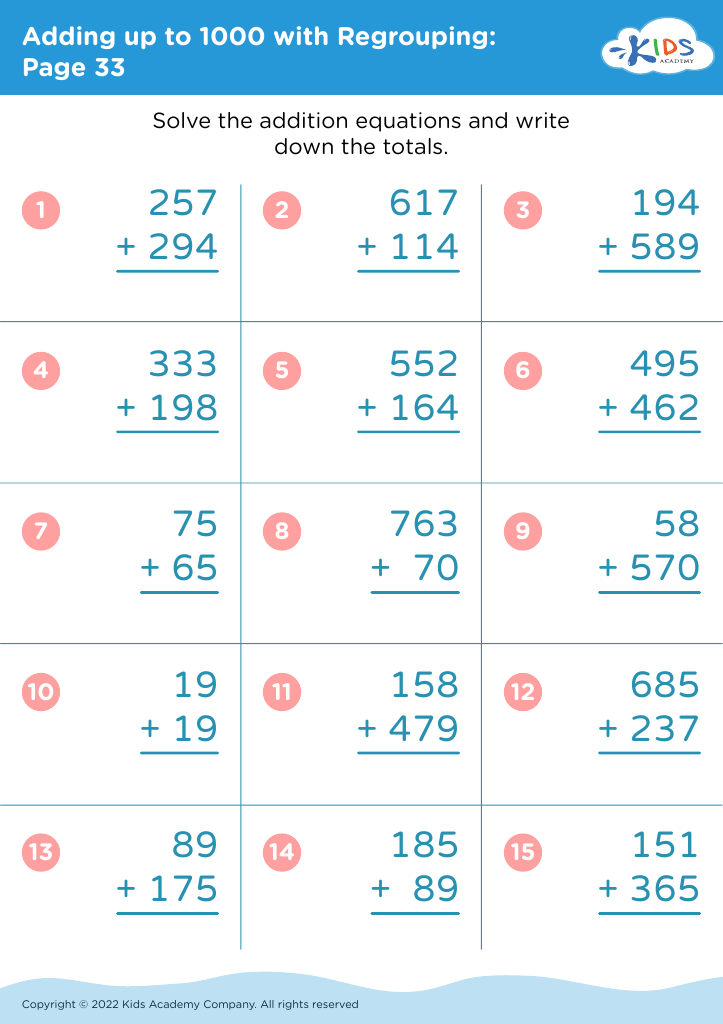
Adding up to 1000 with Regrouping: Page 33
Worksheet
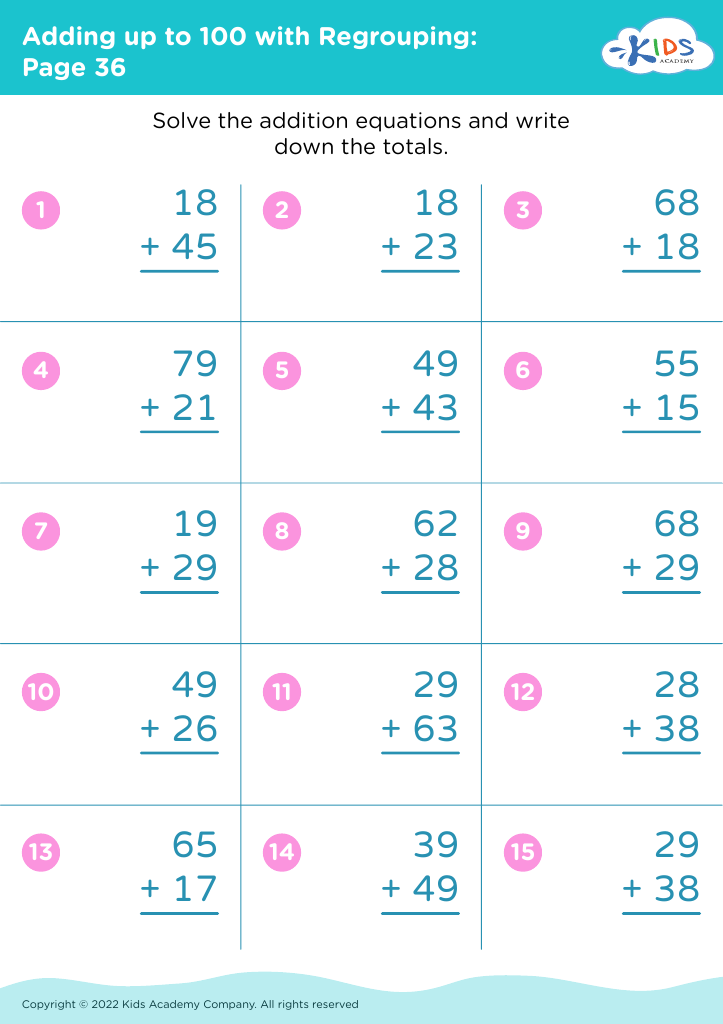
Adding up to 100 with Regrouping: Page 36
Worksheet
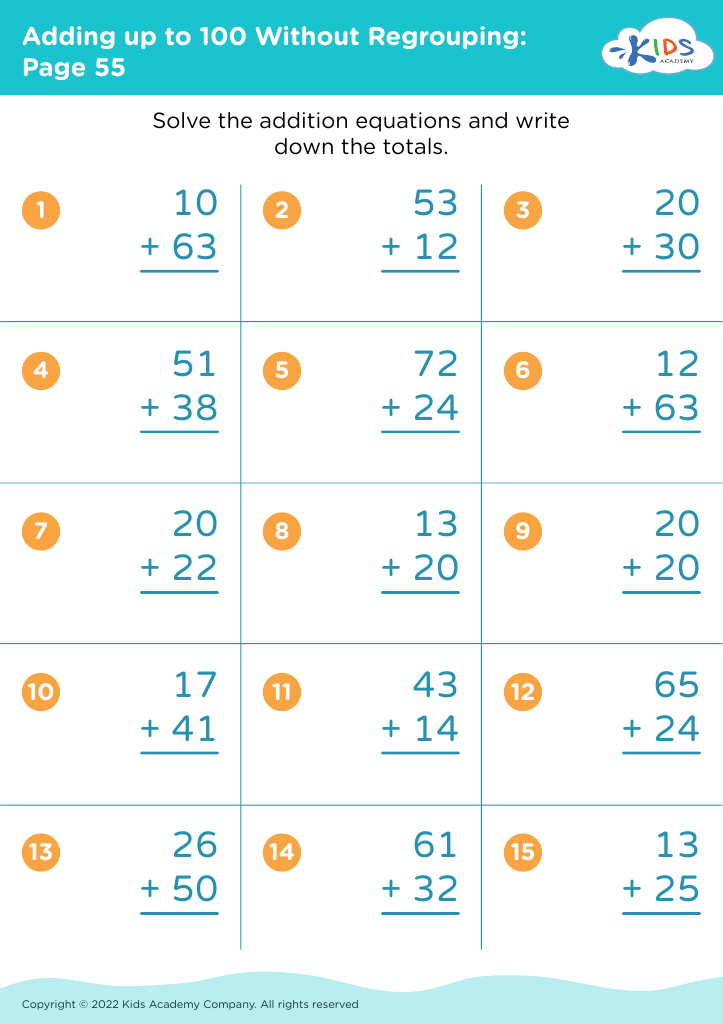
Adding up to 100 Without Regrouping: Page 55
Worksheet
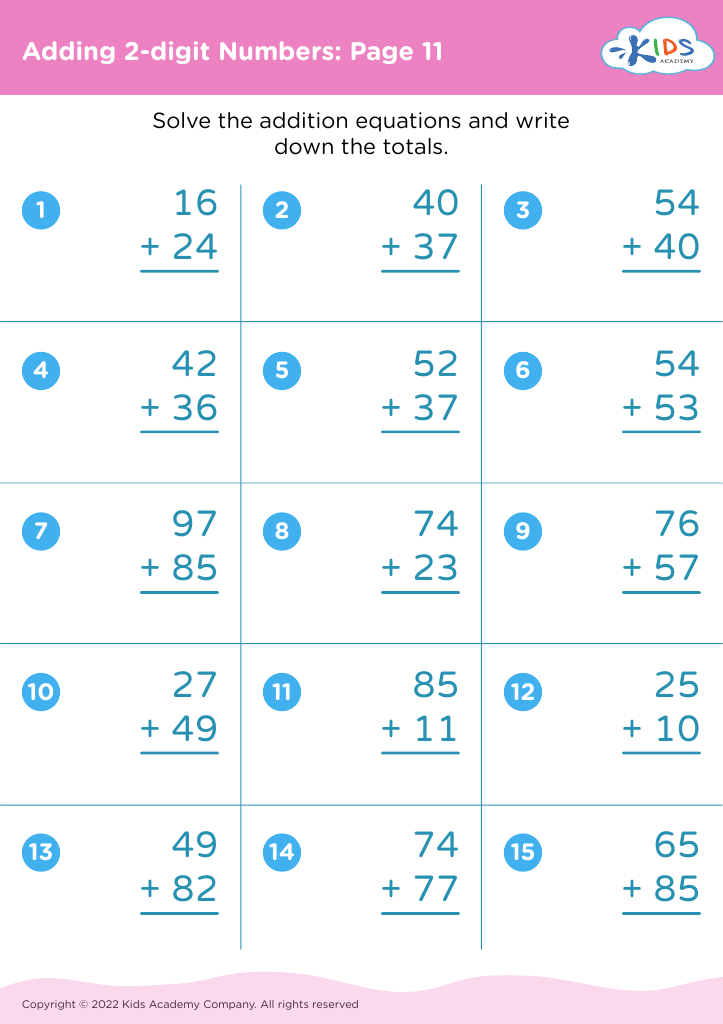
Adding 2-digit Numbers: Page 11

Adding 2-digit Numbers: Page 11

Adding 2-digit Numbers: Page 11
Worksheet
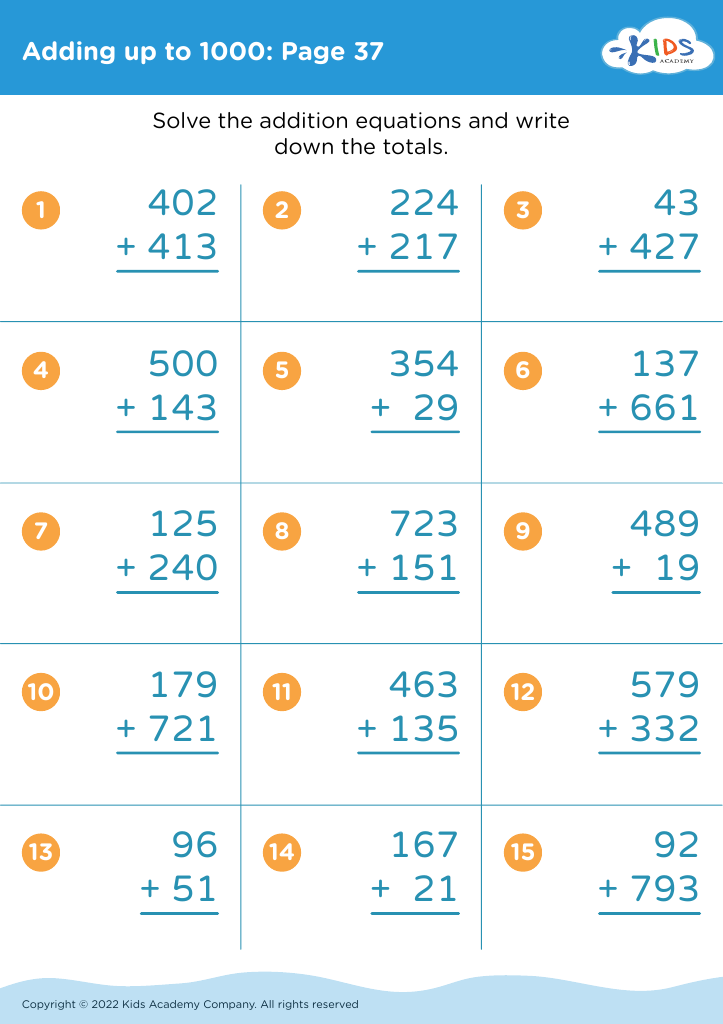
Adding up to 1000: Page 37

Adding up to 1000: Page 37

Adding up to 1000: Page 37
Worksheet
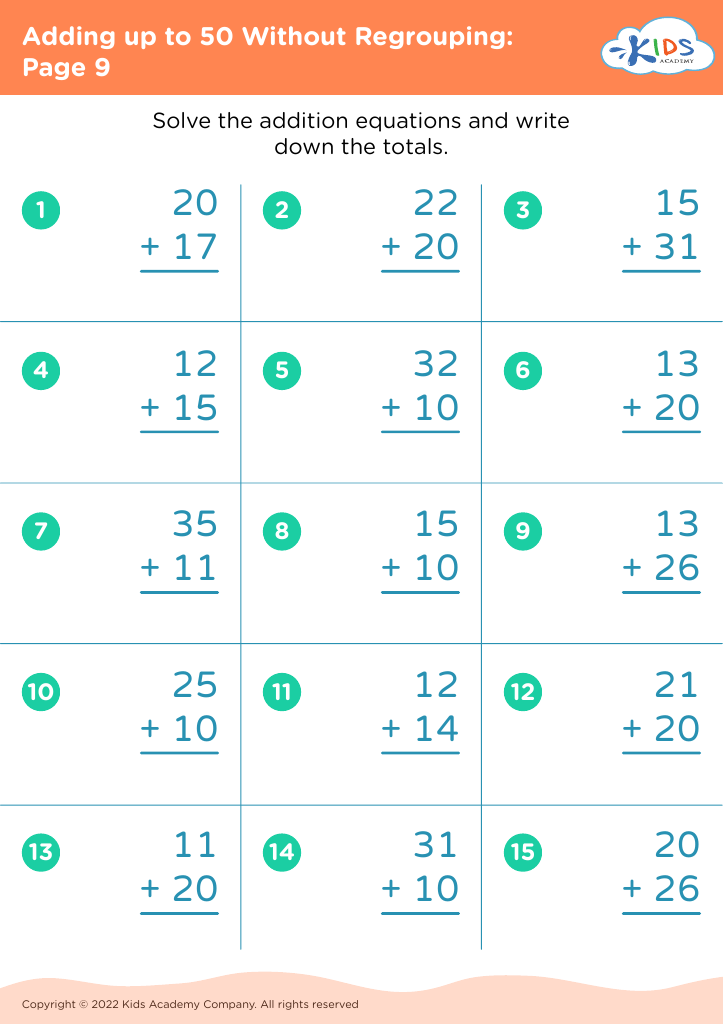
Adding up to 50 Without Regrouping: Page 9
Worksheet
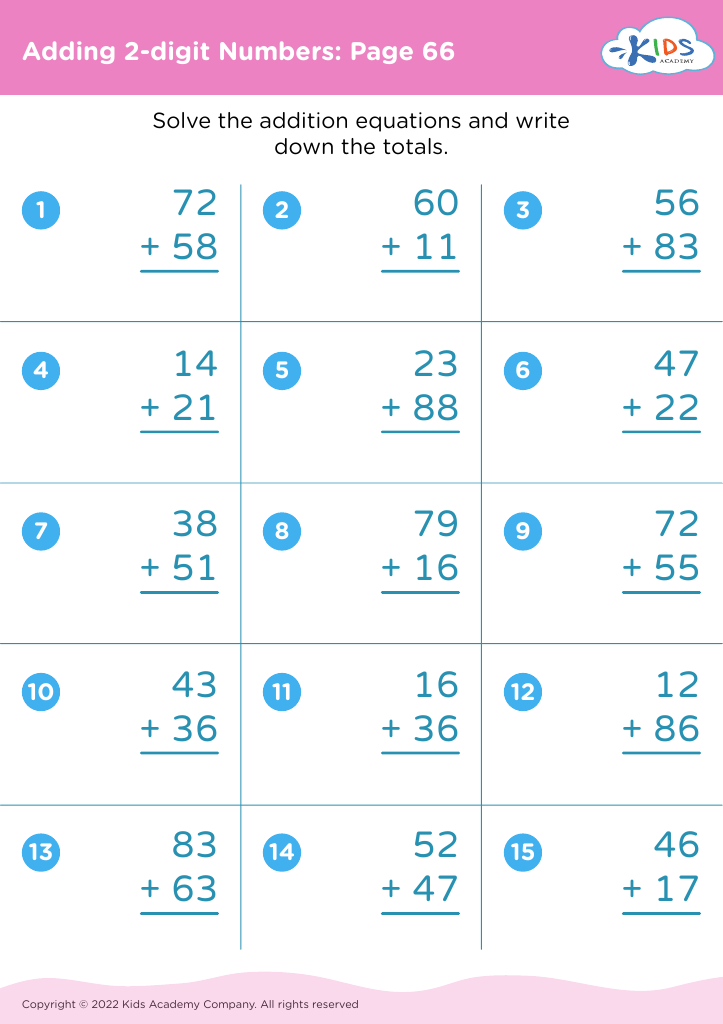
Adding 2-digit Numbers: Page 66

Adding 2-digit Numbers: Page 66

Adding 2-digit Numbers: Page 66
Worksheet
Counting in Your Community Worksheet
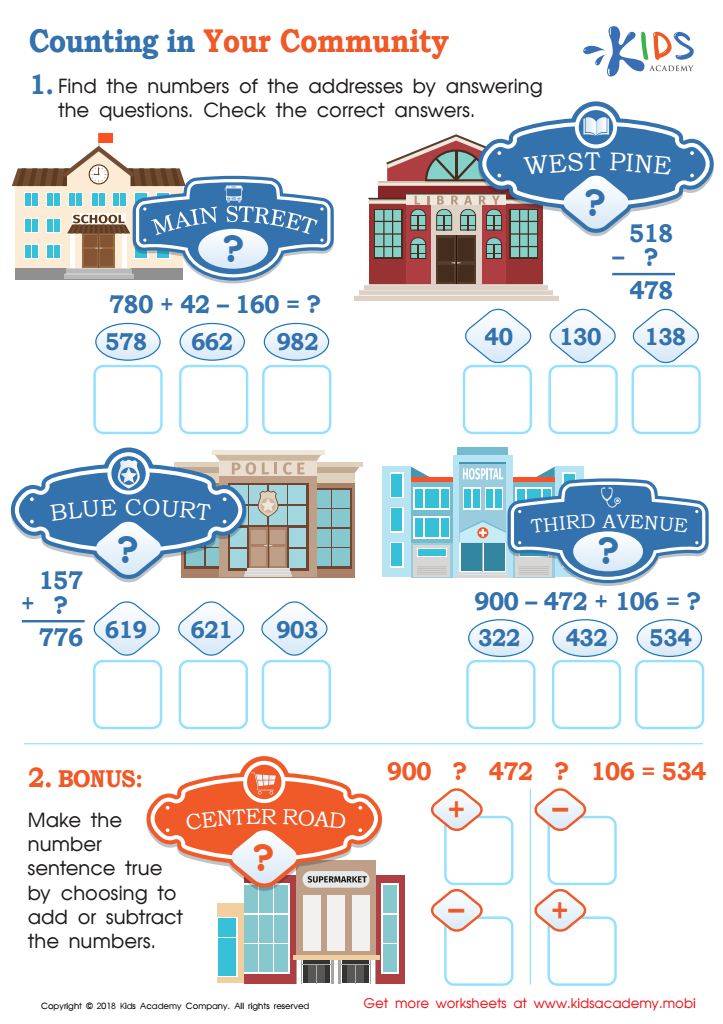
Counting in Your Community Worksheet
Introduce your kids to the idea of a community, where different people and buildings co-exist, each playing their part for the community's progress. Ask them to name the buildings they see in their community. Then work through this worksheet to find the numbers of the addresses by answering the questions. Check the answers once they've solved the equations.
Counting in Your Community Worksheet
Worksheet
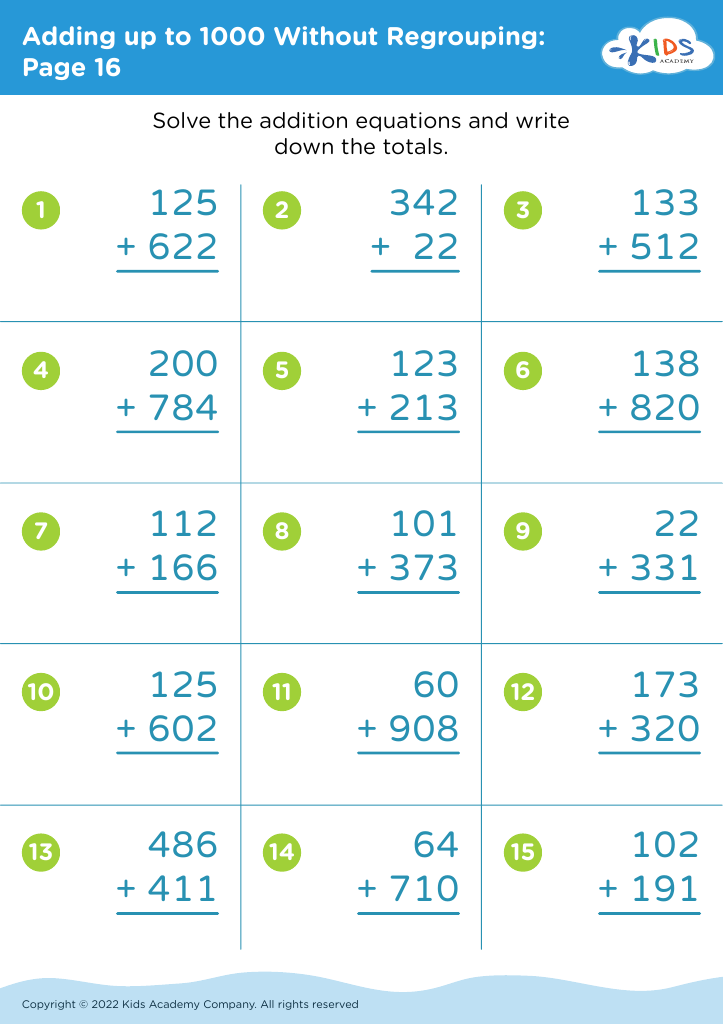
Adding up to 1000 Without Regrouping: Page 16
Worksheet
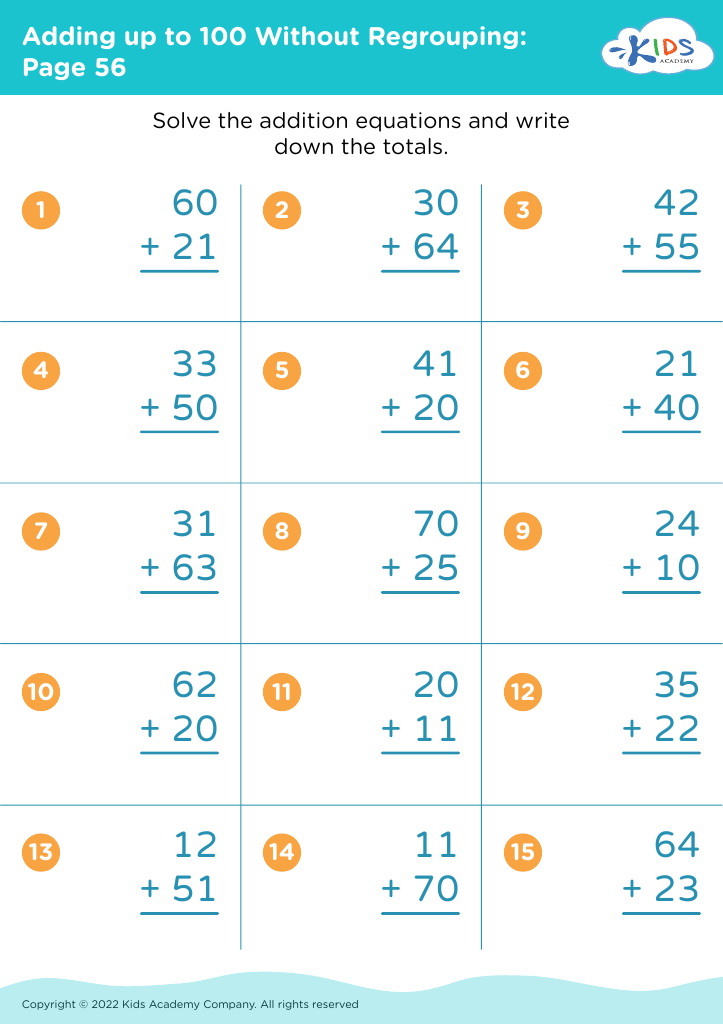
Adding up to 100 Without Regrouping: Page 56
Worksheet
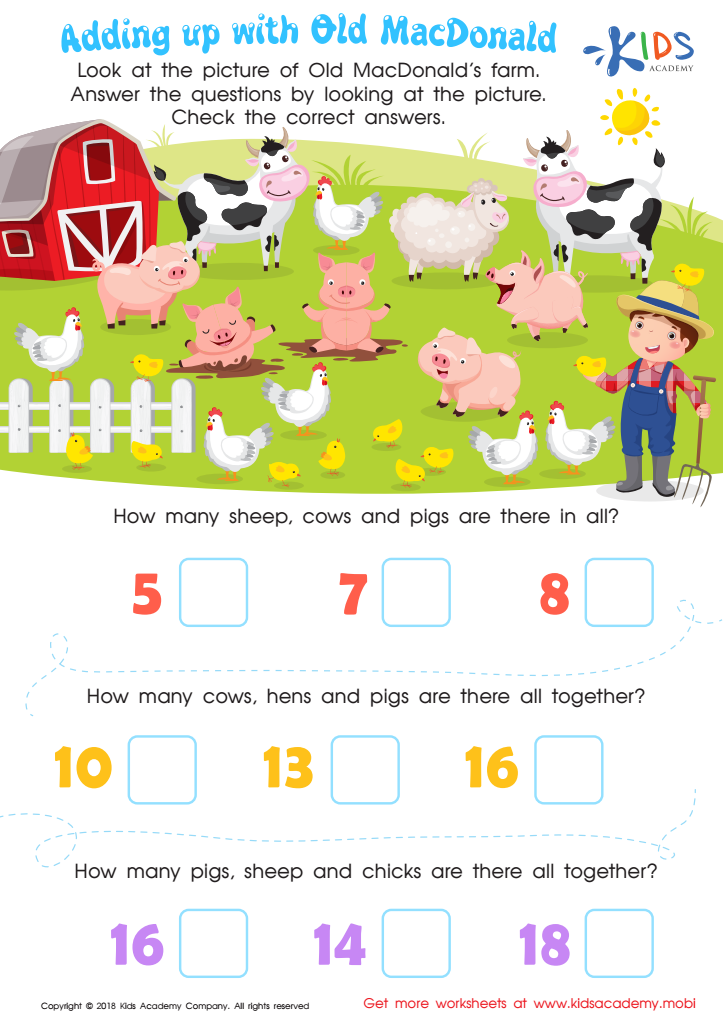
Adding Up with Old MacDonald Worksheet

Adding Up with Old MacDonald Worksheet

Old MacDonald needs help counting his animals! Give your little math whiz a fun challenge with a free PDF worksheet. They'll love counting the animals and doing basic addition with two or three addends. Who knew math could be so much fun on the farm?
Adding Up with Old MacDonald Worksheet
Worksheet
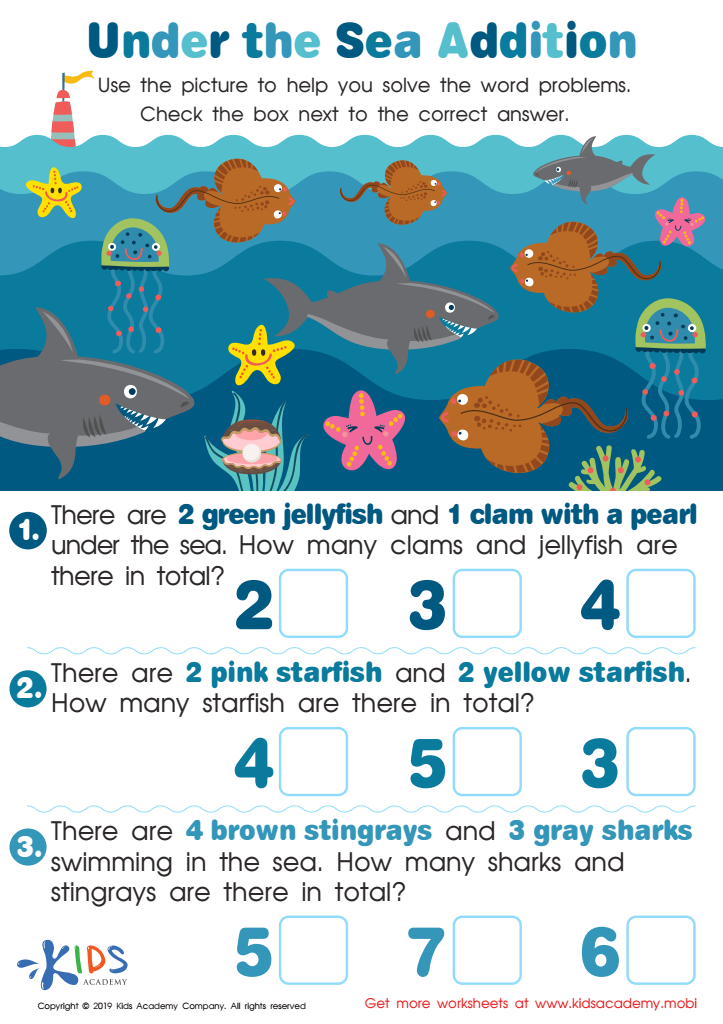
Under the Sea Addition Worksheet

Under the Sea Addition Worksheet

Ask your kids to identify undersea animals in a picture, then solve the word problems at the bottom with it! If they're into the nature channel or marine life, they'll love this worksheet. Check the box next to the correct answer for each one. 80 words
Under the Sea Addition Worksheet

Worksheet
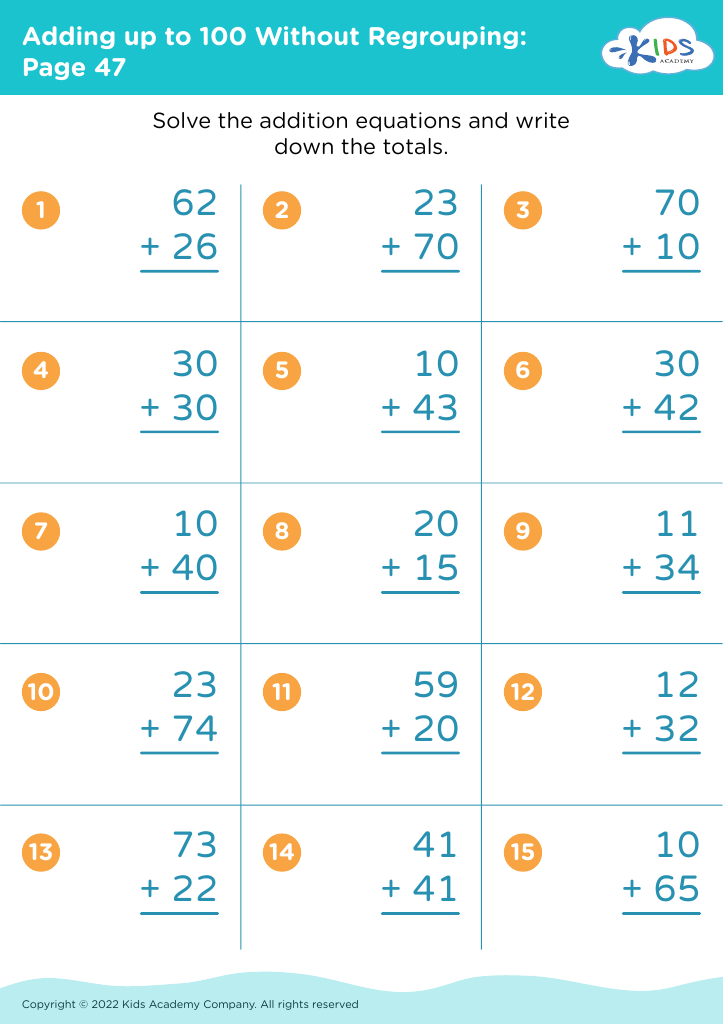
Adding up to 100 Without Regrouping: Page 47
Worksheet


Parents and teachers should pay close attention to number recognition, addition, and subtraction at the age of 8 because these foundational math skills are critical for a child's overall educational development. At this stage, children transition from basic counting to more complex arithmetic, necessitating a solid understanding of number concepts.

First, number recognition helps kids identify and understand the value of individual digits, enabling them to perform basic mathematical operations. This recognition lays the groundwork for more advanced subjects like multiplication, division, and algebra.

Secondly, addition and subtraction skills are essential because they form the basis for nearly all future math learning. Understanding these concepts enhances problem-solving abilities and logical thinking. For example, when children grasp how to add and subtract, they build the skills necessary to tackle word problems, sequence events, and understand spatial relationships—all of which are integral in subjects beyond mathematics.

Moreover, proficiency in these areas boosts a child's confidence and fosters a positive attitude towards learning. Early successes with number recognition, addition, and subtraction can set the tone for future academic pursuits, making students more likely to engage willingly with other subjects as they advance through school.

In essence, focusing on these skills at the age of 8 ensures that children are well-prepared for educational challenges, creating a strong foundation for lifelong learning and intellectual growth.