Filters

140 filtered results

Clear all filters
Favorites
With answer key
Interactive

140 filtered results

Difficulty Level

Grade


Check out this FREE Trial Lesson on Addition & Subtraction for age 8!

A

Favorites
With answer key
Interactive
  • 8
  • Number Recognition
  • Addition & Subtraction
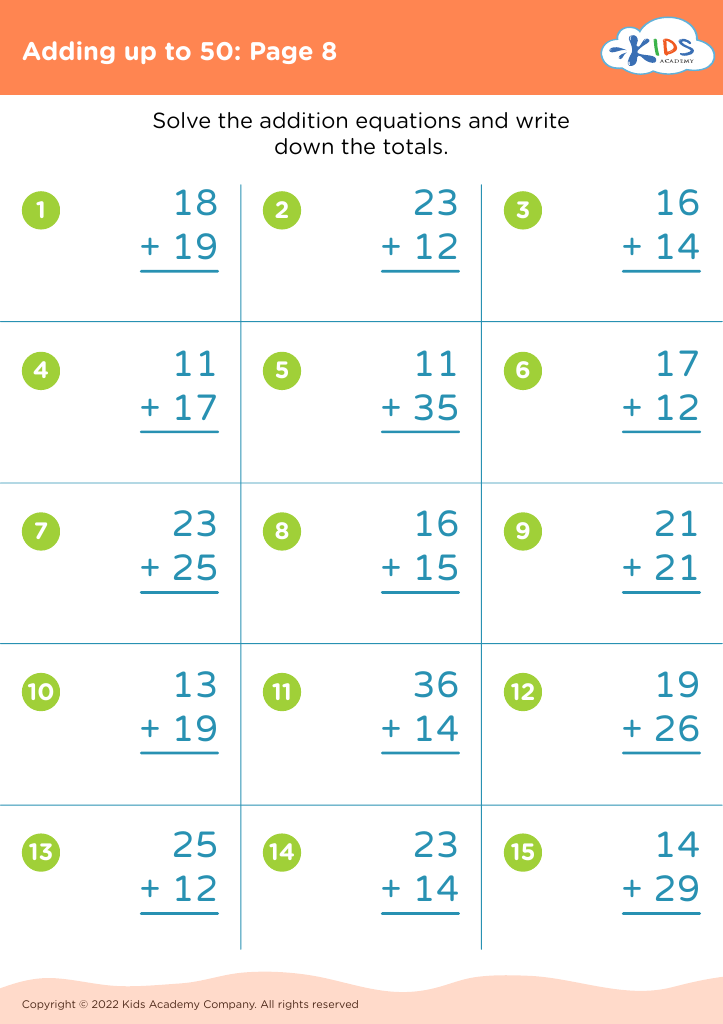
Adding up to 50: Page 8

Adding up to 50: Page 8

Adding up to 50: Page 8
Worksheet
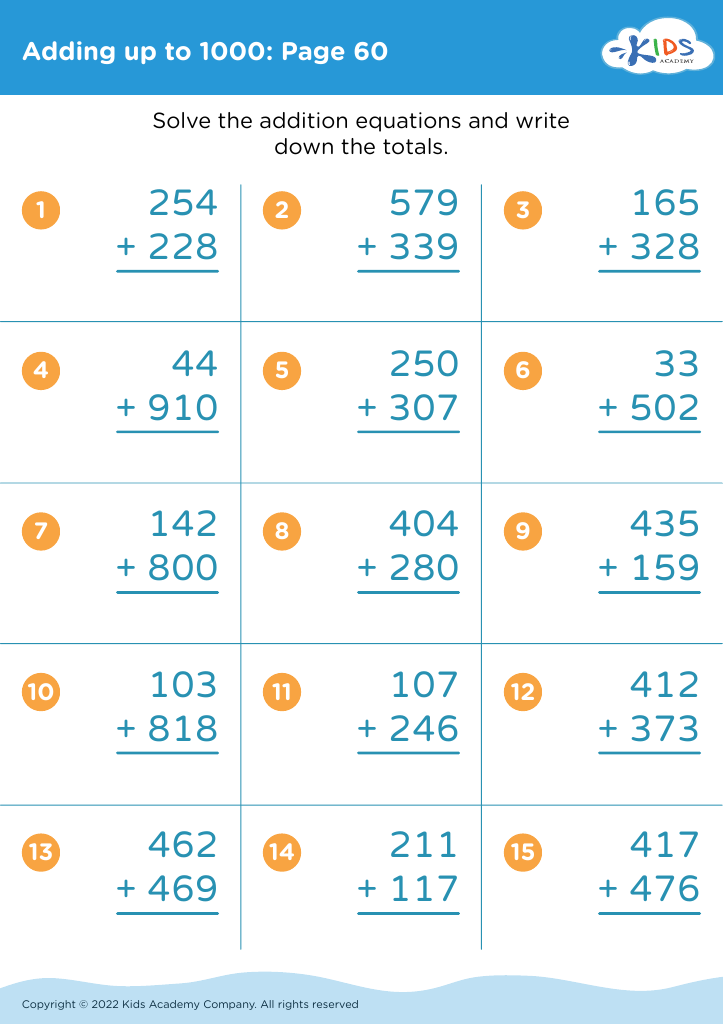
Adding up to 1000: Page 60

Adding up to 1000: Page 60

Adding up to 1000: Page 60
Worksheet
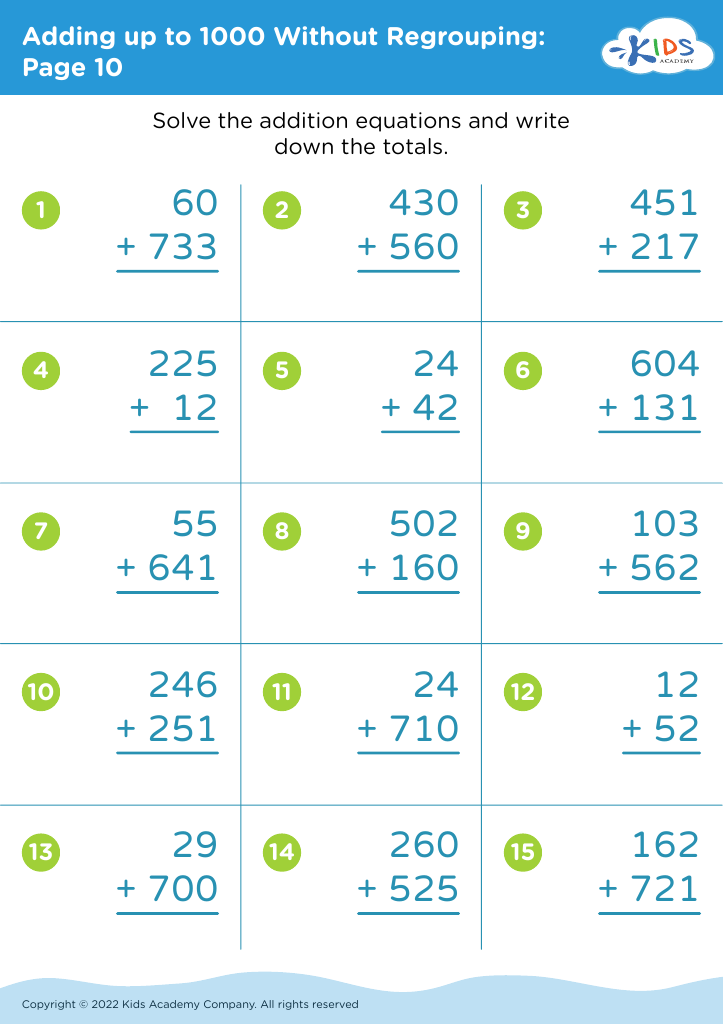
Adding up to 1000 Without Regrouping: Page 10
Worksheet
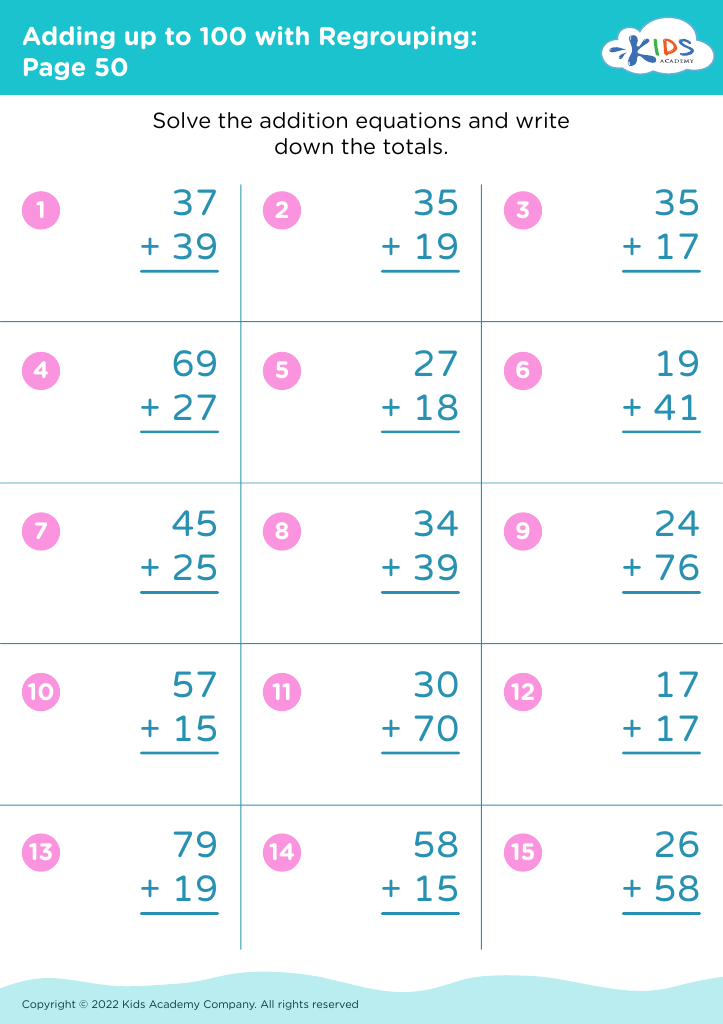
Adding up to 100 with Regrouping: Page 50
Worksheet
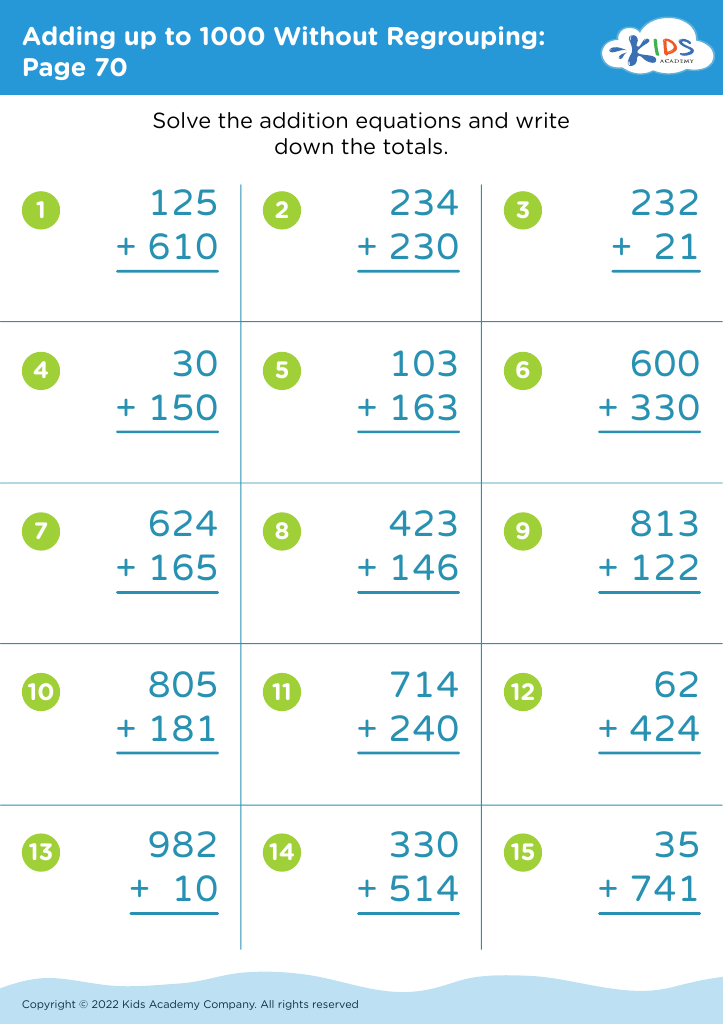
Adding up to 1000 Without Regrouping: Page 70
Worksheet
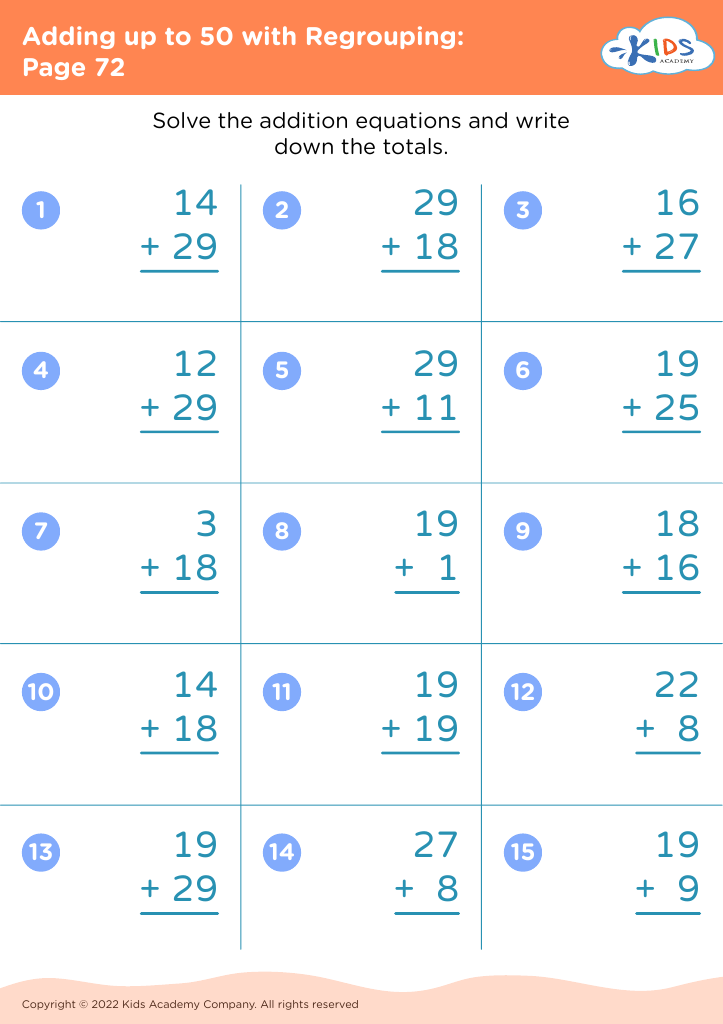
Adding up to 50 with Regrouping: Page 72
Worksheet
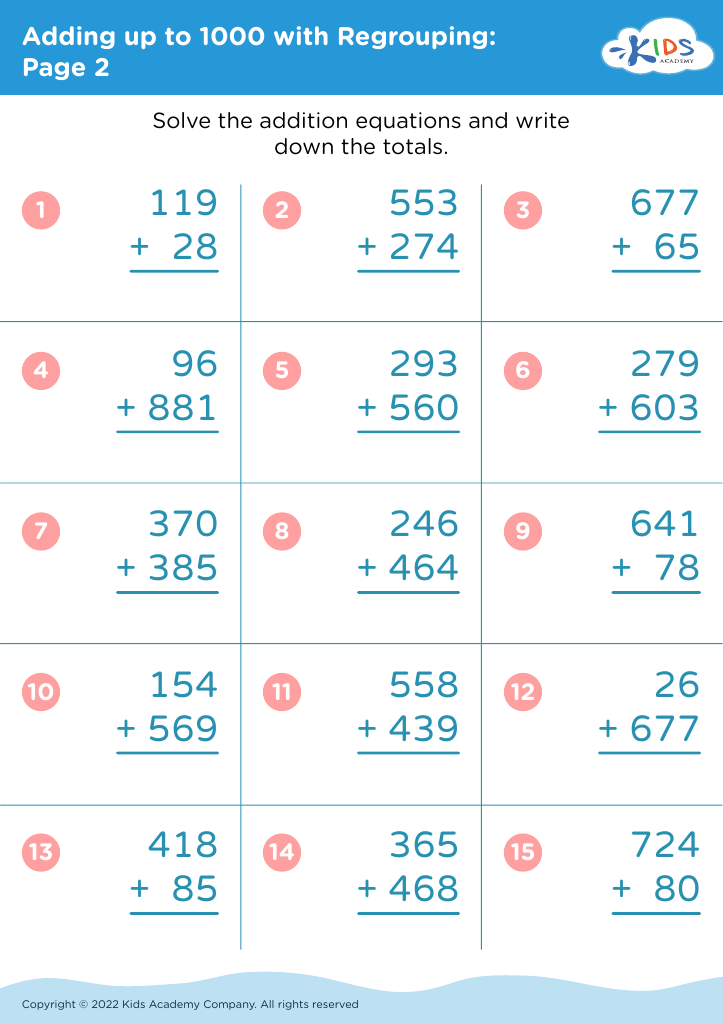
Adding up to 1000 with Regrouping: Page 2
Worksheet
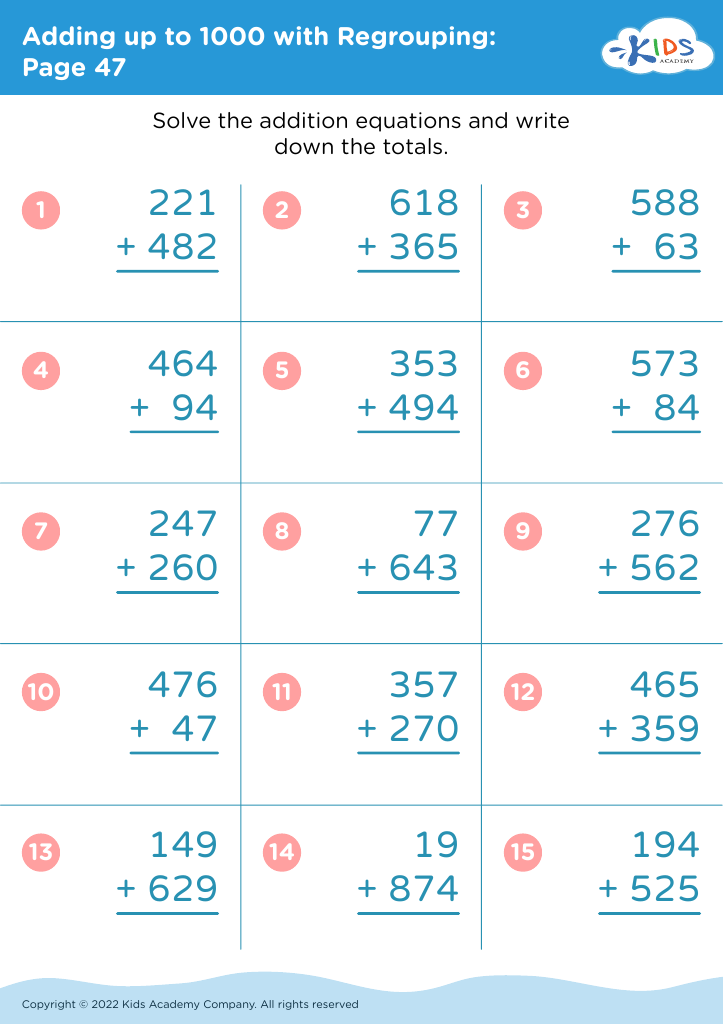
Adding up to 1000 with Regrouping: Page 47
Worksheet
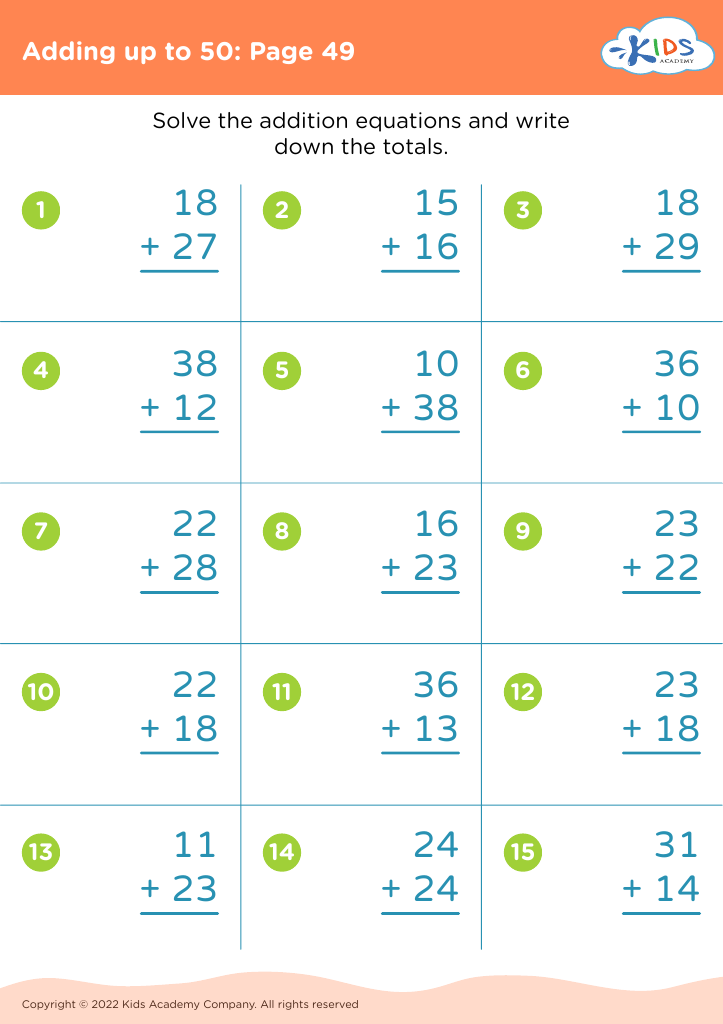
Adding up to 50: Page 49

Adding up to 50: Page 49

Adding up to 50: Page 49
Worksheet
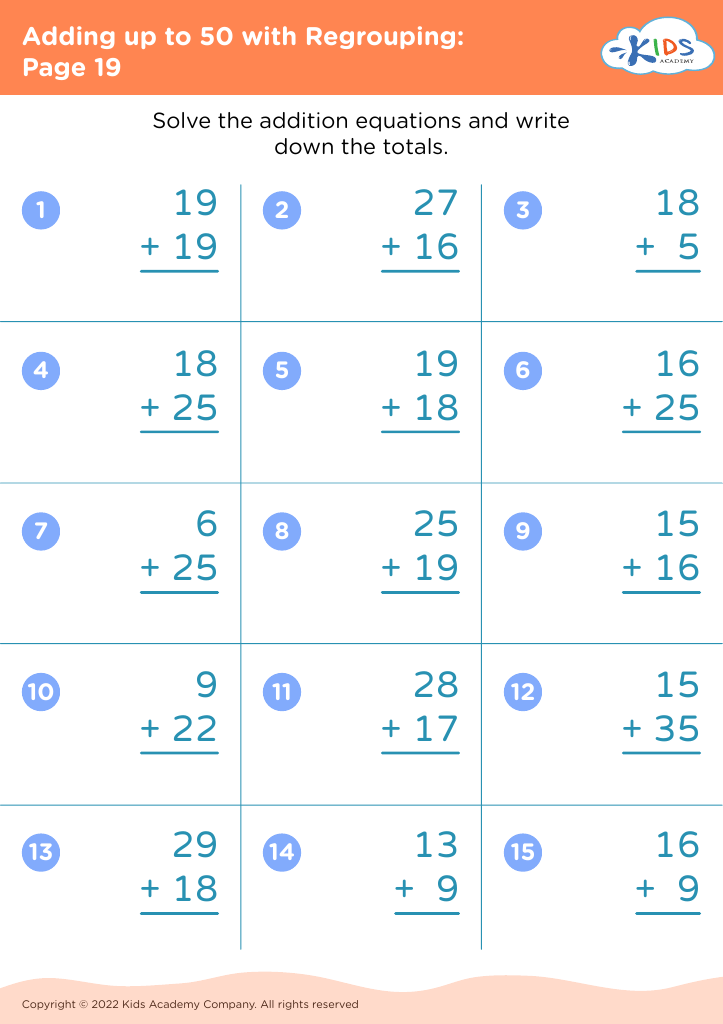
Adding up to 50 with Regrouping: Page 19
Worksheet
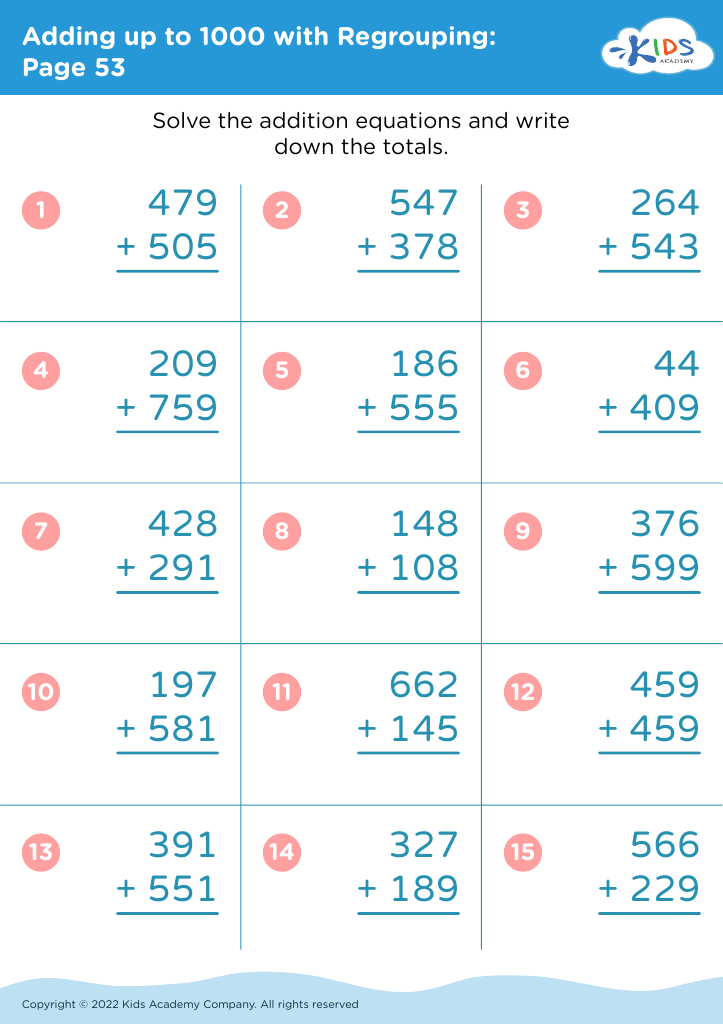
Adding up to 1000 with Regrouping: Page 53
Worksheet
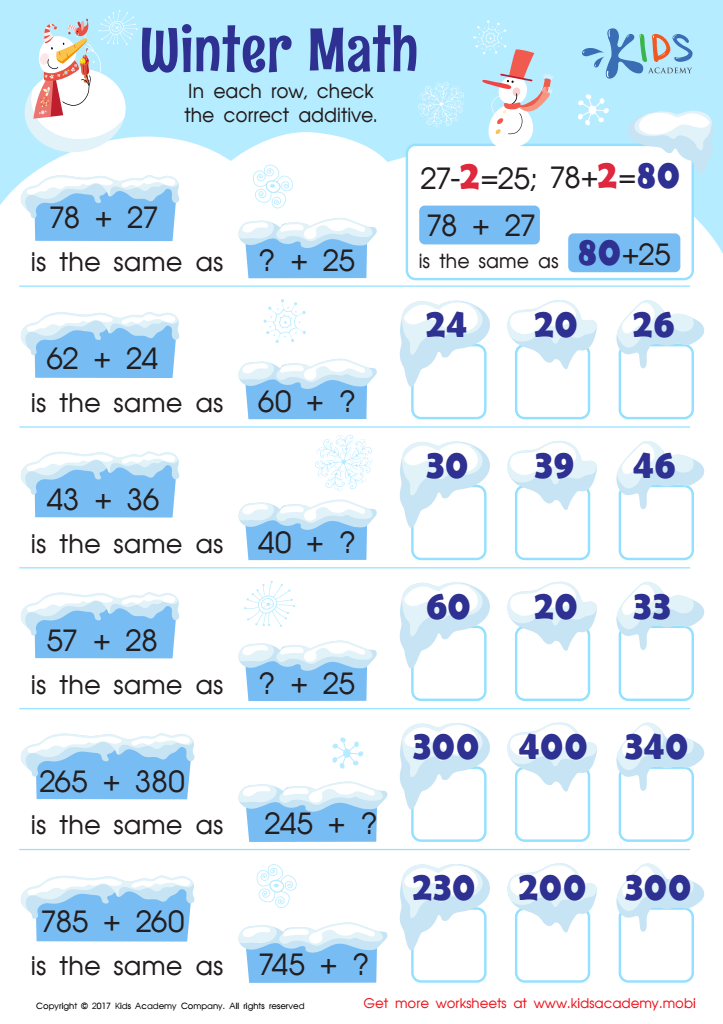
Free addition PDF worksheet for 3rd grade

Free Addition Worksheet

Perfect for a wintry day, challenge your 3rd grader to compare addition equations and fill in the missing numbers in the PDF. This winter-themed worksheet is sure to bring a smile while your 3rd grader practices their addition skills. Perfect for a blustery day, challenge your child to compare addition equations and complete the missing numbers in the PDF.
Free Addition Worksheet
Worksheet
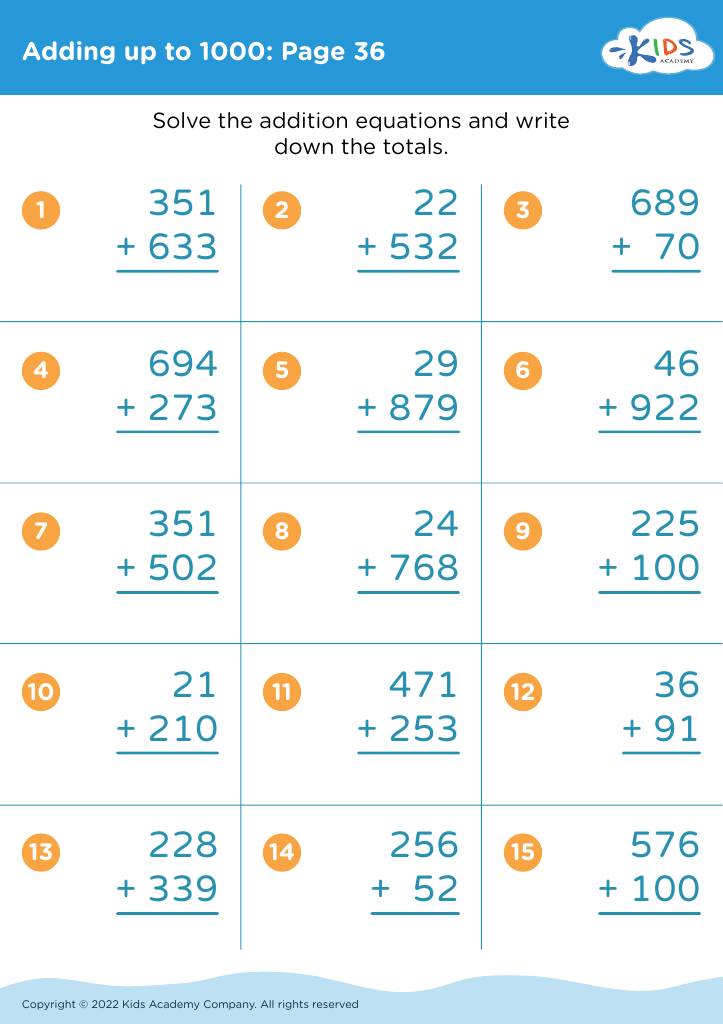
Adding up to 1000: Page 36

Adding up to 1000: Page 36

Adding up to 1000: Page 36
Worksheet
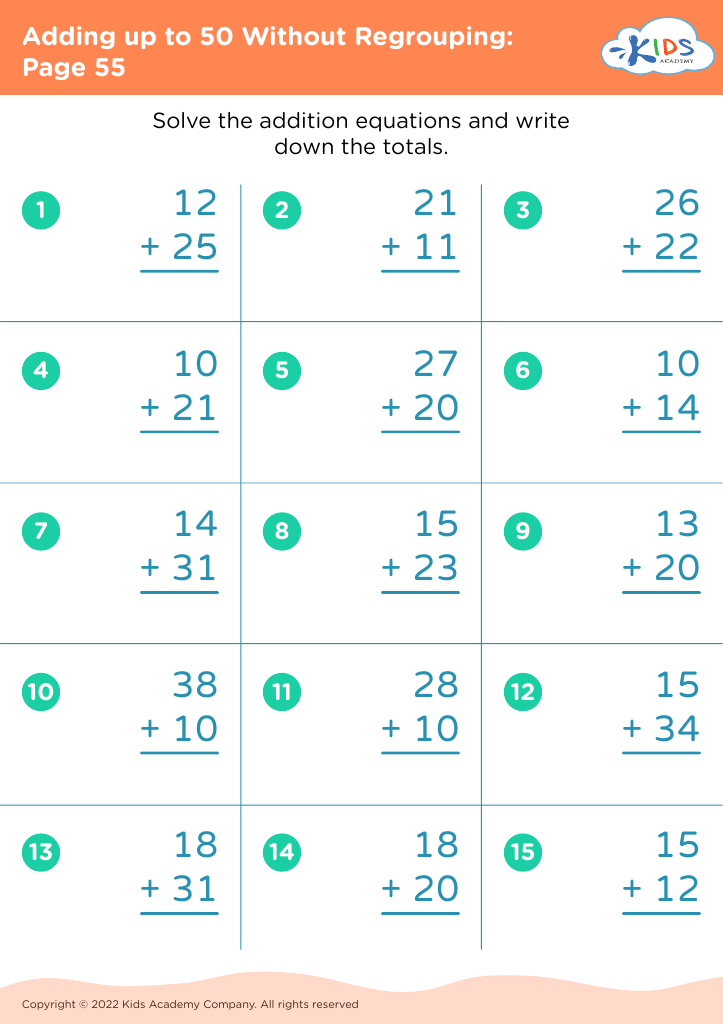
Adding up to 50 Without Regrouping: Page 55
Worksheet
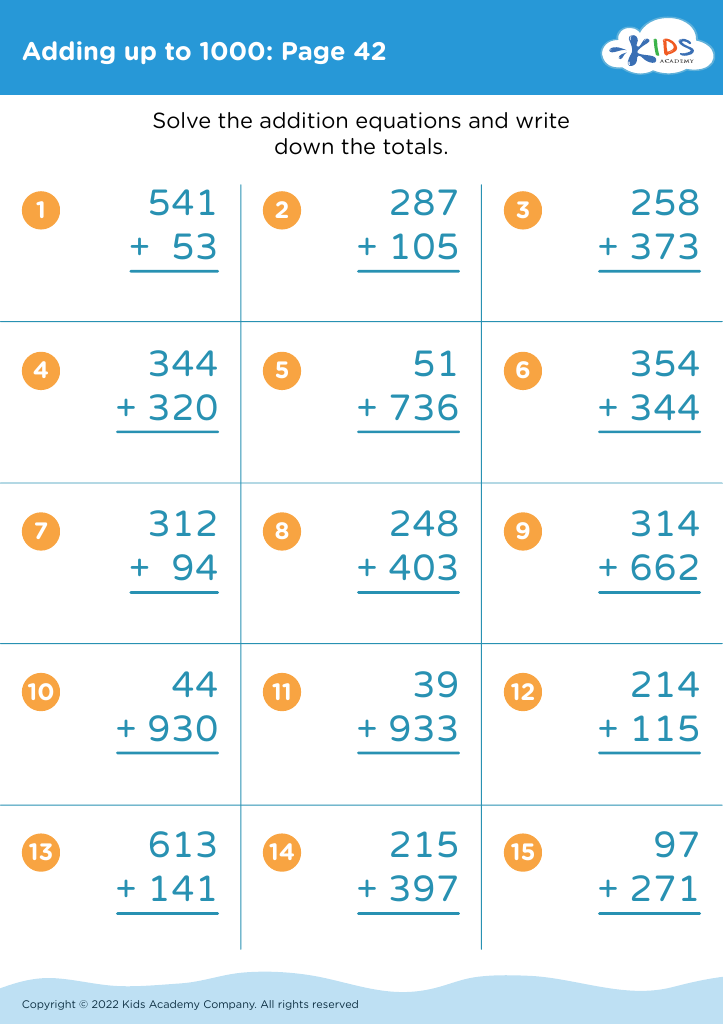
Adding up to 1000: Page 42

Adding up to 1000: Page 42

Adding up to 1000: Page 42
Worksheet
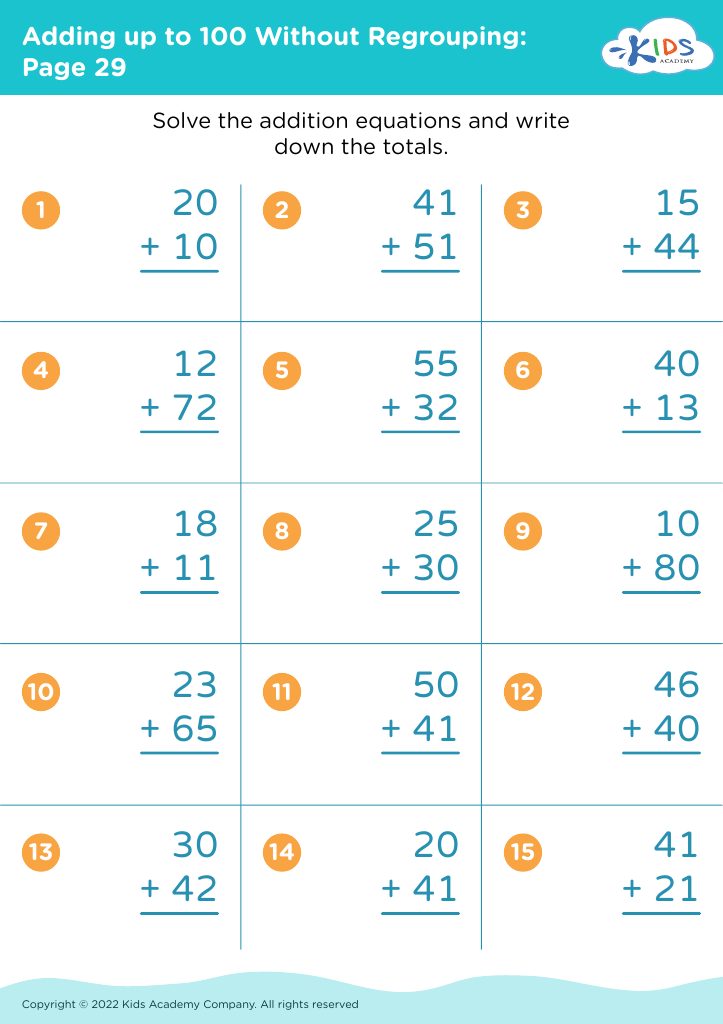
Adding up to 100 Without Regrouping: Page 29
Worksheet
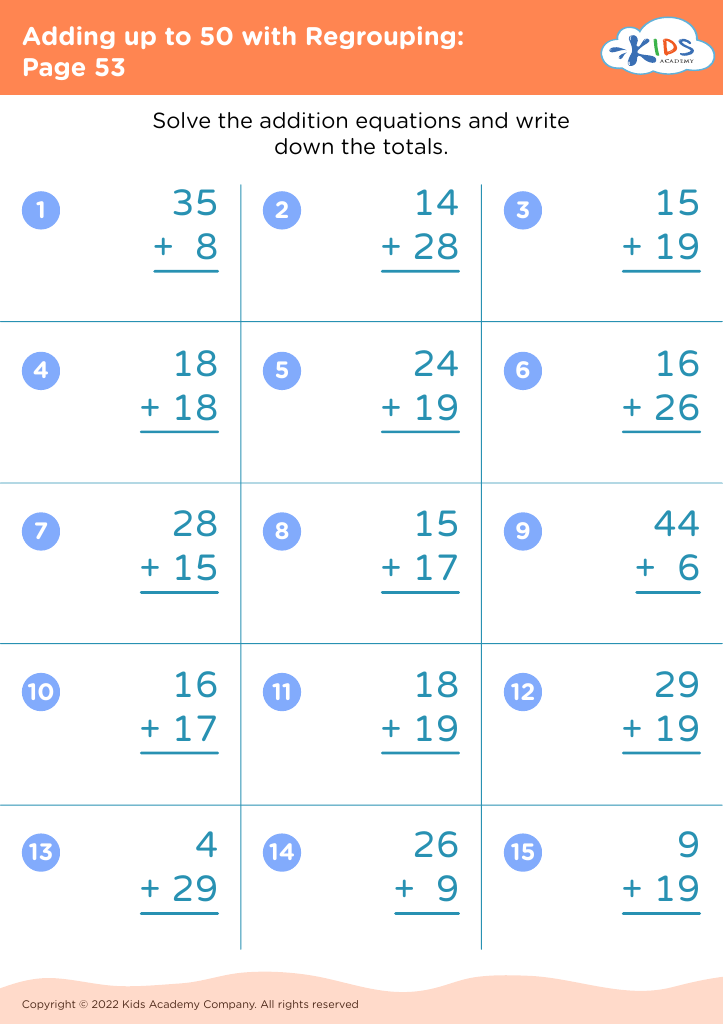
Adding up to 50 with Regrouping: Page 53
Worksheet
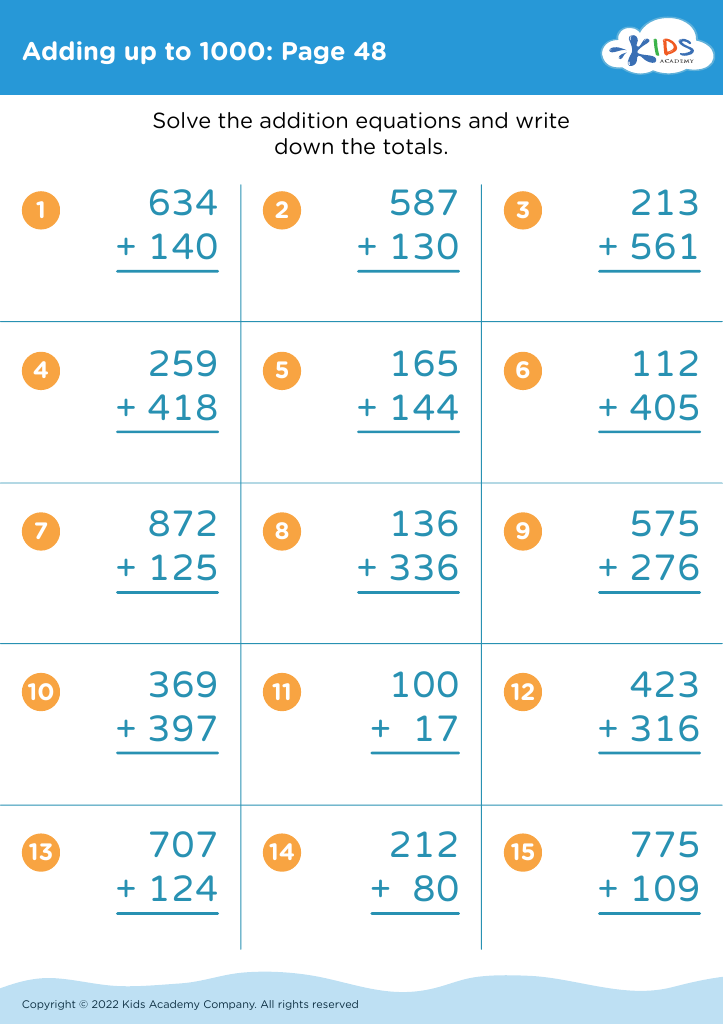
Adding up to 1000: Page 48

Adding up to 1000: Page 48

Adding up to 1000: Page 48
Worksheet
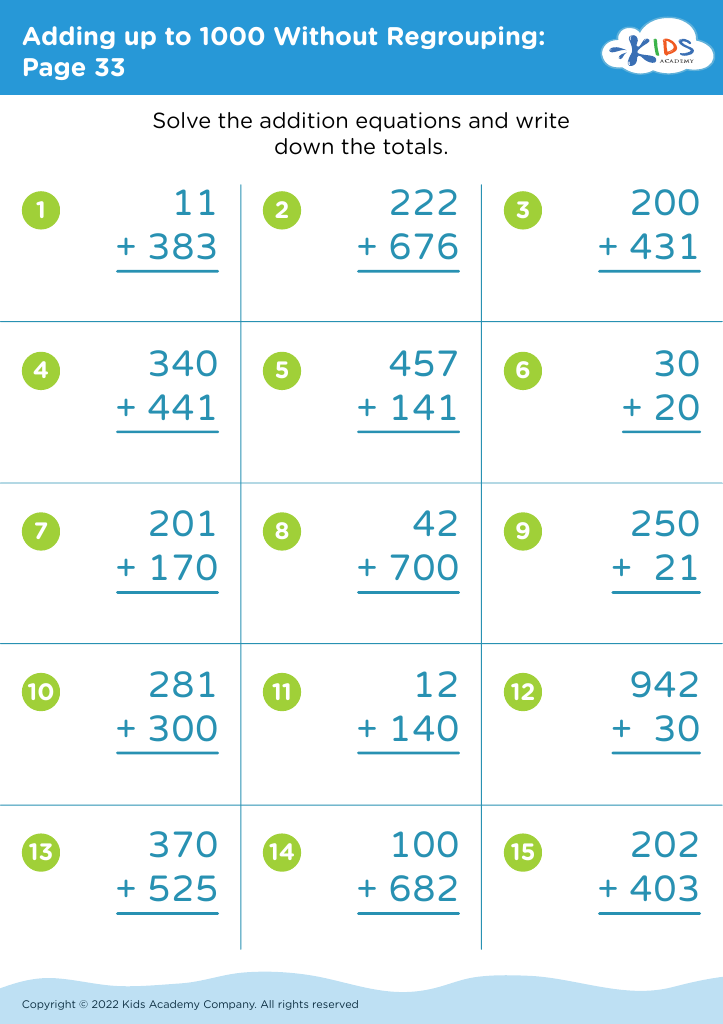
Adding up to 1000 Without Regrouping: Page 33
Worksheet
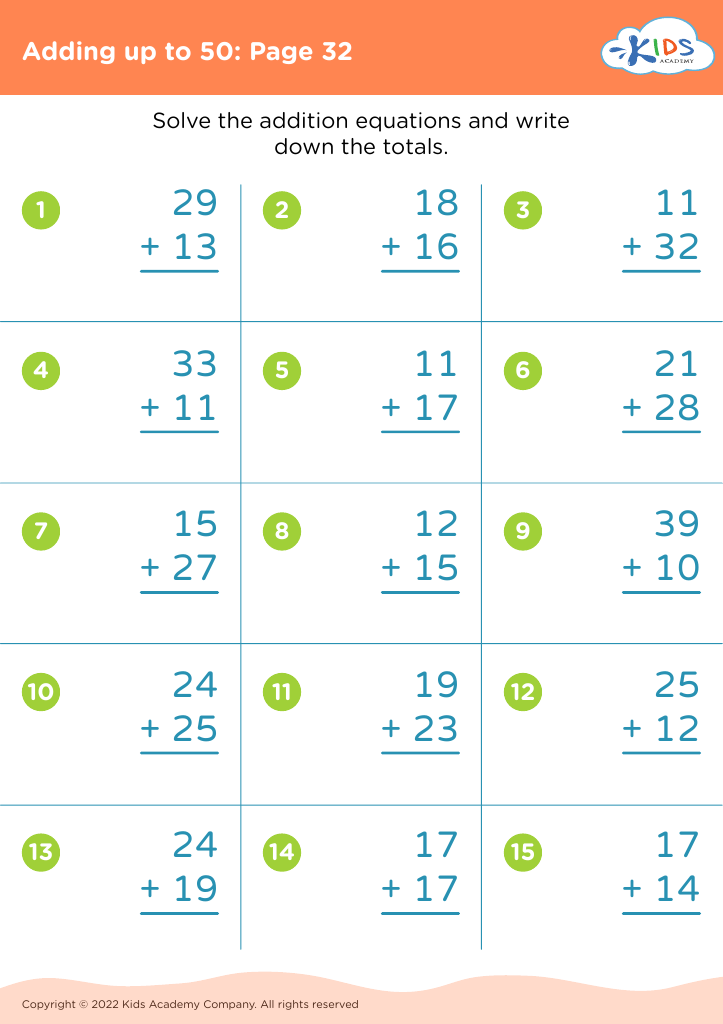
Adding up to 50: Page 32

Adding up to 50: Page 32

Adding up to 50: Page 32
Worksheet


... 5 6

Parents and teachers should pay close attention to number recognition, addition, and subtraction at the age of 8 because these foundational math skills are critical for a child's overall educational development. At this stage, children transition from basic counting to more complex arithmetic, necessitating a solid understanding of number concepts.

First, number recognition helps kids identify and understand the value of individual digits, enabling them to perform basic mathematical operations. This recognition lays the groundwork for more advanced subjects like multiplication, division, and algebra.

Secondly, addition and subtraction skills are essential because they form the basis for nearly all future math learning. Understanding these concepts enhances problem-solving abilities and logical thinking. For example, when children grasp how to add and subtract, they build the skills necessary to tackle word problems, sequence events, and understand spatial relationships—all of which are integral in subjects beyond mathematics.

Moreover, proficiency in these areas boosts a child's confidence and fosters a positive attitude towards learning. Early successes with number recognition, addition, and subtraction can set the tone for future academic pursuits, making students more likely to engage willingly with other subjects as they advance through school.

In essence, focusing on these skills at the age of 8 ensures that children are well-prepared for educational challenges, creating a strong foundation for lifelong learning and intellectual growth.