Unlock your child's math potential with our Problem-Solving Practice Addition & Subtraction Worksheets, specifically designed for 8-year-olds. These engaging worksheets help children enhance their addition and subtraction skills through fun problems that encourage critical thinking and boost confidence. Developed by experts, each printable worksheet features relatable scenarios, perfect for making math enjoyable and relevant. Ideal for classroom use or additional practice at home, these worksheets cater to different learning styles and abilities. Equip your child with the tools they need to excel in math and develop essential problem-solving skills for lifelong academic success.
Check out this FREE Trial Lesson on Addition & Subtraction for age 8!

Standard Addition

Favorites
With answer key
Interactive
  • 8
  • Problem-solving practice
  • Addition & Subtraction
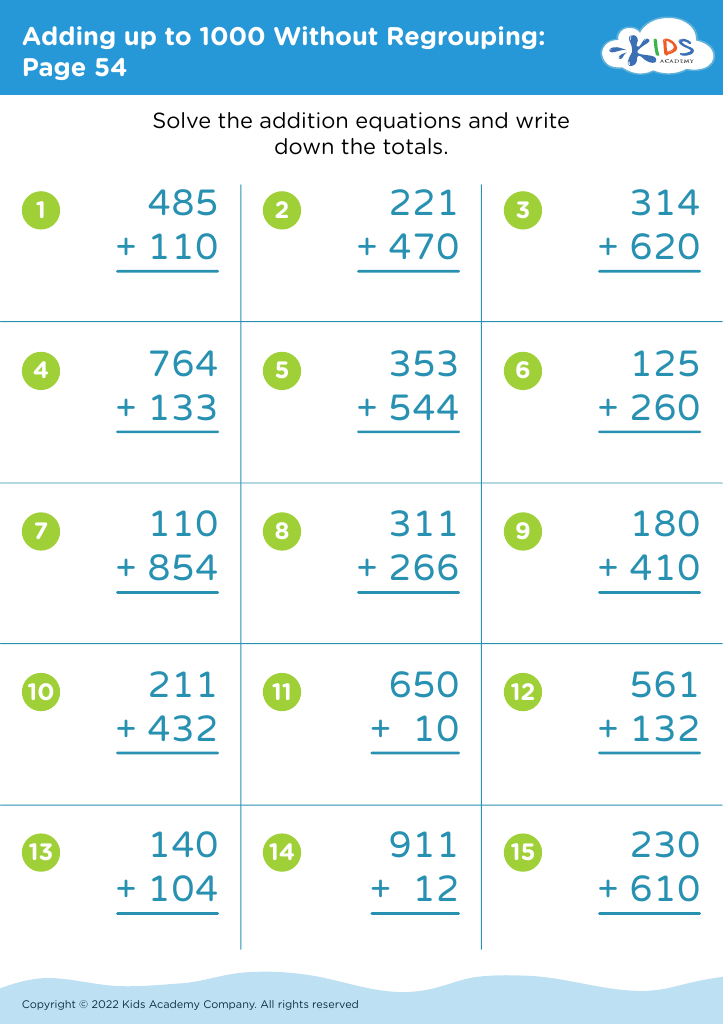
Adding up to 1000 Without Regrouping: Page 54
Worksheet
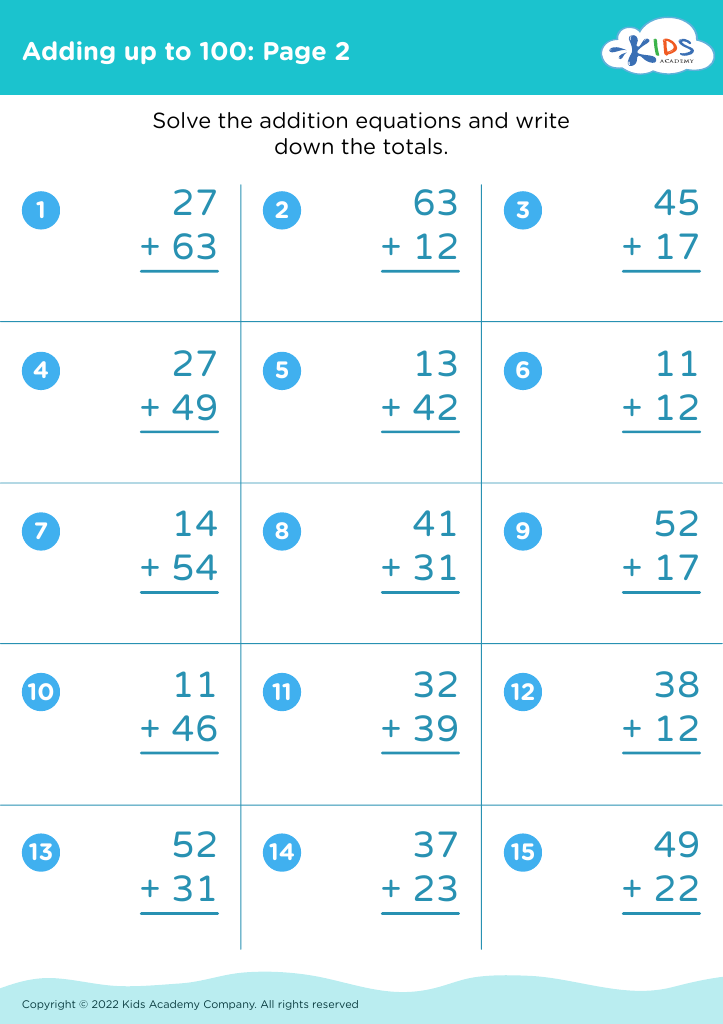
Adding up to 100: Page 2

Adding up to 100: Page 2

Adding up to 100: Page 2
Worksheet
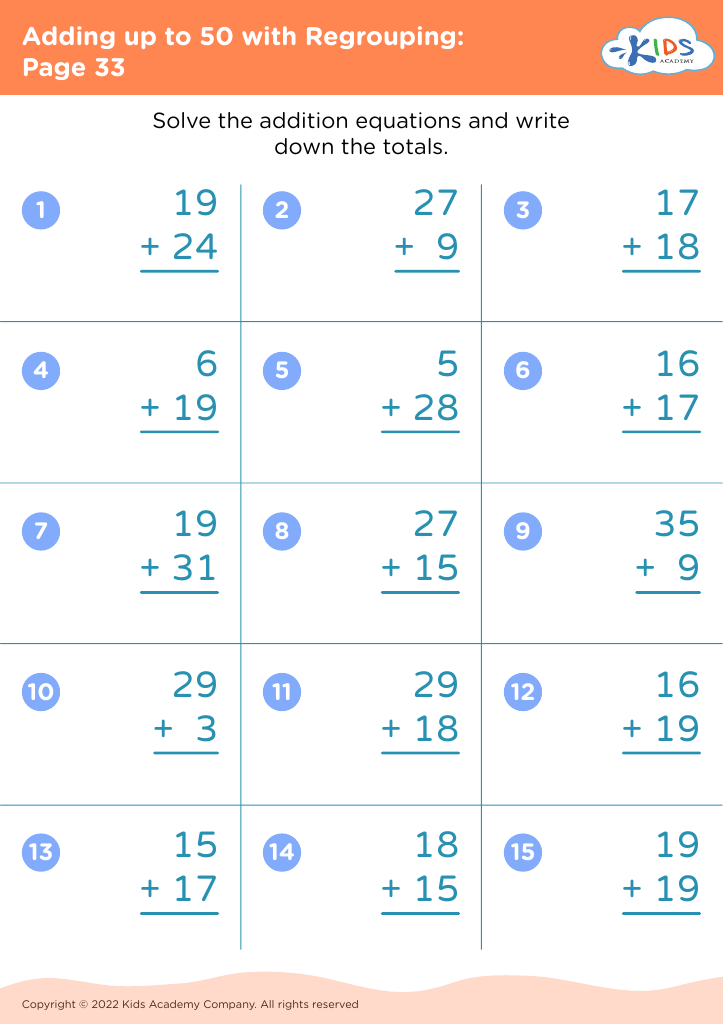
Adding up to 50 with Regrouping: Page 33
Worksheet
Addition with regrouping worksheet

Addition with Regrouping Worksheet

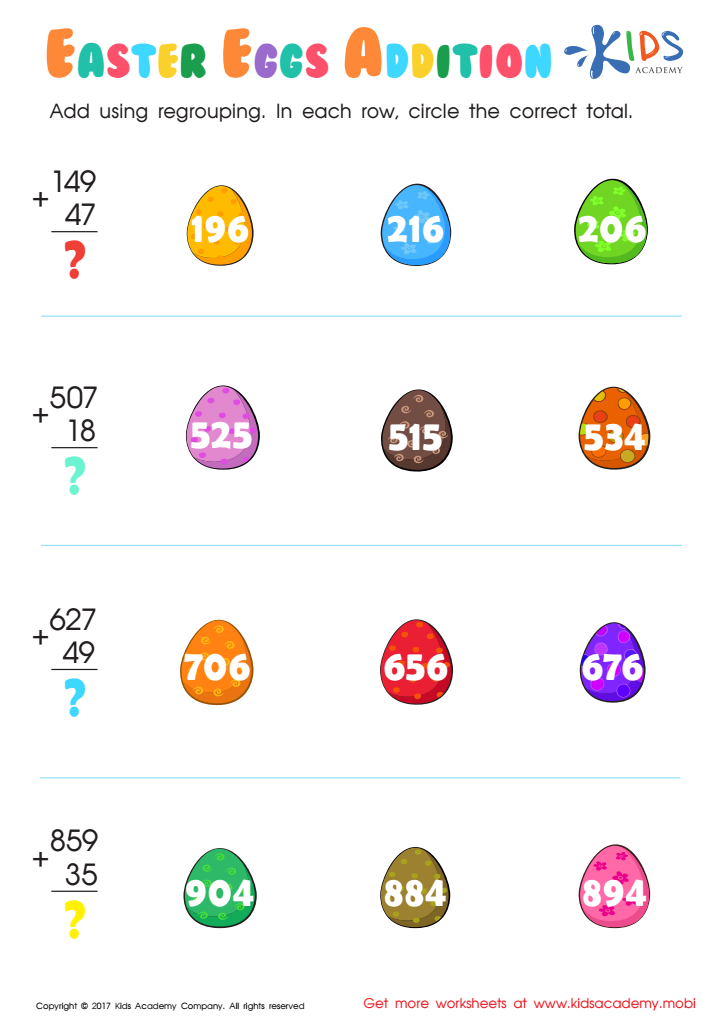
Try this fun holiday-themed addition with regrouping worksheet! Kids can practice adding while regrouping using bright, colorful holiday images. It's a great way to make math exciting, and keep their interest piqued!
Addition with Regrouping Worksheet
Worksheet
Adding Numbers: Conservation Worksheet
Adding Numbers: Conservation Worksheet
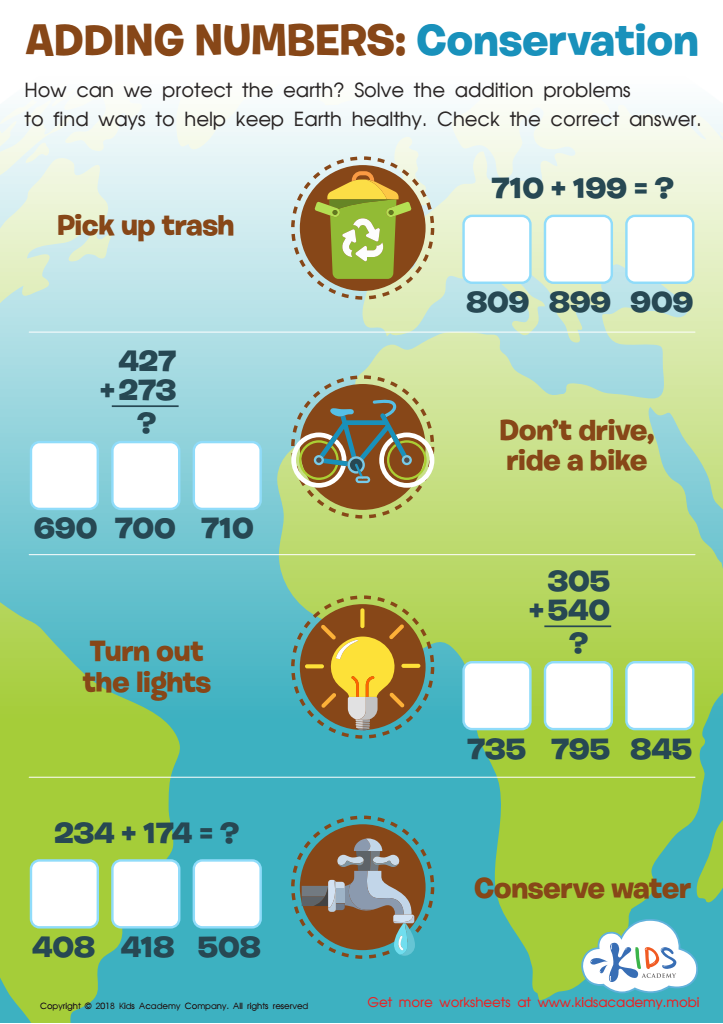
We all live on the Earth, which provides us with the vital necessities for survival. Unfortunately, we too often take advantage of this, causing pollution, water wastage and global warming. Help teach your kids how we can protect our planet - ask them to come up with good ideas and work together to find solutions. Challenge them to solve the subtraction problems to see what they can do to help keep the Earth healthy.
Adding Numbers: Conservation Worksheet
Worksheet
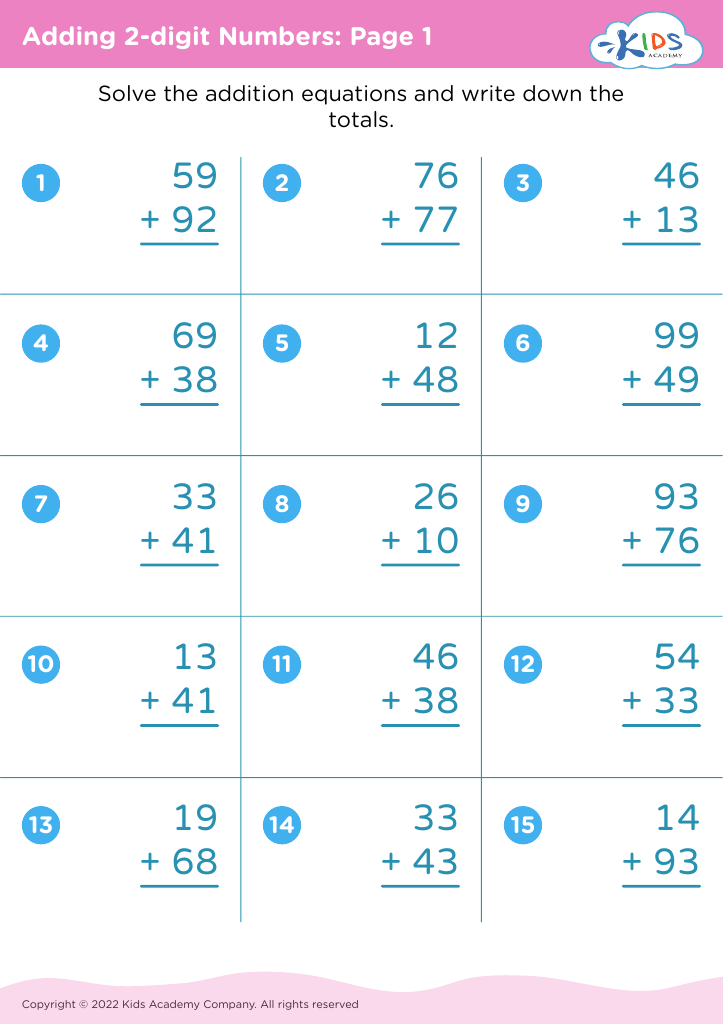
Adding 2-digit Numbers: Page 1

Adding 2-digit Numbers: Page 1

Adding 2-digit Numbers: Page 1
Worksheet
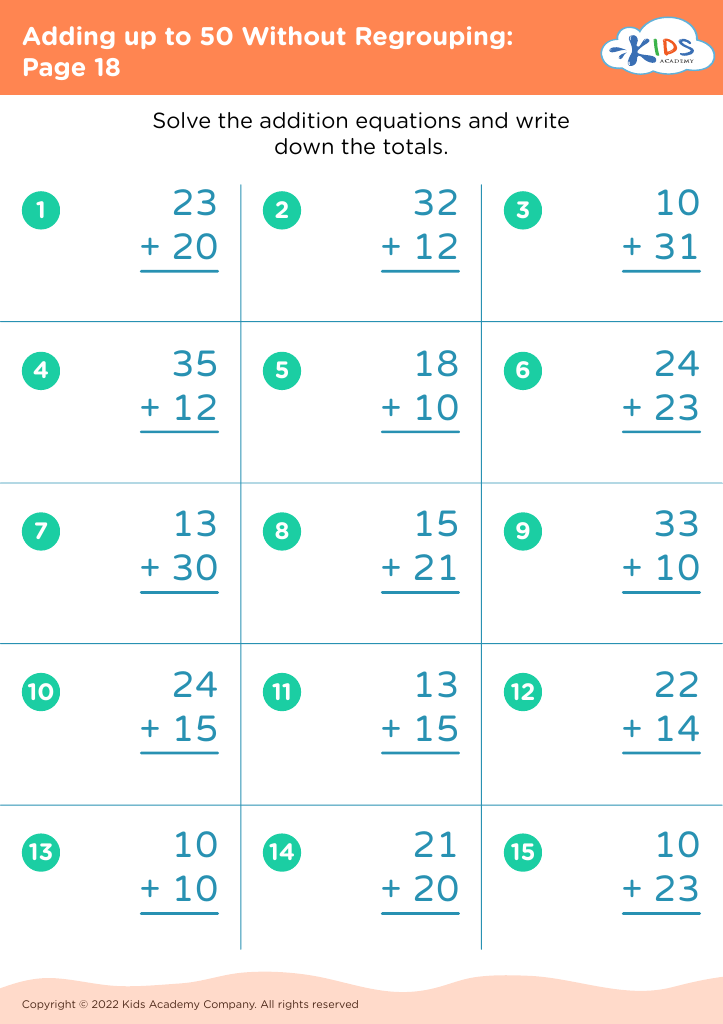
Adding up to 50 Without Regrouping: Page 18
Worksheet
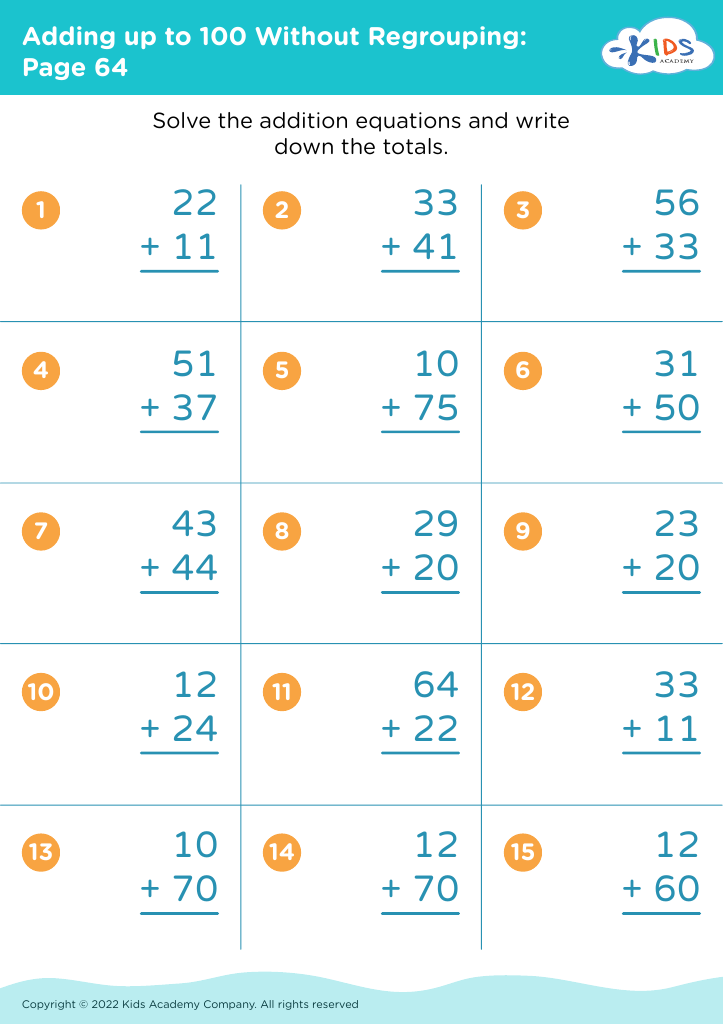
Adding up to 100 Without Regrouping: Page 64
Worksheet
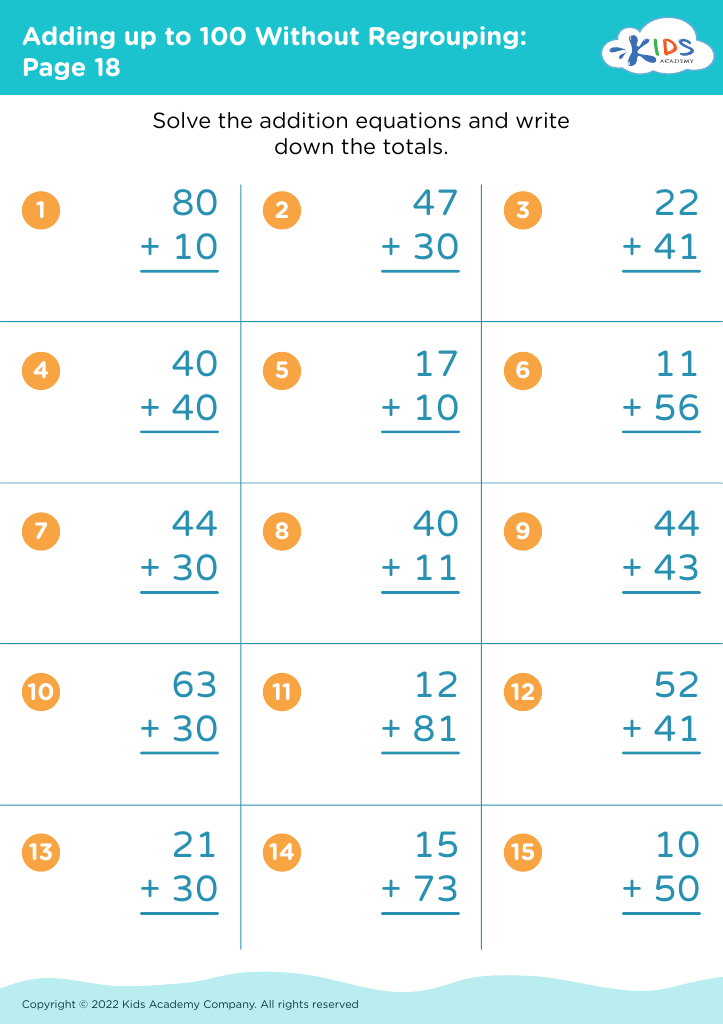
Adding up to 100 Without Regrouping: Page 18
Worksheet
Adding up to 100 with Regrouping: Page 3
Worksheet
Adding up to 1000: Page 70

Adding up to 1000: Page 70

Adding up to 1000: Page 70
Worksheet
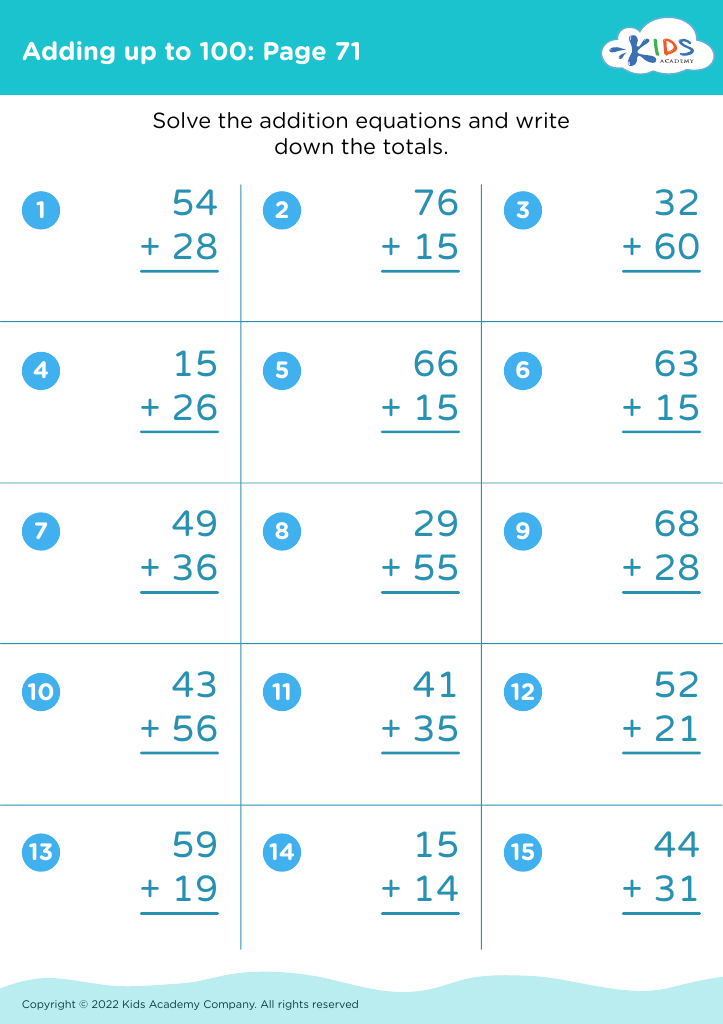
Adding up to 100: Page 71

Adding up to 100: Page 71

Adding up to 100: Page 71
Worksheet
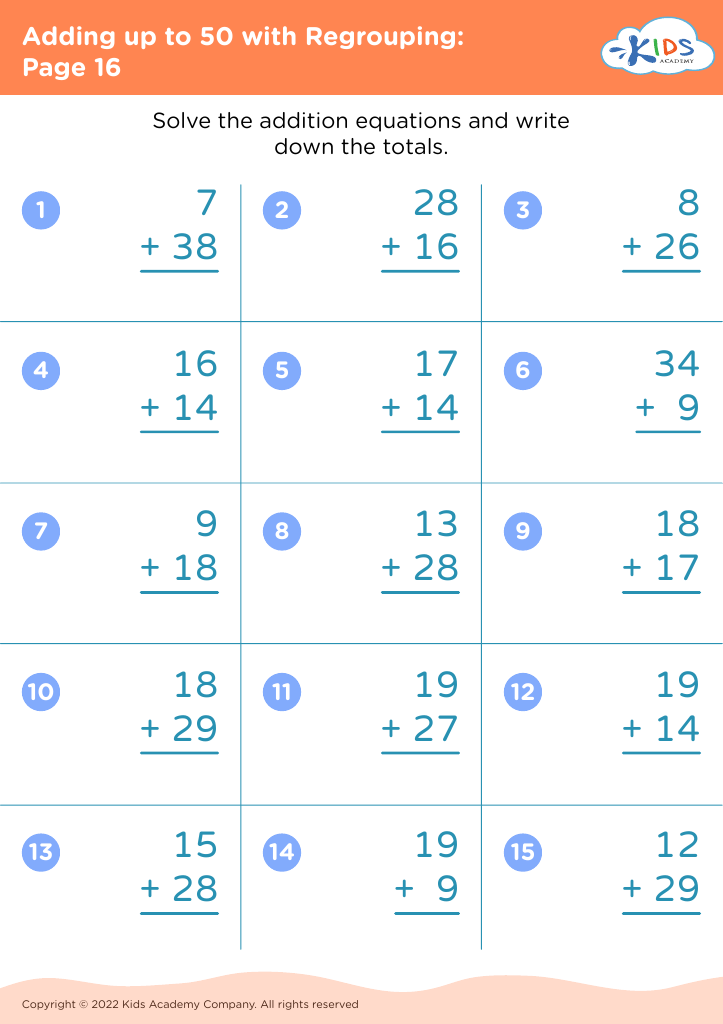
Adding up to 50 with Regrouping: Page 16
Worksheet
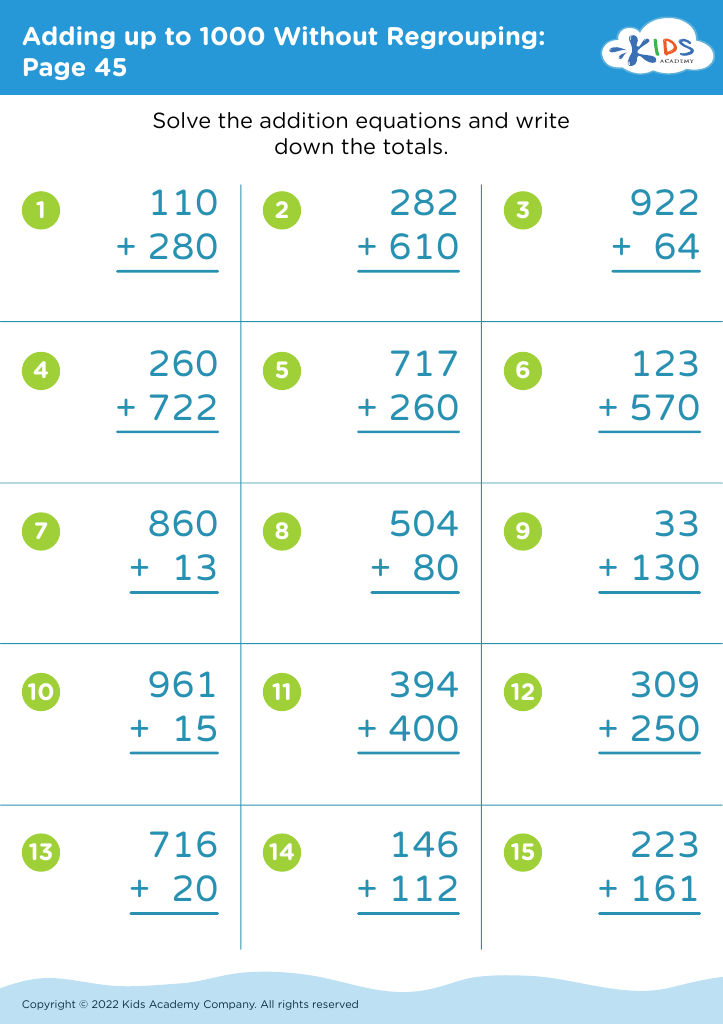
Adding up to 1000 Without Regrouping: Page 45
Worksheet


Developing problem-solving skills through addition and subtraction is foundational for 8-year-olds. At this age, children are transitioning from simple arithmetic to more complex mathematical thinking, making it essential to solidify these basic operations. Mastery in addition and subtraction ensures that children are not just memorizing facts but are also understanding the underlying concepts of mathematics. This solid foundation supports future learning in more advanced areas such as multiplication, division, and eventually algebra and geometry.

Problem-solving with addition and subtraction also enhances critical thinking and logical reasoning. It encourages children to approach problems methodically, understand relationships between numbers, and apply logical steps to arrive at a solution. These skills are transferable to many aspects of life, fostering independent thinking and effective decision-making.

Furthermore, problem-solving activities in math promote perseverance and resilience. Children learn that complex problems require effort and persistence, which builds their confidence. This positive experience can cultivate a growth mindset, a belief that intelligence and abilities can develop with practice and effort.

Engaging in addition and subtraction problems also helps improve attention to detail and analytical skills, crucial for academic success across all subjects. Thus, parents and teachers should prioritize problem-solving practice to support comprehensive cognitive development and lifelong learning.