Recognizing equivalent fractions Addition & Subtraction Worksheets for 8-Year-Olds
4 filtered results
-
From - To
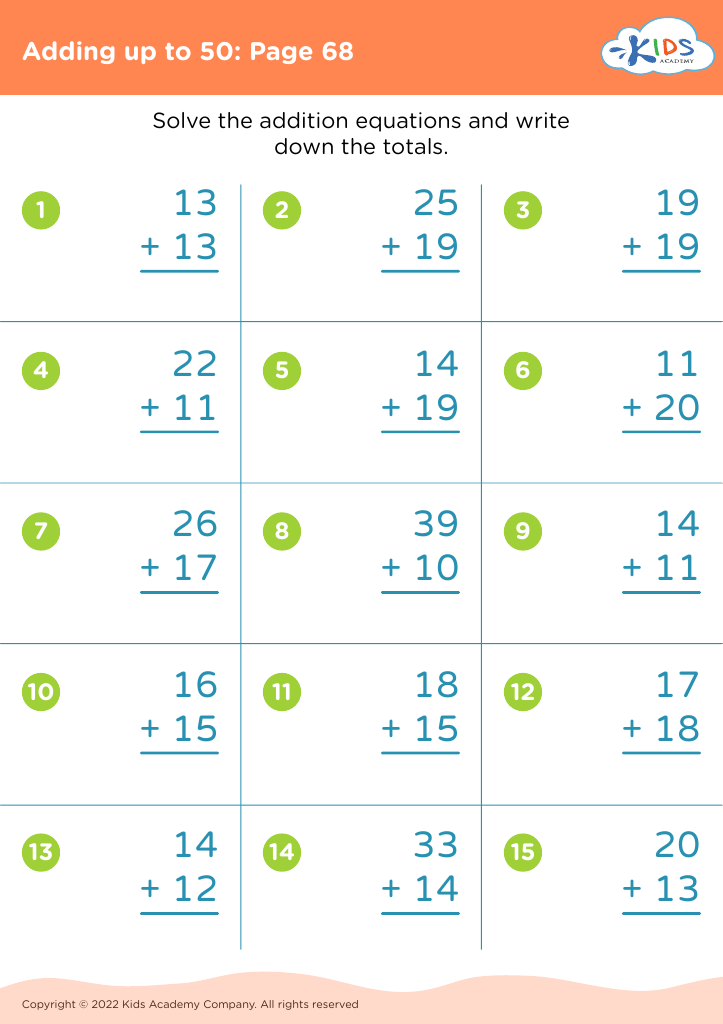
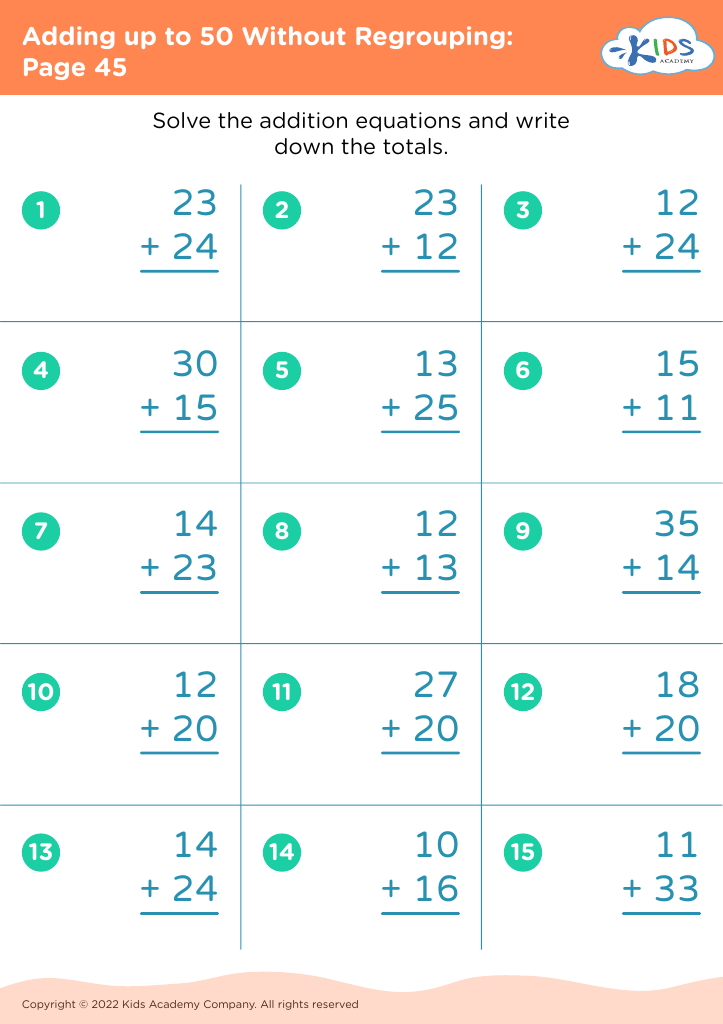
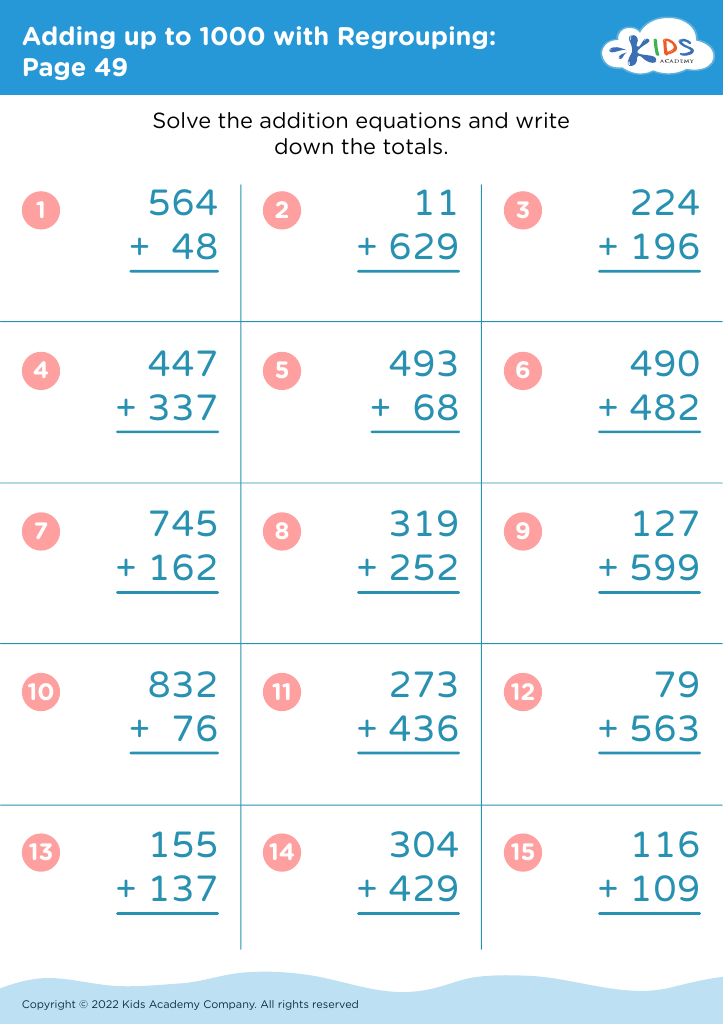
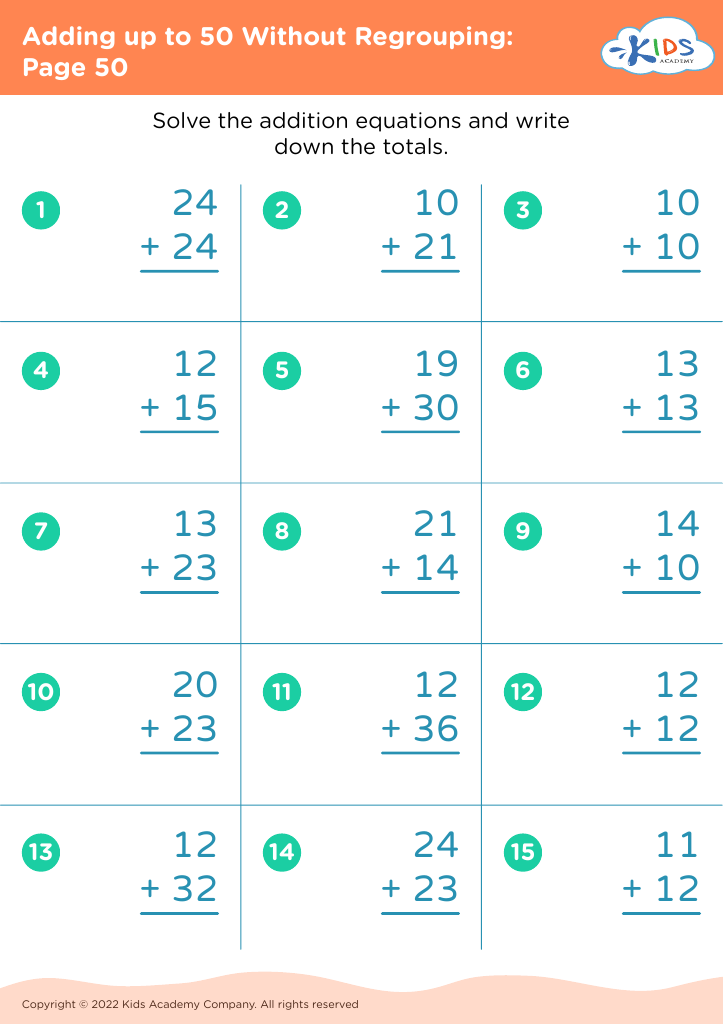
Dive into the world of recognizing equivalent fractions with our engaging worksheets designed specifically for 8-year-olds. These educational resources from Kids Academy focus on teaching young learners how to identify and work with equivalent fractions through fun and interactive addition and subtraction exercises. Each worksheet is crafted to build fundamental math skills, boost confidence, and enhance problem-solving abilities in a supportive environment. The colorful and well-structured activities ensure kids enjoy the learning journey, unlocking their full potential in mastering fractions. Perfect for home or classroom use, these worksheets are a great tool for parents and teachers alike.








Recognizing equivalent fractions and understanding addition and subtraction of fractions are foundational skills in mathematics that are critical for 8-year-olds. Parents and teachers should prioritize these skills as they lay the groundwork for future mathematical concepts and problem-solving abilities. Equivalent fractions help children understand that different fractions can represent the same amount, an essential insight that fosters a deeper comprehension of fraction comparison and operations.
Mastering addition and subtraction of fractions, particularly with like denominators at this stage, equips students with practical problem-solving tools. These skills are crucial in real-life scenarios such as cooking, budgeting, or even dividing items fairly among friends. Developing these abilities early encourages logical thinking and attention to detail, which are valuable in all areas of learning.
Moreover, competency in fractions enhances a child’s confidence in mathematics, making the subject less intimidating and more engaging. This confidence can lead to a greater interest in mathematics and improved performance in higher-level math courses down the line. Fundamentally, recognizing equivalent fractions and learning their addition and subtraction promotes cognitive development, enhances critical thinking, and prepares children for more complex mathematical challenges, making it an essential focus for any educational curriculum.








