Recognizing numbers Addition & Subtraction Worksheets for 8-Year-Olds
3 filtered results
-
From - To
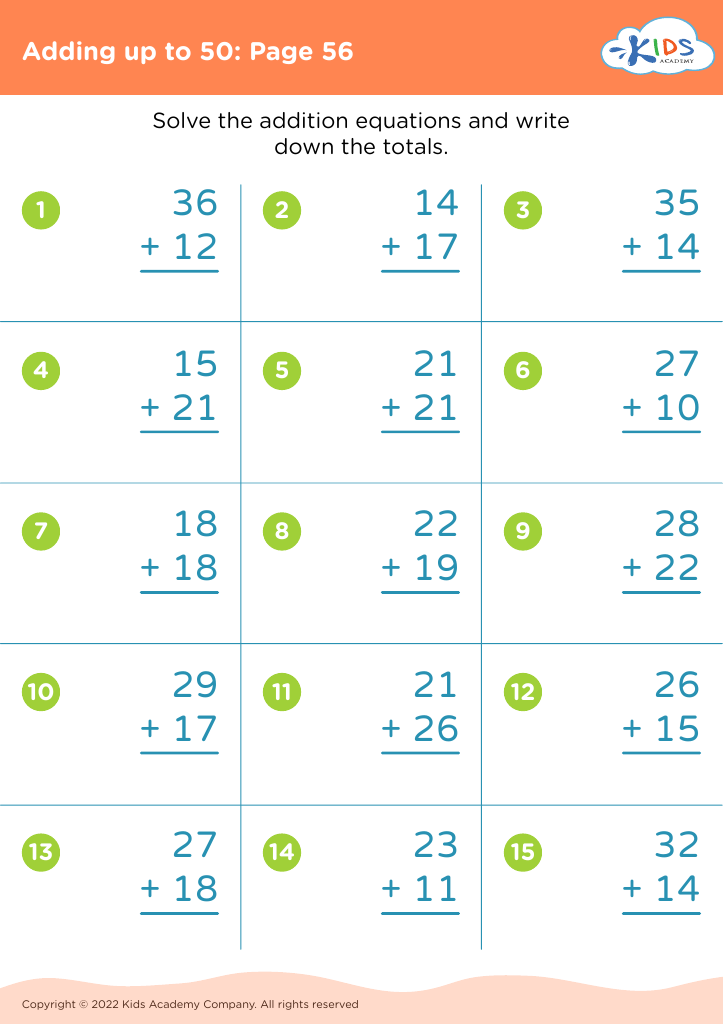
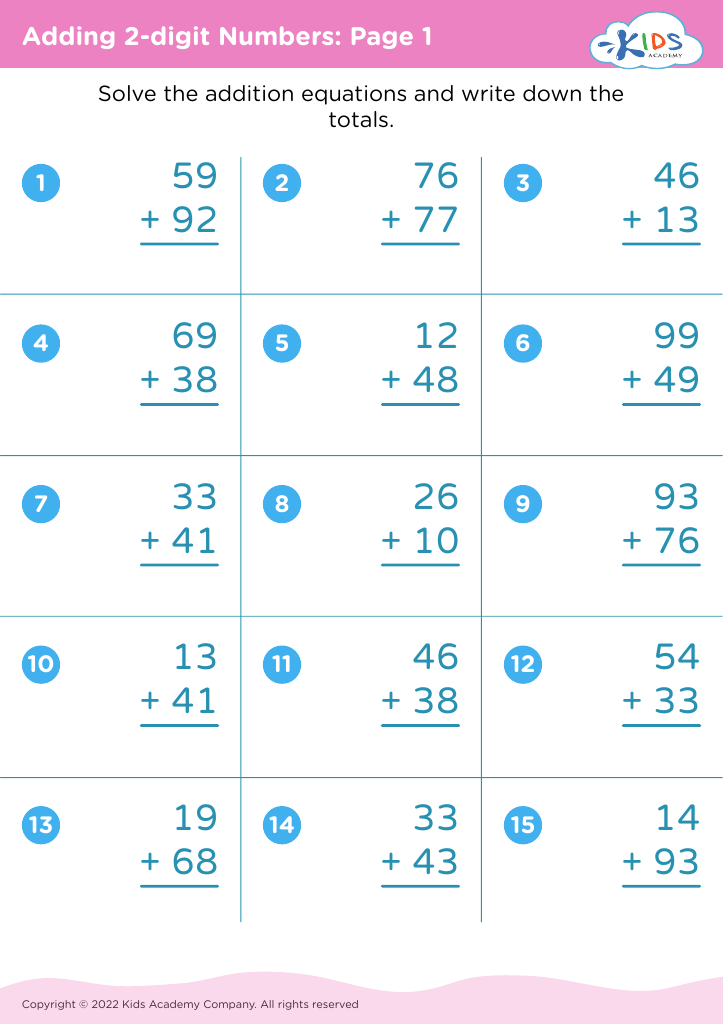
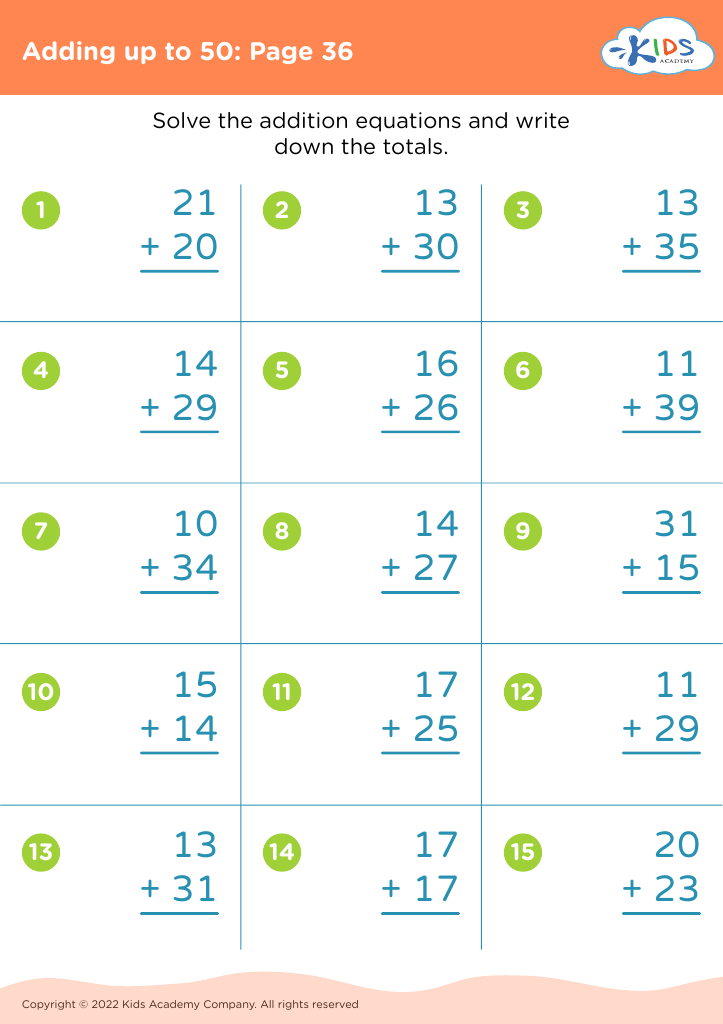
Discover our engaging "Recognizing Numbers: Addition & Subtraction Worksheets" designed specifically for 8-year-olds. These printable worksheets help students enhance their number recognition skills while mastering the fundamentals of addition and subtraction. With a variety of fun activities and exercises, children can practice single and double-digit problems in an interactive way that boosts confidence and fosters a love for math. Perfect for classroom or at-home learning, our worksheets cater to different learning styles, allowing your child to progress at their own pace. Equip your young learner with essential math skills today and watch them excel!








Recognizing numbers and mastering addition and subtraction are foundational skills for 8-year-olds that significantly influence their long-term academic success and confidence. At this stage, children are transitioning from basic arithmetic to more complex mathematical concepts, making it crucial for parents and teachers to prioritize these skills.
When children recognize numbers and understand how to manipulate them through addition and subtraction, they develop critical problem-solving abilities. These skills lay the groundwork for future mathematical learning, including multiplication and division, as well as more advanced topics like geometry and algebra. Mastery of these concepts also supports the development of logical reasoning and analytical thinking—skills essential not only in math but across various subjects.
Additionally, strong numerical skills foster self-esteem and independence. When children feel confident in their abilities, they are more likely to engage actively in learning and tackle challenges. Moreover, parents and teachers play vital roles in creating a supportive environment for practice and exploration. Through interactive games, real-life applications, and positive reinforcement, caregivers can make learning numbers enjoyable and meaningful.
In summary, recognizing numbers and performing addition and subtraction provide an essential foundation for academic achievement and personal growth in children.








