Shape Recognition Addition & Subtraction Worksheets for 8-Year-Olds - Page 2
31 filtered results
-
From - To
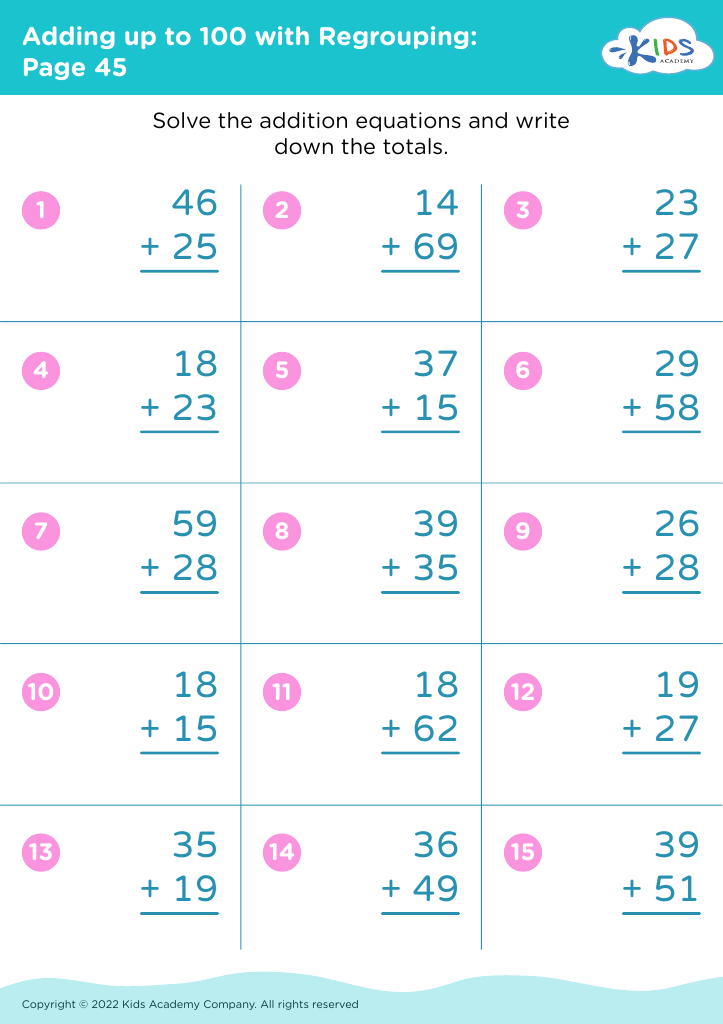
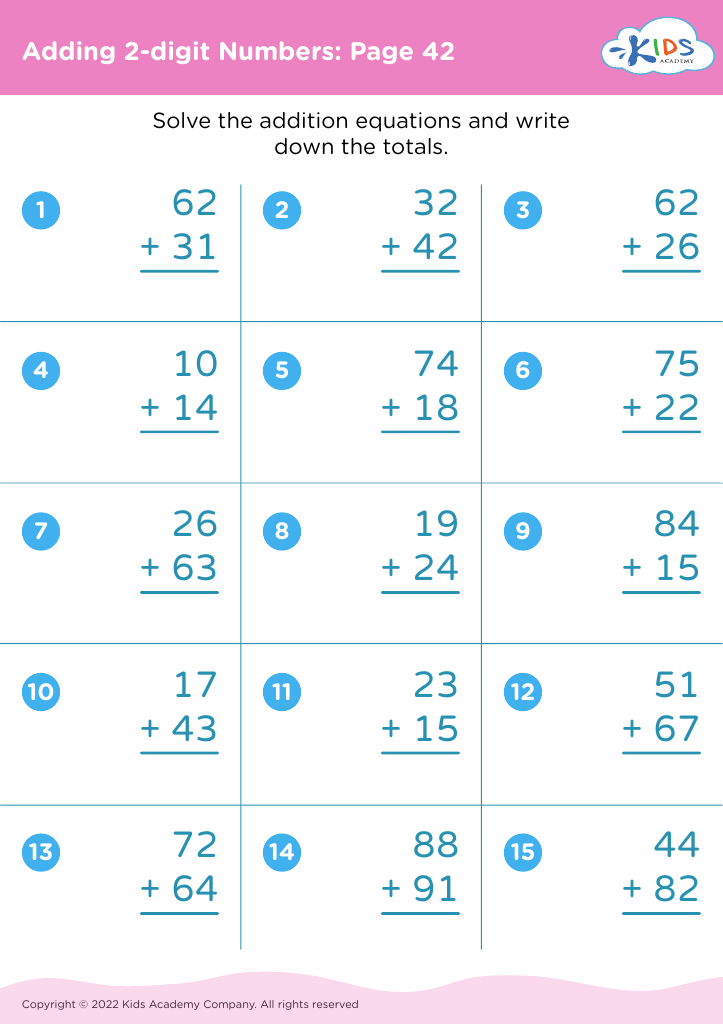
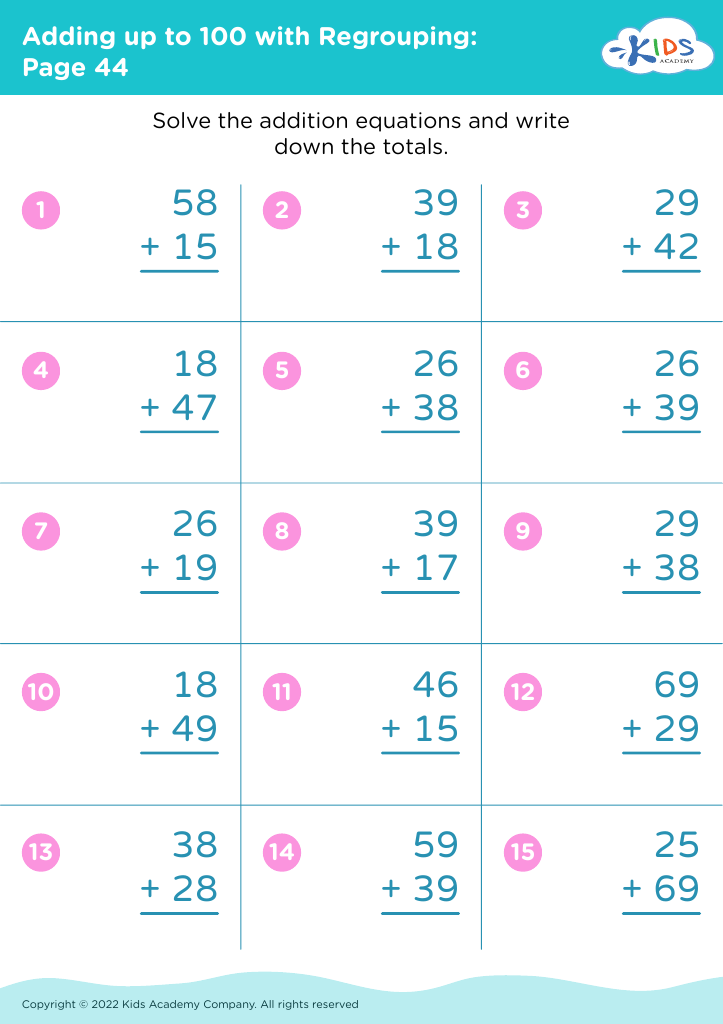








Shape recognition, alongside addition and subtraction, is essential for 8-year-olds as it fosters crucial cognitive and academic skills. At this age, children are developing foundational mathematical abilities, and incorporating shapes into mathematics enhances their understanding of spatial relationships and problem-solving skills. When children recognize shapes, they can visualize mathematical concepts, making addition and subtraction more intuitive.
Additionally, shape recognition supports critical thinking. For instance, when children learn to categorize shapes, they also practice sorting and identifying patterns, which are key components of logical reasoning. This not only aids in math but in science and technology as well, fields increasingly reliant on spatial reasoning.
Moreover, early exposure to these concepts encourages children to see mathematics as interconnected with the world around them, sparking their curiosity and engagement. Involving parents and teachers in this learning process strengthens relationships and creates a supportive environment that values education.
Ultimately, by nurturing shape recognition and mathematical skills, we equip children with tools that extend beyond the classroom, preparing them for more complex concepts in math and steeling them for future academic success. Hence, understanding the significance of shape recognition in relation to addition and subtraction is vital for their overall development.








